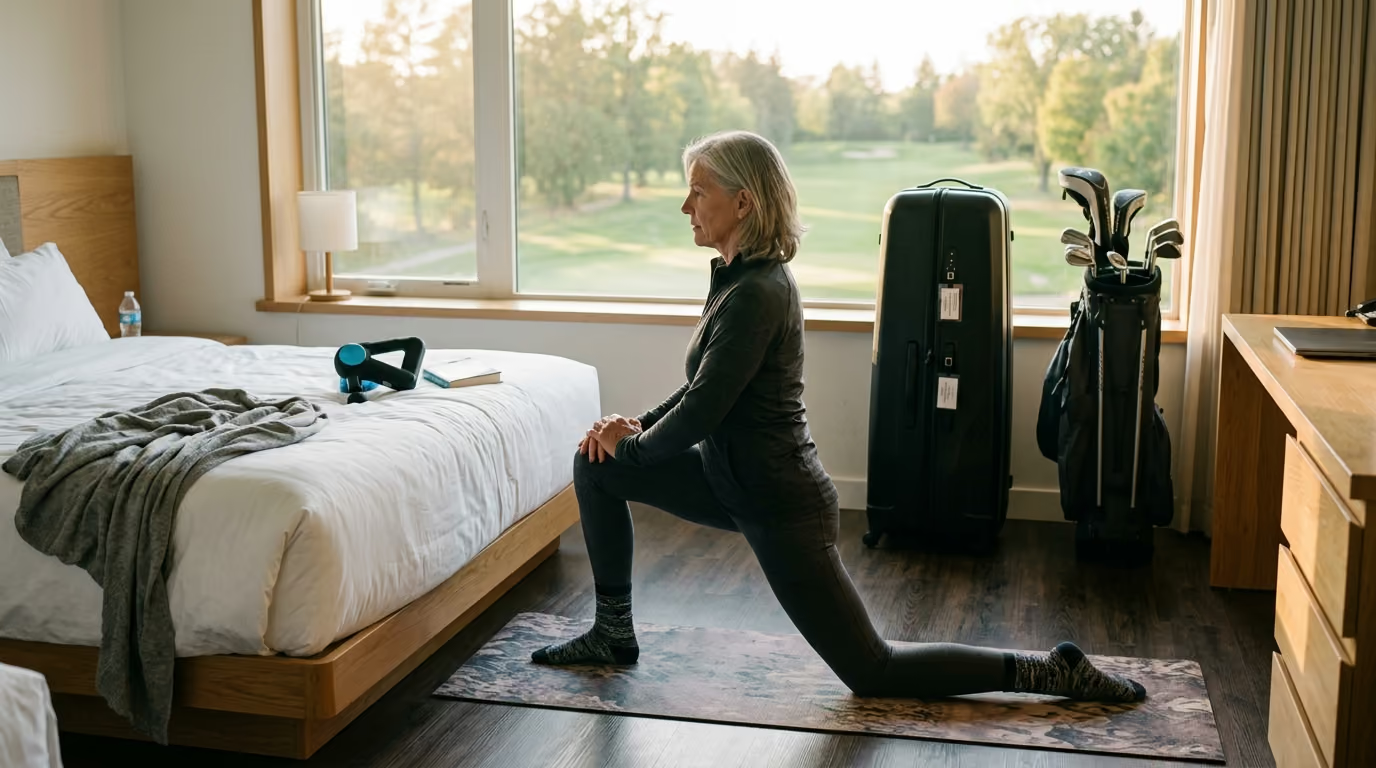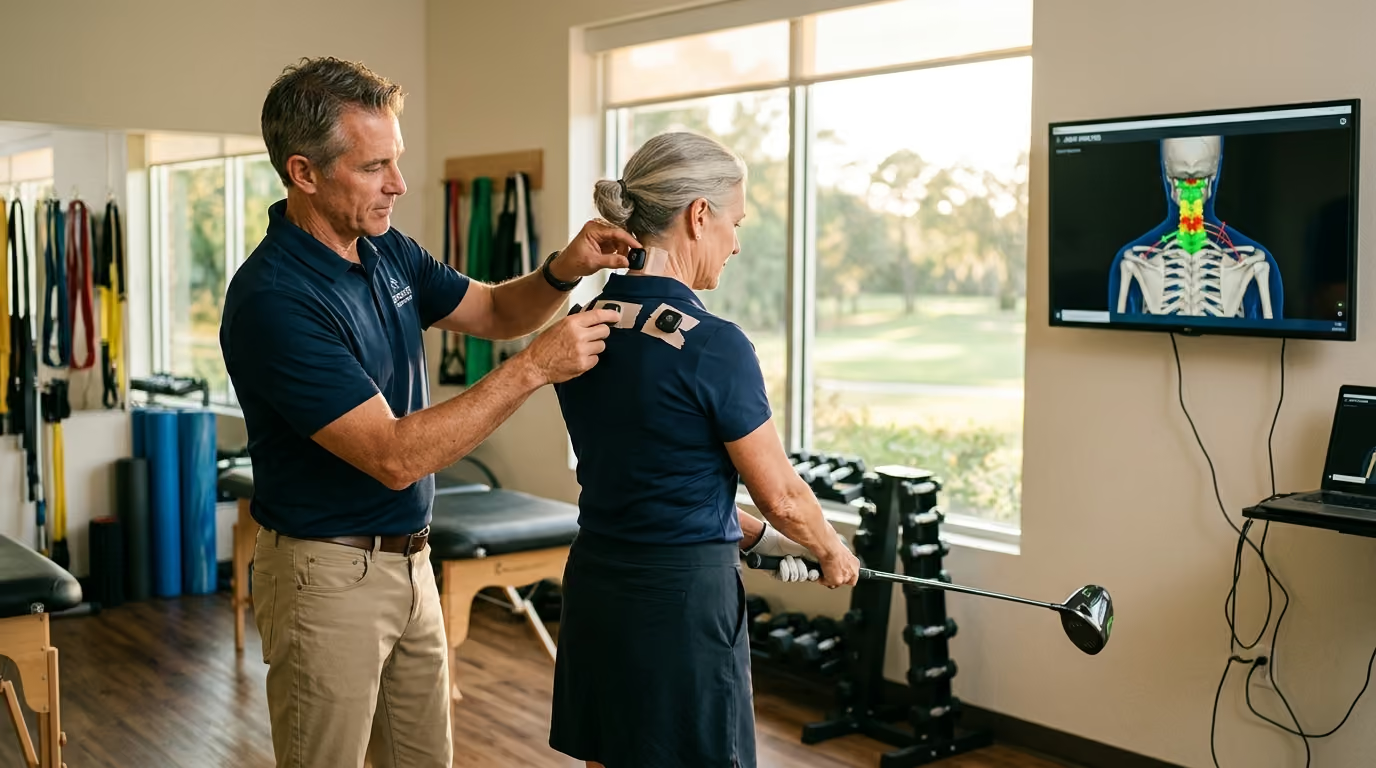

Rigid head positioning feels like steady golf technique, but locking the cervical spine actually causes severe neck strain and reduces swing power.




Most golf instruction tells you to keep your head perfectly still. This advice is actually one of the worst things you can do for your neck. If you force your head to lock in place while your torso rotates, you place extreme pressure on your cervical spine.
We need to look at why a stiff neck ruins more than just your scorecard. It can end your playing days entirely.
The saddest thing I have seen in golf is watching lifelong playing partners slowly drop out of our weekend group. It usually starts with a nagging shoulder or knee issue they ignore until it requires surgery. That pattern is exactly why I became obsessed with golf longevity. We do not have to stop playing as we age, provided we do the right maintenance work between rounds.
Protecting your spine is not about avoiding movement. It is about understanding how your neck operates within the entire swing.
Many golfers believe that neck pain is a normal part of getting older. They accept the morning stiffness and the limited turn as facts of life. However, this pain is often a direct result of simple posture errors at address. You can correct these errors without changing your natural swing style.
This manual provides a detailed look at how to protect your cervical spine. We will look at biomechanics, eye dominance, and daily habits. By learning how your neck, eyes, and mid-back work together, you can play pain-free golf. You will find that a healthy neck actually leads to more power.
When your joints move freely, your swing speed naturally increases. Let us start by looking at a real-world scenario on the golf course.
You are standing on the fourteenth tee box on a warm Saturday afternoon. You have played solid golf for thirteen holes. Suddenly, you feel a sharp, warm ache at the base of your skull.
You try to turn your head to watch your playing partner's drive, but you have to turn your entire torso instead. Your shoulders feel heavy and tight. When you address your ball, your chin catches on your lead shoulder during the backswing. To avoid the pain, you unconsciously shorten your swing.
You lift your head early to escape the pressure. The result is a thinned drive that slices deep into the trees. This scenario happens to thousands of mature golfers every weekend. They assume it is just normal muscle fatigue.
In reality, it is a sign of cervical spine overload. Your neck muscles are working too hard to stabilize your head. This physical issue shows up most clearly during the transition from the backswing to the downswing. At this moment, your body produces maximum rotational force.
If your neck cannot handle this force, your nervous system will protect you by slowing down your muscles. This reaction is why you lose power as the round progresses. It can also lead to secondary injuries in your shoulders and elbows as you try to force the clubhead through impact.
Ignoring this warning sign leads to chronic inflammation and joint damage. You might find yourself taking pain relievers just to get through eighteen holes. This cycle is completely avoidable. You can break it by understanding the underlying biomechanics of your spine.
By taking a proactive approach to injury prevention, you can stop this pain before it starts. Let us look at the science of how your body rotates during the swing.
To protect your neck, you must understand how different parts of your spine work together. Your spine is a chain of joints that alternates between stability and mobility.
Your thoracic spine, which is your mid-back, is designed to rotate. Your lumbar spine, which is your lower back, is designed for stability. Your cervical spine, which is your neck, requires a balance of both. It must remain stable to protect your spinal cord while allowing your head to stay steady.
When your mid-back becomes stiff, your body must find rotation elsewhere. It naturally forces your neck to do the turning work. This compensation places severe strain on the cervical joints. Over time, this extra movement wears down the spinal discs.
This problem is highly common in golfers who suffer from C-Posture at address. C-Posture is a rounded, C-shaped curve from your tailbone to your neck. This posture is often caused by Upper Crossed Syndrome. This condition involves tight chest muscles paired with weak upper back muscles.
It pulls your head forward, away from its neutral position over your spine. For every inch your head moves forward, it doubles the weight on your neck muscles. This forward head position makes it impossible for your neck to rotate safely.
Another common posture flaw is S-Posture, which involves an excessive arch in your lower back. To keep your eyes on the ball from this position, you must round your upper back and tilt your head back. This position jams the small facet joints in your neck together. When you swing, these jammed joints cannot glide smoothly.
To swing without injury, you need specific ranges of neck motion. A right-handed golfer needs at least 70 degrees of left neck rotation. This range allows your shoulders to turn under your chin during the backswing. You also need at least 60 degrees of right neck rotation for the follow-through.
This means you need a total of 140 degrees of neck mobility. If you lack this mobility, your swing will suffer. Research shows that spinal injuries make up 35 percent of all amateur golf injuries. For professional female golfers, neck injuries are actually the most common issue.
Older golfers are especially vulnerable to these strains. Research shows that golfers aged 55 and older represent over half of golf-related spinal emergency visits. Muscle strain is the most frequent diagnosis in these cases.
Left-handed golfers also face a unique risk. Studies show they have nearly three times higher odds of spinal injuries compared to right-handed golfers. This is often due to asymmetrical muscle development from a lifetime of swinging in one direction.
By using proper physical training, you can protect these delicate joints. Let us look at how your eyes play a massive role in this equation.
Many golfers do not realize that their eyes dictate how their neck moves. Your brain wants to keep your dominant eye focused on the ball. If you are right-handed and right-eye dominant, you face a unique physical challenge.
During your backswing, your nose can block your right eye's view of the ball. To keep the ball in sight, you will naturally tilt your head. This tilt creates massive twisting forces on your cervical vertebrae.
It is a major cause of sudden neck spasms on the backswing. You might think you have a swing flaw, but you actually have a simple alignment issue. Your body is trying to satisfy your brain's visual demands at the expense of your neck health.
By contrast, cross-dominant players have a natural advantage. A right-handed golfer who is left-eye dominant can turn back easily. Their dominant eye is closer to the target. It stays clear of the nose during the backswing.
This allows for a full turn with very little neck strain. You can test your own eye dominance easily at home. Extend both arms in front of you and form a small triangle with your hands. Look through the triangle at an object on the wall.
Close your left eye. If the object stays in the center, you are right-eye dominant. If the object moves out of view, close your right eye. If it stays centered now, you are left-eye dominant.
Knowing this information allows you to adjust your address position. You can make a simple change that protects your neck instantly. Let us look at how to apply this change during your next round.
If you feel neck tension building during a round, do not try to stretch your neck aggressively. Instead, make a quick adjustment to your setup. First, stand tall at address and let your shoulders drop down away from your ears.
This movement relaxes the upper trapezius muscles. Next, turn your head slightly toward your trail shoulder before you swing. For a right-handed golfer, this means pointing your nose slightly to the right of the ball.
This small turn pre-clears your nose. It allows your left eye to stay focused on the ball without straining your neck. Focus entirely on keeping your chin slightly elevated away from your chest. Do not tuck your chin down.
A tucked chin locks your neck joints. It prevents them from rotating during your backswing. Keep your eyes soft and relaxed. Do not stare intensely at a single dimple on the ball.
This simple adjustment takes only two seconds. It immediately reduces the rotation demands on your cervical spine. This quick change can keep you pain-free for the rest of your round. It helps you maintain your swing speed even when you are tired.
However, a quick fix is only a temporary solution. To build lasting neck health, you need a regular training routine. Let us look at the exercises that will help you achieve this goal.
To fix the root cause of neck strain, you must build a simple daily routine. This routine focus on strengthening your neck muscles and opening your mid-back. We recommend starting with the Cervical Rotation Test.
Stand tall, turn your head to the side, and try to touch your chin to your collarbone. Do not open your mouth or raise your shoulders during this test. Repeat the test on the other side.
If you cannot reach your collarbone on both sides, your neck is restricted. This restriction puts you at a high risk for injury. You should perform the following three exercises three times a week to rebuild your mobility.
Sit tall in a chair with your shoulders relaxed. Look straight ahead at an object on the wall. Pull your head straight back as if you are making a double chin.
Keep your eyes level and do not look down toward the floor. Hold this position for five seconds. Relax and return to the starting position.
Perform ten repetitions. This exercise strengthens the deep neck flexors that support your cervical spine. These muscles are often weak in golfers who sit at a desk all day. Strengthening them helps reverse forward head posture.
Stand in your normal golf posture with your forehead touching a wall. You can place a soft towel between your forehead and the wall for comfort. Cross your arms over your chest.
Focus entirely on turning your shoulders while keeping your forehead in contact with the wall. Turn your torso slowly to the right, then to the left. Do not let your head slide or roll on the wall.
Perform fifteen rotations in each direction. This drill trains your mid-back to rotate while your neck remains stable. It teaches your body to separate head movement from shoulder movement. This separation is vital for a smooth swing.
Sit on a chair with a low back support. Place your hands behind your head to support your neck. Gently lean backward over the top of the chair.
Focus entirely on arching your mid-back, not your lower back. Hold the stretch for three seconds, then return to neutral.
Perform ten repetitions. Improving mid-back extension makes it much easier to turn during your swing. This movement reduces the pressure on your neck.
It also helps you maintain a better posture throughout the day. By dedicating ten minutes a day to these movements, you will build a resilient spine. You can find more structured guides in our resources section.
Many golfers make critical errors when trying to protect their necks. These mistakes often stem from outdated coaching advice or poor posture habits.
Some players think they need to look down intensely at the ball. They tuck their chin flat against their throat. This position locks the facet joints of your cervical spine.
When you try to rotate your shoulders, your neck cannot turn. This forces your entire head to snap out of position at the top of your swing. Keep your chin up and look at the ball with a soft gaze instead.
Your chin should be high enough that your lead shoulder can pass underneath it. This alignment allows for a full, unobstructed turn.
Trying to keep your head completely still is highly damaging. Your head must be allowed to move slightly during a natural swing. A healthy swing allows the head to rotate slightly to the right during the backswing.
It also allows the head to release toward the target during the follow-through. Forcing your head to stay frozen puts immense twisting force on your neck joints. Focus on keeping a steady head, not a frozen head.
Let your chin rotate slightly with your shoulders as you turn back. This small release prevents joint locking and muscle strain.
Many golfers spend all their time stretching their neck muscles. They ignore the stiff mid-back that is causing the problem. If your thoracic spine cannot rotate, your neck will always be overworked.
You cannot fix a neck issue without addressing your mid-back mobility. Treat the mid-back as the engine of your turn, and let your neck stay quiet. Focus your mobility work on your thoracic spine first.
This approach solves the root cause of the tension instead of just treating the symptoms. It is the secret to a long and healthy playing career.
Your golf gear can also impact your neck health. Making a few small changes to your equipment can prevent unnecessary strain on the course.
Carrying a heavy bag with a single strap is a common cause of neck pain. The strap pulls down on your shoulder, which tightens the upper trapezius muscle. This muscle connects directly to your neck.
It can pull your cervical vertebrae out of alignment. Use a dual strap system that distributes the weight evenly across both shoulders. If you prefer to walk, using a push cart is an even better option.
Reducing the load on your shoulders directly protects your neck. It also saves your energy for the back nine.
If you wear progressive lenses or bifocals on the course, you may be straining your neck. These lenses require you to tilt your head to see clearly. You might lift your chin to look through the bottom portion of your lenses at address.
This places your neck in constant extension. Consider getting a pair of single-vision golf sunglasses. This allows you to see the ball clearly without tilting your head.
Your neck will remain in a neutral, relaxed position throughout your swing. This simple change can eliminate post-round headaches.
If your shoes grip too tightly, they can restrict your hip turn. When your hips cannot turn, your upper body must work harder. This extra effort increases the torque on your spine.
Choose shoes that allow for natural foot rotation during the swing. This small change helps protect your neck and your lower back from excess twisting. Look for shoes that offer comfort and support without completely locking your feet to the turf.
Your joints will thank you after eighteen holes. Proper footwear is a vital part of your physical longevity strategy.
Protecting your cervical spine is a long-term commitment. As we age, our spinal discs lose moisture and become less flexible. This natural process makes it even more important to move correctly.
You can maintain your distance and accuracy without hurting your body. By focusing on healthy ageing, you can enjoy this game for decades. Do not wait for pain to start before you take action.
Make neck health a standard part of your preparation. Your body will thank you on the back nine.
Before you head to the course, keep these simple rules in mind.
Take care of your neck today so you can keep playing tomorrow.
Follow Golfergy for practical insights on performance, mobility, recovery and healthy ageing. Stay connected for new articles, research-led guidance and ideas to help you play better for longer.


Explore practical resources on performance, recovery, mobility and golf longevity.
Read the Blog