
Pain-free golf swings become possible when you correct early extension by stabilizing your pelvis to protect your lumbar facet joints from harmful rotational stress.




Early extension is one of the most common phrases in golf instruction. Many golfers view it purely as a technical swing flaw. They think of it as the root cause of their slice or their occasional block. However, early extension is much more than a cosmetic issue or a ball flight problem.
This movement pattern is a protective, yet highly destructive, habit that places immense physical stress on the lower back. It is not simply a technical error that ruins your scorecard. It is a physical emergency for your joints.
Understanding this physical issue is the first step toward protecting your body. This detailed guide looks at the direct connection between pelvic movement, joint mechanics, and spinal health. We will look at why this movement happens, how it damages your body, and how you can fix it to extend your playing years.
Imagine you are standing on the tee of the fourteenth hole. You have played a decent round, but your lower back is starting to feel a dull, familiar ache. You set up to your driver, swing back, and start your downswing.
Instead of rotating your hips around your lead thigh, your pelvis thrusts forward toward the ball. This sudden forward movement reduces the space between your body and the ball. To avoid hitting the turf way before the ball, your upper body must stand up.
Your spine straightens, your chest rises, and your arms are forced to flip at the club. You hit a weak block into the right trees. As you walk off the tee box, a sharp pinch flares up in your lower back.
This scenario plays out daily on golf courses around the world. It is the classic presentation of early extension in action. It is not just a failure to hit a good shot. It is a physical emergency for your lumbar spine, especially for golfers over the age of 40.
To understand why early extension hurts, we must look at the anatomy of your lower spine. The lumbar spine consists of five large vertebrae stacked on top of each other. Between these bones are soft discs that absorb shock. Behind the discs are small, paired joints called facet joints.
These facet joints guide and limit the movement of your spine. In a healthy golf swing, your spine should maintain its forward tilt through the impact zone. Your hips should turn while your upper body remains angled over the ball. This is called maintaining your posture.
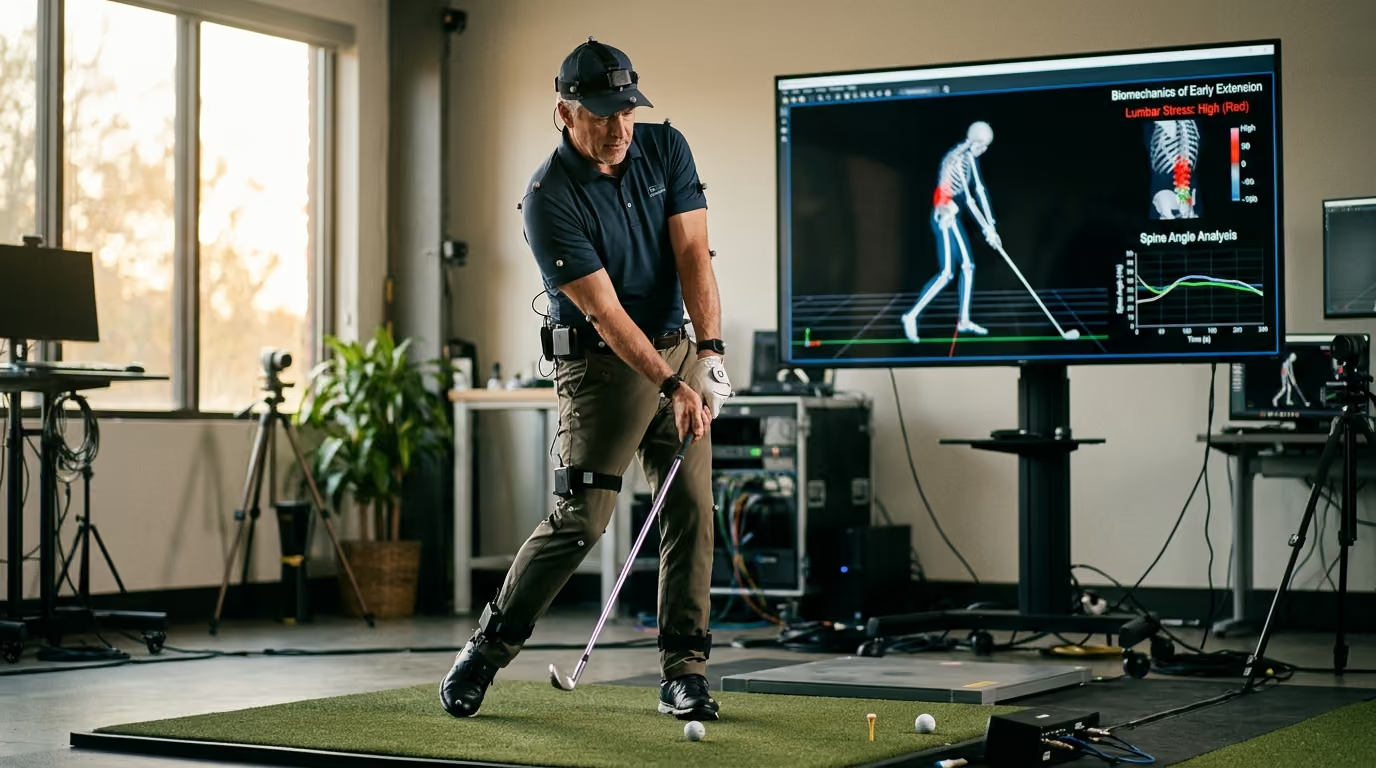
When you early extend, your pelvis thrusts toward the target line. This movement forces your lower spine to flatten and arch backward while your hips are still turning. Doctors refer to this combination of arching and turning as extension and lateral flexion.
This motion causes the facet joints to slam together under intense pressure. This is known as facet joint impingement, or tip impingement. The small bony structures of the joints rub against each other with extreme force.
Research shows that your facet joints are not designed to carry heavy vertical loads. Normally, they support very little of your body weight. However, when your spine is forced into just 4 degrees of extension, these joints carry 10% to 40% of the total compressive force. During a rapid golf swing, this percentage sky-shifts, causing immediate joint irritation.
The physical forces are surprisingly high. Biomechanical studies reveal that golfers with limited hip movement experience much higher shear forces in their lower back. For example, golfers with poor pelvic control experience shear forces of 387 Newtons at the L4-L5 joint. Golfers with good movement experience only 299 Newtons at that same joint.
At the L5-S1 joint, the difference is even more dramatic. Poor movement patterns generate 525 Newtons of shear force, compared to 407 Newtons for mobile golfers. These forces are not minor.
The sudden, high-speed load on a golfer's lumbar spine during impact can approach the force experienced by professional football linemen hitting a practice sled. This makes proper pelvic movement a matter of golf injury prevention rather than just swing aesthetics. Over time, these repetitive forces lead to chronic joint inflammation and arthritis.
A powerful golf swing relies on a precise kinematic sequence. This means energy should transfer from the ground up. First, your feet push against the turf. Second, your pelvis rotates. Third, your torso turns, followed by your arms, and finally, the club head.
Early extension completely breaks this natural sequence. Instead of using ground reaction forces to turn your hips, your lower body performs a sudden jump or thrust. This movement replaces rotation with premature extension.
When your pelvis thrusts forward, the physical changes in your swing are massive. Posture collapse statistics show that early extension can reduce your pelvis-to-ball distance by more than 2.5 inches. This movement also causes your spine angle to collapse by over 12 degrees from address to impact. Your body loses its physical angles, forcing your arms to make last-second adjustments.
You might wonder why professional golfers look like they jump or extend during their swing without hurting their backs. The critical difference is timing. Elite players do extend their legs and hips, but they do it after they have rotated through the ball.
They perform a slight squat at the start of the downswing. This move clears their hips and creates space for their arms. They only extend after they hit the ball. Amateurs, however, extend early to reach the ball because their hips never cleared in the first place.
Understanding early extension requires looking at three distinct physical areas. We call this the three-factor framework. It consists of mobility, stability, and motor patterns. If any of these areas fail, your brain will force your pelvis to thrust toward the ball to finish the swing.
Let's look at mobility first. To turn your hips properly, your joints must have sufficient range of motion. The primary culprit is a lack of hip mobility, specifically internal rotation of your lead hip. If your lead hip cannot turn inward, your pelvis has nowhere to go. It is forced to slide forward and then thrust upward. Limited ankle flexibility also plays a major role.
Next is stability. To hold your posture during a high-speed swing, your core and glute muscles must work together. The gluteus maximus and gluteus medius are the primary anchors of your pelvic position. If these muscles are weak, your pelvis will drift toward the ball during the downswing. Your abdominal muscles must also remain active to control the tilt of your pelvis.
Finally, we must look at movement patterns. Sometimes, a golfer has the physical strength and flexibility to swing correctly, but their brain has learned a faulty motion. For example, a swing that is too flat or shallow in the backswing leaves no room for the arms to return to the ball. The golfer must stand up to make space.
These physical factors often present themselves in specific golfer archetypes. Let us look at two of the most common profiles.
This is one of the most common profiles among recreational golfers over 40. This golfer spends eight to ten hours a day sitting in an office chair. Over time, prolonged sitting leads to inactive glute muscles, where the hips essentially forget how to fire.
Sitting also causes the hip flexors to become chronically tight and shortened. When this golfer gets on the course, their inactive glutes cannot anchor the pelvis during rotation. At the same time, their tight hip flexors pull their pelvis forward.
The result is an automatic pelvic thrust during the downswing, putting immense pressure on the lower spine. To learn more about how everyday life impacts your game, check out our golf performance blog.
This pattern is highly common in older golfers who suffer from hip joint stiffness or mild osteoarthritis. If the lead hip cannot rotate internally, the swing hits a physical wall during the transition.
Because the lead hip will not turn, the golfer cannot rotate around it. The pelvis must instead slide laterally and then thrust toward the target line to complete the swing. This movement puts the lumbar spine under extreme twisting and arching forces at the worst possible moment.
Even elite players suffer from this issue when their bodies are compromised. Tiger Woods has noted in interviews that when his hips are tight, he cannot load his trail hip properly. This tightness forces him to early extend to compensate, which has contributed to his well-documented back issues over the years.
When you are in the middle of a round, you cannot perform complex physical therapy exercises. You need a simple cue to help you feel the correct motion and relieve the pressure on your lower back.
Here is a simple on-course drill you can do before your next tee shot. Find an alignment stick or use your golf bag. If you are on the driving range, place your golf bag so that it gently touches your glutes at address.
If you are on the tee box, simply imagine a wall touching your backside. As you make your backswing, focus entirely on turning your trail hip back so it touches that imaginary wall.
When you transition into your downswing, shift your focus entirely to your lead hip. Focus entirely on turning your lead hip back so your lead glute stays pressed against the imaginary wall as your hips turn.
This simple cue prevents your pelvis from moving toward the ball. By keeping your backside back, you create the space your arms need to swing through impact. This drill protects your lower back by keeping your spine in its original forward tilt, preventing the painful facet joint crunch.
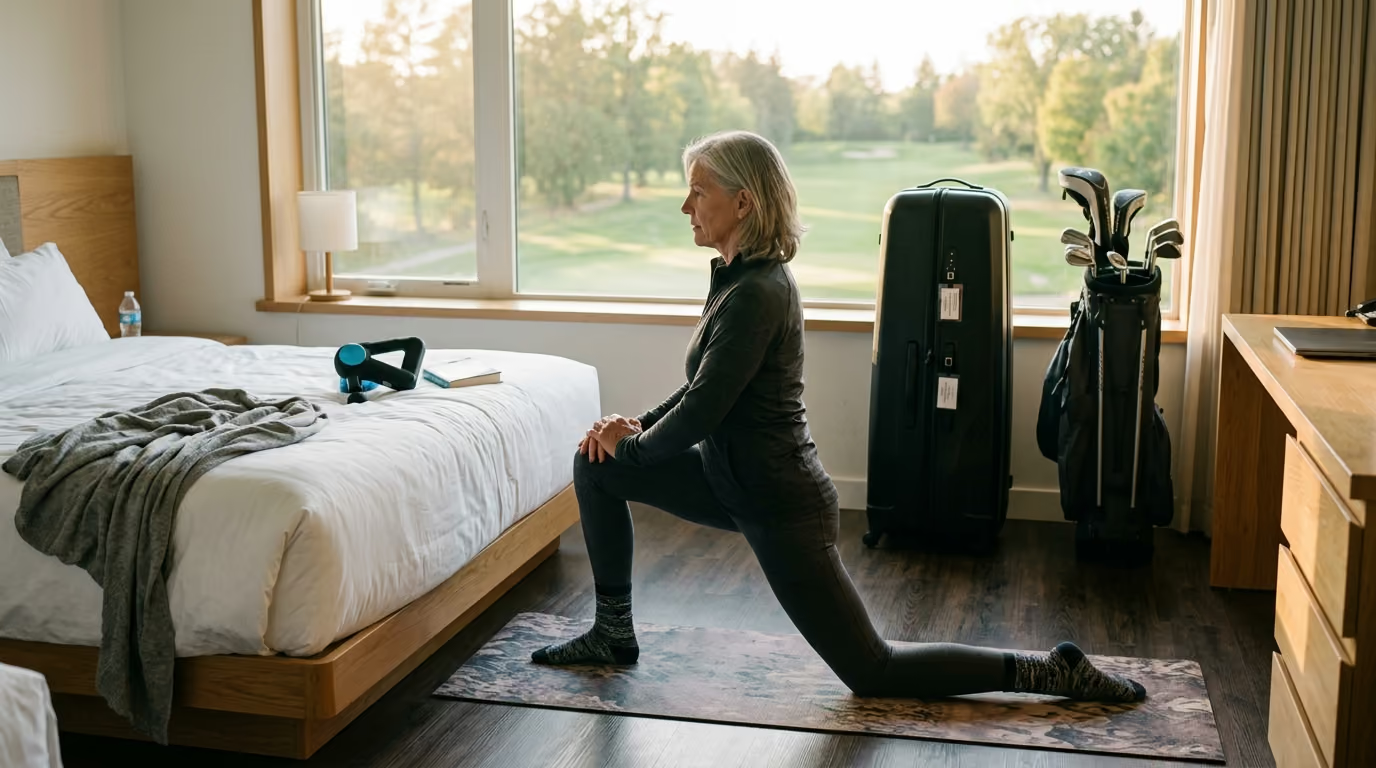
Fixing early extension for good requires a consistent routine. You must build better glute strength and improve your joint mobility. This simple daily routine takes less than fifteen minutes and can be done at home.
Perform these three exercises three to four times per week. They will help build the physical capacity you need for golf longevity.
This exercise directly addresses the restricted lead-hip mobility that forces your pelvis to slide.
This exercise activates your glutes and teaches your brain to stabilize your pelvis.
This drill trains your brain to control the tilt of your pelvis while maintaining your posture.
When golfers realize they are early extending, they often try to force their bodies into positions they cannot physically support. This can lead to even more severe back injuries.
Many golfers try to fix their posture collapse by arching their lower back at address. They believe that exaggerating the arch in their spine will keep them from standing up during the downswing.
This position actually pre-loads your facet joints before you even start your swing. It locks your pelvis in a forward tilt, making it nearly impossible for your hips to rotate properly. As a result, your body is forced to early extend even more during the downswing to clear your hips.
Most golfers only focus on what their hips are doing during the downswing. However, early extension is very often a direct compensation for a backswing failure.
If you fail to turn and load your trail hip during your backswing, your pelvis will slide laterally. When your downswing begins, you have no room to rotate. Your only option to hit the ball is to thrust your pelvis forward. You must make sure your backswing has a proper hip turn before you try to fix your downswing.
Some golfers early extend because of a psychological desire to help the ball get into the air. This is common with mid-to-high handicap players using long irons.
These golfers try to scoop or lift the ball by straightening their spine and flipping their wrists at impact. This movement stands the entire body up, forcing the pelvis toward the ball. No amount of physical training will fix this until the golfer learns to hit down on the ball to make it go up.
Your physical body is the engine of your swing, but your equipment can make early extension better or worse. Using the wrong gear can force your body into poor biomechanical positions.
If your clubs are too short for your height, you will be forced to bend over excessively at address. This extreme tilt makes it very difficult for your hips to rotate. Your brain will recognize that you are too far from the ball and will force you to thrust forward to compensate.
Similarly, if your club shafts are too stiff, you may struggle to generate swing speed. Golfers often compensate for overly stiff shafts by using their body weight to thrust at the ball. This violent hip thrust is a common source of facet joint pain.
Your connection to the ground is critical for pelvic rotation. If your golf shoes lack proper traction, your feet will slip during the downswing.
When your feet slip, your body loses its anchor. Your hips cannot rotate around a stable base. To prevent falling, your nervous system will halt hip rotation and force a forward hip thrust instead. Make sure you wear shoes with high-quality spikes or aggressive spikeless treads to maintain a stable foundation. You can find more gear tips in our golf performance resources.
When you are on the driving range, you are typically hitting balls in a rhythm. On the course, you spend several hours walking, standing, and waiting between shots.
This prolonged standing can fatigue your glutes and core muscles. As these stabilizer muscles tire, your body loses its ability to maintain golf posture. By the back nine, early extension becomes much more pronounced, leading to increased facet joint stress and pain.
Yes, a simple pelvic tilt test is an excellent way to assess your pelvic control. Stand in your normal golf posture without a club. Try to tilt your pelvis forward and backward without moving your upper body.
If you cannot perform this movement smoothly, or if your entire torso shakes, you have poor motor control of your pelvis. This lack of control almost always translates to early extension during the high-speed demands of the golf swing.
Early extension is often more severe with the driver. The longer shaft of the driver requires a wider stance and a more dynamic movement.
Additionally, many golfers try to swing much harder with their driver. This extra effort often leads to an overactive upper body or an aggressive downswing thrust. Short irons require a more controlled, downward strike, which naturally encourages better posture.
Remember your pelvic turn protects your spine, so focus on rotating your hips around your lead thigh rather than thrusting them toward the ball to keep your back healthy for years to come.
Follow Golfergy for practical insights on performance, mobility, recovery and healthy ageing. Stay connected for new articles, research-led guidance and ideas to help you play better for longer.


Explore practical resources on performance, recovery, mobility and golf longevity.
Read the Blog