Fifty percent of trabecular bone can be lost over a lifetime, making targeted swing adjustments essential for golfers managing osteoporosis and protecting spinal health.




You stand on the tenth tee box with a mild breeze on your face. You reach down to tee up your golf ball. A sudden sharp twinge strikes your lower back. You assume it is just the typical stiffness of an early morning round.
If you are living with low bone density, that minor twinge might be a warning sign of structural strain. In our experience, ignoring these signals is where many players make their biggest mistake.
The saddest thing I have seen in golf is watching lifelong playing partners slowly drop out of our weekend group. It usually starts with a nagging shoulder or knee issue they ignore until it requires surgery. That pattern is exactly why I became obsessed with golf longevity. We do not have to stop playing as we age, provided we do the right maintenance work between rounds.
This resource provides a clear path for golfers facing osteoporosis or osteopenia. You do not have to give up the game you love. By adjusting how you move, you can protect your spine and still enjoy your weekend rounds. Our focus is on helping you play safely for many years to come.
As we get older, our skeletal health becomes a primary factor in how long we can stay on the course. Osteoporosis makes bones weak and fragile, which increases the danger of sudden fractures. Osteopenia is the step before osteoporosis, meaning your bones are thinner than normal but not yet fully fragile. Both conditions require serious attention if you want to keep swinging a club.
To understand this, we must look at how bone tissue behaves. Bone is constantly breaking down and rebuilding itself to stay strong. In our younger years, the body builds new bone faster than it breaks down old bone. Around age thirty, most people reach their peak bone mass.
Doctors use a bone density test called a DEXA scan to measure your bone strength. This test gives you a T-score, which compares your bone density to a healthy young adult. A T-score of -1.0 to -2.5 indicates osteopenia, showing early signs of bone loss. A T-score of -2.5 or lower indicates osteoporosis, which means your bones are significantly weaker.
These numbers are not a reason to stop playing. Instead, they are a guide to help you make smart choices on the course. Knowing your score allows you to choose the right swing modifications. It helps you focus on the exact areas that need protection.
To protect your skeletal system, you must understand what happens inside your bones as you age. After your third or fourth decade, this natural balance begins to shift. Bone mineralization typically decreases by 0.3 to 0.5 percent every year.
Over a lifetime, women can lose up to 50 percent of their trabecular bone. Trabecular bone is the spongy, porous bone tissue found inside your vertebrae. When this inner mesh loses its density, the bone becomes hollow and weak. It loses its ability to handle sudden twisting or heavy loads.
This makes the spine highly vulnerable to compression during a golf swing. Understanding this change is the first step toward playing golf safely with low bone density.
The human golf swing looks like a graceful, flowing motion. Inside your body, however, it creates massive physical stress. The rapid rotation and bending generate high loading on your lumbar spine.
Research shows that spinal disc prolapse can occur at compressive loads of 5,448 Newtons. A fast, powerful swing can easily push weakened spinal bones close to this structural limit. When you twist your spine under this heavy load, the risk of a vertebral compression fracture rises.
These fractures do not always happen from a fall. They can happen from the simple, repeated force of swinging a club. This is why understanding swing biomechanics is so important for your physical safety.
Torque is the twisting force created when you turn your shoulders against your hips. Shear force is the sliding pressure that pushes your vertebrae in opposite directions. Both forces are highly active during a standard golf swing.
When bone density is normal, the spine can handle these forces with help from surrounding muscles. When bones are weak, torque and shear forces can cause tiny micro-fractures in the vertebrae. Over time, these micro-fractures can lead to a painful collapse of the bone.
To prevent this, we must find ways to rotate without placing torque on the spine. This requires a shift in how we think about swing power.
Many golfers believe that walking eighteen holes is enough to keep their bones strong. While walking is excellent for your heart, golf alone has a low effect on overall bone mineral density. Studies show it does not stimulate new bone growth as well as high-impact activities like running or tennis.
However, golf still plays an important role in your physical health. Research shows it helps post-menopausal women maintain their current bone mass. This benefit is even stronger when players combine golf with hormone replacement therapy. Keeping the bone density you have is a major success for your healthy ageing goals.
To play golf safely with low bone density, you must change how you swing the club. Most modern golf instruction teaches the "Modern Swing" technique. This style focuses on creating a large "X-factor" to maximize your distance.
The X-factor is the angle difference between your shoulder rotation and your hip rotation at the top of your backswing. To get a large X-factor, you must keep your hips relatively still while turning your shoulders as far back as possible. This creates a massive twisting force in your lower back.
This modern technique also involves hyperextending your spine during the follow-through. For someone with healthy, dense bones, this torque is manageable. For someone with osteoporosis, this twisting can easily crack a weakened vertebra.
Instead of the modern style, you should adopt the "Classic Swing" framework. The classic swing allows your hips and shoulders to turn together. This movement reduces the twisting stress on your individual vertebrae.
When your pelvis and shoulders rotate in unison, your spine acts as a single, solid unit. This prevents the dangerous twisting forces that cause spinal fractures. You can still generate plenty of speed, but you do it safely.
To make this transition, focus entirely on turning your trail hip. Let your hip turn freely toward the back of the swing. This simple change takes the pressure off your lower back and keeps your spine safe.
Protecting your spine starts before you even move the club. You must master what we call the "I" alignment principle. This principle means keeping your shoulders aligned directly over your hips throughout your setup.
Imagine a straight, vertical line running from your shoulders down to your hips. Avoid leaning too far forward or slumping your shoulders at address. A slumped posture puts extra compression on the front of your vertebrae.
This forward-leaning position is where most osteoporotic compression fractures happen. Standing in an upright "I" shape keeps the pressure distributed evenly across your spinal bones. It ensures that the force of your swing is absorbed by your muscles and larger joints.
You can still hit the ball far without twisting your lower back. The secret lies in generating power through your feet and legs instead of your spine. To do this, focus on lifting your front heel during your backswing.
When you lift your lead heel, your entire trunk can turn as one unit. This shifts the physical load away from your delicate back bones. Your hips and feet do the work of rotating, which protects your spine from harm.
This movement pattern utilizes the large joints of your lower body to absorb the forces of the swing. It is a highly effective way to keep your swing powerful while keeping your spine safe. Incorporating these adjustments is central to effective injury prevention on the course.
You do not have to wait until next season to make your game safer. There are several changes you can make during your next round. These quick adjustments will immediately take pressure off your spine.
First, open your lead foot. Before you swing, angle your front foot outward toward your target. This simple change makes it much easier for your hips to rotate during the downswing.
When your hips turn easily, your lower back does not have to twist as much to finish the shot. It allows your body to follow through naturally without straining your spine.
Second, stand closer to the ball. Standing far away from the ball forces you to bend forward at your waist. This forward lean increases the leverage on your spine, making your clubs feel heavier and your back work harder.
By standing closer, you promote a more upright posture that naturally protects your vertebrae. You will feel more balanced and less strained during your swing. It also helps you maintain the "I" alignment throughout your shot.
Third, use the Modified Golfer’s Reach when picking up your ball. Never bend straight down at your waist to pull your ball out of the cup or retrieve a tee. Instead, use a hip hinge.
Let one leg swing straight back behind you as a counterbalance while you keep your back completely straight. This movement acts like a seesaw, keeping all the weight off your lumbar spine. It is a simple habit that protects your back from sudden, sharp pain.
Finally, practice active rest between holes. Many golfers like to sit in the cart to rest their back. However, sitting actually increases the compressive force on your lumbar discs and vertebrae.
If you feel tired or sore, find a flat grassy area during a delay and lie flat on your back for a few minutes. This simple posture decompresses your spine and allows your back muscles to relax completely. It is a far better way to recover than sitting on a bumpy golf cart.
To play golf for many years, you need a regular exercise habit off the course. Your routine should focus on building the muscles that support your bones. It should also improve your balance to prevent accidental falls.
Falls are the leading cause of hip and spinal fractures in older adults. Spend 15 to 20 minutes daily on balance training. Simple exercises can make a massive difference in your stability.
Try standing on one foot while brushing your teeth. As you improve, try closing your eyes for a few seconds during the exercise. This trains your brain and muscles to coordinate without relying only on your vision.
You also need dedicated strength training at least two days per week. Your focus should be on your back extensors and your abdominal muscles. Strong back muscles act like a natural brace for your spine.
They pull your posture upright and absorb shock during the golf swing. One excellent exercise to add to your daily routine is the Standing Prone Cobra. To perform this, stand tall with your arms at your sides.
Turn your palms outward so they face away from your body. Squeeze your shoulder blades together and hold this position for 30 to 60 seconds. This simple movement activates your upper back muscles and opens up your chest.
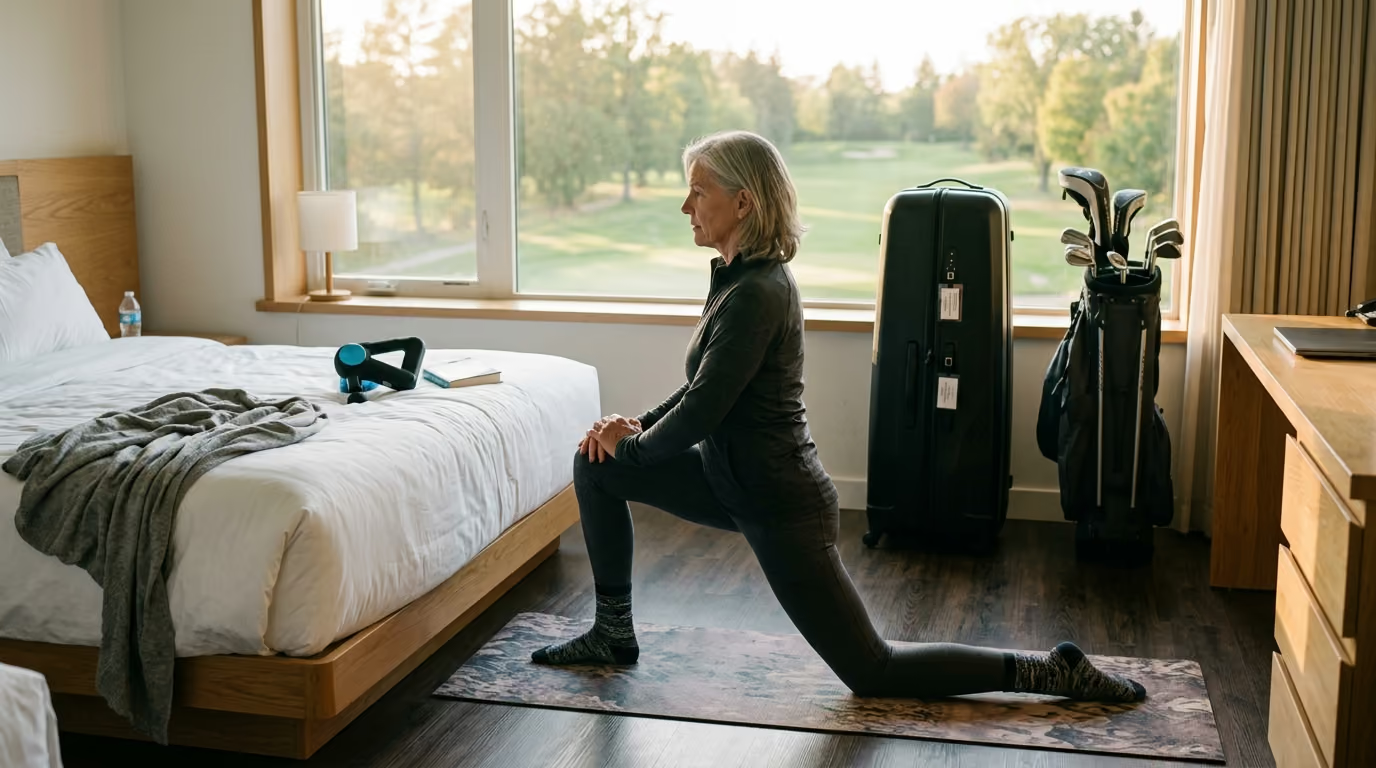
You should also work on your hip mobility regularly. Tight hips force your lower back to twist more during your swing. Spend a few minutes each day stretching your hip flexors and glutes.
Keeping your hips loose is one of the best ways to protect your spine. It allows your pelvis to rotate freely, which keeps your lower back safe. Combine this with gentle core exercises like bird-dogs to build a solid foundation.
To build muscle memory for a safer swing, you should practice specific drills. The first is the Three-Quarter Swing Drill. This drill helps you avoid swinging to your absolute end-range of motion.
Set up with a mid-iron and make a backswing where your hands only reach shoulder height. Focus entirely on turning your hips rather than reaching your arms back. From this position, swing through to a matching finish where your hands end at shoulder height.
You will find that you still hit the ball almost as far as a full swing. This is because your contact will be more consistent. More importantly, you keep your spine well out of the danger zone.
The second exercise is the Lead Heel Lift Drill. This drill trains your body to use your feet for rotation instead of twisting your spine. It helps you break the habit of keeping your lower body frozen.
Take your normal stance with a short iron. As you start your backswing, consciously lift your front heel off the ground. Let your hips turn fully to the right.
As you begin your downswing, plant your front heel back down first. This movement initiates the swing from the ground up. It ensures your lower body leads the way, protecting your back from torque.
The third exercise is the Step-Through Finish Drill. This drill prevents your spine from hyperextending at the end of your swing. It encourages your weight to transfer fully onto your lead side.
Set up to the ball and make a smooth, easy swing. As you hit the ball and move into your follow-through, allow your trail foot to step completely forward toward the target.
This step-through motion releases all the tension in your lower back. It prevents your spine from arching backward at the finish. It is an excellent way to keep your swing fluid and tension-free.
Many well-meaning golfers make mistakes when trying to protect their bones. These errors can actually increase the risk of injury. Recognizing these traps is the first step to avoiding them.
The first mistake is what we call the "Driver Trap." Many players believe they must use their driver on every tee box to get maximum distance. However, swinging a driver requires a lot of physical energy.
It also causes more side-bending and rapid spine rotation than any other club. If you have low bone density, it is wise to leave the driver in your bag. Stick to shorter woods or hybrids that allow you to maintain a controlled, upright swing.
The second mistake is swinging to your absolute end-range of motion. Some golfers try to turn their shoulders as far back as they possibly can. This end-range twisting puts massive torque on the spine.
It is at this exact point where the bone is most vulnerable to a fracture. Instead, practice a shorter backswing and a shorter, controlled follow-through. This keeps your movements well within your safe zone of flexibility.
The third mistake is the "No Impact" misconception. Some golfers assume that because golf does not involve running or jumping, it is completely safe. They do not realize that the fast twisting of a swing creates a high internal impact.
The sudden pull of your muscles on your bones during a fast swing can put a massive load on your spine. You must treat the golf swing with the same respect and caution as any high-intensity physical activity. Always warm up thoroughly before you hit your first shot.
The gear you choose has a major effect on how much stress your body experiences. Making a few simple changes to your equipment can protect your bones and make the game more comfortable. You do not need to buy all new clubs to make a difference.
First, look at your club shafts. Heavy steel shafts require more muscle power to swing. This extra effort increases the compression forces on your spine.
Switching to lighter graphite shafts can reduce the physical strain on your body. Graphite also absorbs more vibration, which protects your joints from shock. Choose shafts with more flex, like regular or senior flex, to let the club do the work.
Second, pay attention to your golf shoes. Avoid stiff, heavy shoes with long metal spikes. Instead, opt for lightweight, spikeless shoes with plenty of cushioning.
Good cushioning helps absorb the impact forces when you walk the course. This reduces the jarred sensations that travel up your legs to your spine. It also helps you maintain a stable, comfortable base throughout your round.
Third, check your grips. If your grips are worn or too thin, you will naturally squeeze the club too tightly. This excess hand tension travels up your arms and tightens your shoulders and back.
Thicker, soft grips allow you to hold the club with a lighter, relaxed pressure. This keeps your upper body relaxed and reduces spinal tension. Using proper gear is a key part of your recovery and protection strategy.
How you transport your clubs also matters for spine safety. Carrying a heavy golf bag on your shoulders is highly dangerous if you have low bone density. The constant weight compresses your vertebrae with every step.
Using a push cart is a much better option. It keeps the weight off your back and allows you to walk naturally. If you use a push cart, make sure to push it with both hands rather than pulling it behind you with one hand, which twists your spine.
If your bone density is very low, riding in a golf cart is the safest choice. It allows you to save your energy for your swings. Just be sure to drive slowly over bumps to avoid sudden, jarring impacts on your spine.
If you have experienced a spinal fracture or had back surgery, you must follow strict guidelines before returning to golf. Your bones need time to heal before they can handle the forces of a golf swing. Returning too early can cause permanent damage.
According to medical research, the standard return to play timelines vary by condition. After non-fusion surgery, you can typically return to the course in four to eight weeks. After a lumbar fusion, you should wait four to eight months.
If you have suffered a vertebral compression fracture, the timeline is usually three to six months. You must be completely pain-free, and your medical imaging must show stable alignment. Never rush this process, as your long-term health is much more important than a few missed rounds.
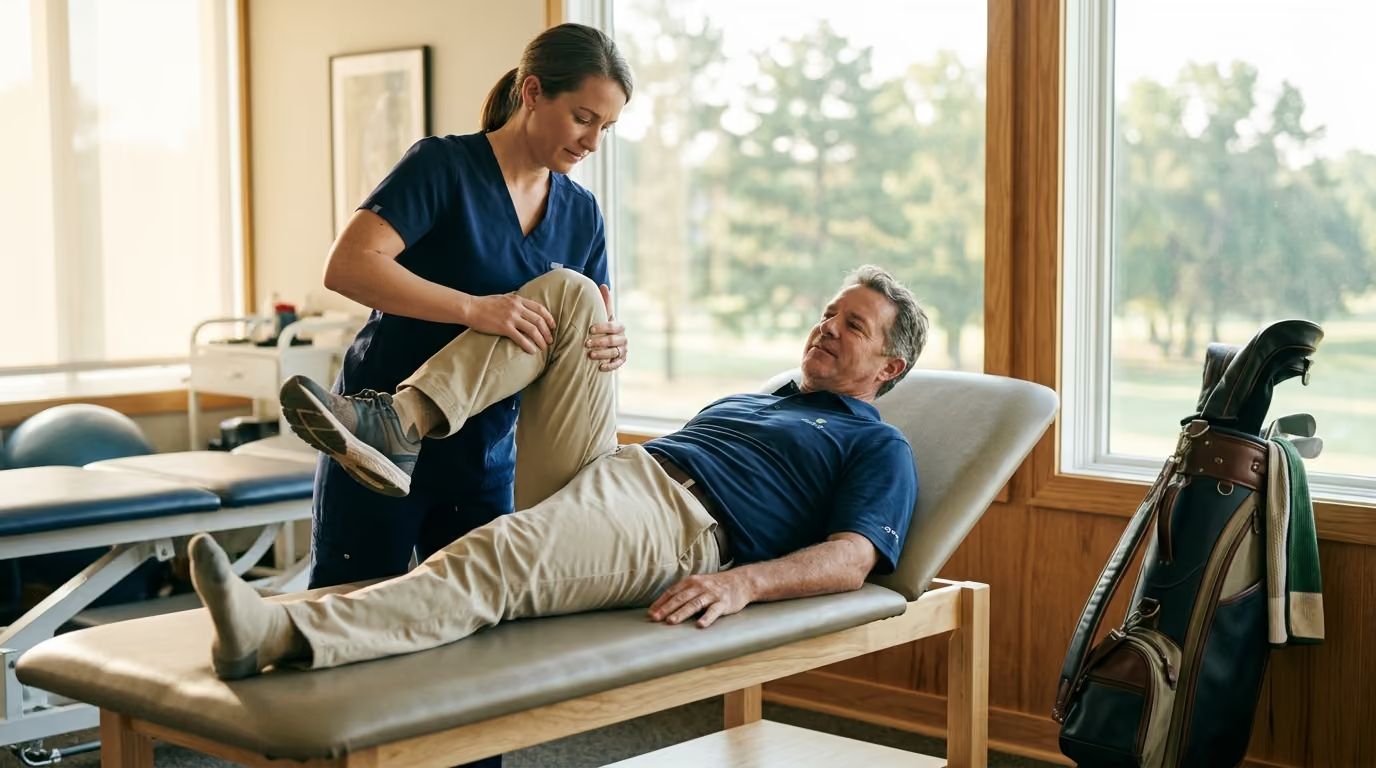
Always work closely with your doctor and physical therapist. They can help you design a safe plan to return to the game. They can also check your swing mechanics to make sure you are not putting your bones at risk.
Before you take your first swing, ask your doctor if your bones are strong enough for rotational forces. Your therapist can guide you through specific exercises to prepare your body. This professional support is the best way to make sure you return to golf safely.
You should come back to this guide whenever you feel a change in your physical comfort on the course. Revisit these steps before the start of each new golf season to refresh your swing mechanics. It is also helpful to review this routine if your doctor updates your bone density T-score.
Protecting your spine through smart movement patterns and strength training is the ultimate key to extending your playing years. We want to make sure you can enjoy the fairway with your friends for decades. Take your time, make these changes slowly, and enjoy the game safely on the main Golfergy website.
Protecting your spine with a unified classic swing and targeted strength training is the most effective way to enjoy golf safely with low bone density.
Follow Golfergy for practical insights on performance, mobility, recovery and healthy ageing. Stay connected for new articles, research-led guidance and ideas to help you play better for longer.


Explore practical resources on performance, recovery, mobility and golf longevity.
Read the Blog