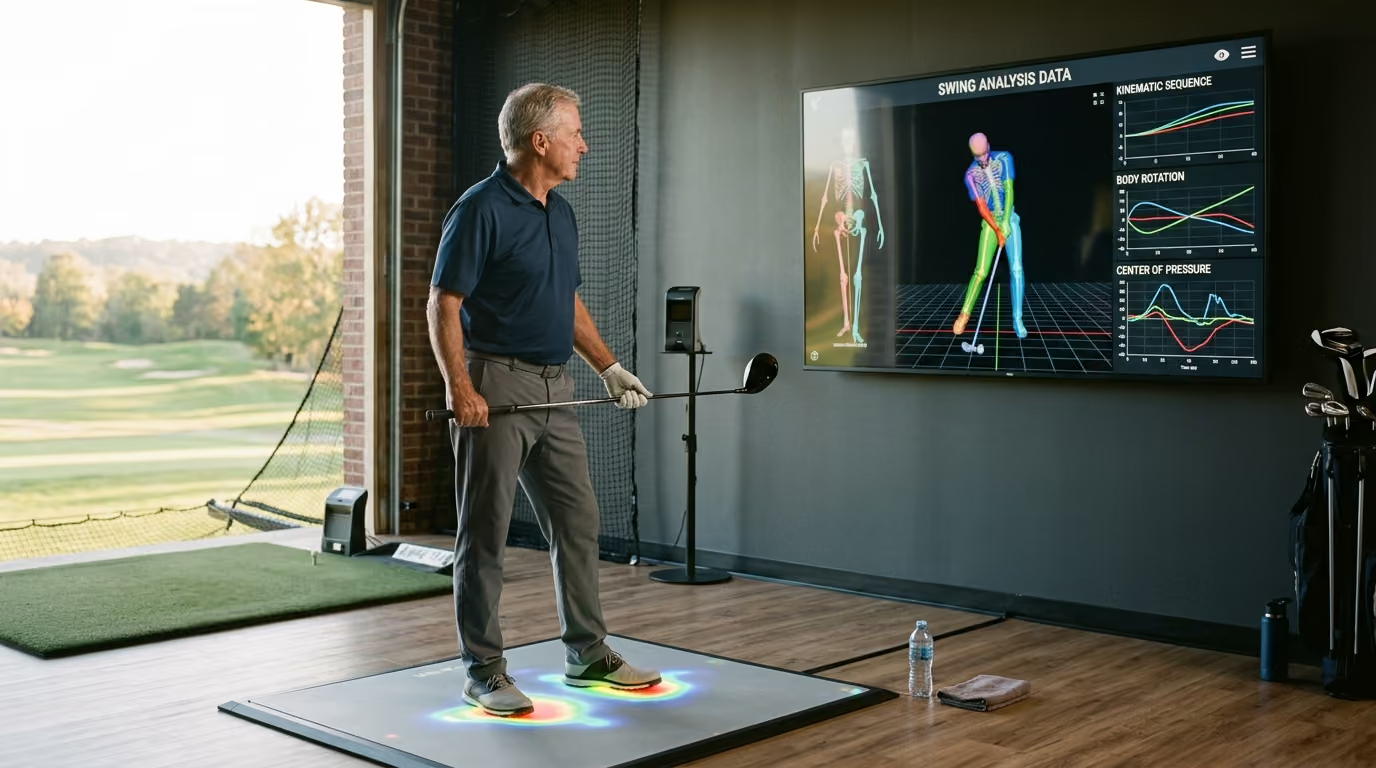
Most golfers blame poor swing mechanics for late-round mistakes, but carrying heavy gear actually drains the mental energy needed for clear focus.




You stand on the tee box of the fourteenth hole. The sun is high in the sky, and a gentle breeze has turned into a steady wind. You have spent the last three hours carrying your heavy golf bag across the rolling fairways. Your shoulders feel tight, and your lower back has developed a dull, nagging ache.
Your legs feel heavy as you step up to address your ball. The hole requires a precise tee shot over a deep bunker to a narrow landing area. There is water on the right and thick, penalizing trees on the left. You try to focus on your target, but your mind is cloudy and distracted.
Your thoughts keep drifting to the physical tension in your neck and shoulders. Your brain feels sluggish from the constant physical work of lifting and carrying your gear. You take a quick, tired swing just to get the shot over with. The club face strikes the turf too early, chunking the ball into the hazard.
This mistake did not happen because of a sudden flaw in your swing technique. It happened because your brain ran out of energy. Your physical work drained your mental focus. This guide will show you how managing your physical load can save your score and protect your body. This concept is vital for healthy ageing on the course.
Cognitive offloading is a simple scientific concept with powerful applications for sports. Researchers Risko and Gilbert defined it in 2016. It refers to the use of physical action to reduce the mental work required for a task. Your brain has a limited amount of processing power at any given moment.
When you offload tasks, you free up this mental power for higher-level thinking. You see this in daily life when you use a calendar to remember appointments. You also do this when you write a shopping list instead of memorizing it. This allows your brain to focus on complex decisions instead of basic memory.
In golf, your brain has to process an immense amount of data for every shot. You must calculate wind speed, slope, and distance. You must choose the right club and plan your swing path. If you are also carrying a thirty pound bag, your brain must manage that physical load too.
Your brain has to coordinate your balance, step size, and posture on uneven turf. By using a push cart or a caddie, you offload these physical tasks. You store the heavy load in the cart or with the caddie. This action immediately frees up your working memory so you can focus on your target. This simple shift is a key part of maintaining high golf performance as you age.
Working memory acts like the short-term storage of a computer. It has a strict limit on how much information it can hold at once. When you overload this memory, performance drops quickly. You make poor decisions, misread greens, and lose your swing tempo. By offloading physical stress, you keep your working memory clear.
Physical strain also triggers your body's survival instincts. When you carry a heavy load, your brain prioritizes basic physical survival. It directs resources to your muscles and away from your analytical systems. This means you lose the ability to think creatively on the course. You default to simple, often incorrect, swing adjustments.
Cognitive offloading helps you avoid this mental decline. It allows you to approach each shot with a fresh, relaxed mind. You can analyze the conditions with clarity and confidence. This mental freshness is what separates a great back nine from a disappointing collapse. By protecting your brain, you protect your scorecard.
Many golfers believe that carrying a bag builds character and physical fitness. They think walking with a strap on their shoulder is the purest way to play. However, scientific research shows this habit actually hurts your performance. Carrying a bag causes a massive drop in your scoring ability.
Dr. Neil Wolkodoff led a landmark study at Denver's Rose Medical Center. He wanted to see how different modes of travel affect scores and energy. He tested golfers under four different conditions over nine holes. The testing modes were carrying a bag, pushing a cart, using a caddie, and riding in a cart.
The results of the study were eye opening. Golfers who carried their bags burned an average of 721 calories over nine holes. This was the highest energy burn of all the groups. Yet, these golfers also shot the worst scores. Their average score was 45 for nine holes.
In contrast, golfers who used a push cart burned 718 calories. This is nearly the same energy burn as carrying a bag. However, their average score was 40. This was the lowest average score in the entire study. Pushing a cart kept the players active but removed the strain from their spines.
Carrying a bag places a vertical load directly onto your spine. This load compresses your spinal discs and fatigues your stabilizer muscles. Your brain must constantly send signals to keep you balanced on uneven grass. This continuous neuromuscular activity consumes a huge amount of glucose.
When you push a cart, the load is horizontal. The ground supports the weight of the clubs. You only need to apply force to move the cart forward. This requires far less muscle activation in your back and shoulders. Your body stays warm, but your brain does not have to work to keep you upright.
This difference in load type has a massive impact on your swing. Vertical load fatigue leads to a loss of posture during the swing. Your spine angle changes, and your contact becomes inconsistent. By switching to a horizontal load, you protect your swing mechanics. You preserve your physical structure for the entire round.
The link between physical effort and mental focus is purely biological. Your brain represents only two percent of your body weight. Yet, it consumes twenty percent of your body's daily energy. This energy comes in the form of oxygen and glucose. When you carry a heavy load, your large muscle groups demand more blood flow.
This shift in resources creates a metabolic-cognitive link. As your muscles tire, your brain receives less oxygen and glucose. This lack of fuel directly hurts your prefrontal cortex. The prefrontal cortex is the area of your brain that handles executive function. This function includes planning, emotional control, and decision making.
When your body enters a state of high physical stress, your heart rate climbs. Physical strain that pushes you past your anaerobic threshold causes scoring errors. This usually happens on tough, hilly sections of the course. When your heart rate is too high, you lose the ability to make calm decisions.
Using a push cart leads to a 10.4 percent reduction in oxygen consumption compared to carrying. This data comes from studies published in the Journal of Golf Science. This saving in oxygen keeps your body in an aerobic state. Your heart rate remains steady, and your brain stays fully fueled. This is a simple way to practice injury prevention by avoiding fatigue-related swing flaws.
When you are physically exhausted, your brain struggles to regulate emotions. You are more likely to get angry after a bad shot. This anger leads to impulsive decisions on the next tee. You might try to hit a heroic shot through a tiny gap in the trees. These high-risk decisions often lead to big numbers on your scorecard.
Physical fatigue also impairs your spatial awareness. You struggle to judge distances and read the slope of the green. Your eyes tire, and your depth perception decreases. This makes putting especially difficult on the back nine. You might hit putts too hard or misread the break completely.
By reducing your physical load, you prevent these visual and mental errors. Your eyes stay sharp, and your mind remains calm. You can make realistic tactical decisions based on your actual skill level. This steady mental state is key to consistent scoring over eighteen holes.
Riding in a motorized cart seems like the easiest way to play. Many golfers choose a cart to save energy and play faster. However, riding in a cart has a negative impact on mental focus. It often leads to poor shot planning and high scores.
In the Rose Medical Center study, cart riders shot an average score of 43. This was three shots worse than the push cart users. Scientists also measured mental focus on a scale from one to ten. Walkers using an electric trolley scored a high 6.63 for mental focus. Push cart walkers scored a 5.67.
Motorized cart riders scored a low 5.01 for focus. This is the lowest focus score of any group. This drop in focus is caused by the rider's fatigue paradox. Riding in a cart stops your body from finding a natural walking rhythm. Walking helps your mind transition between shots.
When you ride, you experience a stop and start rhythm. You sit in the cart and drive fast. Then you stop suddenly and hit your ball. This quick cycle does not give your brain time to process information. Your body cools down, and your mind stays tense. Walking at a steady pace keeps your nervous system in an optimal state of arousal.
Walking stimulates the release of brain chemicals that improve mood and focus. These chemicals include dopamine and endorphins. They help reduce anxiety and increase mental clarity. When you ride in a cart, you miss out on this natural cognitive boost. Your brain stays in a passive, uninspired state.
The physical act of walking also helps you stay loose. Your joints stay lubricated, and your muscles stay warm. This is especially important for mature golfers with arthritis or stiffness. When you sit in a cart, your muscles tighten up between shots. This stiffness leads to a loss of swing speed and control.
Walking allows you to naturally build a mental strategy for your next shot. As you walk toward your ball, you can see the layout of the hole. You can observe the wind and the slope of the green from a distance. This slow gathering of information leads to better decisions than a rushed cart ride.
Social offloading is another way to save your mental energy. This happens when you share tasks with another person. Researchers Tufft and Richardson studied this in 2020. They showed that working with an expert reduces your personal cognitive load. On the golf course, this expert is a skilled caddie.
A caddie does much more than carry your clubs. They take over the routine thinking tasks of the round. They calculate the yardage to the pin. They check the wind speed and direction. They know how the greens slope and how the ball will roll.
By outsourcing these details, you prevent decision fatigue. You do not have to spend your own brain power on calculations. Instead, you can focus entirely on executing your swing. This separation of duties is a massive mental advantage.
Research by Swann in 2015 showed that caddies help golfers enter a flow state. Flow is a state of deep focus where your actions feel effortless. Good caddies act as flow-state guardians. They talk about normal topics between shots to keep your mind relaxed. They only focus your attention when you arrive at your ball.
A caddie also acts as an emotional buffer. When you hit a bad shot, a good caddie helps you move past it. They take the club, clean it, and put it away. This physical action serves as a visual sign that the shot is over. It helps you leave the mistake behind and focus on the next task.
This support prevents the buildup of negative emotions on the course. You do not carry the frustration of a bad shot to the next tee. Your mind stays clear and objective. This emotional stability is critical for consistent performance. It helps you avoid the sudden score blowups that ruin a good round.
Sharing the physical load also reduces muscle tension in your neck and shoulders. Carrying a bag causes you to shrug your shoulders to keep the straps in place. This chronic tension travels down your arms and affects your grip pressure. A caddie removes this tension, allowing for a smoother, more relaxed swing.
Every golf hole presents a series of complex math problems. You must calculate the exact yardage to the front, middle, and back of the green. You must adjust this number for elevation changes, wind resistance, and temperature. You must also calculate the slope of the fairway and the depth of the rough.
These calculations create a continuous mental workload during your round. Psychologists refer to this as cognitive load. If you do all this math yourself, your brain starts to fatigue by the tenth hole. This mental tiredness leads to errors in judgment and club selection.
You can offload this analytical work by using simple physical tools. A GPS watch or a high-quality rangefinder does the math for you. You do not have to pace out yardages from sprinkler heads or guess the wind slope. The device provides the exact distance with the press of a button.
When you offload these calculations, your mind stays calm. You do not spend energy worrying if your yardage is correct. This certainty gives you confidence as you stand over your ball. You can execute your swing with a clear, focused mind instead of a doubtful one.
A caddie provides the ultimate form of this tactical offloading. A professional caddie will handle all the distance and wind calculations. They will present you with a single, clear number and a target. You only need to focus on swing speed and ball contact.
This division of labor keeps your brain fresh. You avoid the mental burnout that comes from constant guessing and calculation. This benefit is especially important during tournament play or competitive matches. By keeping your mind fresh, you can make better tactical choices under pressure.
Heart rate variability, or HRV, is a key measure of your body's stress levels. A higher HRV indicates that your nervous system is relaxed and flexible. A lower HRV shows that your body is in a state of stress or fatigue. Walking with a push cart helps maintain a healthy HRV during your round.
Rhythmic walking acts as a natural pacifying signal to your brain. The steady, repetitive movement of your legs calms your nervous system. It helps keep your body in a parasympathetic state, which is also known as rest and digest. This state is ideal for fine motor control and calm thinking.
When you carry a heavy bag, this rhythmic benefit is lost. The vertical strain on your shoulders spikes your heart rate and lowers your HRV. Your body enters a mild fight or flight state to handle the heavy load. This physical stress makes your hands tense and your swing quick.
Riding in a cart also disrupts your HRV. The constant stop and start motion prevents your heart rate from finding a steady baseline. Your body experiences rapid spikes in heart rate followed by sudden drops. This instability can lead to mental fatigue and a loss of physical coordination.
Walkers who use an electric trolley maintain the most stable heart rates. Their heart rates remain in a steady aerobic zone of ninety to ninety-nine beats per minute. This steady state keeps blood flowing to the brain without fatiguing the muscles. It provides the perfect balance of physical warmth and mental clarity.
By keeping your heart rate in this sweet spot, you protect your decision making. You do not experience the sudden drops in energy that lead to bad swings. Your body stays relaxed, and your mind remains alert. This cardiovascular stability is highly beneficial for mature golfers looking to extend their playing years.
Cognitive offloading does more than just improve your score on the back nine. It also offers significant long-term physical benefits for your body. Removing the weight of a golf bag from your shoulders protects your joints. It helps prevent chronic wear and tear on your spine, hips, and knees.
Carrying thirty pounds over five miles puts immense pressure on your lower back. Over time, this pressure can lead to disc compression and sciatic nerve pain. It can also cause muscle imbalances as you shrug your shoulders to hold the bag. These imbalances can ruin your posture and shorten your playing years.
Using a push cart or an electric trolley keeps your spine in a neutral position. It distributes the work evenly across your larger muscle groups, like your legs and glutes. This prevents the micro-trauma that leads to chronic back pain. It is a vital practice for effective injury prevention and long-term joint health.
This physical preservation also speeds up your recovery after each round. You will not feel as stiff or sore the morning after playing eighteen holes. This fast recovery allows you to practice more often and play more rounds per week. It is a simple way to maintain your mobility and enjoy the game for decades.
Reducing physical strain also protects your rotator cuffs and shoulder joints. Lifting a heavy bag off the ground sixty times per round is hard on your shoulders. It can lead to tendonitis and rotator cuff tears over time. A push cart removes this repetitive lifting motion completely.
By protecting your shoulders, you preserve your swing width and rotation. You can turn your torso fully without feeling pain or restriction. This full range of motion is critical for maintaining swing speed as you age. It is the best way to keep your game strong and your body healthy.
To benefit from cognitive offloading, you must choose the right gear. There are several ways to transport your clubs while walking. The best choice depends on your physical health, budget, and course terrain.
Electric trolleys are the best option for preserving mental energy. These motorized units carry your bag and move on their own. You control them with a small remote or a handle sensor. This removes all physical effort from moving your clubs. Studies show that electric trolley users have the highest mental focus scores.
Standard manual push carts are another excellent and popular choice. If you choose a manual cart, look for a three wheel or four wheel model. These models are much easier to push than old two wheel pull carts. Pulling a cart behind you puts strain on your shoulder and rotates your spine. Pushing a cart keeps your body aligned and symmetrical.
Hiring a caddie is the ultimate form of both physical and mental offloading. A caddie carries your bag and manages your strategy. This option provides the greatest reduction in cognitive load. However, caddies are not always available or within budget. If a caddie is not an option, an electric trolley is the closest alternative.
When buying a manual push cart, look for large wheels with ball bearings. These wheels roll easily over thick rough and wet grass. A hand-operated brake is also much easier to use than a foot brake. Make sure the handle height can adjust to keep your spine in a neutral position.
If you choose an electric trolley, consider the battery type. Lithium batteries are lighter and last longer than lead-acid batteries. A lighter trolley is easier to lift in and out of your car trunk. This prevents lower back strain before your round even begins. Look for models with an automatic downhill brake to prevent runaway carts.
For golfers with physical limitations, a remote control trolley is worth the investment. You can walk freely without touching the cart at all. The cart follows you or drives ahead of you with the push of a button. This is the closest experience to having a caddie without the high cost.
To protect your mental focus, you must build sustainable habits. These habits form a daily routine that addresses the root cause of fatigue. You can implement these practices during your next round.
First, learn the correct push cart posture. Many players lean forward and push with their lower back. This posture causes lower back pain and fatigue. Instead, focus entirely on turning your trail hip when you walk. Keep your chest high and your shoulder blades down. Push the cart with your core muscles, keeping your hands close to your body.
Second, use a focus trigger based on distance. Do not think about your next shot as soon as you finish the last one. Instead, walk in a relaxed state until you are thirty yards from your ball. Once you cross this invisible line, turn your focus on. This habit gives your brain a rest between shots and prevents mental burnout.
Third, build a simple strength routine off the course. Focus on exercises that strengthen your legs and hips. Squats, lunges, and glute bridges are excellent choices. Stronger legs require less effort to carry your body weight uphill. This leaves more energy for your brain on the back nine. This habit is critical for improving your overall strength and endurance.
Hydration is another simple way to protect your cognitive function. Mild dehydration can reduce focus and coordination by ten percent. Use your push cart or trolley as a physical reminder to drink water. Take a small sip of water after every single hole, regardless of how thirsty you feel. This simple trigger prevents the mental fog that comes with dehydration.
You should also carry healthy snacks like nuts or fruit in your bag. Your brain relies on a steady supply of glucose to make decisions. Eating small amounts of food every four holes keeps your blood sugar stable. This prevents the energy crashes that cause late-round errors. It is a vital part of on-course nutrition.
Finally, pay attention to your breathing during the walk. Slow, deep belly breathing helps activate your parasympathetic nervous system. This reduces physical tension and lowers your heart rate. It keeps your mind calm and ready for the next shot. Try breathing in for four seconds and out for six seconds as you walk.
Golfers often make several mistakes when trying to manage their energy. The first is the hero carrying fallacy. Many experienced players feel that carrying a bag shows strength. They believe that using a cart is a sign of aging or weakness. This belief is incorrect and actually hurts their scores.
As the Wolkodoff study proved, carrying a bag leads to the highest scores. The extra physical strain causes mental errors and poor swings. Refusing to use a cart does not make you tougher. It simply makes you play worse golf. Accepting help from a cart is a smart strategy for better play.
The second mistake is the forgetting effect from caddie over-reliance. While offloading is helpful, you can overdo it. If you let a caddie make every single decision, your brain can check out. You might stop reading greens or planning your own shots. This passive state can lead to poor focus when you swing.
Always stay involved in the final decision. Use the caddie's advice as helpful data, but make the final choice yourself. This keeps your mind active and engaged without getting overwhelmed. It preserves your athletic instincts while reducing your mental workload. It keeps you in charge of your own game.
The third mistake is poor cart placement around the greens. Many players park their carts in front of the green. After putting out, they have to walk back to get their cart, then walk to the next tee. This adds unnecessary steps and wastes energy. Always park your cart on the side of the green closest to the next tee box.
Another common mistake is pulling a push cart with one arm behind your body. This habit rotates your spine and shoulders in an unnatural way. It can cause muscle imbalances and lower back pain over time. Always push the cart with both hands in front of your body. This keeps your posture symmetrical and reduces strain.
Finally, some golfers push their carts too fast. They treat the walk like a fitness race. This fast pace raises their heart rate too close to their anaerobic threshold. Walk at a relaxed, comfortable pace to keep your heart rate low. This preserves your energy for the actual swing.
Your golf equipment can also affect how much physical strain you experience. Minor changes to your gear can lead to major physical relief. First, look at the weight of your golf clubs. Switching from heavy steel shafts to lighter graphite shafts can reduce fatigue. This change is especially helpful for your iron play.
Second, check your grip sizes. If your grips are too small, you must squeeze the club harder to hold it. This extra grip pressure creates tension in your forearms and shoulders. Using midsize or oversize grips can help you relax your hands. This simple adjustment reduces muscle tension and keeps your hands fresh.
Third, pay attention to your golf shoes. Walking a full round is equivalent to walking five miles. Your shoes must have good arch support and proper cushioning. Avoid stiff, heavy shoes that do not flex with your foot. Modern spikeless shoes often offer better comfort and less fatigue than heavy spiked models.
Finally, clear out your golf bag regularly. Remove extra balls, heavy umbrellas, and training aids you do not use. Every pound you remove from your bag reduces the effort needed to push your cart. This simple cleanup is an easy way to speed up your post-round recovery and prevent soreness.
Consider using lighter golf balls if you struggle with swing speed. Lighter, softer balls require less force to compress. This reduces the physical impact on your wrists and elbows during impact. It can help prevent common injuries like golfer's elbow. This small change can make the game much more enjoyable.
You can also adjust the balance of your golf bag. If you use a push cart, place the heaviest items at the bottom of the bag. This lowers the center of gravity and makes the cart easier to tilt and push. It reduces the effort required to maneuver the cart over curbs and hills. This simple balance trick saves small amounts of energy over eighteen holes.
These equipment changes may seem small on their own. However, when you combine them, the results are significant. You will finish your round with less pain and more energy. This physical relief directly translates to better mental focus on the final holes. It is a smart approach to long-term health and performance.
Removing the physical weight of your golf bag from your shoulders is the simplest way to free up the mental energy needed for lower scores.
Revisit this resource when you notice your back-nine scores starting to slip or when you feel unusual fatigue after playing. Taking care of your body is the best way to keep your mind sharp and your game strong for years.
Follow Golfergy for practical insights on performance, mobility, recovery and healthy ageing. Stay connected for new articles, research-led guidance and ideas to help you play better for longer.


Explore practical resources on performance, recovery, mobility and golf longevity.
Read the Blog