
Learn how older golfers can use Pilates Reformer training to manage physical stress, build rotational strength, and protect their lower back from injury.




On September 15, 2026, Joy of Movement Gyrotonic and Pilates Studio in Aptos published an article detailing how recreational athletes are changing their routines. The studio noted that men are increasingly turning to the Pilates Reformer for athletic cross-training. Golfers in particular are adopting this method to manage the physical stress that accumulates over a busy season. The goal is to use controlled resistance to build resilience rather than simply trying to recover after the damage is done.
A full golf swing requires the body to rotate rapidly and stop abruptly. This movement pattern forces the hips, spine, and shoulders to absorb massive amounts of force. When one joint lacks mobility, the neighboring joints take on extra stress to complete the motion. For example, a stiff upper back forces the lower back to twist further than its natural design allows.
The lumbar spine is naturally designed for stability rather than deep twisting. When we force it to rotate aggressively, the joints and discs take on unnatural friction. This mechanical overload is a leading cause of stiffness after a long round. Protecting this vulnerable area requires better movement from the hips and upper back.
Our team at Golfergy has looked closely at how physical conditioning changes swing mechanics. I used to stand on the first tee doing long static hamstring stretches because I thought it was the correct routine. I would actually feel weaker and less coordinated on my first drive. I later learned that dynamic movements like leg swings prime the nervous system much better for rotation.
The mechanics of back pain in golf remain surprisingly complex. A golf rehabilitation summary citing a 2024 systematic review from Watson et al. notes that evidence connecting specific swing characteristics with low-back pain is limited and conflicting. Instead of blaming one mechanical flaw, experts recommend focusing on total body capacity. The physical qualities that protect golfers most include trunk rotation control, hip mobility, and shoulder blade stability.
Recent research highlights the prevalence of physical discomfort among mature players. A cross-sectional study reported in BMJ Open Sport & Exercise Medicine surveyed 1,170 male golfers in the United States. The participants had a mean age of 55 years. The findings revealed that 37.3 percent of these men reported a lower-back complaint during the preceding seven days.
The lower back is not the only area taking the brunt of the swing. The same report identified the left knee as a common complaint site for 13.3 percent of the group. The right knee accounted for 11.0 percent of recent complaints. The right shoulder followed closely at 10.5 percent.
These figures describe recent symptoms in a specific sample of players. They do not establish that golf directly caused every complaint. They also do not predict a lifelong injury rate for all recreational players. However, the data confirms that older golfers regularly deal with nagging discomfort that can limit their playing time.
Many recreational golfers assume they are safe from injury because they swing slower than professionals. The saddest thing I have seen in golf is watching lifelong playing partners slowly drop out of our weekend group. It usually starts with a nagging shoulder or knee issue they ignore until it requires surgery. That pattern is exactly why we became obsessed with golf longevity at Golfergy.
Professional players have teams of physical therapists managing their recovery daily. Amateurs must rely on their own discipline to strengthen tight areas. Without a dedicated routine, the repetitive stress of swinging a club compounds week after week. The resulting muscle imbalances make the body highly vulnerable to sudden pulls and strains.
We do not have to stop playing as we age provided we do the right maintenance work between rounds. Amateur players often sit at desks all week and then demand explosive rotation from their bodies on Saturday morning. This abrupt transition from sitting to swinging creates severe stress on tight tissues. When tissues are tight, cumulative wear damages tendons and joints much faster.
Playing through persistent pain often accelerates the damage. The 2024 systematic review recommends early assessment and activity modification when symptoms continue. Ignoring persistent tightness is a fast track to the injured list. Recognizing tight hips or an irritated shoulder early is a critical step for protecting your lower back and extending your playing years.
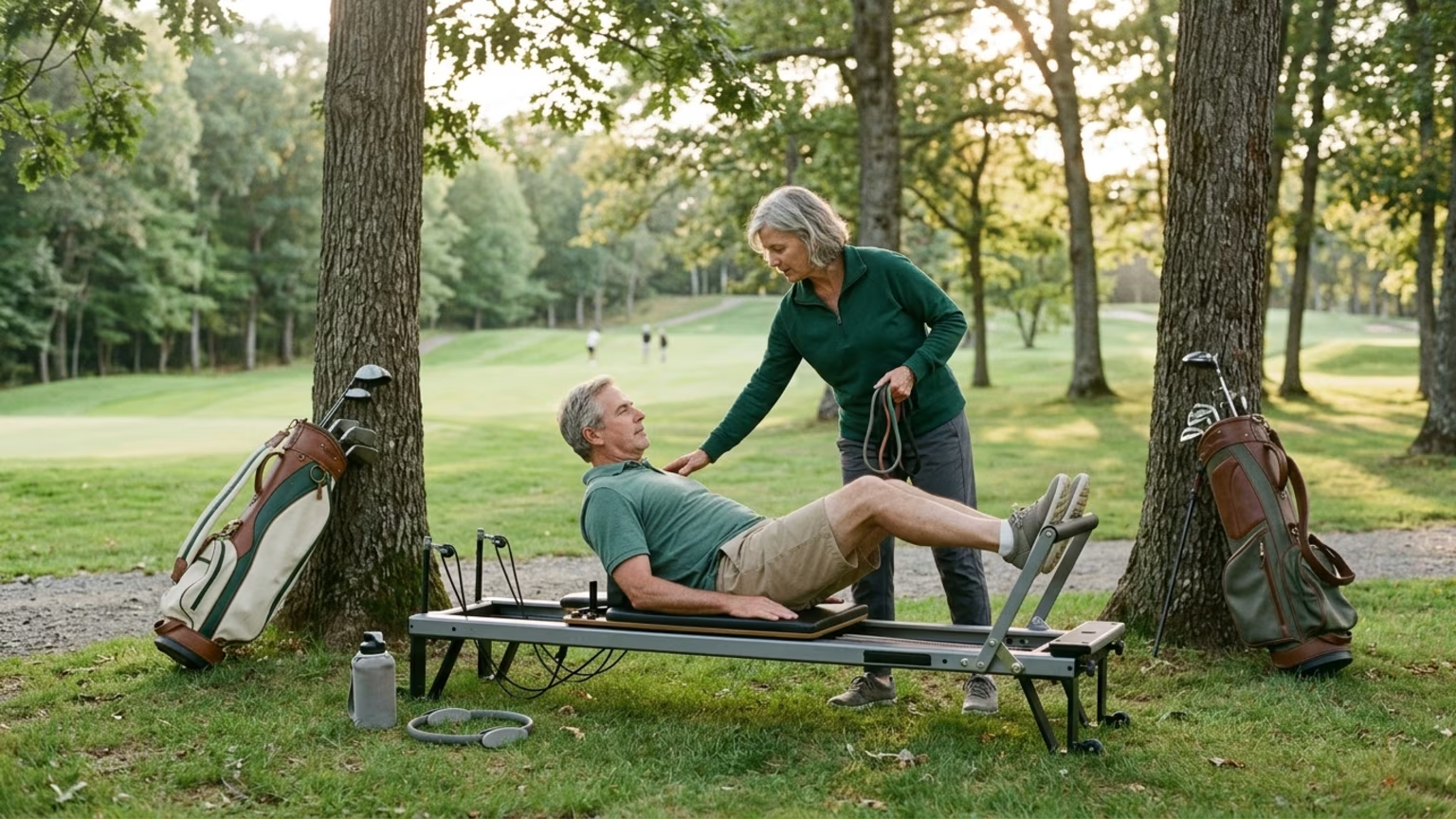
Joy of Movement presents Reformer Pilates as a practical way to address training gaps that conventional practice may not cover. The machine uses spring resistance to permit precise movement through a full range of motion. This controlled environment helps athletes develop stability in their deep core muscles. Instructors can adjust the resistance to match a participant's specific mobility goals.
Many golfers find that traditional gym workouts feel stiff or disconnected from their swing. Reformer work bridges this gap by challenging your balance during slow movements. The machine springs provide continuous tension that mimics the pulling forces of a golf swing. This constant feedback teaches the brain to stabilize the spine while the limbs move.
For men over 40, a practical approach is treating the Reformer as a complement to walking and conventional strength training. The studio suggests once- or twice-weekly sessions alongside your existing routine. If you decide to try a class, tell your instructor about previous injuries or movements that provoke pain. This allows them to modify the exercises safely.
Focus on movements that build trunk rotation control and glute activation. When performing the exercises, pay close attention to your body and avoid pushing into painful ranges. A well-designed routine can be incredibly effective for developing controlled rotation safely. Always build your training volume gradually when returning from a break or increasing your practice time.
Golf rehabilitation guidance specifically recommends progressive loading and recovery between demanding sessions. You should use Pilates to build resilience rather than replace your simple strength workouts entirely. Managing your training load carefully helps keep your joints feeling fresh on the back nine. Consistent load management is a proven strategy for older players.
The fitness industry often presents specific workout methods as guaranteed solutions for back pain. The Joy of Movement article states that its United States participation estimate is approximately 12.9 million active Reformer clients. The studio claims this represents a near-40 percent increase in recent years. The article also claims some boutique studios are approaching a 50-50 male-to-female booking split today.
These figures highlight a growing trend but are presented without a named dataset or independent source. The studio also suggests most clients notice core stability improvements within four to six sessions. This is a promotional studio recommendation rather than a clinically validated golf-injury prescription. Individual response times depend heavily on baseline conditioning, sleep habits, and workload.
We also must clarify the medical evidence surrounding Pilates and back pain. A synthesis of evidence summarized by Realised Library reports that Pilates can reduce pain and disability in chronic nonspecific low-back pain compared with minimal intervention. However, this evidence does not conclusively show superiority over other appropriately matched exercise programs. Pilates is a reasonable option for managing symptoms, but it is not a uniquely proven core fix.
General strength training, walking, and motor-control exercises can be equally effective for managing chronic pain. The key is finding a supervised program that you enjoy and will stick to consistently. An exercise labeled low impact can still aggravate your symptoms if the resistance or frequency exceeds your tolerance. Persistent or worsening pain always warrants assessment by a qualified clinician.
Improving your physical capacity off the course is the most reliable way to play better golf as you age. Controlled resistance training offers a sustainable path to better movement quality. You can choose Pilates, traditional weightlifting, or dedicated mobility classes. What adjustments will you make to your mobility routine this season to steer clear of this hazard?
Follow Golfergy for practical insights on performance, mobility, recovery and healthy ageing. Stay connected for new articles, research-led guidance and ideas to help you play better for longer.


Motocaddy's electric caddies arrive at the 2027 Molly Collegiate Invitational. Learn why reducing carrying fatigue helps older golfers protect their backs.


Learn how PhD-level golf biomechanics coaching uses structured movement screening to identify swing flaws that overload your lower back and wrists.

Learn how uncoordinated golf mechanics affect older players. We explain why the spine absorbs stress and share practical routines to reduce physical strain.
Explore practical resources on performance, recovery, mobility and golf longevity.
Read the Blog