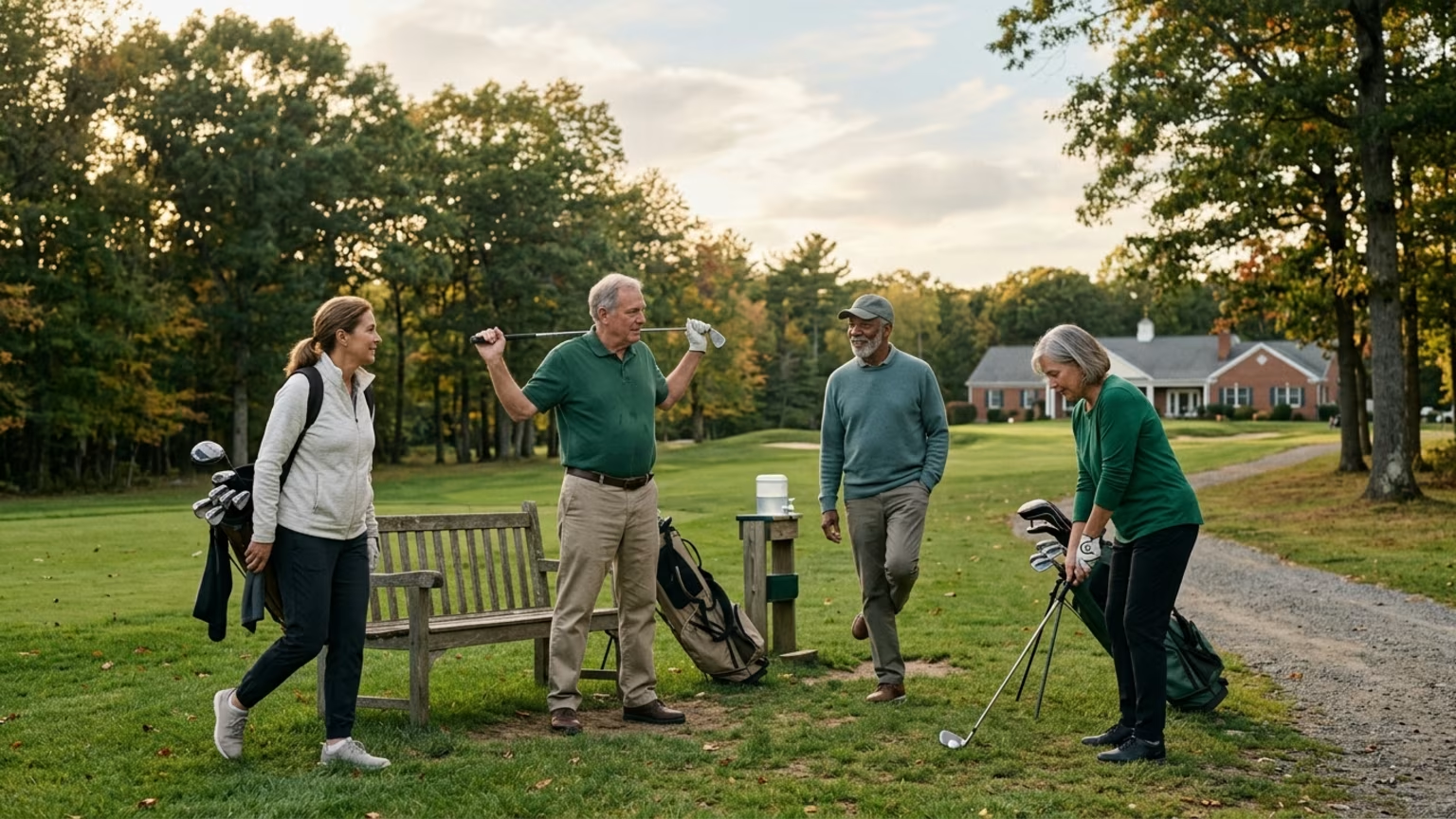
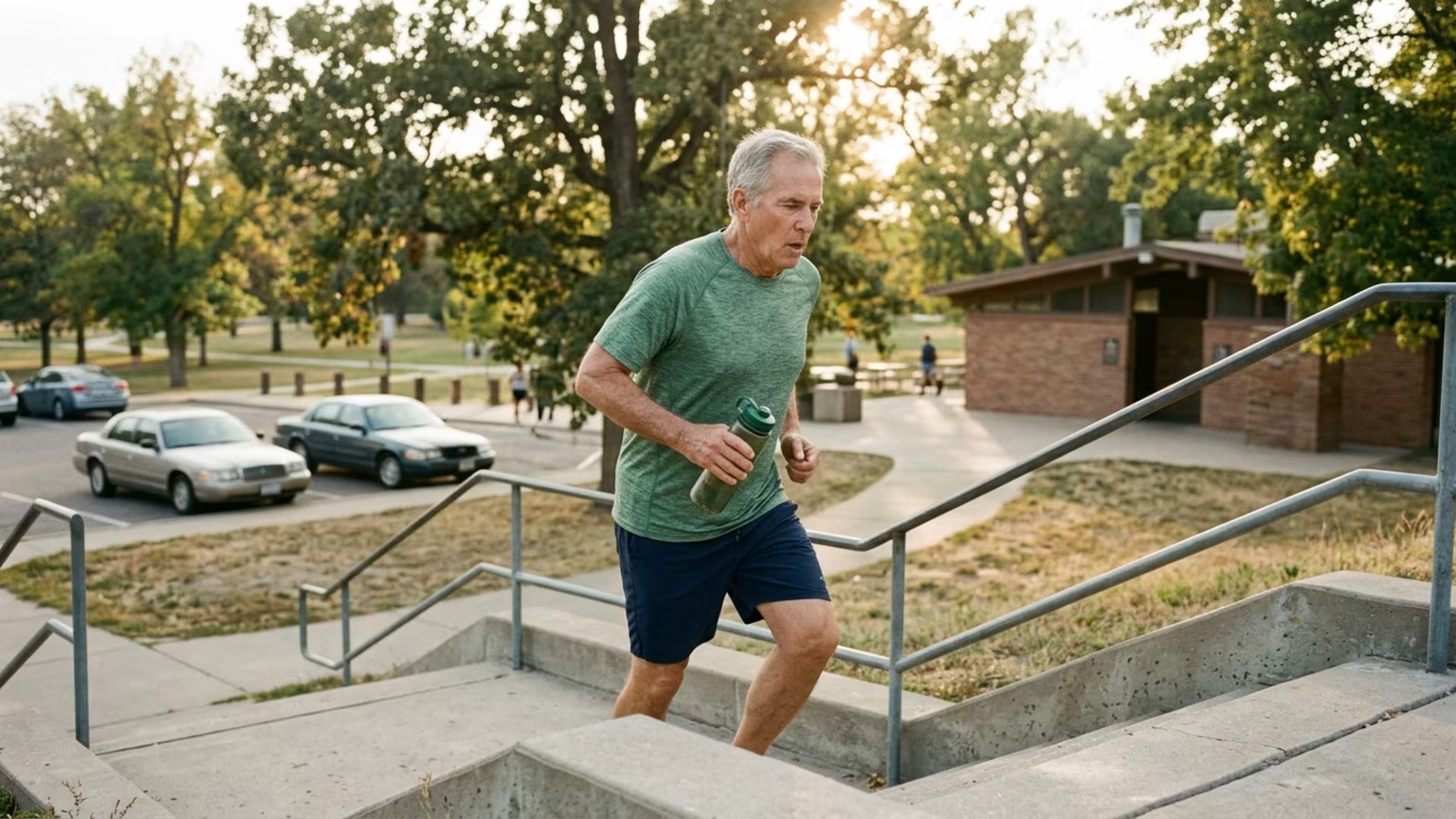
Motocaddy's electric caddies arrive at the 2027 Molly Collegiate Invitational. Learn why reducing carrying fatigue helps older golfers protect their backs.




Motocaddy announced an agreement to provide electric caddies for the upcoming 2027 Molly Collegiate Invitational. The tournament is scheduled for February 15 and 16, 2027. This event will take place at The Heights Golf Club in San Diego. Motocaddy says the tournament will be the first regular-season NCAA event to use electric caddies.
According to the company, the NCAA Division I Women’s Golf Committee approved the use of these motorized carts. The Molly Collegiate Invitational was founded in 2021. It is scheduled to feature 12 teams in 2027. San Diego State, Texas State, Gonzaga, and Washington State will compete.
California Baptist, Santa Clara, San Francisco, and Northern Colorado are also scheduled to play. The field concludes with Montana State, Cal State Fullerton, Sacramento State, and Fresno State. San Diego State is a Division I program in the Pac-12 with 13 NCAA regional appearances.
Carrying a golf bag for 18 holes places uneven stress on the human body. A heavy strap pulls down on one shoulder for hours. This unequal load forces the muscles of the lower back to work overtime to keep your spine stable. As physical fatigue builds over the round, your stabilizing muscles lose their ability to support the torso properly.
When a tired golfer swings a club, the rapid rotation places high shear force on the lumbar spine. This mechanical failure often leads directly to severe back injury and prolonged absences from the course. Furthermore, repeatedly gripping and lifting a heavy bag creates cumulative stress on the tendons in your forearm. This repetitive strain can contribute to issues like golfer's elbow over a long season.
Your body is forced into an unnatural posture when supporting bag weight on one side. The muscles on the opposite side of your torso must contract constantly to keep you walking straight. This sustained contraction limits your rotational mobility by the time you reach the back nine. A restricted torso forces your arms and hands to manipulate the clubhead to save the shot.
Relying entirely on your hands drastically increases the risk of wrist injuries. This mechanical breakdown clearly demonstrates why protecting your back is critical for complete swing health.
Motocaddy’s agreement follows its support of the Golfweek National Golf Invitational. This is a postseason college championship held at Ak-Chin Southern Dunes in Maricopa, Arizona. The company reported that 70 percent of female student-athletes chose to use an electric caddie there. Motocaddy also reported that 40 percent of male student-athletes opted for the motorized equipment.
In a post-event survey, 87 percent of electric-caddie users said the equipment reduced physical fatigue and helped conserve energy. Motocaddy also said 84.6 percent of surveyed players and coaches supported or strongly supported the NCAA reviewing broader approval. Motocaddy says male and female players using electric caddies recorded improved scores compared with players who carried their clubs. However, the company did not provide the underlying score data or statistical analysis for this claim.
College golfers play in highly competitive environments where marginal energy savings can influence the final leaderboard. Conserving energy over a long weekend of walking might provide a noticeable physical advantage. If Division I athletes feel fatigued from carrying a bag, recreational players will certainly experience similar physical exhaustion. This reality highlights the practical value of managing your energy reserves intelligently.
Golfers over 40 face a high risk of joint strain. As we age, our spinal discs lose hydration and our tissues recover much slower from physical stress. Recreational players often spend hours sitting at a desk during the week. This sedentary habit weakens the core muscles needed to carry a bag and swing a club safely.
Even with slower swing speeds, aging joints are less forgiving of poor physical mechanics. The saddest thing we have seen in golf is watching lifelong playing partners slowly drop out of our weekend group. It usually starts with a nagging shoulder or knee issue they ignore until it requires surgery. That pattern is exactly why our team became obsessed with golf longevity.
We do not have to stop playing as we age, provided we do the right maintenance work between rounds. San Diego State head coach Lauren Dobashi said the product could help players conserve energy and compete at their best. Dobashi also noted the partnership is a natural fit because Motocaddy is based in nearby Carlsbad. Motocaddy said it is seeking additional NCAA tournament partnerships in 2027.
Motocaddy executive Andy Warren claims these caddies can help student-athletes with injury prevention and improved mental focus. We must view this as a company position rather than established medical evidence. A weekend golfer cannot assume that buying a piece of equipment replaces a dedicated fitness routine. Protecting your joints requires both smart equipment choices and consistent physical conditioning.
To protect your body, treat carrying a bag as optional rather than mandatory. If carrying a full bag leaves you unusually tired, an electric caddie is a practical way to walk the course. This choice can reduce the load borne directly by your spine and shoulders. Older golfers should choose equipment based on stability and handling characteristics.
Look for a cart that is easy to start, steer, and control on slopes. Always test the system before a competition or a long round. You should become completely comfortable with the braking and steering systems before relying on the equipment. Conserving your energy allows you to maintain proper posture and manage your physical workload effectively.
Our team used to stand on the first tee doing long, static hamstring stretches because we thought it was the right way to warm up. We would actually feel weaker on our first drives. Research later showed us that dynamic movements, like leg swings and torso twists, prime the nervous system much better. Changing this five minute warmup completely transformed our opening tee shots.
Proper physical preparation protects you just as much as changing your equipment on the course. Focus entirely on turning your trail hip during your warmup swings to loosen your lower back. Small, targeted movements prepare your joints for the high forces of the golf swing.
Many players believe that buying a push cart completely protects them from pain. This idea is a dangerous misconception. An electric caddie can reduce one specific physical demand. However, it does not eliminate swing-related stress or the risks of walking on uneven terrain.
You still need to manage your swing mechanics and physical fitness routines. Neglecting your core strength simply because you bought a motorized cart will leave you vulnerable to muscle strain. Poor warm-up habits and overuse remain significant threats to your physical health. Keep your medical expectations modest and focus on comprehensive physical maintenance.
Preserving your energy on the course is a key part of playing healthy golf for years to come. Managing your physical fatigue helps keep your back and joints ready for the next challenging shot. What adjustments will you make to your mobility routine this season to steer clear of this hazard?
Follow Golfergy for practical insights on performance, mobility, recovery and healthy ageing. Stay connected for new articles, research-led guidance and ideas to help you play better for longer.



Learn how PhD-level golf biomechanics coaching uses structured movement screening to identify swing flaws that overload your lower back and wrists.


Learn how uncoordinated golf mechanics affect older players. We explain why the spine absorbs stress and share practical routines to reduce physical strain.
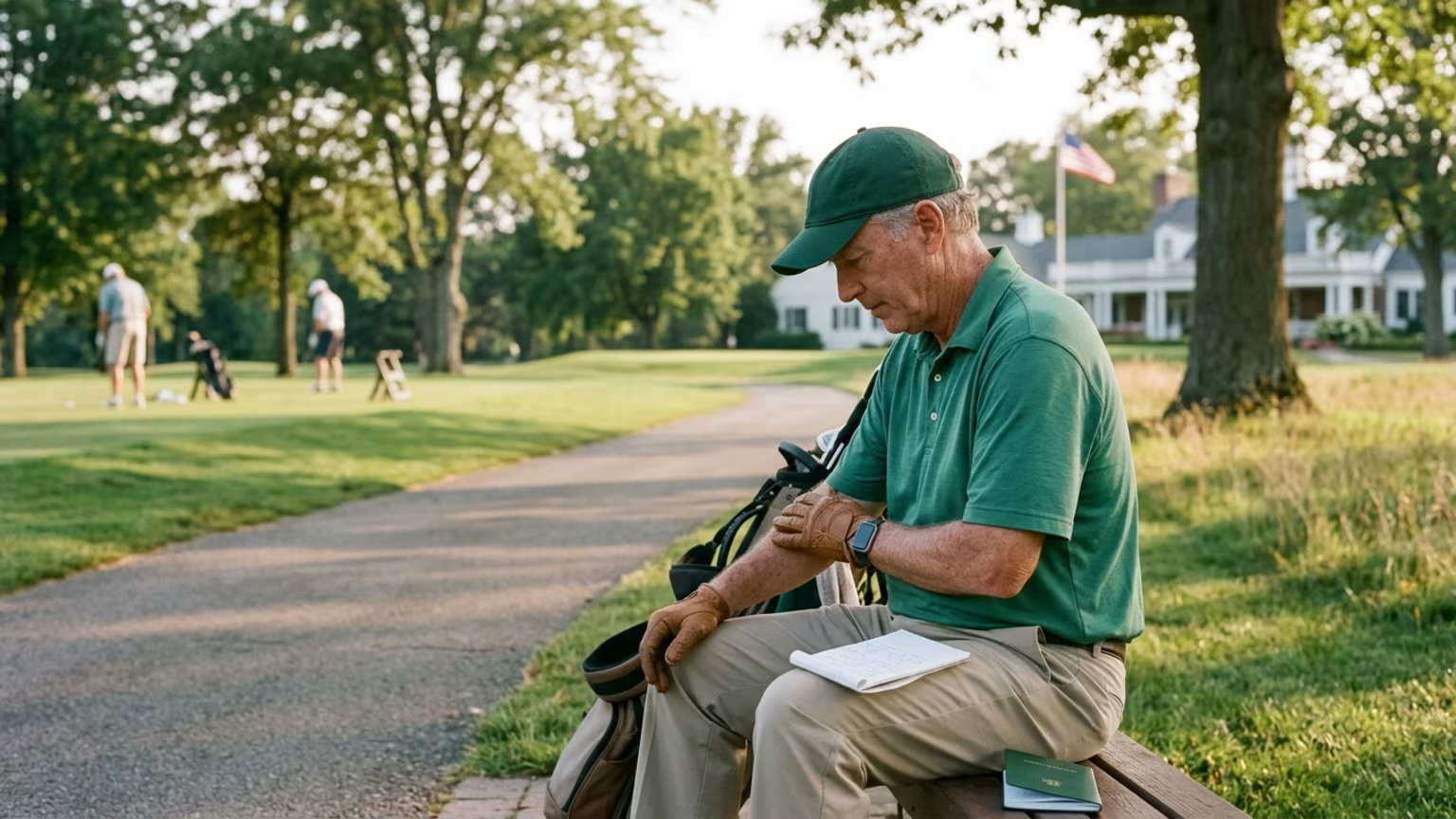
A step-by-step load management guide to safely return to golf. Learn how to progress your swing volume, effort, and walking demands without causing an injury.
Explore practical resources on performance, recovery, mobility and golf longevity.
Read the Blog