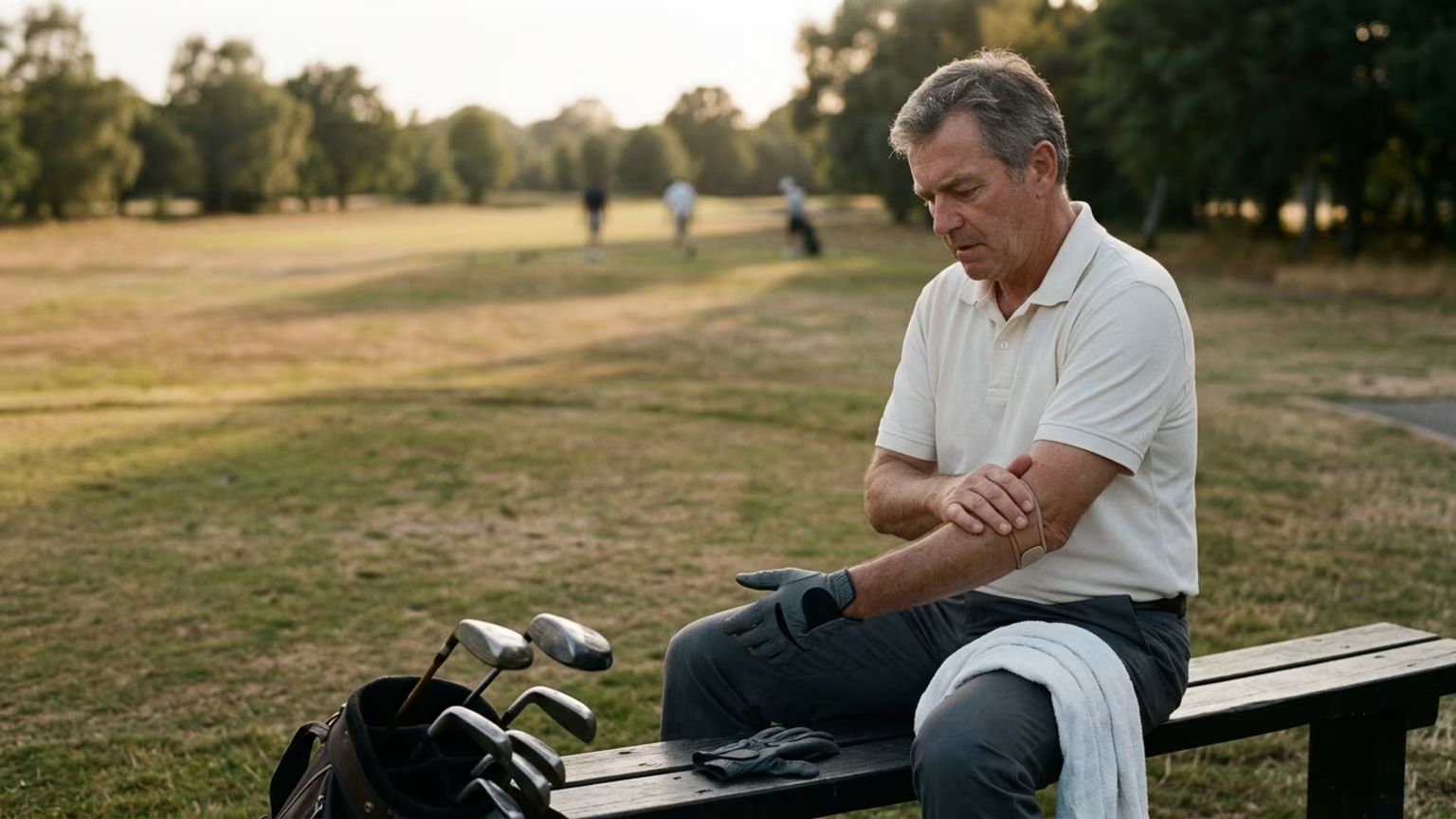

Learn why golfers develop elbow pain and how active load management, grip modifications, and forearm conditioning can keep you playing comfortably.




You just finished hitting your third bucket of range balls off firm mats in July, and now your inner elbow is throbbing as you pack your clubs into the trunk. The immediate impulse is to ice the joint, cancel your weekend tee times, and hope a few weeks of total inactivity will cure the pain. For experienced golfers dealing with medial or lateral elbow pain, stepping away from the game feels like the only safe response. Tennis elbow affects the outer elbow’s wrist and finger extensor tendons, while golfer’s elbow affects the inner elbow’s flexor-pronator tendons.
The names can be quite misleading. Tennis elbow commonly develops through non-sporting jobs and hobbies involving repetitive arm, wrist, and hand movements. Persistent elbow pain should not automatically be assumed to be golfer’s or tennis elbow because several other conditions can mimic it.
When elbow pain strikes, recreational golfers usually find themselves choosing between two distinct paths. Option A is complete and total rest from all golf activity. Option B is active load management, which involves modifying practice habits, adjusting grip pressure, and progressively strengthening the forearm. Players weigh these options because they want relief from the pain but hate losing their hard-earned swing progress.
The choice often comes down to a misunderstanding of how tendons actually respond to physical stress. The underlying issue is better framed as tendon overload rather than a problem limited to the elbow joint itself. The precise cause of this overload is not always perfectly identifiable. Repeated loading and overuse are recognized contributors across multiple medical sources.
Complete rest seems like the most logical fix for an irritated elbow. When you stop gripping a golf club, you immediately remove the repetitive strain that aggravates the tissues. This approach provides excellent short-term relief for acute flares. It protects the joint from immediate further damage when the pain is severe or debilitating.
However, prolonged inactivity has significant drawbacks for older joints and tendons. Tendons require gradual physical loading to build structural resilience. Without any mechanical stimulus, the affected tissues do not magically rebuild their capacity to handle high-speed golf swings. When you eventually return to the course, the tendons are often just as vulnerable to overload as they were before the break.
In our experience, when we developed medial epicondylitis, we thought we needed complete rest. Six weeks off the course did nothing to help. We finally learned that active recovery with a flexbar was the actual solution. It taught us that treating golf injuries requires loading the tissue properly, not just sitting on the couch and hoping for the best.
Active load management allows you to maintain your swing mechanics while protecting the irritated tendons. This strategy requires you to change how you hold the club and how you structure your practice sessions. The Royal Orthopaedic Hospital specifically advises people with tennis elbow to examine the force used when gripping and to use the minimum force necessary. Gripping is not an isolated hand action.
A golf grip recruits the forearm muscles that connect directly to the elbow. By reducing your squeeze to the minimum amount needed for control, you lessen the repetitive load on those tendons. Sports-medicine guidance describes golfer’s elbow as a condition that can be aggravated by forceful gripping combined with wrist flexion or forearm rotation. Focus entirely on softening your trail hand before starting the takeaway.
Equipment can also be a practical variable to test during this phase. A properly fitted club and a comfortable grip might reduce your need to squeeze the handle too tightly. Modifying your practice workload and recovery timeline is a critical step in this approach. Clinical and golf-injury guidance commonly recommends increasing golf workload gradually rather than making sudden jumps.
One golf-rehabilitation protocol recommends adding ball count before swing speed and driver volume, while checking the next morning’s response. Changing one variable at a time helps you identify exactly what triggers the pain. You can temporarily reduce the number of high-speed driver swings, shorten the session, or use controlled half-swings. If your elbow feels stiff the next morning, your previous session was too demanding.
You can then drop your ball count or reduce your swing speed during the next session. This feedback loop allows you to keep swinging a club while avoiding the extreme strain that causes a high-repetition injury in the hands or wrists.
When comparing these two strategies, active management wins the longevity test for recreational players. The Royal Orthopaedic Hospital states that tennis elbow can occur at any age but most frequently affects people around age 40. Older golfers frequently experience a sudden spike in workload when returning from winter breaks or starting intensive new swing programs. These sudden transitions shock the forearm tissues before they have time to adapt.
Maintaining your playing years requires balancing physical exposure with active recovery. NHS guidance states that stretching followed by a strengthening program can help tennis elbow. Rebuilding your tissue capacity away from the course prepares your body for the physical demands of a long golf season. Stretching and progressive strengthening are commonly included in conservative elbow-tendinopathy care.
You can build a strong foundation by working with a professional on targeted forearm movements. Slow wrist-extension strengthening and gradual grip conditioning teach the tendons to tolerate force safely. For those managing medial pain, focusing on a comprehensive prevention routine for golfer's elbow pays massive dividends over a playing career. Active conditioning directly supports the goal of playing pain-free golf for decades.
For lateral elbow symptoms, the main strengthening emphasis is typically wrist extensor capacity. For medial symptoms, it is wrist flexor and forearm-pronator capacity. A qualified clinician should determine the appropriate exercise selection for your specific body.
NHS guidance recommends resting between bouts of activity, modifying the painful activity and reducing grip force. Ignoring the pain and swinging at maximum effort will simply cause further tendon overload. Total rest will calm an angry joint, but it leaves the underlying tissue weakness completely unaddressed.
Choose complete rest for severe acute flare-ups, and active load management for long-term swing health. Treat your practice sessions as a measurable physical dose, reduce unnecessary grip tension, and build your forearm capacity progressively. Steady conditioning and smart load tracking will keep you on the fairway for years to come.
Follow Golfergy for practical insights on performance, mobility, recovery and healthy ageing. Stay connected for new articles, research-led guidance and ideas to help you play better for longer.


Review elbow and wrist pain patterns in golf through symptom notes, practice changes, ground contact and grip condition, without assuming a quick fix.


Tiger Woods’ 2017 Dubai withdrawal offers a measured lesson for golfers over 40, with NHS guidance on when back pain needs medical attention.

Understand a stiffer golf turn, notice changes without self-diagnosis and learn when comfortable movement or individualized advice may help.
Explore practical resources on performance, recovery, mobility and golf longevity.
Read the Blog


