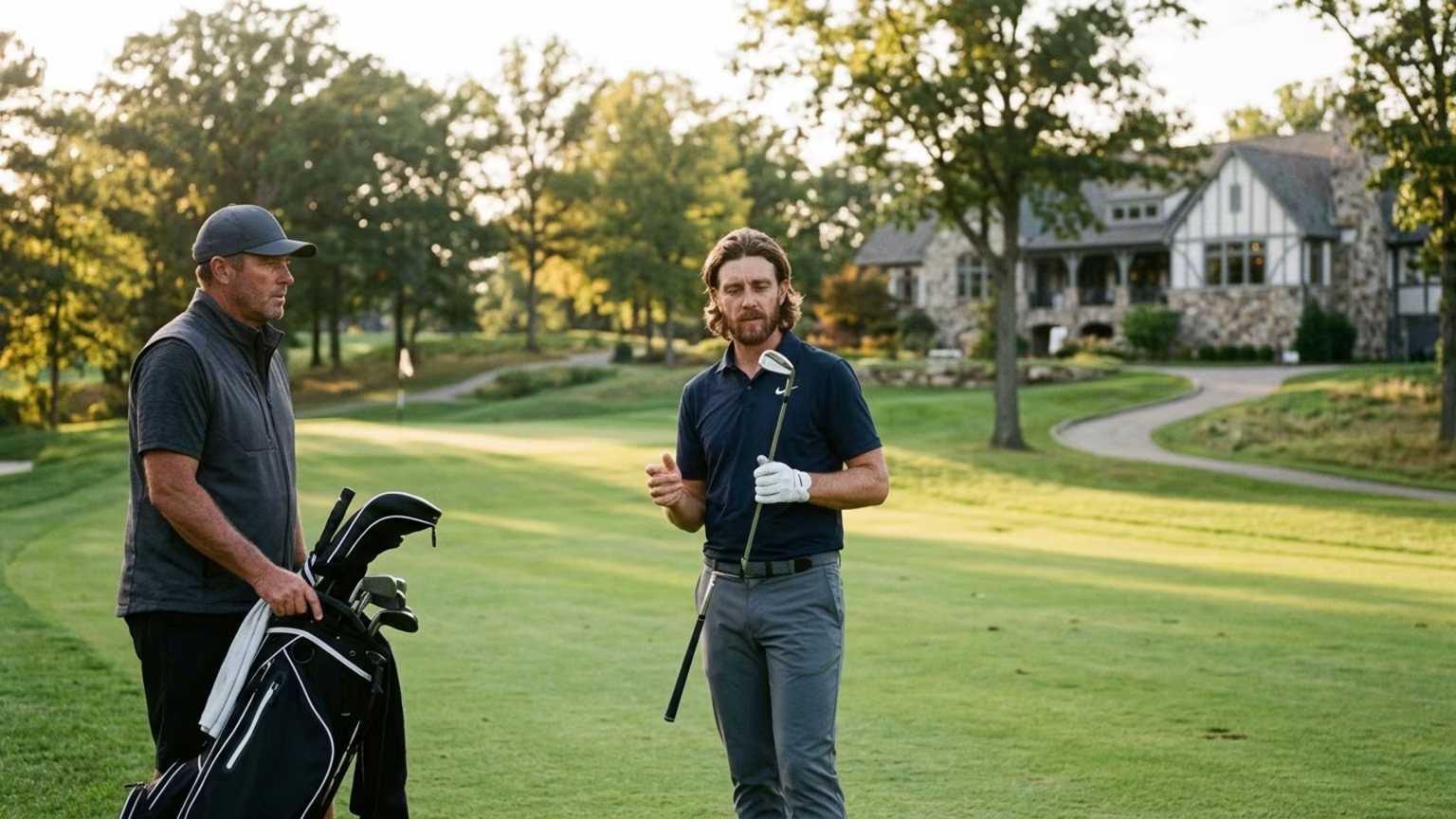

Read Tommy Fleetwood's process-based approach to golf consistency. Learn how standardizing routines helps older players maintain their game and protect their joints.




You just finished a grueling, sweaty 18 holes in July, and your lower back is barking at the clubhouse. You spend the afternoon wondering why your swing felt erratic. Tommy Fleetwood recently outlined a practical philosophy to solve this exact problem. In a Yahoo Sports video segment titled “Fleetwood on Mastering Golf Consistency: Tips for Every Age,” the professional golfer explained his unique mindset.
Published on August 27, 2026, and updated on August 28, 2026, the interview details how he builds a reliable foundation. For recreational players over 40, his insights offer a clear path to stable scoring without physical overexertion. By shifting focus away from perfect ball striking, older players can manage their physical limits better. This approach fundamentally changes how we view game improvement.
Older golfers typically find themselves choosing between two distinct recovery and performance paths. Option A is the traditional peak-chasing approach. This method involves searching for flawless swing mechanics every single week. It also relies heavily on passive static stretching for physical maintenance.
Option B is the process-based approach. This method uses controllable mental routines and movement-based preparation to build a reliable performance floor. The desire to shoot low scores often tempts people into Option A. The need for pain-free golf eventually drives them toward Option B.
The traditional peak-chasing method relies on trying to hit perfect shots and using static stretching to stay healthy. The primary benefit of this option is the sheer excitement of those rare days when every swing feels flawless. It feels absolutely incredible when your timing is perfect and the ball goes exactly where you want. A golfer experiencing peak form can easily dominate their local weekend match.
The major drawback is the severe physical toll on older joints. Chasing a perfect position often leads to repetitive stress, endless range sessions, and heavy fatigue. Older bodies simply do not tolerate this volume of mechanical tweaking very well. When you treat consistency as a purely mechanical goal, you place immense stress on your lower back.
Relying solely on passive stretching for injury prevention has notable limits for the aging golfer. According to a summary of a large meta-analysis covering 25 randomized controlled trials, there is no detectable injury-prevention effect from stretching alone. The research published on Learn Golf analyzed 26,610 participants and 3,464 injuries. A static stretching session might feel relaxing, but it will not magically protect your back.
Option A leaves your score entirely dependent on how fresh your body feels that morning. This often leads to frustrating rounds where slight stiffness completely ruins your timing. Players who rely on mechanical perfection struggle immensely when minor aches limit their rotation. It is an exhausting way to play the game long-term.
The second option focuses on building a reliable floor through process and preparation. Fleetwood, who was 35 at the time of his interview and seeking his first major championship, adopted this exact mindset. He explained that consistency became an explicit objective for him several years ago. He wanted to become the "most consistent" player he could be.
His definition of consistency is maintaining his lower level of performance to a certain standard while leaving room for exceptional weeks. He pointed to Scottie Scheffler as an example of an elite player whose lower level remains among the best in the world. This means raising the minimum quality of your game rather than constantly seeking peak form. It is a much healthier framework for amateur players.
This structured approach is highly beneficial for the recreational golfer over 40. A separate guide by Performance Sport Care advises golfers not to judge consistency solely by score or ball striking. It recommends evaluating your mental preparation and your decision-making. You should also measure your commitment to shots and your ability to reset between holes.
The guide recommends beginning a round with one or two process goals. It suggests using the warm-up to prepare rather than to prove that the swing is working. Afterward, you should review the behaviors that held up during the round. A player might use a simple post-round recovery checklist to track these routines properly.
Fleetwood also acknowledged that the professional golf schedule had become more condensed over the previous two years. He noticed a distinct difference in its intensity. For older amateurs, a condensed schedule of weekend rounds requires similar physical care. Focus entirely on turning your trail hip during a warm-up swing to prepare your body gently.
This strategy takes the mechanical pressure off your body. You stop trying to force a perfect swing when your muscles feel tight or tired. Instead, you accept your current physical state and rely on a standardized sequence to navigate the course. This builds true resilience on the golf course.
When we evaluate which option helps you play better for longer, the process-based method clearly wins. Chasing peak physical form requires intense practice sessions that can easily aggravate joint pain. A stable routine requires mental discipline rather than physical exhaustion. Golfers who rely on pre-round activation protect their energy reserves for the back nine.
Staying healthy enough to play regularly also brings potential long-term wellness benefits. An observational study involving 4,575 people aged 65 and older found interesting associations for older adults. The research reported by MyGolfSpy noted that 509 active golfers had 39% lower odds of cognitive decline than the 3,495 people who had never played golf. This highlights a powerful reason to protect your body.
The same report said that former golfers did not show the same association in the analysis. Neither annual playing frequency nor practice frequency had a measurable relationship with cognitive status. While this is an observational finding, it highlights the importance of staying active in the game without burning out. Protecting your physical health keeps you safely engaged in the sport.
Option B allows older players to manage their bodies properly through smart routines and movement preparation. The peak-chasing method often leads to burnout and long periods of forced rest. Process consistency keeps you safely on the course year after year. It is the most sustainable approach for mature players.
The evidence points clearly toward standardizing your approach to the game. Option A relies on unsustainable physical perfection and passive recovery techniques. Option B builds a realistic foundation that protects your joints and your confidence. Choose Option A if you want a fleeting weekend thrill, and Option B for long-term swing health.
Your single actionable takeaway is to track your process behaviors alongside your score during your next round. Write down one simple goal, such as committing fully to your club selection. Grade yourself on that choice after every single hole.
Follow Golfergy for practical insights on performance, mobility, recovery and healthy ageing. Stay connected for new articles, research-led guidance and ideas to help you play better for longer.


Build a practical golf warm-up from walking to comfortable mobility and fuller swings, while keeping preparation separate from long-term conditioning.


Shot Scope’s LM1 data offers age and handicap benchmarks for driver speed and carry. Here’s how golfers over 40 can read the figures.

A grounded look at balance after 40, with supported single-leg practice and a clear place for strength training and golf practice.
Explore practical resources on performance, recovery, mobility and golf longevity.
Read the Blog