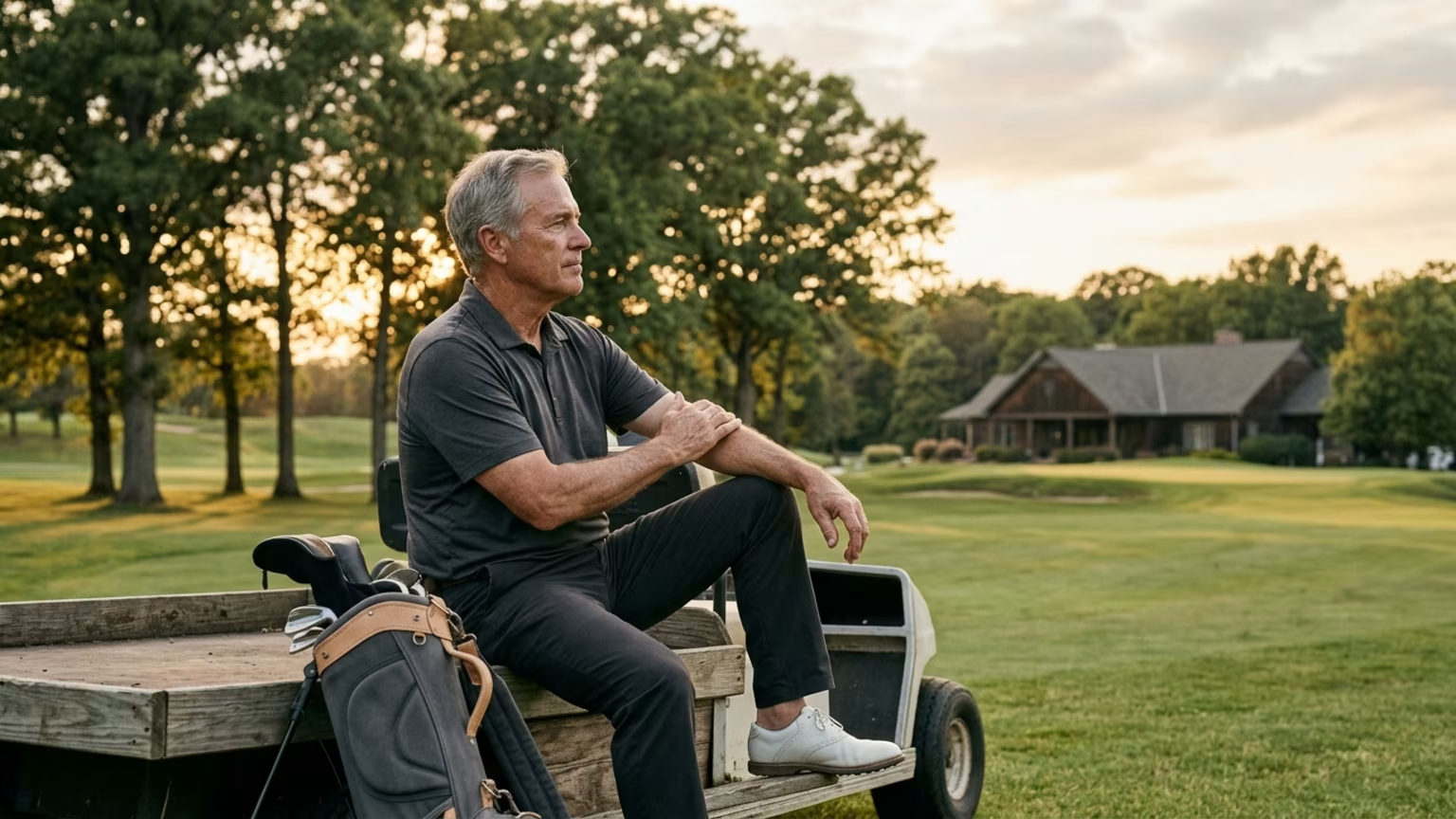

Gary Player's rhythm and balance advice offers older golfers a waltz-like swing technique that reduces joint stress and improves post-round recovery.




You just walked off the 18th green, and your lower back is already stiffening up as you take off your shoes. Resting on the couch until your next tee time is actually a terrible recovery plan. Proper recovery starts during the round, and it involves how you move your body on every single shot. Gary Player recently shared rhythm and balance advice that offers a fascinating alternative to modern power swings.
We often look at recovery as something we do after the round with ice packs. In reality, moving well prevents damage from occurring in the first place. A jerky motion creates micro-tears and joint stress that take days to heal. A smooth motion leaves you feeling capable and ready for tomorrow.
Older players often find themselves stuck between two distinct techniques on the course. Option A is the stationary, flat-footed swing. Option B is a dynamic, rhythmic motion that Gary Player describes like a waltz. Players lean toward Option A because it feels simple. They attempt Option B when they want smoother weight transfer.
Many players choose the stationary swing because they fear losing their balance. It feels safer to keep your feet planted firmly on the grass. The waltz motion requires a bit more coordination and trust in your body. However, the choice between these two styles drastically impacts how your joints feel the next morning. Making the right choice helps Golfergy readers stay on the course longer.
Many amateurs try to keep their lower body perfectly still during the swing. HITC reports that Player identified this flat-footed approach as a major fault for recreational golfers. When players stay cemented to the ground, they often fail to complete their follow-through. They compensate by flipping their hands at the ball.
This upper-body dominance creates serious problems for older joints. In our experience, a few years ago, I noticed my swing falling apart around the 14th hole. My lower back would tighten up, and I started compensating with my arms. I spent months thinking it was a swing flaw. It was not until I started a simple evening hip mobility routine that I realized my glutes were just turning off from fatigue.
Fixing that one physical limitation brought my back nine scores down drastically. When you swing without using the lower body, you force small muscles to do heavy work. This isolated stress leads to intense soreness and slows down your recovery time between rounds.
If you rely solely on your hands, your elbows and wrists absorb the shock of impact. That shock travels straight into your shoulders and neck. A flat-footed stance robs the swing of its natural rhythm. Players end up lunging at the ball from a static position.
This sudden burst of energy pulls violently on the lower back. The spine simply cannot handle that kind of torque without proper support from the legs. Golfers who rely on this static method often find themselves reaching for anti-inflammatory medication before they even reach their car. If you want a more resilient body, read our guide on assessing your golf fitness.
During a recent appearance on Bryson DeChambeau’s "Break 50" series, Player offered a different perspective. HITC reports that the 90-year-old advised amateurs to picture the swing like a waltz. This means moving weight to the right side and then shifting it to the left side. The goal is continuous motion rather than violent effort.
To apply this safely, focus entirely on feeling pressure under your trail foot. Once you feel that pressure, slowly let it move toward your lead foot. You do not need a massive sway to achieve this feeling. A subtle shift is enough to create momentum without straining your hips.
Player noted that athletic power comes from the core, recalling a conversation where Muhammad Ali stressed this exact point. A smoother motion might help golfers avoid unnecessary force, keeping the body fresher for the back nine. It organizes the swing around your largest muscle groups. We can learn more about protecting our bodies by adapting our mechanics for a safer swing.
This rhythmic style creates a natural sequencing of body parts. Your legs initiate the downswing, your torso follows, and your arms just go along for the ride. You do not have to muscle the club through the impact zone. This sequence protects your delicate connective tissues from absorbing sudden shocks.
Player also emphasized the importance of a complete follow-through. When you move your weight correctly, the club pulls you into a tall finish. You should be able to hold that final pose until the ball lands. If you are falling off balance, you are likely swinging too hard or staying too flat-footed.
Option B easily wins the longevity battle. The flat-footed swing puts immense strain on the arms and wrists. The waltz approach encourages a balanced finish that spreads the effort across the whole body. Britannica notes that Player is a nine-time major champion and the third man to complete the modern men’s career Grand Slam.
His victories include three Masters titles, three Open Championships, two PGA Championships and one U.S. Open. He stopped playing competitive golf in 2009 after his final Masters appearance, but he still plays regularly at age 90. His career longevity points to the value of a fluid motion over brutal force. HITC describes Player’s career as including 159 worldwide victories.
When you use a fluid motion, you spread the physical cost of the swing over a larger area. Your hips and legs share the load with your upper back. This shared workload prevents any single joint from becoming overworked during a long round. You can walk off the course feeling tired but not broken.
Older players should not force a massive weight shift, but a gentle pressure transfer is a smart goal. Protecting your joints starts with how you organize your movement. If you can finish your swing in a balanced pose, you are doing something right. Better balance training is a great tool for older players looking to build a stable foundation.
The debate between a stationary swing and a rhythmic motion is easy to settle for older players. The stationary approach might feel secure for a few holes, but it taxes your joints heavily by the end of the round. A rhythmic shift uses the body the way it was designed to move. Choose the flat-footed approach for isolated arm swings, and choose the waltz approach for long-term swing health.
Golf is a long walk, and a fluid motion makes every step a little lighter.
Follow Golfergy for practical insights on performance, mobility, recovery and healthy ageing. Stay connected for new articles, research-led guidance and ideas to help you play better for longer.


Rest or move the day after 18 holes? Use fatigue, soreness, symptoms and your playing schedule to guide a flexible recovery day.


Compare foam rolling, massage, compression, heat and cold for golfers, with comfort benefits kept separate from performance and injury claims.
A measured guide to stiffness during and after golf, with gentle movement options, sustainable habits and NHS-backed back-pain warning signs.
Explore practical resources on performance, recovery, mobility and golf longevity.
Read the Blog


