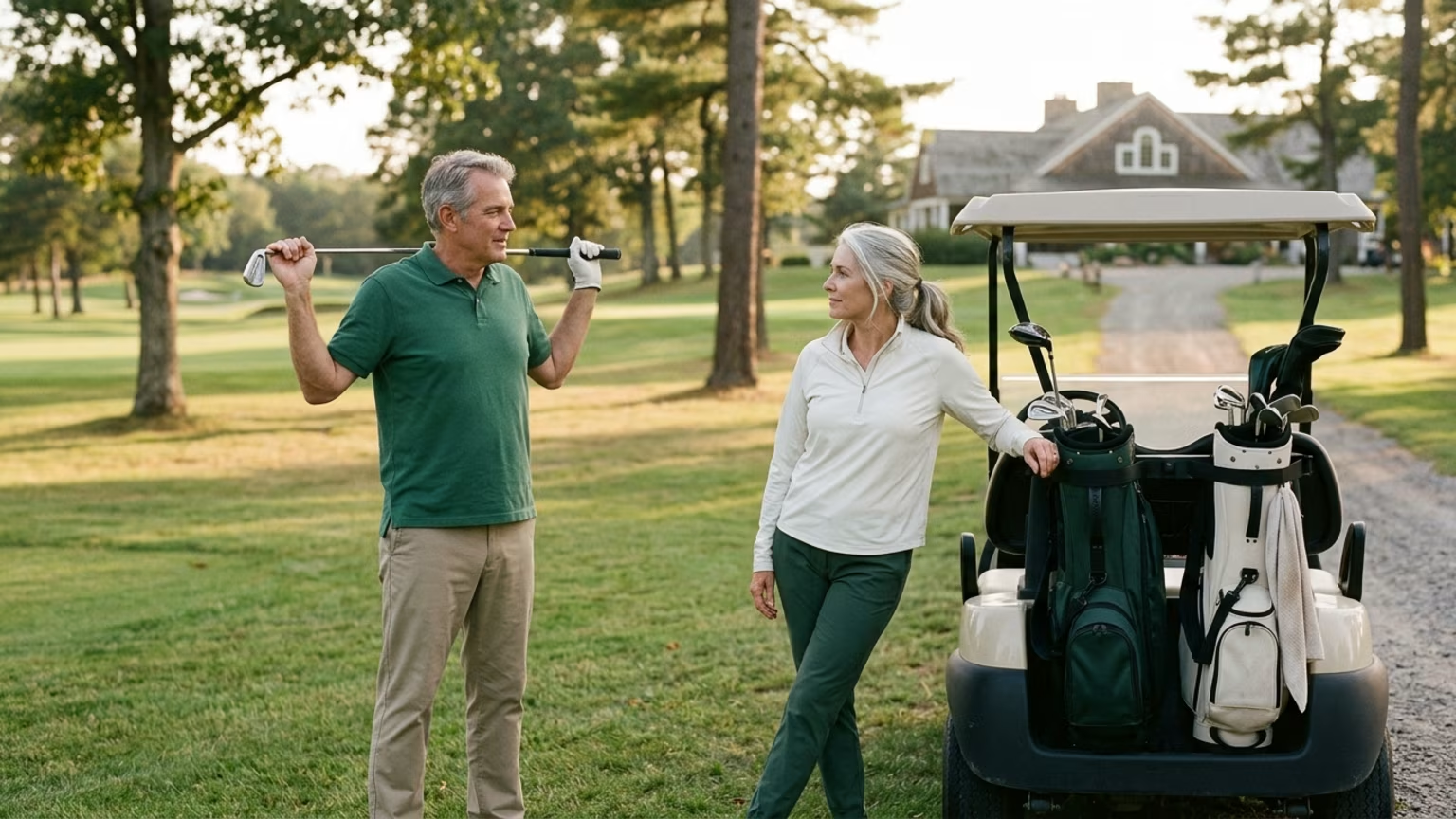

A measured guide to stiffness during and after golf, with gentle movement options, sustainable habits and NHS-backed back-pain warning signs.




Why do my hips, back and shoulders feel tight during a round, then still feel stiff at home? It is frustrating when finishing a game leaves you wondering whether to move around, stretch or rest.
At Golfergy, we favor practical recovery habits over quick fixes. The starting point is not a complicated routine. It is choosing a low-key response to mild stiffness while recognizing symptoms that deserve professional attention.
A round combines repeated swings with sustained physical activity, and temporary stiffness may follow that effort. Golf is physical work even when the pace feels relaxed.
A golf-health overview describes the game as predominantly moderate-intensity activity. It also notes that walking the course adds physical activity compared with riding. Think about the whole round rather than treating each swing as an isolated effort.
That context gives stiffness a more measured frame. Feeling tight after golf does not automatically mean you need an elaborate recovery session.
NHS primary-care guidance says most back pain improves with time and gentle activity. It recommends professional advice when pain is severe, persistent or worsening, or when it affects everyday activities. Those distinctions are more useful than trying to judge your condition by the scorecard.
The research does not establish how stiffness changes a golfer's swing path, distance or contact. It also does not establish a golf-specific cause or a normal recovery timetable for lingering soreness. Nor does it test a post-round recovery sequence or prove that a particular stretch prevents injury.
Keep an observation about your body separate from a technical conclusion. Noticing back tightness is useful information. Deciding that tight hips caused a missed fairway is a different claim.
During practice, note where you feel restricted without immediately rebuilding your swing around it. For movement background, our guide to how the hips and upper body share the turn offers a place to start.
The useful question is what you notice during a movement. It is not which swing fault you can blame on that feeling.
NHS guidance supports gentle activity and says to stop back exercises that make pain worse. It also advises consulting a GP for advice when an exercise worsens symptoms. That supports a restrained response rather than forcing a stretch beside the tee.
For mild stiffness, easy movement and comfortable mobility can be low-key options:
These options do not amount to a decision that you should continue playing through pain. Personal decisions about a painful hip, back or shoulder belong with a qualified healthcare professional.
At home, the same approach can stay simple. Easy movement, comfortable mobility and time to recover are options rather than a sequence to complete.
Choose one small movement instead of trying to address every stiff area at once. There is no need to make the reset another performance test.
Our article on shifting from the round into recovery provides another way to think about that transition. The priority here remains comfort and attention to symptoms.
The NHS back-pain guidance draws a clear line between routine self-care and symptoms that need assessment. Do not let a planned recovery routine delay that assessment.
For back pain, NHS advice is to see a GP if it:
Seek urgent help for severe back pain that starts suddenly or worsens quickly. NHS guidance also advises urgent help when back pain comes with feeling hot or cold, shivery or unwell.
Seek emergency care for back pain accompanied by symptoms such as:
These are back-pain warning signs rather than a screening checklist for every hip or shoulder complaint. Questions about a specific hip or shoulder symptom need individual assessment from a qualified clinician.
Make gentle activity part of everyday life rather than treating the hours after golf as your only opportunity to move. That approach follows the NHS emphasis on activity rather than assuming prolonged rest is best for back pain.
For longer-term planning, look beyond the recovery window. The golf-health overview summarizes a small trial in men in which an eight-week strength-and-flexibility program improved measured strength and range of motion. Clubhead speed also improved.
Use that finding as a reason to discuss a sustainable training plan with a qualified professional. The aim is a manageable habit rather than collecting more exercises to perform whenever you feel stiff.
A useful weekly planning habit is to record how you felt during golf and afterward. Note whether symptoms settled or kept returning. Also note whether they affected ordinary tasks away from the course.
Those observations give you something concrete to discuss if you seek care. They also keep your attention on daily function rather than only on whether you can make another swing.
For the preparation side of that habit, read about making warm-up part of your golf day. Keep preparation and recovery in the same conversation without turning either into a complicated ritual.
At your next practice session, assess your body before judging the swing. Notice how you feel before starting and whether a particular movement brings on tightness.
Keep your attention on one small movement at a time. Record what you notice without forcing extra range or assigning yourself a diagnosis.
Finish that check by asking whether the stiffness is settling or whether pain is recurring and affecting life beyond golf. Take persistent or worsening symptoms to a qualified healthcare professional. Let your next practice session produce a clearer observation about your body, not just another swing correction.
Follow Golfergy for practical insights on performance, mobility, recovery and healthy ageing. Stay connected for new articles, research-led guidance and ideas to help you play better for longer.


Rest or move the day after 18 holes? Use fatigue, soreness, symptoms and your playing schedule to guide a flexible recovery day.


Compare foam rolling, massage, compression, heat and cold for golfers, with comfort benefits kept separate from performance and injury claims.

Plan a simpler evening after golf with regular sleep times, a relaxing wind-down, and realistic next-day commitments.
Explore practical resources on performance, recovery, mobility and golf longevity.
Read the Blog


