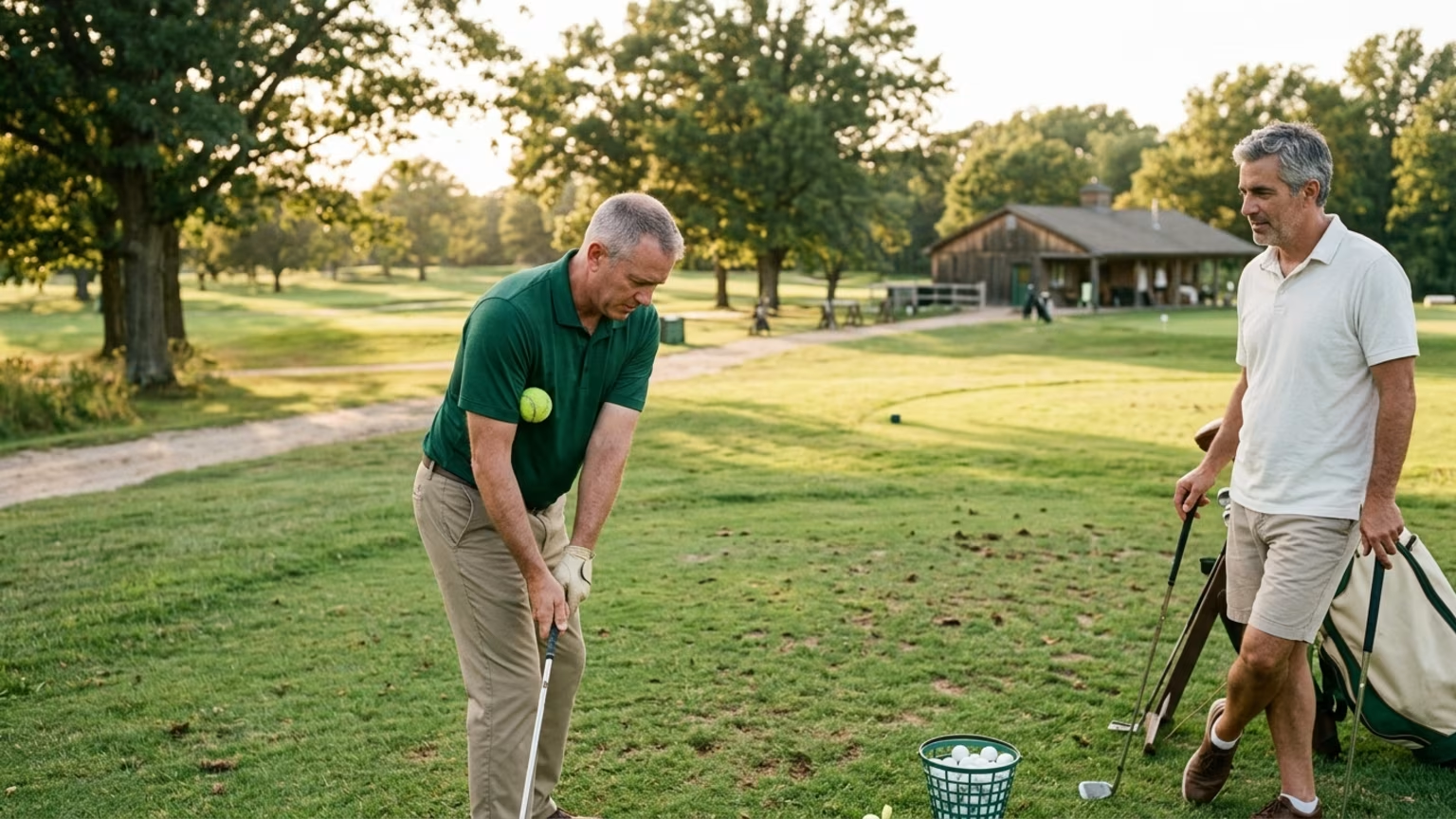

A review of the tennis ball transition drill from My Avid Golfer Magazine. Learn how this simple coaching constraint can improve lead-side balance and stability.




In September 2026, My Avid Golfer Magazine released a digital issue that caught the attention of experienced recreational players. The publication included a coaching feature titled “How Using a Tennis Ball Can Help Your Transition,” written by Jack Daneshmand. This article outlined a practical drill using half of a tennis ball to provide immediate sensory feedback. The feature reflects a broader golf-performance focus on ground interaction, pressure shift, and rotational control.
Golfers are increasingly looking for ways to improve lead-side stability rather than trying to generate upper-body speed. This drill offers a physical constraint that encourages pressure toward the inside of the lead foot during the downswing. The magazine presented this method to help players feel a more organized shift before initiating rotation. It is designed as a practical coaching tool rather than a proven treatment protocol.
To understand why this constraint is recommended, it helps to examine the biomechanical concepts of a golf swing. A common golf-biomechanics explanation describes the transition as three linked actions. First, lateral pressure moves toward the lead heel. Second, the lead glute and quadriceps help brake the lateral pelvic movement.
Finally, vertical force is applied through the lead leg. This braking action limits excessive pelvic slide and creates a dependable platform. The body then converts that controlled movement into rotational motion through impact. Daneshmand’s central coaching idea relies on this very sequence.
The feature suggests that a more stable lead foot can help a golfer use the lead leg more effectively. A separate biomechanics explanation also describes the downswing as a “shift” toward the lead side. It then outlines a “brake” that limits lateral glide. These biomechanics sources describe the lead leg as a crucial posting mechanism for rotational motion.
Golfers over 40 face distinct challenges when trying to coordinate this complex transition sequence. Age often brings a subtle decline in balance, making it harder to plant the lead foot securely. The magazine specifically notes that golfers who slide excessively toward the target may have difficulty creating a stable platform. Players who roll onto the outside of the lead foot also struggle with this necessary stability.
Without a reliable braking mechanism, mature players frequently lose their ground connection during the swing. A golfer might respond to an unstable setup by gripping the ground with their toes or stiffening their knee awkwardly. These compensatory movements disrupt the sequence and make safe rotation incredibly difficult. Claims connecting poor swing technique directly to lower-back pain should be made cautiously.
The supplied sources do not provide sufficient clinical evidence to establish a simple cause-and-effect relationship. Uncontrolled lateral sliding puts older players in an awkward position during the most forceful part of their swing. Developing functional control is why balance training for golfers remains a vital part of healthy aging on the course. Daneshmand’s feature presents a cautious, step-by-step progression to improve awareness of lead-side pressure.
The drill starts with a stable setup and half a tennis ball placed beneath the lead foot. The golfer then begins with short wedge or iron shots at a modest speed. This setup changes the golfer’s relationship with the ground and makes an unstable action much easier to notice. The stated movement sequence is to shift pressure toward the lead side, allow the leg to accept force, and then rotate.
The drill is strictly intended to discourage excessive lateral movement toward the target. You should focus on noticing whether pressure moves into the inside of the foot without sliding far forward. This drill acts as an external cue to help build useful rotation without forcing the back. The published progression moves carefully from short shots to half swings.
From there, players progress to three-quarter swings before removing the tennis ball entirely. After removing the constraint, the golfer attempts to reproduce the sensation of shifting and stabilizing in a normal swing. This gradual increase allows the movement pattern to be rehearsed at a lower speed. Rehearsing at a lower speed protects the body before it faces the demands of a complete swing.
You must stop immediately if the exercise produces pain, a loss of balance, or sharp discomfort in the knee. The safest instructional focus is on a controlled sensation of pressure, not on forcing the lead knee straight. The drill may not suit every golfer right away. Golfers with current pain, recent surgery, or significant balance problems should obtain advice from a qualified clinician.
Players with known foot, knee, hip, or back conditions should also consult a professional before practicing on an unstable surface. This careful approach prevents a simple coaching cue from aggravating an underlying physical issue. Use the drill strictly as a rehearsal tool, not as a substitute for lower-body power drills or strength conditioning. The available material presents this exercise as a coaching constraint based on a plausible movement concept.
It is not a clinically tested intervention, and no source proves that it prevents back pain or increases swing speed. The American College of Sports Medicine highlights integrating physical activity into routine health care for older adults. The organisation also encourages connecting older adults with qualified exercise professionals for personalized guidance. Movement drills can complement a broader program of physical assessment, but they should never replace individualized medical advice.
For older recreational golfers, the most defensible benefit is simply improved awareness of balance during transition. What adjustments will you make to your mobility routine this season to steer clear of this hazard?
Follow Golfergy for practical insights on performance, mobility, recovery and healthy ageing. Stay connected for new articles, research-led guidance and ideas to help you play better for longer.


Keep everyday movement separate from golf preparation, with practical habits for desk and travel days plus a clear look at warm-up evidence.


Understand how hips, trunk and shoulders share a golf turn, with gentle ways to notice restrictions and work within a comfortable range.

Understand how hips and spine share your golf turn, why restrictions may change that pattern, and how to focus on comfortable, controlled movement.
Explore practical resources on performance, recovery, mobility and golf longevity.
Read the Blog