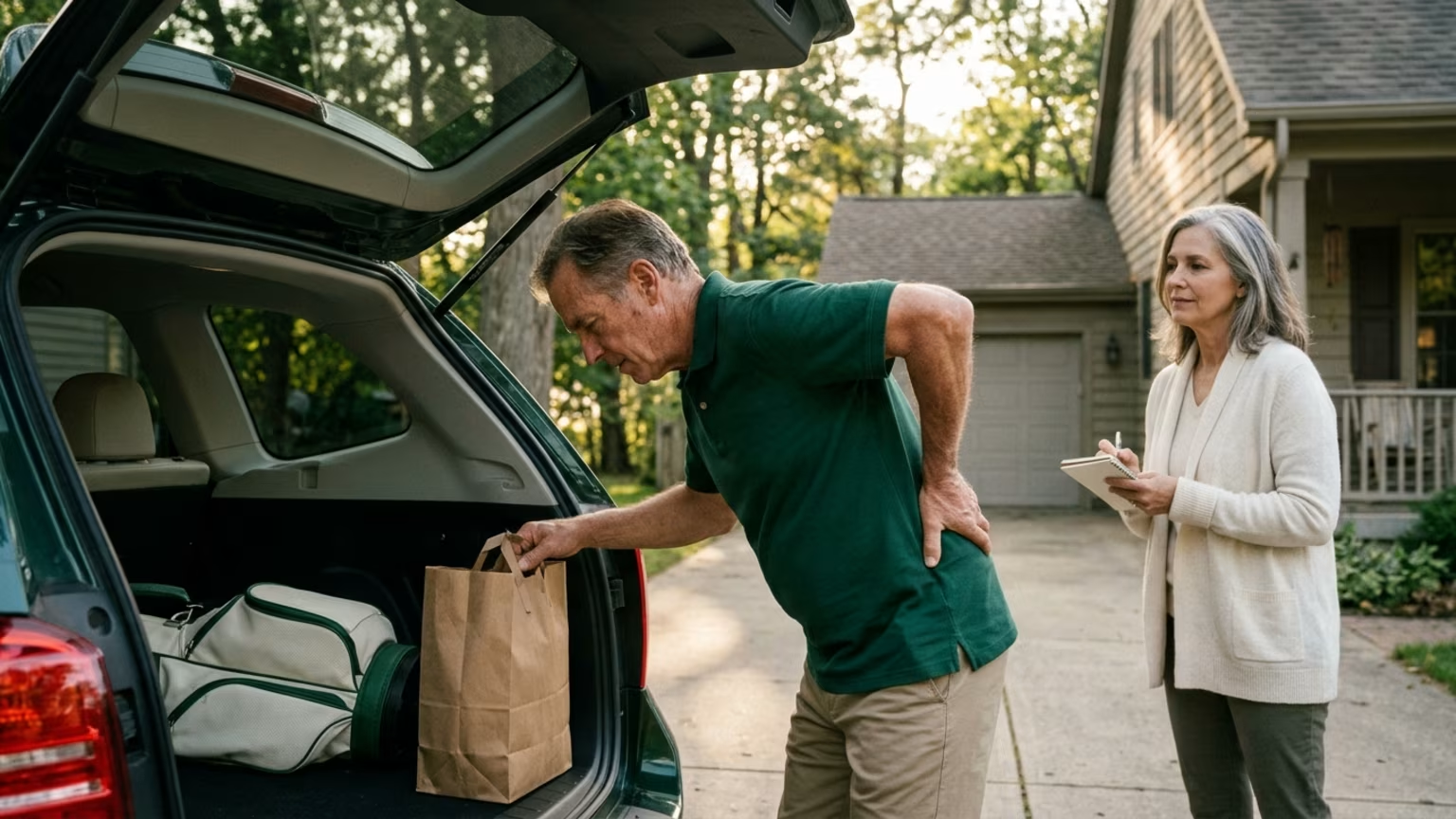

Learn when back discomfort after golf calls for scaling back, a routine assessment or emergency help, with NHS-based guidance.




Is my sore back after golf just tiredness, or should I get it checked? It is a reasonable question when you want to keep playing without ignoring a problem. You do not have to treat every ache as an injury or dismiss it as part of getting older.
This guide focuses on back discomfort rather than every kind of post-round soreness. The useful distinction is not simply whether you ache. It is whether the discomfort is improving, getting worse or limiting everyday life.
NHS-hosted guidance from Unicity Medical Centre says most back pain improves with time and gentle activity. That offers some reassurance without making every ache something to stretch through.
Tightness alone cannot tell you what is causing it. This symptom guide cannot identify an injury or explain why discomfort starts on a particular hole.
For now, separate what you feel from what you assume. “My back feels tight when I swing” is an observation. “I just need to stretch harder” is a conclusion that the symptom does not establish.
A practical check is to ask:
These are observations to share with a healthcare professional rather than a way to diagnose yourself. Use them to describe the pattern if you seek advice.
This guidance does not establish how back tightness changes swing path, distance or contact. Do not use a poor shot as your test for whether back pain needs attention.
If your contact changes when discomfort appears, note both without deciding that one caused the other. Keep the observations separate: what your back felt like and what happened to the shot.
There is no need to solve a medical question by repeatedly testing your full swing. Golfergy's discussion of discomfort and changes in your swing offers related reading. For this decision, keep the focus on symptoms and everyday function rather than the scorecard.
Scale back rather than force swings or stretches through worsening discomfort. This guidance does not identify a safest stretch for an individual golfer.
NHS-hosted advice supports staying gently active. That is different from using another full swing to see whether the pain disappears.
Keep the immediate decision small: stop pushing the movement that is making symptoms worse. Do not add a stretching routine simply because you feel obliged to finish the round. Personal advice about which movements suit your situation belongs with a qualified healthcare professional.
If discomfort is severe or worsening, seek professional advice rather than treating the remaining holes as a test. The warning signs below call for a different response from ordinary monitoring.
Separate a routine assessment from symptoms that call for more urgent help.
Unicity Medical Centre's NHS-hosted advice recommends speaking to a healthcare professional when back pain is severe, persistent, worsening or affecting everyday activities.
A golf-focused summary of NHS advice also recommends seeing a GP if back pain has not improved after a few weeks of home care or stops normal daily activities. That reference to a few weeks is not a reason to wait when pain is severe or worsening.
The same summary advises stopping play and seeking advice for:
It describes these as emergency symptoms:
Seek emergency medical help for these symptoms. Do not treat them as a stretching problem or wait for another practice session.
Gentle activity is the supported starting point. There is no specific daily or weekly exercise programme for preventing recurrence in this guidance.
For an everyday check, notice whether back discomfort is interfering with ordinary activities. Record whether it is improving rather than judging recovery only by whether you can hit a ball.
If the same problem keeps returning, bring that pattern to a healthcare professional. Ask what activity is appropriate for you and whether an individual exercise plan is needed.
Golfergy's approach is steady action rather than quick fixes. A simple way to notice changes in your body can help frame that conversation.
Use your next practice session as a check-in, not a test of how much discomfort you can tolerate. If symptoms already call for medical help, seek that help instead of waiting to assess them on the range.
If you are practising, focus on one observation at a time:
Keep those observations for any conversation with a healthcare professional. At your next practice session, assess your body before you judge your ball flight.
Follow Golfergy for practical insights on performance, mobility, recovery and healthy ageing. Stay connected for new articles, research-led guidance and ideas to help you play better for longer.



Plan sleep around early tee times with consistent habits, realistic sleep opportunity and practical guidance for travel and changing golf schedules.


A practical guide to recurring golf pain, warning signs and when to pause for medical advice, without self-diagnosing or forcing a stretch.

Build a familiar post-round meal or snack around appetite, carbohydrate and protein foods, without strict timing rules or promises of better scores.
Explore practical resources on performance, recovery, mobility and golf longevity.
Read the Blog