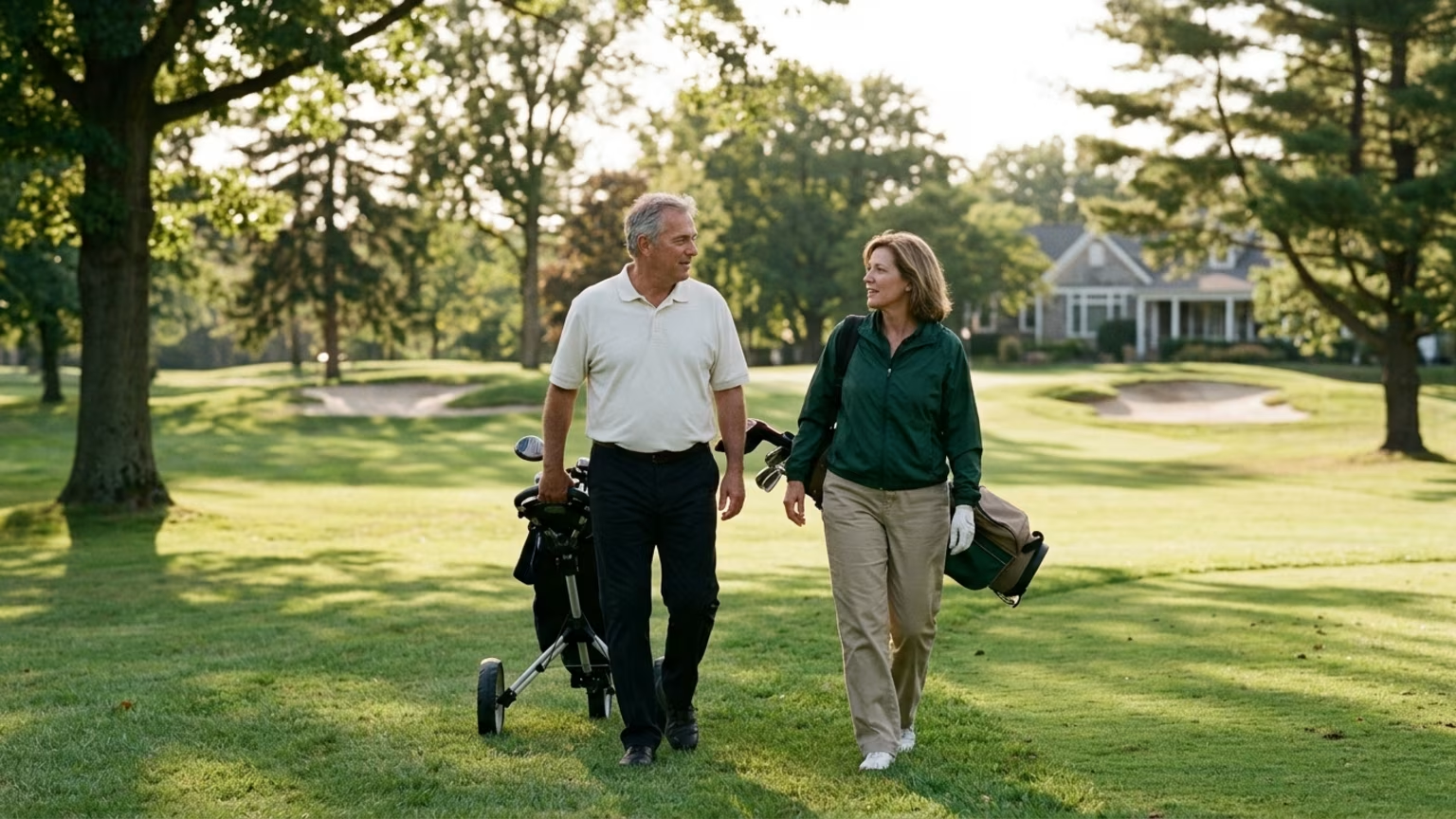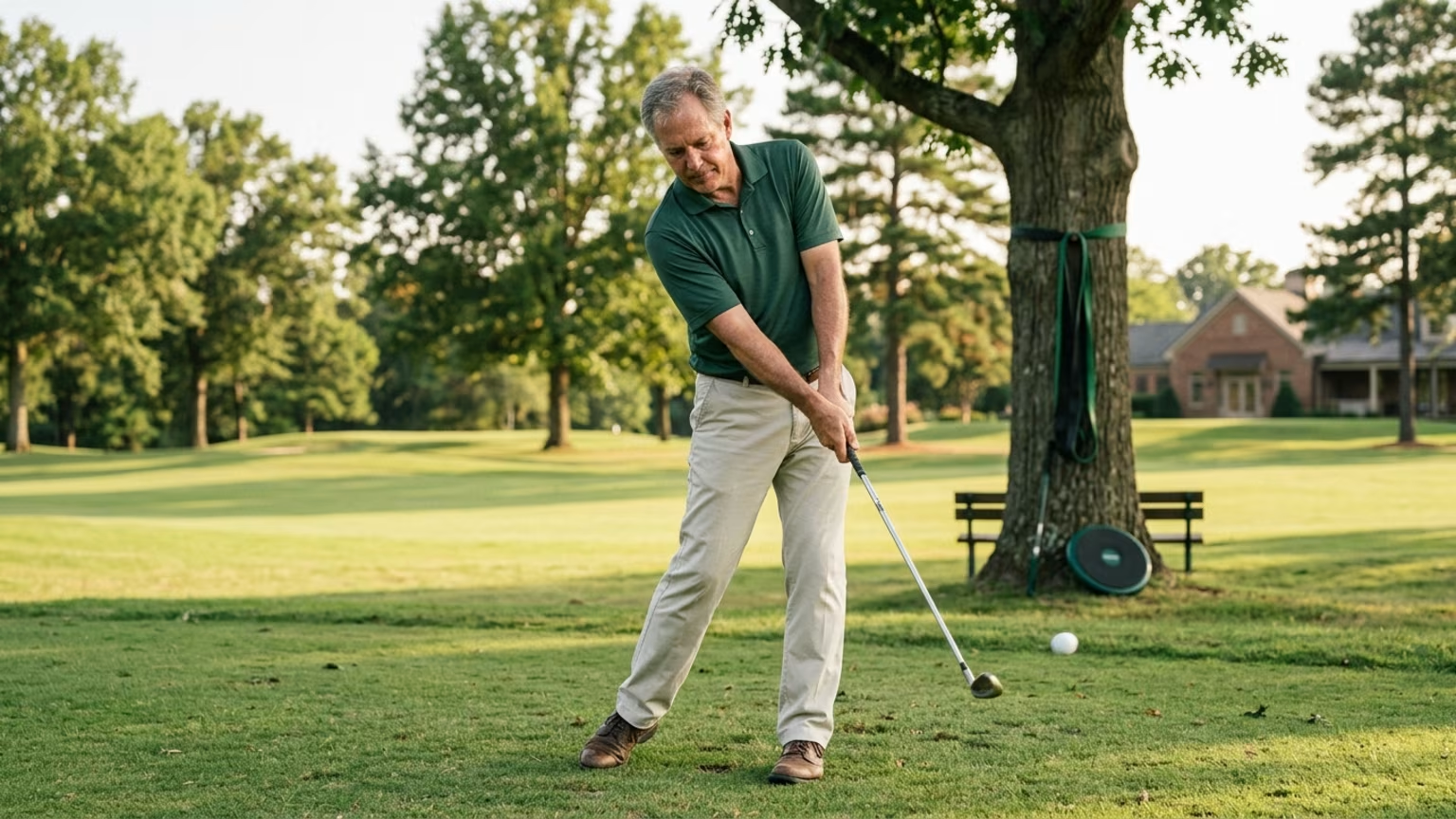

Learn the practical differences between force, stability, and equilibrium in the golf swing, and how golfers over 40 can train to play better for longer.




Strength is your body's capacity to produce force. Stability is your ability to control unwanted movement while another part of your body moves. Balance is your capacity to maintain or recover your physical equilibrium. These three physical traits are completely different tools for your older golf swing. None of them can substitute for the others.
Many recreational players group these three concepts together without distinction. They assume a physically strong player is naturally stable. They guess a balanced player must have high core stability. The reality on the golf course is much more specific. Generating a massive amount of force does not mean you have the physical control to direct it.
Holding a perfectly still posture does not prove you have the power to hit a long drive. Understanding the boundaries between these traits helps you focus your practice. You can ask yourself if you need more force production or a steadier center of gravity. Developing a clear view of your own body is the first step toward lasting improvement.
A standard round of 18 holes demands all three physical qualities working in unison. They overlap heavily during every single shot you take from the tee box to the green. The transition from the top of the backswing into the downswing offers a clear example. This crucial moment requires force, stability, and equilibrium simultaneously.
First, a golfer needs strength to push into the turf and rotate the body with speed. This pushing action creates the initial force needed to move the club. Next, the golfer needs stability to keep the trunk and hips from swaying laterally. Core bracing and lateral control help maintain your posture during this rapid rotation.
Finally, the golfer needs balance to hold the finishing position without falling backward. Uneven lies on the golf course highlight these physical boundaries clearly. Standing on a steep sidehill lie tests your balance before you even swing the club. As you swing, your stability keeps your upper body from dipping toward the slope.
Your strength then powers the clubhead through the thick rough. Building foundational strength for a more reliable swing makes this entire sequence possible. If one physical trait is missing, the other two suffer. A player with great strength but poor stability might generate speed while swaying far off the ball.
The demands of walking a full golf course amplify these physical requirements. As you reach the late holes, muscle fatigue begins to test your bodily control. A tired golfer might still produce force but lack the stability to control their lateral sway. Developing these three distinct tools helps you maintain a reliable swing even when exhaustion sets in.
Physical capacities change naturally as recreational golfers pass the age of 40 and move into their 50s. Golf fitness coach Chris Ownbey presents force production, mobility, stability, and balance as separate physical demands relevant to the swing. According to his work, these specific capacities can shift and decline over time.
Muscle mass and force production often decrease as players age. The ability to recover equilibrium can also slow down after a golfer turns 50. When older golfers lose their natural balance, they often compensate by holding back on their bodily rotation. If they lose lateral stability, their bodies might sway to artificially manufacture clubhead speed.
Mobility is another critical factor that declines naturally as we get older. A lack of spinal mobility can restrict your turn and limit your ability to generate force. When an older player forces a massive shoulder turn without adequate mobility, their stability usually collapses. A thoughtful training routine acknowledges these limits and builds control around them.
Older players need a tailored approach to address these natural physical changes. Keiser University College of Golf advises golfers over 50 to adjust their physical training routines. The college suggests that players with back or shoulder issues should prioritize mobility and a controlled tempo over maximum weight loading. Pushing for absolute strength without addressing stability can lead to poor movement patterns.
This balanced mindset helps players pass the back-nine endurance test without feeling physically depleted.
Golf instructors recognize the practical differences between force, control, and equilibrium. Keiser University College of Golf describes the swing as a rotational movement that calls on strength, mobility, and balance. The institution links lower-body and core strength directly to pushing against the ground and transferring energy. This transfer of energy requires intense physical discipline from the golfer.
Keiser's coaching article says that research and coaching experience link improvements in rotational strength and single-leg stability with measurable gains in speed and accuracy. The article does not cite specific studies or underlying numerical measurements to validate this exact point. It simply uses these concepts to explain why producing force demands equal physical control. Practitioners view these physical traits as a unified system rather than isolated pieces.
Core bracing limits unwanted lateral sway during a full rotation of the torso. Developing a functional framework for strength, balance, and rotational control is a practical goal for any mature player. These insights do not promise a perfect swing or guaranteed injury prevention. They simply highlight the real physical demands of hitting a golf ball effectively.
Building force and controlling it helps support steadier positions over the ball.
Keiser University College of Golf recommends specific movements to build bodily awareness and physical control. The college suggests single-leg stands and heel-to-toe walks as practical balance challenges. These simple exercises are highly accessible and do not require heavy gym equipment. They provide a safe starting point for older players looking to build coordination.
To practice a single-leg stand, focus entirely on maintaining an upright posture while lifting one foot off the floor. Keep your breathing steady and hold the position for a short duration. Switch legs and repeat the process on the other side. This drill isolates your ability to maintain equilibrium without adding complicated swing mechanics.
The heel-to-toe walk is another simple method to challenge your bodily coordination. Walk slowly in a straight line while placing the heel of your front foot directly against the toes of your back foot. This narrows your base of support and forces your body to manage its center of gravity. You can perform this drill in any quiet hallway.
Incorporating these small tests into your weekly schedule can reveal hidden physical imbalances. You might discover that your left leg offers excellent stability while your right leg struggles to hold weight. Identifying a weak side early allows you to address the issue before it ruins your posture on the course. Simple awareness is often the best defense against long-term golfing injuries.
Keiser recommends beginning with a simple warm-up and a very limited selection of strength movements. Progressing gradually is critical for mature golfers looking to avoid physical setbacks. If you feel sharp joint pain during any exercise, stop the movement immediately. These foundational habits focus on controlled execution rather than aggressive physical force.
Building force alongside stability and balance gives your body the physical resilience to play better for longer.
Follow Golfergy for practical insights on performance, mobility, recovery and healthy ageing. Stay connected for new articles, research-led guidance and ideas to help you play better for longer.


A practical look at golf strength after 40, with research on older golfers and simple habits for connecting training goals to a coordinated swing.


How legs, trunk and upper body share the work of a golf swing, with simple planning habits and a measured look at evidence for older golfers.

Understand mobility versus stability in golf, what older-golfer research reports, and two modest habits for comfortable movement control.
Explore practical resources on performance, recovery, mobility and golf longevity.
Read the Blog