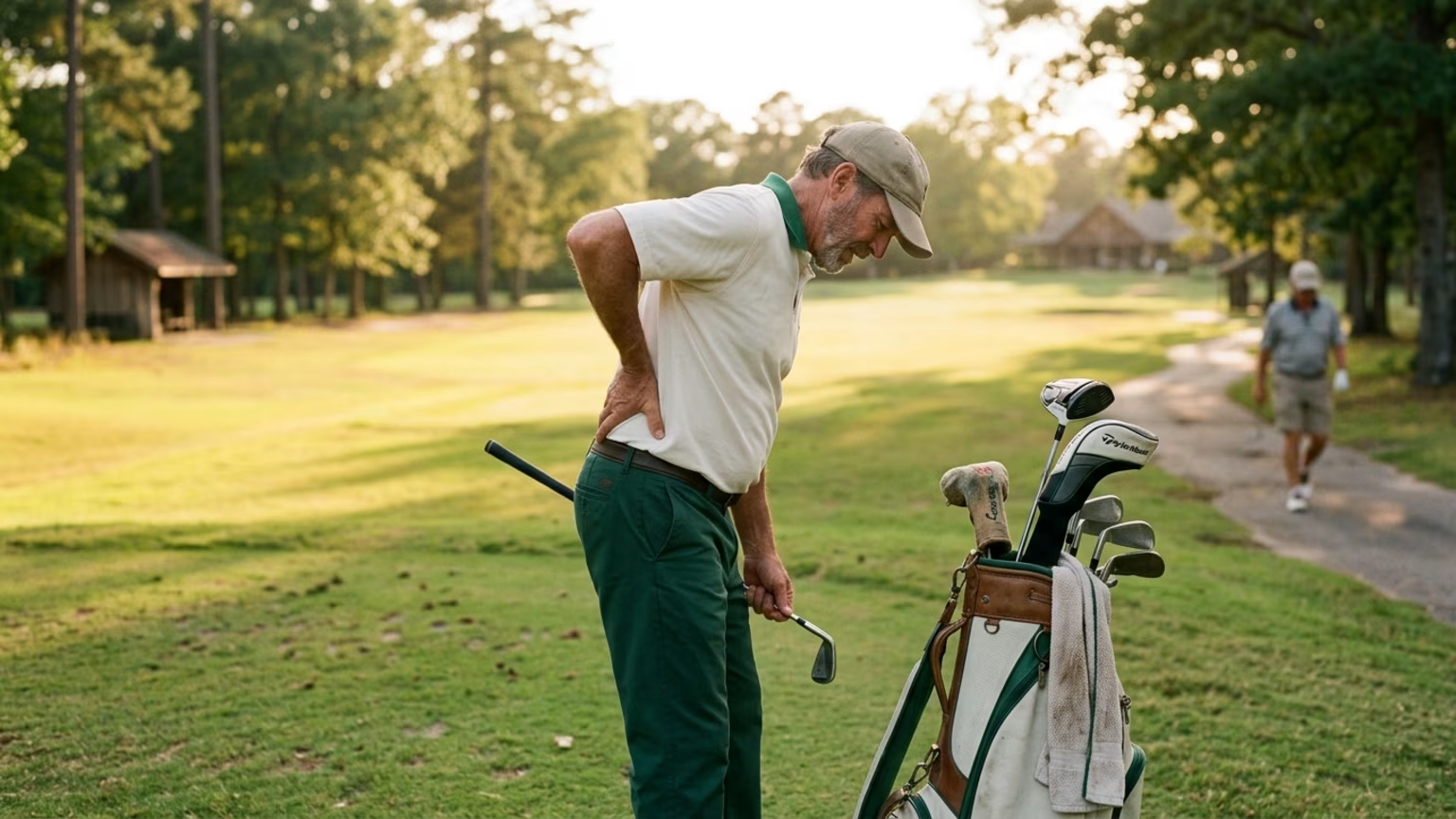

Learn how older golfers can build a more reliable swing by focusing on lower-body stability, trunk control, and force management rather than maximum speed.




Golf-specific strength is simply your body's ability to coordinate force from the ground up. It is not about building the largest muscles possible. It is the functional skill of managing energy through your legs, core, and arms. When older players complain about losing distance, they are often just losing this sequence.
When you watch a seasoned player, their swing looks effortless and smooth. That fluidity comes from a deep foundation of physical stability. Your swing relies on specific muscle groups doing their exact jobs at the correct moments. Many recreational players misunderstand what building this physical foundation requires.
They try to swing harder with their hands and shoulders. This upper-body effort usually leads to poor contact and strained muscles. True golf fitness builds a connected chain of movement. It trains the body to operate as one unified system.
The lower body interacts with the ground to create a firm base of stability. The hips and trunk then contribute to healthy rotation. Finally, the upper body transfers that gathered force to the golf club. This framework proves that your arms do not generate power on their own.
They merely act as a conduit for the energy created by your lower body. If you want a repeatable swing, you have to train the body to handle force properly.
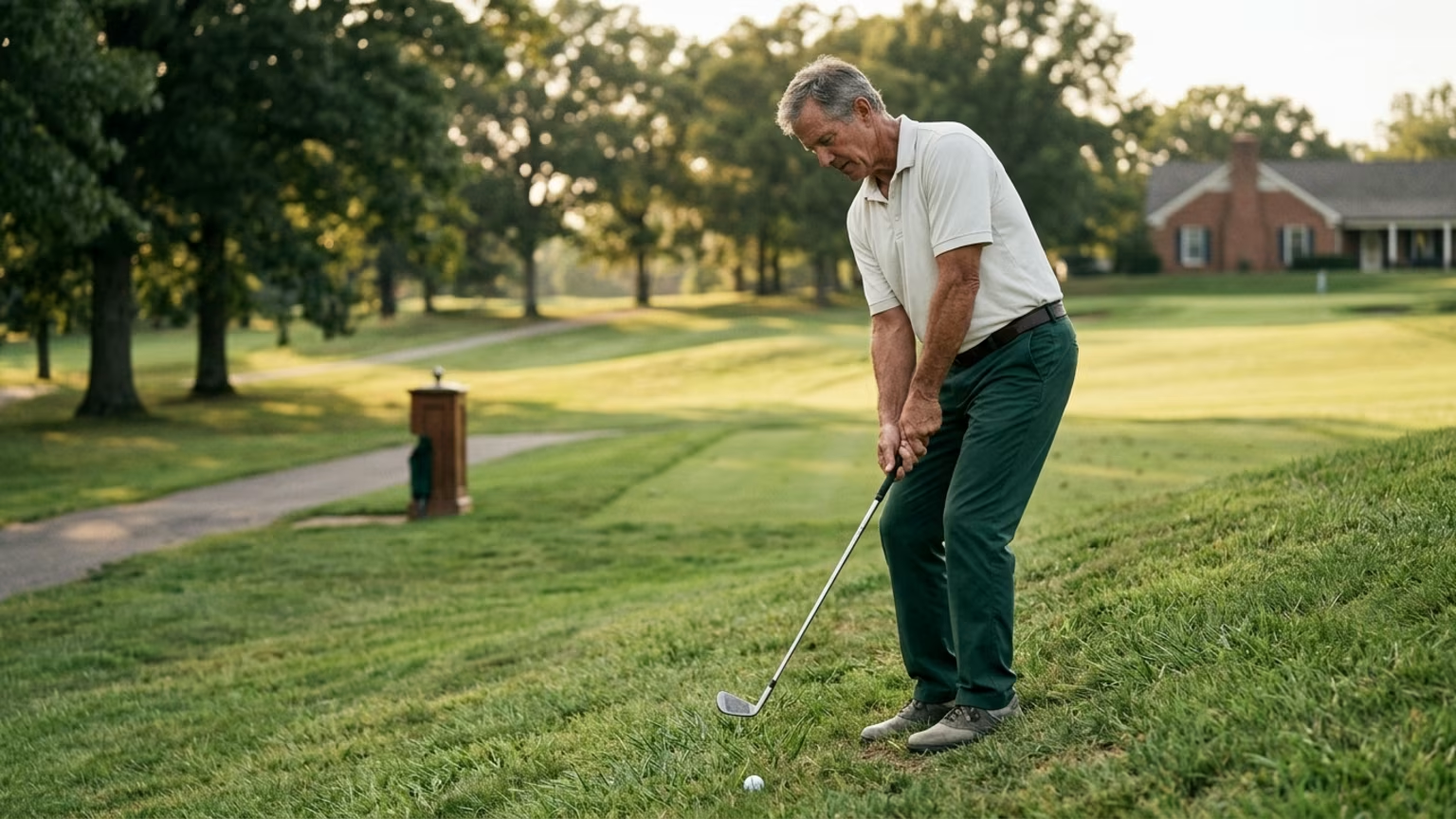
Think about your setup on a sloping fairway during the back nine. Your lower body has to grip the turf and remain completely stable. If your legs lack strength, your center of gravity shifts out of place during the swing. Your upper body then has to overcompensate to make solid contact with the golf ball.
This compensation requires perfect hand timing to hit a decent shot. Most recreational players cannot rely on perfect timing every single round. The resulting shots are usually thin or hit off the toe of the club. This is exactly where a lack of foundational conditioning ruins your scorecard.
A coordinated body handles uneven lies with ease. Your legs push against the ground to create a reliable base of stability. Your trunk rotates smoothly without swaying offline or losing posture. Finally, your upper body simply transfers that gathered energy right into the clubhead.
When these parts work together, the club moves on a predictable path. Players who train this chain experience fewer late-round swing faults. They also hit the ball closer to the center of the clubface more often. Managing force correctly means you do not have to swing out of your shoes.
You can take a smooth swing and still generate plenty of clubhead speed. You are letting your larger muscle groups do the heavy lifting for you. This efficiency preserves your physical energy for the final few holes. This is why building a reliable base of strength improves your overall consistency.
As golfers pass age 40 and 50, natural physical changes disrupt how they manage force. Muscle mass begins to decrease slowly over time. Joint stiffness can alter how you shift your weight during the backswing. We often lose the subtle lower-body stability that grounds the golf swing.
These small physical declines add up to a less reliable golf game. You might not notice the loss of power until you review your yardages. The issue is rarely a sudden loss of arm strength. Instead, the problem stems from a breakdown in how you push off the ground.
Changing how your feet press into the turf alters your entire lower-body movement during the swing. If stiffness changes how you press into your shoes, your entire swing path shifts. You might stop loading your trail leg properly. You might slide your hips laterally instead of rotating them.
These age-related shifts force the arms and hands to work too hard to save the shot. When your feet and legs cannot manage the ground pressure, your sequence falls apart. Your body simply forgets how to ground itself properly.
Older golfers frequently struggle with a loss of balance during the follow-through. This imbalance is a clear sign that the lower body is not managing force correctly. Restoring this connection to the ground is an immediate priority for aging players.
Many players start a fitness program expecting massive distance gains right away. The available research suggests a more measured reality for recreational players. Aeon Wellness Club summarized a 2021 systematic review that looked at resistance-training methods and golf performance. This review included 13 studies of nonspecific resistance training.
It also included seven studies focused on combined training programs. Aeon Wellness Club reports average clubhead speed changes of about 1.6% for general resistance training. They note an average change of about 4.1% for combined programs. These averages are useful benchmarks for the recreational player.
They prove that training helps, but they are not a promise of extra yards for any individual golfer. Your primary goal should be a reliable motion rather than maximum speed. Understanding these numbers helps keep your expectations realistic. You are training to control your swing rather than to break long-drive records.
A modest increase in clubhead speed is just a nice bonus. By focusing on stability and control, you build a swing that holds up under pressure. When you are standing over a crucial approach shot, you need to trust your balance. You can learn more about the strength foundation for better ball striking to guide your own routine.
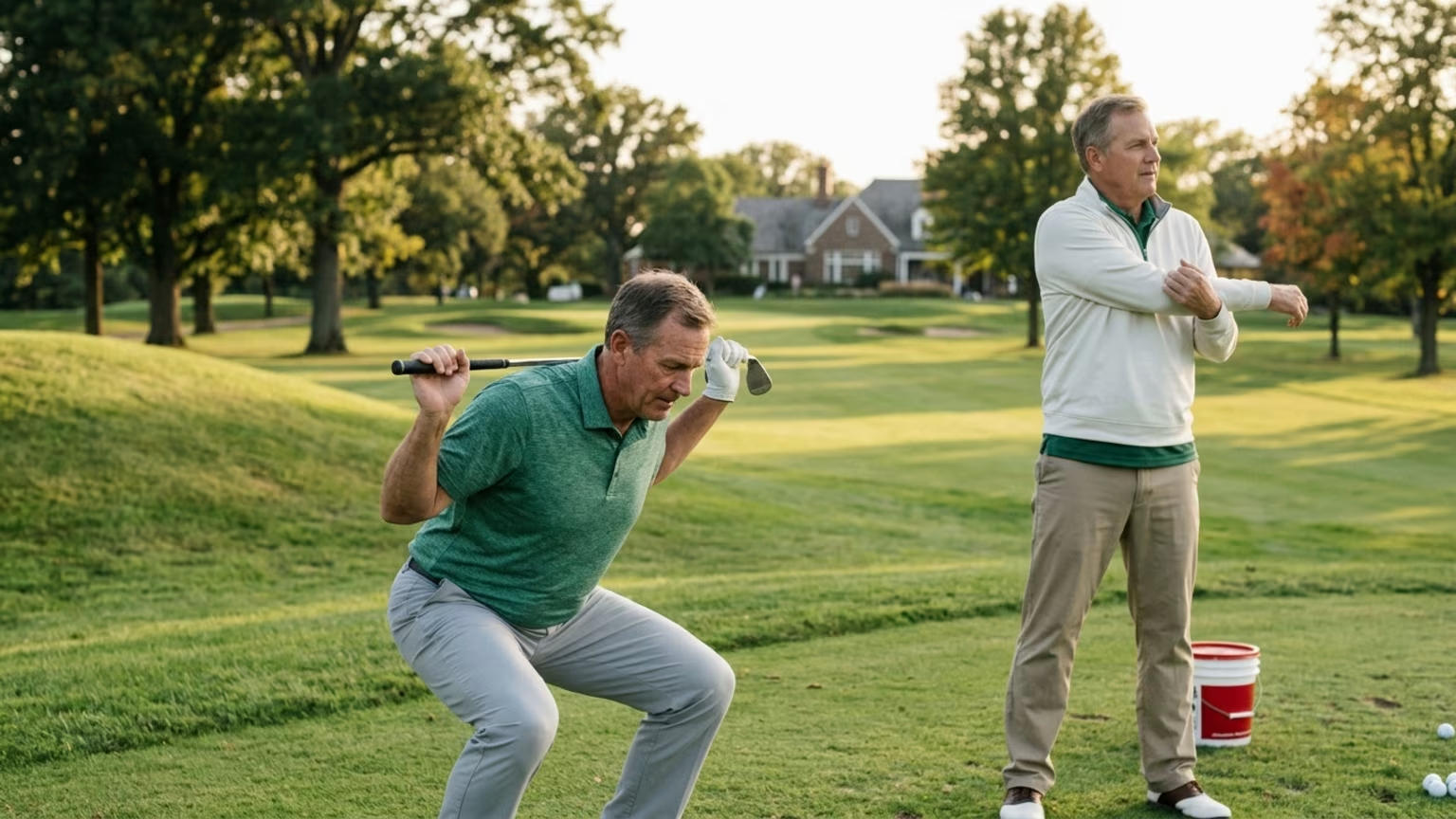
If you want to support this coordinated swing, start with very conservative movements. Begin by focusing entirely on your foot pressure during your practice swings. Take a medium iron and set up in your living room without a golf ball. Focus entirely on feeling the ground beneath the balls of your feet.
Make a slow backswing while keeping your lower body quiet and firmly rooted. Notice if your weight spills to the outside of your trail foot. You want to feel a solid post that your hips can turn against comfortably. This simple drill reinforces your connection to the ground.
Next, incorporate a basic trunk rotation habit without holding a golf club. Cross your arms over your chest and stand in your normal golf posture. Focus entirely on turning your trail hip away from the imaginary target line. Do not force your shoulders to turn past their comfortable limit.
You can perform this movement in front of a mirror to check your posture. Keeping your head steady while your trunk rotates is a great way to monitor your progress. This small movement helps your body remember how to rotate the trunk safely. Combining these simple habits helps establish proper strength plans for older golfers.
Over time, you build the physical control needed to transfer energy smoothly. Practicing the right movement patterns is always better than lifting heavy weights. Older recreational golfers benefit most from consistency and proper recovery. Make sure you rest adequately between your practice sessions and your rounds.
Rushing the process will only set you back physically. If a movement causes pain, stop immediately and consult a medical professional. Building your strength should never compromise your joints.
Training your body to coordinate force from the ground up is the true foundation of playing better for longer.
Follow Golfergy for practical insights on performance, mobility, recovery and healthy ageing. Stay connected for new articles, research-led guidance and ideas to help you play better for longer.



A practical guide to hip and upper back mobility for golfers over 40. Learn how combining strength with controlled movement helps you play better for longer.


Examine the physical limitations driving modern golf training tools. Learn why targeted mobility conditioning and recovery tracking protect older golfers from injury.
Learn why static balance routines fail older players on the course. Find practical ways to stay steady on uneven lies and protect your golf swing mechanics.
Explore practical resources on performance, recovery, mobility and golf longevity.
Read the Blog