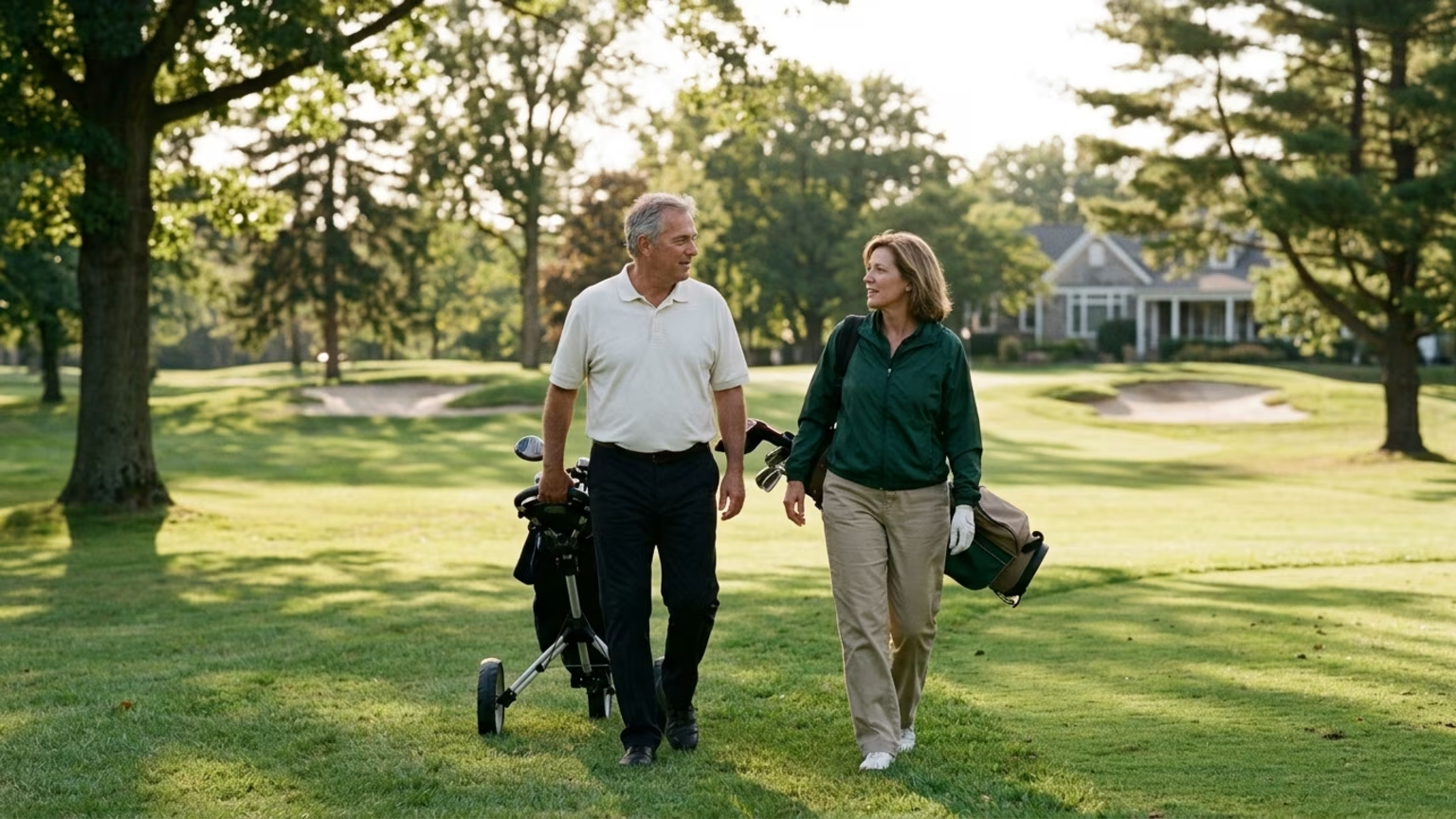
Learn why golf fitness after 40 goes beyond swing speed. See how balance, core stability, and functional strength help older players walk the course safely.




Golf strength is simply your body's capacity to produce, control, and sustain force over a prolonged period, acting as the engine of your older golf swing. Many players mistakenly associate strength training purely with heavy weightlifting or building large, restrictive muscles. For the mature recreational golfer, it is actually about maintaining the stability required to control your clubhead and protect your joints. Younger players might chase extreme speed, but experienced golfers usually need strength for resilience and consistency. Understanding this critical distinction is the first step toward creating a reliable, sustainable physical routine.
Building a capable body means you do more than just survive a round, allowing you to actively enjoy it from start to finish. When you maintain adequate muscle capacity, you can absorb the rotational forces of your swing without straining your lower back. It also provides a buffer against the typical physical fatigue that ruins scorecards on the back nine. Establishing a golfers strength blueprint after 40 means prioritizing practical, functional movements over temporary equipment fixes.
Many mature players try to buy a better game with new equipment, hoping modern technology will compensate for physical decline. However, a lighter shaft or an oversized clubhead cannot fix poor posture, weak hips, or a stiff upper back. True consistency comes from a body that can execute the right movements reliably, hole after hole. Investing in your physical capacity provides a much higher return than searching for an overnight swing correction.
During a standard round of golf, your body endures a surprising amount of varied, repeated physical stress. You have to maintain a precise spine angle during rapid rotation, walk miles across varied terrain, and stabilize your stance on steep hills. Every time you swing, your legs and hips must generate ground force while your trunk manages the rotational load. If your lower body and core lack the required conditioning, your swing mechanics will begin to fail as fatigue sets in.
Consider the reality of playing a shot from a sidehill lie with the ball sitting well below your feet. Your legs have to hold a deeper, static squat position while your upper body twists aggressively through the impact zone. Without adequate lower-body stability, you will likely lose your balance, alter your club path, and mis-hit the golf ball. Your trunk must also remain engaged to protect your lower back from absorbing too much rotational torque.
Walking the course also demands continuous energy, especially when carrying a bag or pushing a heavy cart up an incline. As the round progresses, tired legs lose their ability to support the forceful hip rotation necessary for a consistent golf swing. When your legs get tired, your arms tend to take over, leading to timing issues and potential elbow or shoulder strain. Maintaining strength for a more reliable swing after 40 gives you the muscular endurance to hold these difficult postures securely.
The physical demands of golf extend well beyond the hours you spend at the local course. Carrying groceries, climbing stairs, and playing with grandchildren all rely on the same fundamental movement patterns you use during a round. When your legs and trunk are strong enough to manage daily chores easily, they are also prepared to handle the rotational forces of a tee shot. Training for golf longevity is ultimately an investment in your overall health and daily vitality.
As a golfer passes age 40 and approaches 50, muscle mass and natural balance begin to decline predictably. This natural physical shift makes it harder to recruit power, maintain posture, and recover efficiently between rounds of golf. Rather than chasing extreme clubhead speed, mature players should focus on maintaining a capable, resilient body. The World Health Organization offers clear guidance recommending that adults participate in muscle-strengthening activity on at least two days per week.
These regular strengthening sessions should involve all major muscle groups to maintain general physical capacity over time. For older adults, particularly those aged 65 and older, this health guidance adds an important layer. The recommendation includes multicomponent activity focused on balance and strength to support long-term mobility. Following a minimum effective strength plan for golf longevity provides a sensible way to manage these natural aging processes.
While the golf fitness industry often fixates on adding miles per hour to your driver, basic physical resilience matters much more. If you cannot walk the fairways safely or recover quickly, a slightly faster swing will not improve your overall experience. A training routine should not be evaluated solely on whether it adds distance to your drives off the tee. It must also support your ability to walk the course comfortably, recover quickly, and manage everyday physical tasks.
Translating this guidance into practical action does not require exhausting daily workouts or highly complicated gym equipment. You can organize your habits around core movement categories rather than complex, golf-specific gym protocols. Try combining squatting, hinging, pushing, and pulling with loaded carries. Squatting and hinging build the strong leg and hip drive necessary for a powerful downswing.
Pushing and pulling movements strengthen the chest, back, and shoulders, providing control over the clubhead throughout your swing arc. Loaded carries, like simply walking with heavy dumbbells in each hand, train your core to brace against shifting weights. While this specific five-category menu is an editorial framework rather than a proven medical protocol, it aligns neatly with general physical guidelines. These basic human movements address your entire bodily system and build the general capacity required for a healthy golf game.
To begin addressing your specific bodily system, start by focusing entirely on basic stability and core control before adding resistance. You might dedicate five minutes a day to single-leg balance exercises, holding onto a chair for safety if needed. As you grow more comfortable, you can introduce basic wall push-ups or unweighted squats to challenge your major muscle groups. Keep the movements slow, controlled, and well within your current physical capabilities to avoid unnecessary soreness or injury.
Beyond the swing itself, practical strength training plays a massive role in how you feel the morning after a round. When your muscles lack endurance, your joints and ligaments take on the brunt of the physical stress during your swing. This overcompensation often leads to lower back stiffness, sore shoulders, and a nagging fatigue that lingers for several days. Building a solid physical base helps your body absorb these forces, making recovery faster and much more comfortable.
It is highly recommended to seek individualized professional advice if you have health concerns or are unsure about selecting exercises. Your personal routine should match your medical history, your current fitness level, and the specific physical demands you face on the course. Public-health recommendations provide a great starting point, but they should always be tailored to your unique situation. Committing to a longevity mobility plan for swing health is a process of steady, patient adaptation rather than an overnight transformation.
Building foundational physical capacity is ultimately about giving your body the resilient base it needs to keep playing better for longer.
Follow Golfergy for practical insights on performance, mobility, recovery and healthy ageing. Stay connected for new articles, research-led guidance and ideas to help you play better for longer.


A practical strength framework for golfers over 40, built around everyday goals, sensible progression and a careful look at limited golf research.


A research-led look at strength, balance, mobility and trunk control, with a flexible planning framework for golfers over 40.
Understand golf mobility after 40 with a comfortable-turn self-check, hip and shoulder guidance, and a clear look at flexibility and swing speed.
Explore practical resources on performance, recovery, mobility and golf longevity.
Read the Blog