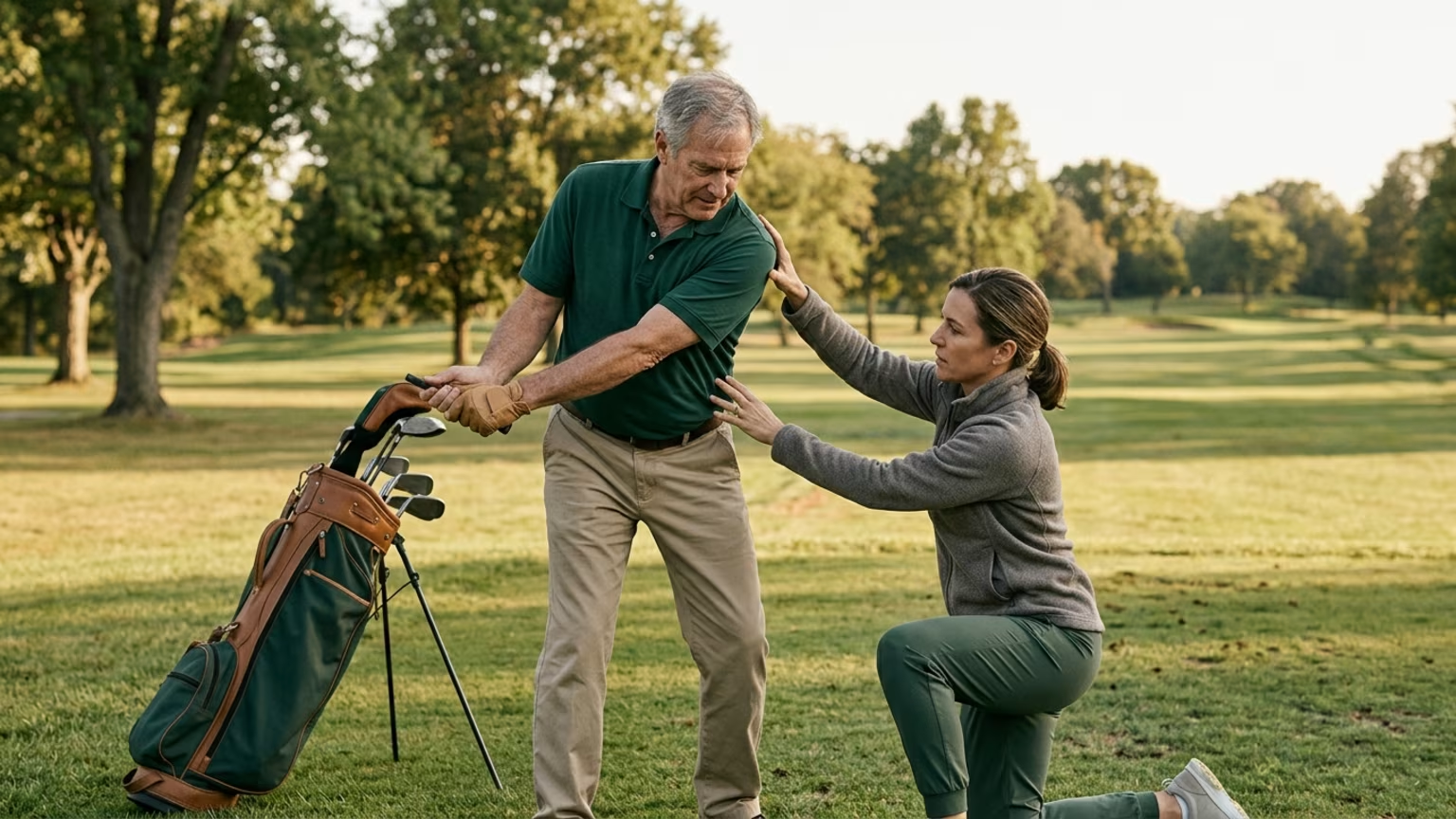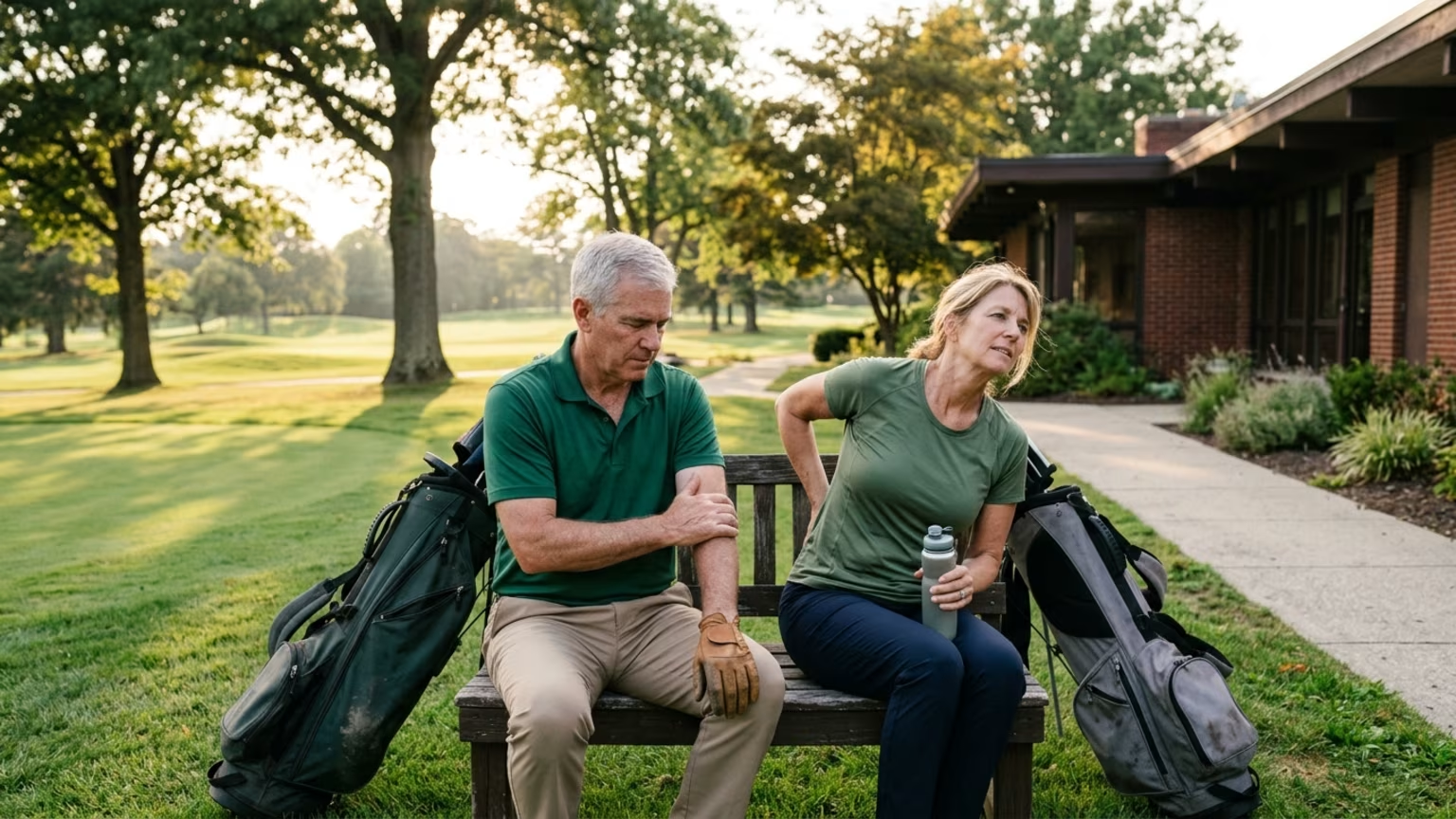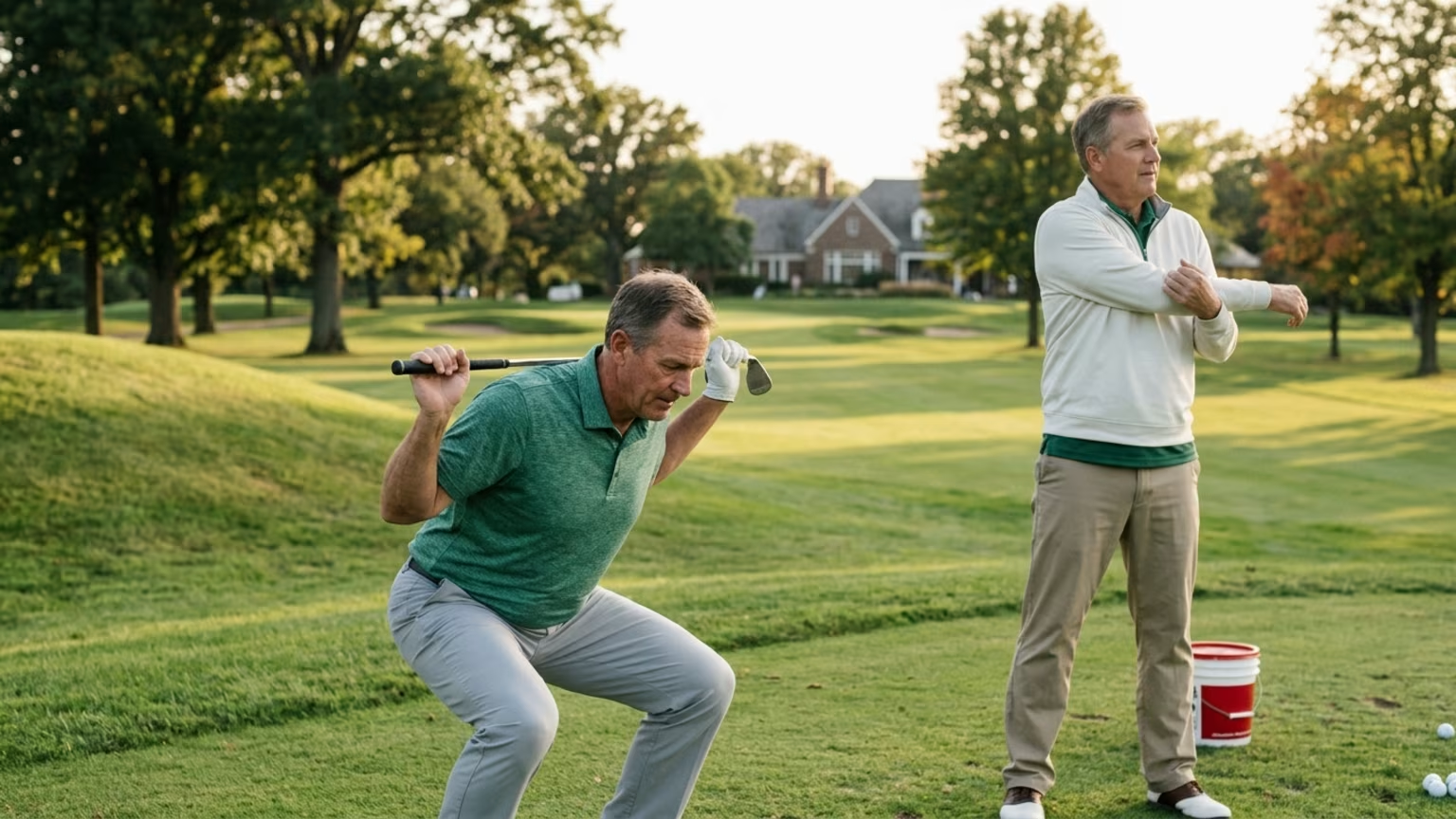

Flexibility is just available range, but mobility is controlling it. Learn how older golfers can test their rotation and build a more repeatable swing.




Thoracic spine mobility is simply your mid-back’s ability to rotate, and it acts as the central engine for your older golf swing. It is important to distinguish this active movement from passive flexibility. Flexibility is the total amount of available stretch at a specific joint or muscle group. Mobility is your physical ability to actually use and control that range of motion under pressure.
Having a wide range of motion available does not automatically mean a golfer can control it safely during a swing. You might possess the flexibility to twist your torso deeply while sitting calmly on a yoga mat. However, standing over a golf ball and rotating your shoulders against the resistance of your planted feet requires active mobility. Stretching a muscle is a quiet, passive activity.
Swinging a golf club is a highly active, forceful action that demands immense stability. If you cannot control the flexible range you have, your swing sequence will break down. True mobility means you possess the strength to hold your posture while turning. A highly flexible golfer with poor stability will struggle just as much as a stiff golfer.
This crucial difference between passive stretch and active control becomes obvious during a standard eighteen-hole round. A golf physiotherapy clinic known as Royal Blue Fitness describes the golf swing as a movement requiring highly controlled rotation. A player must move their body into a specific range of motion and stabilize through it while force travels upward from the ground. On the first tee, you might feel loose enough to make a full, aggressive turn.
As the round progresses toward the back nine, muscular fatigue inevitably sets in. The physical force of swinging a club repeatedly requires your muscles to brace and control every single rotational movement. If you rely strictly on passive flexibility without the strength to control it, your body will struggle to maintain posture when tired. Your hips might slide laterally instead of turning cleanly.
Your upper back might slump forward slightly to compensate for a lack of rotational endurance. This loss of physical stability often leads to inconsistent contact, early extension, and poor shots late in the day. True mobility means you can stabilize your spine and pelvis through impact on the final hole just as well as you did on the first. Understanding this mechanical requirement helps you maintain your swing mobility from the opening drive to the final putt.
When your feet push against the turf, your body must transfer that energy efficiently through your core and into the clubhead. If your joints lack the stability to manage that energy, the physical force leaks out through compensatory movements. A stable midsection acts as a strong bridge between your lower and upper body during the entire swing. Without this controlled mobility, you lose power before the clubhead even reaches the golf ball.
As golfers pass the age of forty and fifty, the physical requirements for a repeatable swing begin to shift noticeably. The natural instinct for many older players is to stretch aggressively to regain the massive shoulder turn of their younger days. Having a massive, passive range of motion does not automatically translate to hitting the ball further or scoring better. Older players often lose the muscular strength required to control their available range effectively.
When your muscles lose the endurance to stabilize a deep turn, your body will naturally compensate by placing stress on other joints. A stronger body can support the rotational demands of the swing without breaking down mid-round. Reef Physical Therapy notes that strength actively helps golfers use their available range and maintain mechanics when they get tired. Age fundamentally changes how your body recovers and stabilizes under a heavy rotational load.
You need physical strength to use your available range effectively when fatigued late in a round. This is exactly why smart preparation beats swinging harder as you navigate your later playing years. Focusing purely on strength and stability rather than extreme stretching preserves your joints for the long term. A well-conditioned midsection acts as a shock absorber for your spine.
When you focus entirely on building control over your joints, you reduce the risk of mid-round injuries. Your lower back no longer has to twist excessively to make up for stiff, uncontrolled hips. This focused approach to physical preparation keeps older players on the course week after week. Consistency in your movement quality always beats the intensity of a random stretching routine.
Clinical experts strongly advise against aggressively stretching tight areas without understanding the underlying swing mechanics. Reef Physical Therapy advises that golfers only need enough hip, thoracic spine, and shoulder movement to achieve effective positions. They caution mature players against chasing extreme flexibility, and they warn against aggressively pushing an irritated joint. A restricted-feeling joint often requires a full assessment of strength and stability rather than a harder stretch.
Ascend Physical Therapy notes that a proper evaluation looks at much more than a simple toe touch. Their clinical evaluations consider hip internal and external rotation, hip extension, and overall pelvic control. These physical therapy professionals also check for side-to-side differences, single-leg stability, thoracic rotation, and shoulder mobility. A true professional assessment looks at exactly how these specific areas move in actual golf positions.
Many amateur golfers make the mistake of diagnosing their own swing flaws based on a single tight muscle. They might spend weeks stretching their hamstrings without realizing their pelvic control is the actual problem. A professional golf evaluation removes this guesswork by testing how your entire body works together as a system. This clinical perspective helps you avoid wasting time on stretches that will not improve your actual golf mechanics.
Instead of forcing deep stretches, you can use simple self-checks to identify bodily areas that lack controlled movement. These checks are gentle ways to notice discomfort, obvious asymmetry, or physical compensations. They are absolutely not diagnostic tests. If any movement causes pain or reproduces a familiar golf symptom, you should stop immediately and consult a professional.
The first foundational habit is monitoring your upper back rotation regularly. Sit upright in a firm chair and gently turn your chest to the right, and then turn to the left. Try to keep your pelvis completely still during the entire movement. Notice if one direction feels noticeably more restricted than the other.
Pay close attention to whether you have to lean backward or shift your hips to complete the turn. Ascend Physical Therapy often assesses thoracic rotation and rib-cage movement because a marked side-to-side difference can force your lower back to overwork. The second foundational habit focuses entirely on your hip control. You can perform this gentle check from a comfortable standing or seated position.
Keep your knees bent and gently rotate one thigh inward, and then rotate it outward slowly. Repeat this exact motion on the other leg. Look for a clear side-to-side difference or any sudden discomfort. Notice if your pelvis has to lift or shift to create the necessary movement.
Because limited hip control alters your entire swing path, performing these simple mobility self-checks helps you notice stiffness early. The final awareness check involves your shoulder mobility. Raise your arms comfortably overhead and gently turn your upper arms outward. Notice any sharp pain, a marked side-to-side difference, or whether you must arch your lower back to get the movement.
Shrugging your shoulders heavily to complete this motion is a common compensation. Seek a professional assessment rather than forcing a stretch if you find a substantial new restriction. A qualified physical therapist can assess your movement safely in a proper clinical context.
True mobility is simply the active physical control required to execute a repeatable swing, keeping you playing better for longer.
Follow Golfergy for practical insights on performance, mobility, recovery and healthy ageing. Stay connected for new articles, research-led guidance and ideas to help you play better for longer.



A practical dynamic mobility routine for older golfers preparing for the first tee. Understand why active warm-ups improve performance over static stretching.


Learn why your golf turn relies on hip and mid-back mobility. Discover how rotation changes after 40 and find gentle ways to maintain your swing range.

Avoid weekend stiffness and lower back pain with a simple, evidence-based mobility routine designed for older golfers who spend most of the week sitting.
Explore practical resources on performance, recovery, mobility and golf longevity.
Read the Blog