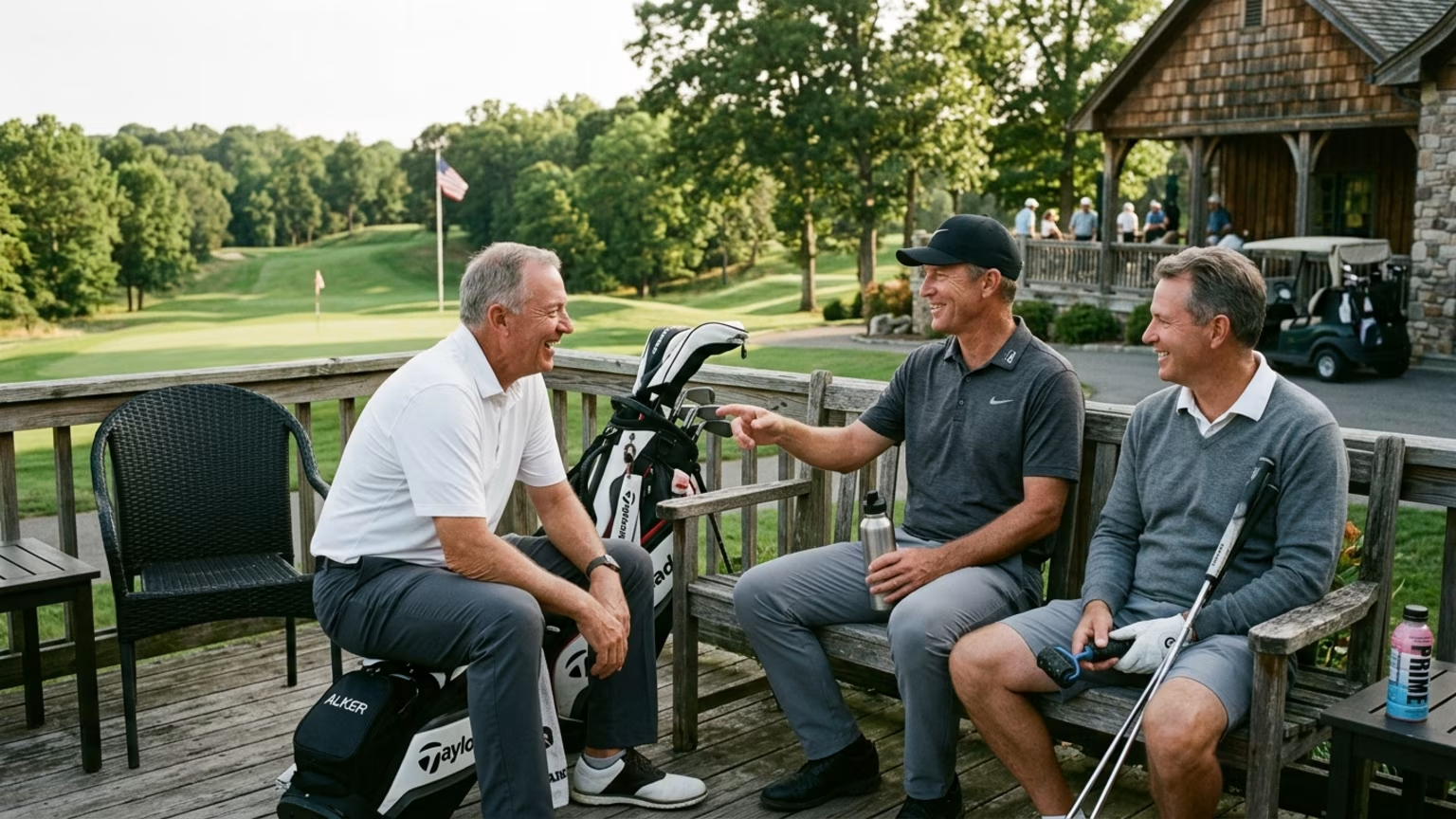

Steven Alker's back-to-back PGA Tour Champions wins highlight the importance of proper recovery, sleep, and mobility routines for golfers over 50.




Steven Alker stood on the back nine at Warwick Hills Golf & Country Club in Grand Blanc, Michigan. The 55 year old New Zealander looked completely fresh while walking down the fairway late in the final round. He made four consecutive birdies during that closing stretch to secure his second straight PGA Tour Champions victory. Behind that late round execution is a physical reality that older players cannot ignore: a physician quoted by Men’s Health Spain claims that sleeping eight hours or more could reduce injury risk by as much as 65 percent.
Alker closed the Ally Challenge with a four under par 68 to finish at 15 under 201. That final round secured a three stroke victory and earned him $330,000 from a reported $2.2 million purse. Posting rounds of 68, 65, and 68 over a 54 hole event requires more than just good ball striking. It demands a nervous system and physical frame that can recover fully overnight.
While professional golfers have access to elite medical teams, the foundation of their recovery relies on basic human physiology. Tissue repair happens largely during deep sleep cycles. For an aging athlete, consecutive rounds amplify normal fatigue into cumulative muscle strain. Protecting that physical baseline allows a player to maintain posture and rotational force through the final holes of a tournament.
Your clubhead speed directly relates to your ability to recruit fresh muscle fibers during the golf swing. When your body fails to recover after a long round of golf, your nervous system limits rotational power to protect fatigued joints. Older players often notice this power drain on the back nine, making them wonder about how to track physical strain over time. Proper rest restores that muscular elasticity so you can attack the golf ball with confidence.
The victory marked Alker’s 13th win on the PGA Tour Champions and his third of the season. His success on a tour built for players aged 50 and older highlights a stark contrast with amateur golf. Weekend players often expect their bodies to handle multiple consecutive rounds without planning any formal recovery steps. This approach usually leads to late round swing faults and mounting physical pain.
The victory in Michigan was Alker's second victory in as many weeks, following his win at the Rogers Charity Classic in Calgary. Traveling between locations and playing high stakes tournament golf requires serious bodily resilience. Professional golfers have the benefit of dedicated travel support and physical therapists to manage this physical stress. Amateur players must rely entirely on their own routines to combat the stiffness of travel and consecutive walking.
When I developed medial epicondylitis, commonly known as golfer's elbow, I thought I needed complete rest. Six weeks off the course did nothing to help. I finally learned that active recovery with a flexbar was the actual solution. It taught me that treating golf injuries requires loading the tissue properly, not just sitting on the couch and hoping for the best.
Tour professionals manage fatigue systematically so they can execute their strategies across consecutive days of competition. While a younger player on tour might bounce back from an aggressive weekend swing, a 50 year old amateur will feel that same mechanical strain for days. For the mature recreational golfer, the physical breakdown usually begins in the lower back or hips during the second consecutive day of play. Without adequate rest and targeted physical upkeep, maintaining a consistent swing plane becomes nearly impossible.
Organizing your physical recovery before fatigue becomes a lasting injury is the most effective way to stay on the course. You should start by introducing regular mobility work rather than relying on aggressive stretching. Recent mobility guidance prioritizes doing controlled dynamic movements before your round and gentle static stretching afterward. You should stretch your hips and hamstrings while also tending to your shoulders and upper back.
When practicing your post round stretching, keep your instructions focused on one small movement at a time, such as focus entirely on turning your trail hip. International health reporting notes that older adults can maintain strength using body weight exercises, resistance bands, or light weights. You do not need to lift massive loads to support the physical demands of swinging a golf club. A basic routine with a resistance band can keep your trunk stable and protect your joints over the long term.
A basic program might include supported squats, step ups, and calf raises to build basic lower body endurance. You can also incorporate rows with a resistance band, simple weight carries, and daily balance exercises. The exact movements and resistance levels should be modified to protect prior injuries or specific joint limitations. Working on these basic movement patterns off the course translates directly to a much more resilient golf swing.
If you want to handle consecutive tee times, you must utilize these science based strategies for consecutive rounds. Separate your technical practice from your high intensity practice on days following a tough round. Focus on chipping and putting rather than repeatedly hitting drivers at full force. This measured approach protects your energy reserves and keeps your swing mechanics incredibly sharp.
Recreational golfers should monitor how their own bodies respond rather than blindly copying an unverified professional routine. The cited exercise guidance recommends a baseline target of 150 to 300 minutes of moderate activity each week. You can also aim for 75 to 150 minutes of vigorous activity weekly. Both approaches should include muscle strengthening activity on at least two days per week to maintain joint stability.
These benchmarks are designed for healthy aging rather than elite athletic peaking on the professional circuit. Chasing the practice volume of a younger tour professional will only accelerate tissue damage and invite joint inflammation. Use your own physical symptoms to guide the intensity of your next training session. If stiffness changes your normal walking pattern or limits your backswing, it is time to rest and seek professional assessment.
You should also focus heavily on managing your sleep consistency before and after a round of golf. Avoid treating late night travel or heavy screen use as normal habits before a weekend competition. Building a predictable bedtime routine is the most reliable way to reset your central nervous system between consecutive matches. Your body needs dedicated time to flush out metabolic waste and repair microscopic muscle tears.
Alker’s impressive performance in Michigan demonstrates what a well maintained body can achieve late in a professional golf tournament. Sustaining that level of play requires treating rest, controlled practice volume, and mobility work as connected parts of your golf schedule. Regular physical maintenance translates directly into fewer late round mistakes and a much longer playing career. Numbers don't lie: preserving your mobility and respecting your sleep schedule is the ultimate equipment upgrade. Play smart, recover well, and keep your body ready for the next tee time.
Follow Golfergy for practical insights on performance, mobility, recovery and healthy ageing. Stay connected for new articles, research-led guidance and ideas to help you play better for longer.


Rest or move the day after 18 holes? Use fatigue, soreness, symptoms and your playing schedule to guide a flexible recovery day.


Compare foam rolling, massage, compression, heat and cold for golfers, with comfort benefits kept separate from performance and injury claims.
A measured guide to stiffness during and after golf, with gentle movement options, sustainable habits and NHS-backed back-pain warning signs.
Explore practical resources on performance, recovery, mobility and golf longevity.
Read the Blog


