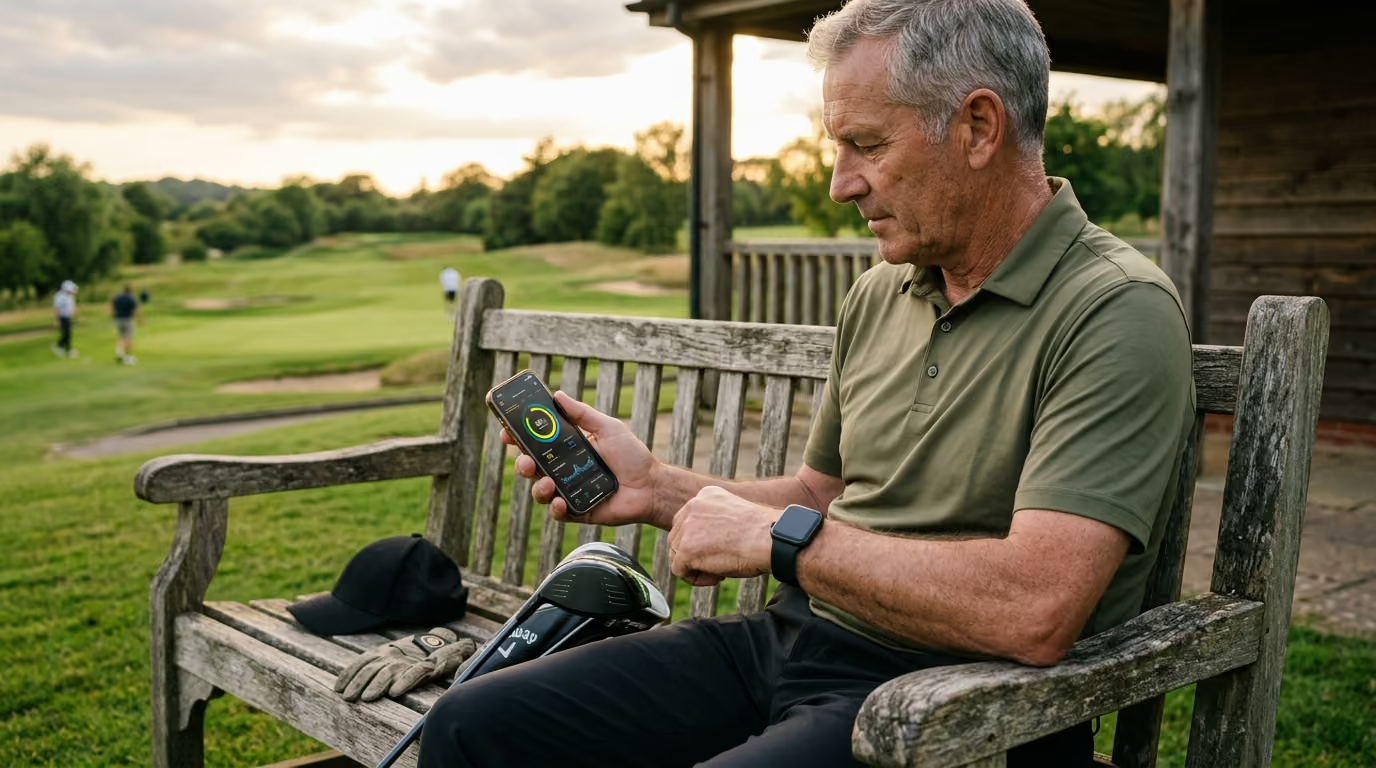

Inconsistent golf swings seem like mechanical flaws, but modern wearable technology proves that hidden nervous system fatigue actually ruins your movement.




Why does your golf swing feel fluid on Tuesday but completely fall apart on Saturday? You might blame your alignment, your tempo, or your equipment. The real cause is often far more subtle, invisible, and deeply rooted in your nervous system. For golfers over the age of fifty, physical fatigue does not always present itself as sore muscles. Instead, it shows up as a quiet drop in coordination, a slower swing speed, and an inability to clear your hips through impact.
Tracking this hidden wear and tear is no longer a matter of guesswork. Modern wearable sensors can measure how your body responds to the physical demands of the game. By monitoring specific cardiac and sleep metrics, you can learn when to push your training and when to step back. This approach helps you maintain your performance, protect your joints, and play pain-free golf for decades.
You stand on the fifteenth tee during a warm Saturday afternoon. You have played two rounds of golf this week, and you also spent an hour on the driving range yesterday. As you address the ball, you feel reasonably good, but your body tells a different story. When you reach the top of your backswing, your trail hip refuses to turn fully. Your hips stall during the downswing, forcing your hands to flip at the ball to compensate.
This mechanical breakdown is a classic response to systemic fatigue. When your central nervous system is tired, your brain protects your body by limiting your range of motion. Your deep stabilizing muscles stop firing efficiently, which places extra stress on your lower back. By the time you reach the green, your lower back feels tight, and your drive has leaked forty yards into the right rough.
You might assume that you simply need to stretch more or practice your swing path. However, the physical limitation on the fifteenth tee actually started days ago. Your body has been operating under a heavy load without fully recovering. A wearable device can detect this decline in physical capacity long before you feel the first twinge of pain in your lower back.
To make sense of the data on your wrist or finger, you must understand what your device is designed to do. Different wearables collect and present information in distinct ways. We can organize these devices into three clear categories based on how they deliver feedback to the user.
Prescriptive devices focus heavily on telling you exactly what to do each day. The WHOOP band is the primary example of this category. It does not have a screen, so it does not distract you while you are on the course. Instead, it sends raw data to an app that calculates a daily strain target based on your sleep and recovery scores.
If your recovery is low, the device advises you to limit your physical output. If your recovery is high, it encourages you to take on a more demanding workout or spend more time on the driving range. This style of feedback is excellent for golfers who want clear, direct guidance without needing to analyze raw numbers themselves.
Descriptive devices show you what is happening in your body but leave the decision-making process to you. The Oura Ring fits perfectly into this category. It sits comfortably on your finger, where it monitors your heart rate, skin temperature, and movement.
Each morning, the device provides a readiness score and a detailed breakdown of your sleep stages. It does not give you a specific daily workout plan. Instead, it presents a clear picture of your physical state so you can make your own training decisions. This style is ideal for golfers who prefer to adjust their schedules based on personal feel combined with solid data.
Reactive devices provide real-time metrics and general health tracking, but they require you to do some of the interpretation. The Apple Watch and various Garmin models are the leaders in this category. These watches excel at tracking active yards walked, GPS coordinates on the course, and active calories burned.
To get actionable recovery advice from these devices, you often need to use third-party applications. Apps like Athlytic can import your raw heart data from Apple Health to calculate your daily recovery. This setup offers great flexibility, as it combines excellent on-course GPS features with detailed health monitoring.
The most critical metric for tracking your physical readiness is Heart Rate Variability, which is commonly called HRV. To understand HRV, you must look at how your heart actually beats. Your heart does not beat at a perfectly constant rhythm like a metronome. If your pulse is sixty beats per minute, your heart does not beat exactly once every second.
Instead, the time between beats varies slightly. One interval might be 0.9 seconds, while the next interval is 1.1 seconds. This tiny variation in milliseconds is your HRV. It is measured using a mathematical formula called RMSSD, which stands for the root mean square of successive differences.
Metronomic Rhythm (Low HRV - Stressed Autonomic System):
[ Beat ] --- 1.00s --- [ Beat ] --- 1.00s --- [ Beat ] --- 1.00s --- [ Beat ]
Variable Rhythm (High HRV - Rested Autonomic System):
[ Beat ] -- 0.92s -- [ Beat ] ---- 1.12s ---- [ Beat ] - 0.85s - [ Beat ] -- 1.05s -- [ Beat ]
Your autonomic nervous system controls this variation. This system has two main branches that constantly compete for control of your body.
The sympathetic branch is your fight-or-flight response. When you face stress, exercise, or physical fatigue, this system takes over. It prepares your body for action by releasing adrenaline, raising your heart rate, and making your heart beat in a more rigid, metronomic pattern. A dominant sympathetic system causes your HRV to drop.
The parasympathetic branch is your rest-and-digest system. When you are relaxed, well-fed, and fully recovered, this system dominates. It slows your heart rate and allows for greater variation between individual heartbeats. A dominant parasympathetic system causes your HRV to rise.
For a golfer over fifty, tracking HRV is the most sensitive way to identify when your body is shifting from productive training into harmful strain. When your HRV is high, your nervous system is balanced, resilient, and ready to coordinate a complex movement like a golf swing. When your HRV is low, your body is struggling to recover, making you more susceptible to injury and swing errors. To learn more about managing your physical readiness, you can read our resources on injury prevention.
Many golfers believe that overtraining is something that only happens to elite, young athletes who spend hours lifting weights. In reality, mature recreational players are highly susceptible to overtraining. As we age, our bodies require more time to rebuild muscle fibers and restore nervous system balance.
If you ignore the signals from your wearable device, you will gradually move along a dangerous physical continuum.
Overtraining Continuum:
[ Productive Training ] -> [ Functional Overreaching ] -> [ Non-Functional Overreaching ] -> [ Overtraining Syndrome ]
This is a normal, productive stage of athletic training. After a demanding round of golf or a challenging strength session, your physical performance will temporarily dip. You might feel slightly stiff the next morning, and your HRV may show a moderate decline. However, with a couple of days of active recovery, your body bounces back to a higher level of fitness.
This stage occurs when your training or playing schedule continuously outpaces your capacity to recover. If you play eighteen holes, practice your short game for hours, and fail to get quality sleep, your body cannot keep up.
Your wearable data will show a persistent decline in HRV that does not resolve after a simple rest day. Your resting heart rate will rise, and you will notice a general lack of power in your swing. If you reach this stage, you must reduce your physical activity immediately to prevent injury.
This is a severe, systemic collapse of your hormonal and nervous systems. It can take weeks or even months of complete rest to recover from this state.
For golfers over fifty, the risk of entering this syndrome is high during sudden comebacks. Deciding to play thirty-six holes over a single weekend after months of inactivity can trigger this severe drop in physical function. You can explore how to manage your playing volume safely by reviewing our articles on healthy ageing.
Most golfers focus heavily on swing mechanics and club technology to lower their scores. However, peer-reviewed research shows a direct connection between your sleep metrics and your performance on the course. A notable study published in 2025 analyzed wearable-derived sleep and physiological metrics in recreational players.
The findings reveal exactly how much your sleep quality impacts your scorecard:
To understand these numbers, we must look at the recovery hierarchy. This framework ranks the factors that determine your daily physical readiness.
Recovery Hierarchy:
Sleep consistency is the absolute foundation of this hierarchy. This metric measures how close your bedtime and wake times are to a regular daily schedule.
If you go to bed at ten in the evening on weekdays but stay up until midnight on weekends, your circadian rhythm is disrupted. Even if you sleep for eight hours on Saturday night, your body will struggle to enter deep, restorative sleep. This lack of deep sleep directly hinders muscle tissue repair and nervous system recovery.
Physiological repair is the second level of the hierarchy. This is where your body performs physical maintenance. During deep sleep, your brain releases growth hormone to repair muscle fibers that were strained during your golf swing. If your sleep consistency is poor, you spend less time in these deep sleep phases, which leads to chronic muscular tightness.
Subjective readiness is the top level of the hierarchy. This is how you feel when you wake up. While mental focus is important, it is entirely dependent on the two levels below it. You cannot reliably feel sharp, focused, and confident on the course if your physiological repair and sleep consistency are compromised. To learn more about optimizing your post-round recovery, read our guide on recovery.
When you first begin tracking your HRV, it is easy to make the mistake of comparing your numbers to general population charts. You might see a younger athlete on social media posting an HRV of 110 milliseconds and feel discouraged by your own score of 35 milliseconds. This comparison is not useful, as HRV naturally declines as we age.
According to clinical data from the Lifelines Cohort Study, which analyzed RMSSD values across thousands of individuals, typical HRV ranges vary significantly by age:
Average HRV Ranges by Age (RMSSD in ms):
Ages 46-55: [==== 40ms -------------------- 65ms ====]
Ages 56-65: [==== 33ms ------------- 56ms ====]
Ages 65+: [==== 22ms ------- 38ms ====]
This natural decline is a normal part of the ageing process. It does not mean you are unfit or unable to play great golf. The key is to avoid the age-decline fallacy.
Your device must establish your personal baseline over several weeks of consistent use. Once this baseline is set, you should only compare your daily scores to your own rolling average. A score of 30 milliseconds can be an excellent, fully recovered reading for a sixty-year-old golfer, even though it would indicate severe exhaustion for a twenty-year-old.
Your wearable device acts as an early warning system for your physical health. To prevent injury and avoid chronic fatigue, you should watch for three distinct warning signs in your daily data.
If your HRV drops consistently for an entire week, your body is in a state of non-functional overreaching. Your nervous system is stuck in a sympathetic, stressed state.
If you continue to practice your swing or play long rounds during this decline, you run a high risk of developing an overuse injury. This warning sign tells you to pause your practice sessions and prioritize sleep.
Your resting heart rate is an excellent indicator of cardiovascular strain. If your resting heart rate is five beats per minute or more above your established baseline for three days in a row, your body is working hard to fight off a stressor.
This stressor could be systemic fatigue, dehydration, or an oncoming illness. You should avoid heavy physical exertion until your resting heart rate returns to its normal range.
The Acute-to-Chronic Workload Ratio, which is commonly written as ACWR, compares your short-term physical strain to your long-term physical strain. Your acute workload is the amount of physical strain you have accumulated over the last seven days. Your chronic workload is your average weekly strain over the past twenty-eight days.
To calculate this ratio, divide your acute strain by your chronic strain. For example, if your average weekly strain score is 10, but your strain over the last seven days was 14, your ratio is 1.4.
Research shows that an ACWR above 1.3 significantly increases your risk of joint and muscle injuries, especially in older populations. If your ratio rises above this threshold, you should immediately reduce your playing and training volume to allow your body to adapt.
While wearable devices are highly accurate, certain factors can distort your data. For golfers over fifty, understanding these distortions is crucial for making correct training decisions.
Many mature golfers take medications to manage high blood pressure or cardiovascular conditions. Beta-blockers are particularly common. These medications work by blocking the effects of adrenaline on your heart, which lowers your heart rate and stabilizes your cardiac rhythm.
According to research published in the Journal of the American College of Cardiology, beta-blockers can artificially increase HRV markers by sixty to seventy-nine percent.
This increase does not mean your nervous system is exceptionally healthy. It is simply a chemical side effect of the medication. This artificial rise can create a false green recovery score on your device, making you look fully rested when your muscles are actually quite tired.
If you take blood pressure medications, you cannot rely solely on absolute HRV numbers. Instead, you must pay close attention to your sleep quality, muscle soreness, and subjective energy levels.
As we age, our natural thirst sensation declines, making older adults much more susceptible to dehydration. Dehydration reduces your blood volume, which forces your heart to beat faster to deliver oxygen to your muscles. This cardiovascular strain causes an immediate drop in HRV and a sharp rise in resting heart rate.
Alcohol has an even more dramatic effect on your data. Even a single beer or glass of wine with dinner can cause your overnight recovery metrics to plunge.
Seniors metabolize alcohol more slowly than younger individuals, meaning the physiological stress lasts much longer. If you have a drink the night before a round, do not be surprised to see a red recovery score in the morning, along with a stiff lower back on the first tee.
Using wearable data does not mean you must stay home from the course whenever your recovery score is low. Instead, you should use the data to adjust how you play and practice.
Imagine you have an important club tournament on Saturday. On Wednesday morning, your wearable device shows a yellow recovery score, and your HRV has declined for two consecutive days. You had planned to spend two hours on the driving range hitting full drives.
Standard Practice (High Strain):
[ 1 Hour Driving Range ] -> [ 30 Mins Chipping ] -> [ 30 Mins Putting ]
Adaptive Practice (Low Strain):
[ 10 Mins Dynamic Warm-up ] -> [ 10 Mins Chipping ] -> [ 40 Mins Putting ]
Instead of pushing through your planned session, you should adapt. Switch your practice session to low-strain activities.
Spend your time on putting, green reading, and short chipping. This allows you to refine your touch without accumulating physical strain, helping your body return to a green recovery state by Saturday morning.
Suppose you plan to play eighteen holes on a hot, humid summer afternoon. Your wearable data shows that your resting heart rate was elevated by six beats per minute overnight. This is a clear indicator that your body is already working hard to stay cool and hydrated.
If you decide to play, you must adjust your strategy to protect your health.
This proactive adjustment prevents heat-related muscle cramps and keeps you from spending the next week recovering from heat exhaustion.
To get the most out of your wearable technology, you can link your on-course performance data with your physical metrics. Many golfers use the Arccos Caddie app on their Apple Watch to track their shots, club distances, and strategies.
This data flows through Apple HealthKit, allowing fitness apps like Athlytic or WHOOP to import the physical details of your round.
For a sixty-year-old golfer, a walking round of eighteen holes often produces a physical strain score equivalent to a five-mile run. By integrating these systems, your wearable device gains a precise understanding of the physical cost of your golf game. This integration helps you plan your rest days more accurately.
To maintain your physical capacity and keep your swing consistent, you should establish a reliable recovery routine. This routine does not require hours of difficult exercise. Instead, it focuses on small, consistent habits that support your nervous system.
For best results, structure your recovery into a simple evening and morning routine.
Your recovery for tomorrow's round begins the night before.
When you wake up, take a moment to assess your physical state before you look at your phone.
If you are ready to use wearable technology to improve your performance and protect your body, follow this step-by-step checklist this week:
Your heart rate variability is a direct reflection of your body's capacity to swing a golf club, and tracking this metric is the most effective way to prevent injury and maintain your playing years.
Follow Golfergy for practical insights on performance, mobility, recovery and healthy ageing. Stay connected for new articles, research-led guidance and ideas to help you play better for longer.


Explore practical resources on performance, recovery, mobility and golf longevity.
Read the Blog