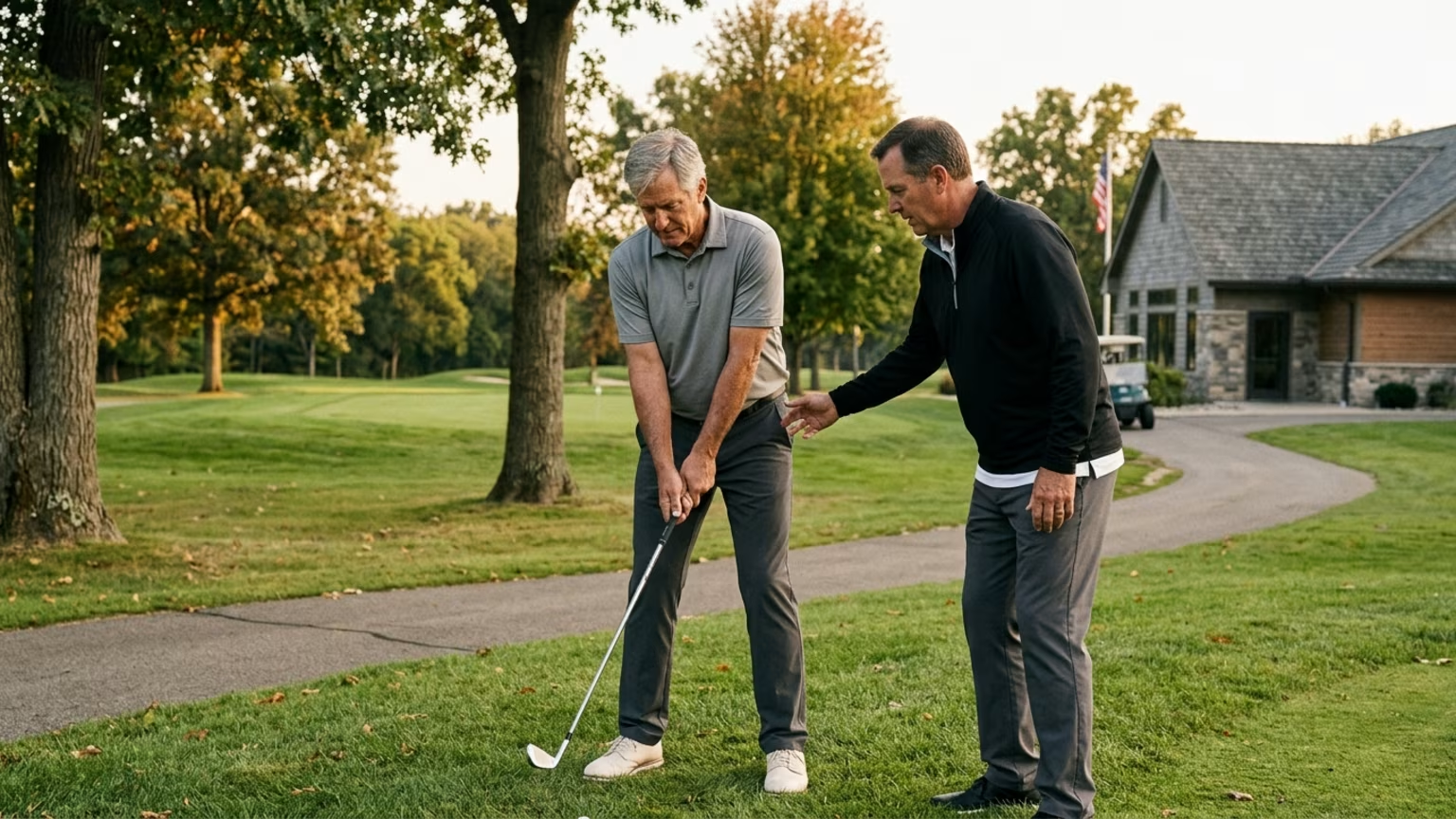

Learn the progressive three-exercise balance routine from SportsBull to improve golf swing stability, build hip strength, and maintain total ground control.




Research shows that perturbation-based balance training can reduce injurious falls by 24 percent compared with controls. This specific data highlights a broader truth for mature athletes on the course. Holding your ground is a trained physical skill rather than a happy accident. You have probably heard a million times that poor balance simply comes from swinging too hard, but the truth according to practitioner guidance from SportsBull is completely different.
It is easy to see why so many mature players blame effort for their balance issues. When you swing aggressively, the sheer force of rotation can easily pull you off your feet if your foundation is weak. Many of us have hit a drive, lost our footing, and immediately told ourselves to swing easier on the next hole. This reaction makes perfect logical sense on the surface.
Lowering your swing speed does reduce the physical demand on your legs. This reduction temporarily prevents you from falling over after impact. However, slowing down your swing completely ignores the underlying physical problem. You are simply masking a physical limitation by choosing to hit the ball shorter distances. Golfers end up sacrificing their natural power instead of addressing their basic physical baseline.
SportsBull recently published an article by Ken Sugawara, identified as the manager of Total Golf Fitness. His guidance notes that poor balance primarily comes from reduced strength around the glutes and limited ankle stability. If your ankles are weak, they cannot support the rapid pressure shifts required during a normal swing. The ankle must be both mobile and stable to function properly throughout the entire motion.
Sugawara suggests that excessive looseness can actually be counterproductive for holding a solid base. The scientific consensus heavily supports building this foundation through targeted practice. A 2026 network meta-analysis reported that perturbation training appeared most favorable for overall and static balance when supervised. Meanwhile, activities like home-based sensory training and Pilates were associated with different balance domains.
The science clearly indicates that golfers must actively train their physical base. Understanding why balance is the foundation of a timeless swing changes how you approach the game entirely. Weak glutes also play a massive role in late-round swing degradation. This happens when the lower body simply gives up under repeated stress.
A few years ago, I noticed my swing falling apart around the 14th hole. My lower back would tighten up, and I started compensating with my arms. I spent months thinking it was a swing flaw. It was not until I started a simple evening hip mobility routine that I realized my glutes were just turning off from fatigue. Fixing that one physical limitation brought my back nine scores down drastically.
Rather than relying on a slow swing to stay upright, older golfers can use a progressive routine. SportsBull outlines three exercises that target ankle stability and single-leg balance under swing-like conditions. The program establishes basic stability before adding any movement that resembles actual swing demands. Another golf-specific training article recommends beginning with a stable base and progressing through controlled lower-body and rotational exercises.
The first exercise begins with the feet approximately hip-width apart and the toes pointing straight ahead. The golfer raises both heels, briefly holds the elevated position, and then lowers the heels for a total of 10 repetitions. SportsBull advises pressing into the ground across the entire forefoot, from the big toe through the little toe. Ankle control is the first stability challenge in the sequence.
This simple movement prepares the lower leg for the rotational forces of the golf swing. Prioritizing stability over force helps older players maintain their mechanics through the entire round. The heel raise creates a reliable platform for the complex movements that follow.
The second exercise requires the golfer to lift one leg until the hip, knee, and ankle are each positioned at approximately 90 degrees. The golfer is instructed to straighten the standing knee, engage the gluteal muscles, and hold the position for 20 seconds. SportsBull specifically advises golfers who cannot maintain the position to hold onto a stable object. This practical modification prevents compensatory trunk movement and keeps the training safe.
Building this hip strength helps older players pass the back-nine test without excess fatigue. It guarantees that the glutes remain active when the body is forced to balance on one side. The static hold forces the stabilizing muscles to endure prolonged tension.
The third exercise begins in the exact same 90-degree single-leg position. While balancing on the standing leg, the golfer moves the raised leg from side to side. This action requires you to practice opening and closing the hip while completing 10 repetitions. Golfers are instructed to minimize side-to-side body movement during this step.
Treating balance as a trainable capability requires this type of movement-specific practice. This is the most swing-like exercise in the entire sequence. Golfers who cannot balance safely during this dynamic phase are again told to use support.
Balance is a physical skill that you can protect and improve over time. By spending a few minutes on these progressive stability drills, you can establish a far more reliable foundation. You do not have to permanently sacrifice your clubhead speed just to stay on your feet. Next time your playing partner offers this advice, trust your body's true mechanics instead. You can become part of that 24 percent who actively resist physical breakdown by doing the actual ground work.
Follow Golfergy for practical insights on performance, mobility, recovery and healthy ageing. Stay connected for new articles, research-led guidance and ideas to help you play better for longer.


Build a practical golf warm-up from walking to comfortable mobility and fuller swings, while keeping preparation separate from long-term conditioning.


Shot Scope’s LM1 data offers age and handicap benchmarks for driver speed and carry. Here’s how golfers over 40 can read the figures.

A grounded look at balance after 40, with supported single-leg practice and a clear place for strength training and golf practice.
Explore practical resources on performance, recovery, mobility and golf longevity.
Read the Blog


