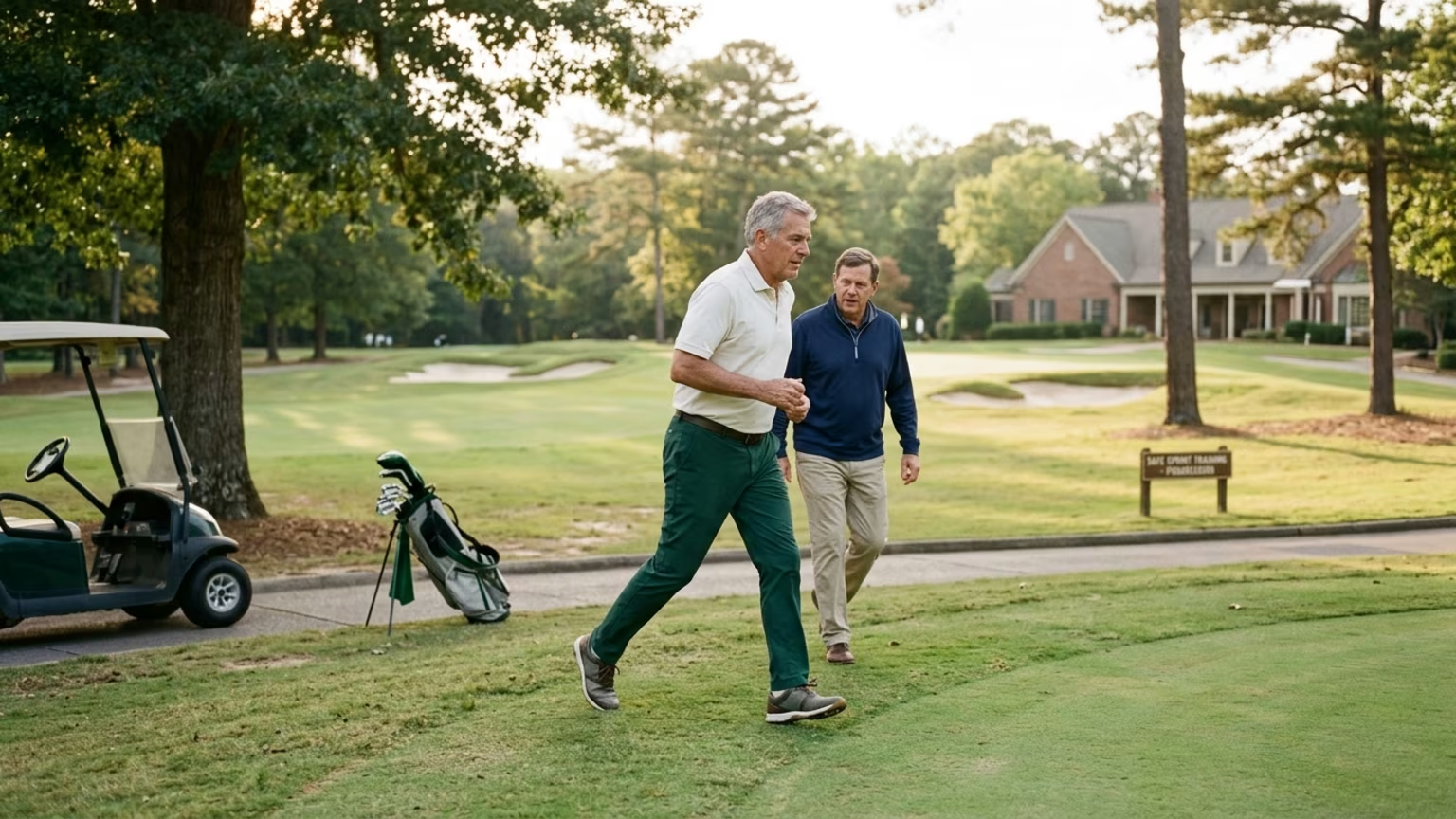

Older golfers can safely build explosive leg power using P4S Golf's guided sprint progressions, dynamic mobility routines, and lower-impact fan bike workouts.




On September 14, 2026, P4S Golf published new guidance outlining safe sprint training progressions for older players. The outlet presented sprint work as a targeted way for golfers to develop explosive lower-body power. This approach moves beyond simply using sprints to improve general cardiovascular fitness. The guidance outlines a specific progression to help older players gain speed without risking severe joint or tendon injuries.
Flat-ground sprinting forces the human body to manage massive ground-contact forces. The movement creates sudden deceleration loads with every single stride. P4S Golf notes that these flat sprints place high eccentric loading on the hamstrings. Eccentric loading occurs when a muscle lengthens while simultaneously trying to contract and slow the leg down. When a golfer over-strides on flat ground, the tension on the hamstring muscle spikes dramatically.
The Achilles tendon acts like a thick, rigid spring during this running motion. It absorbs force as the foot strikes the ground and releases it to propel the body forward. The modern golf swing operates on a very similar mechanical principle. Players push aggressively against the ground to initiate the downswing and generate clubhead speed. This necessary ground reaction force demands healthy and highly elastic tendons in the lower legs.
Golfers over 40 face a notable risk of tendon and muscle strains if they rush into explosive running routines. Age alone does not completely determine physical readiness for speed work. However, older recreational players often lack recent running experience. They may no longer tolerate the abrupt impact forces they easily handled decades ago. A sudden return to maximum-effort sprinting can quickly overwhelm an unprepared Achilles tendon or stiff hamstring.
I used to watch lifelong playing partners slowly drop out of our weekend group after starting aggressive fitness routines. They would often begin a harsh running program, ignore a nagging Achilles issue, and ultimately require surgery. That exact pattern is why our team focuses so heavily on golf longevity today. We can absolutely still train for power, provided we use careful progressions and respect our physical limits.
The available evidence clearly supports using power-oriented training to help aging golfers maintain distance. A 2026 Sports Medicine meta-analysis found that physical-training interventions were associated with improvements in several golf shot-performance measures. The pooled improvements across the studied interventions were significant. Players saw average gains of 1.05 metres per second for clubhead speed and 2.20 metres per second for ball speed.
These physical interventions also added 9.33 metres for carry distance and 10.55 metres for total distance. The golf meta-analysis demonstrates benefits from physical-training interventions overall. It supports the broader principle that physical training can directly improve shot-performance outcomes. However, it does not establish that P4S’s specific sprint protocol produces those exact gains. The strongest available golf evidence supports physical training broadly, but it does not prove that every golfer will gain the same exact yardage.
To safely chase these performance gains, P4S Golf outlines a strict risk-management progression. The article advises golfers to complete at least 10 minutes of dynamic mobility work before sprinting. This preparation should include active movements such as high knees, butt kicks, and walking lunges. These specific motions raise the body temperature and prepare the joints for the upcoming stress. Using a consistent dynamic routine is the safest way to begin any power session.
For golfers over 50, P4S specifically advises against beginning with flat-ground track sprints. The outlet instead recommends lower-impact options to protect vulnerable tissues. Steep hill sprints naturally limit over-striding and reduce the dangerous eccentric loading on the hamstrings. Stationary fan-bike sprints offer another excellent alternative for golfers managing joint concerns or restricted mobility.
The article gives a clear sample fan-bike progression to follow. A player starts with a five-minute warm-up on the bike. They then perform a six-second maximum-effort sprint, followed by 90 seconds of complete rest. This specific cycle is repeated for four to five total rounds. P4S recommends keeping each sprint interval to approximately five to ten seconds. The rest periods must be at least 60 to 90 seconds to allow for complete recovery between efforts.
Weekly volume must also remain tightly controlled. The suggested weekly volume is four to six high-quality sprints performed once or twice per week. Large training volumes can easily turn a speed session into a conditioning workout. The article also names kettlebell swings, medicine-ball throws, and swimming sprints as alternative ways to train explosive leg power. Golfers can learn more about safely structuring these routines in our detailed overview on The Speed Blueprint: Safe Explosive Training for Golfers Over 40.
A frequent mistake older golfers make is confusing speed training with exhausting cardiovascular work. P4S Golf stresses that explosive training relies entirely on high-quality repetitions. If a golfer is still breathing heavily when the next repetition begins, the session is becoming endurance training. Fatigue destroys athletic form, alters technique, and heavily increases the risk of a severe muscle strain.
Another major misconception is that joint or tendon soreness indicates a successful workout. A golfer should never interpret hamstring, calf, or Achilles pain as evidence that the training session is working. Speed and mechanical execution dictate the session length. Any loss of balance, sudden over-striding, or technique breakdown should immediately end the set.
Explosive leg training is just one piece of a broader longevity puzzle for the mature player. Golf-specific injury-prevention recommendations also emphasize hip and thoracic mobility, trunk control, balance, shoulder endurance, grip capacity, and gradual workload progression. For instance, prioritizing targeted balance training creates a much safer foundation for adding rotational speed later. P4S Golf's guidance is a practitioner recommendation, not universal proof that sprinting is perfectly safe for every golfer over 40. Players with previous hamstring injuries or active joint pain must approach speed work highly cautiously.
Adding explosive power to your routine requires patience, proper mechanics, and a deep respect for your physical limits. The primary goal is to build a resilient lower half that supports a dynamic golf swing for years to come. What adjustments will you make to your mobility routine this season to steer clear of this hazard?
Follow Golfergy for practical insights on performance, mobility, recovery and healthy ageing. Stay connected for new articles, research-led guidance and ideas to help you play better for longer.


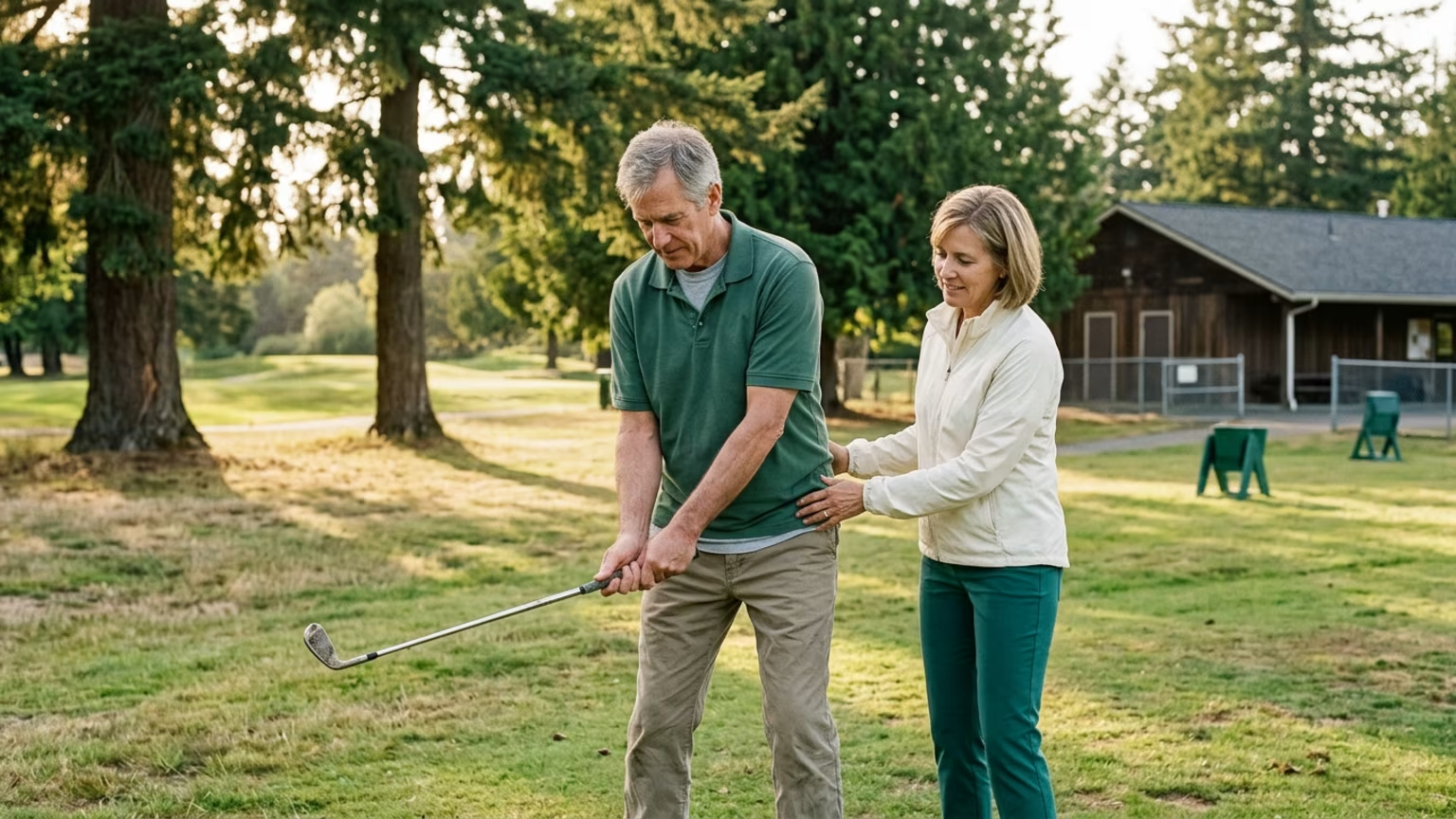
Learn how proper pelvic rotation can protect your back and knees. We review WatchItGolf's recent biomechanics data and share drills for a safer swing after 40.


Compare static stretching against dynamic movement for older golfers. Learn why active motion prepares your golf swing while static holds belong post-round.
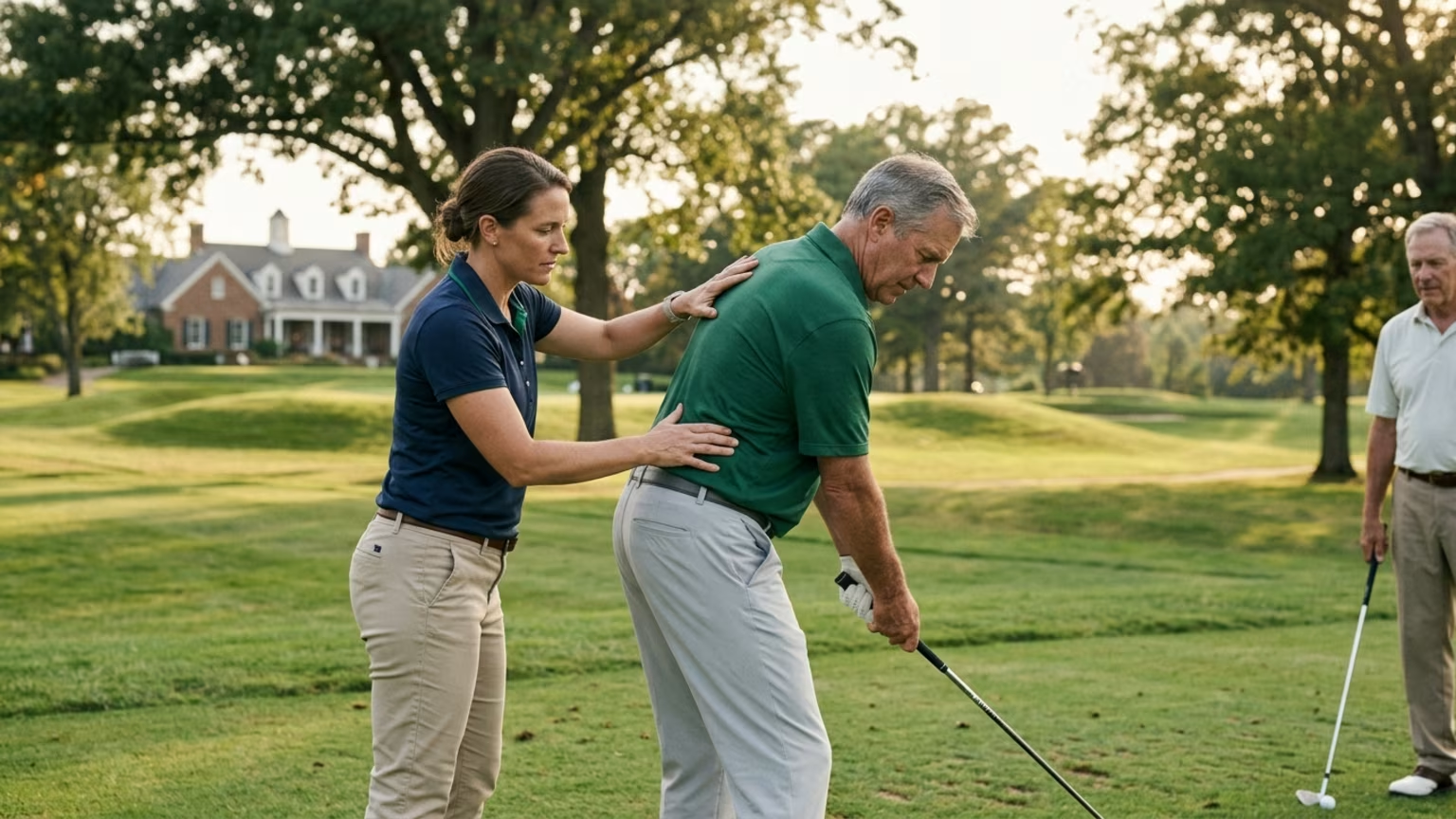
Learn how coordinating your hips, pelvis, thoracic spine and shoulders creates a safer golf rotation and protects your lower back as you age.
Explore practical resources on performance, recovery, mobility and golf longevity.
Read the Blog