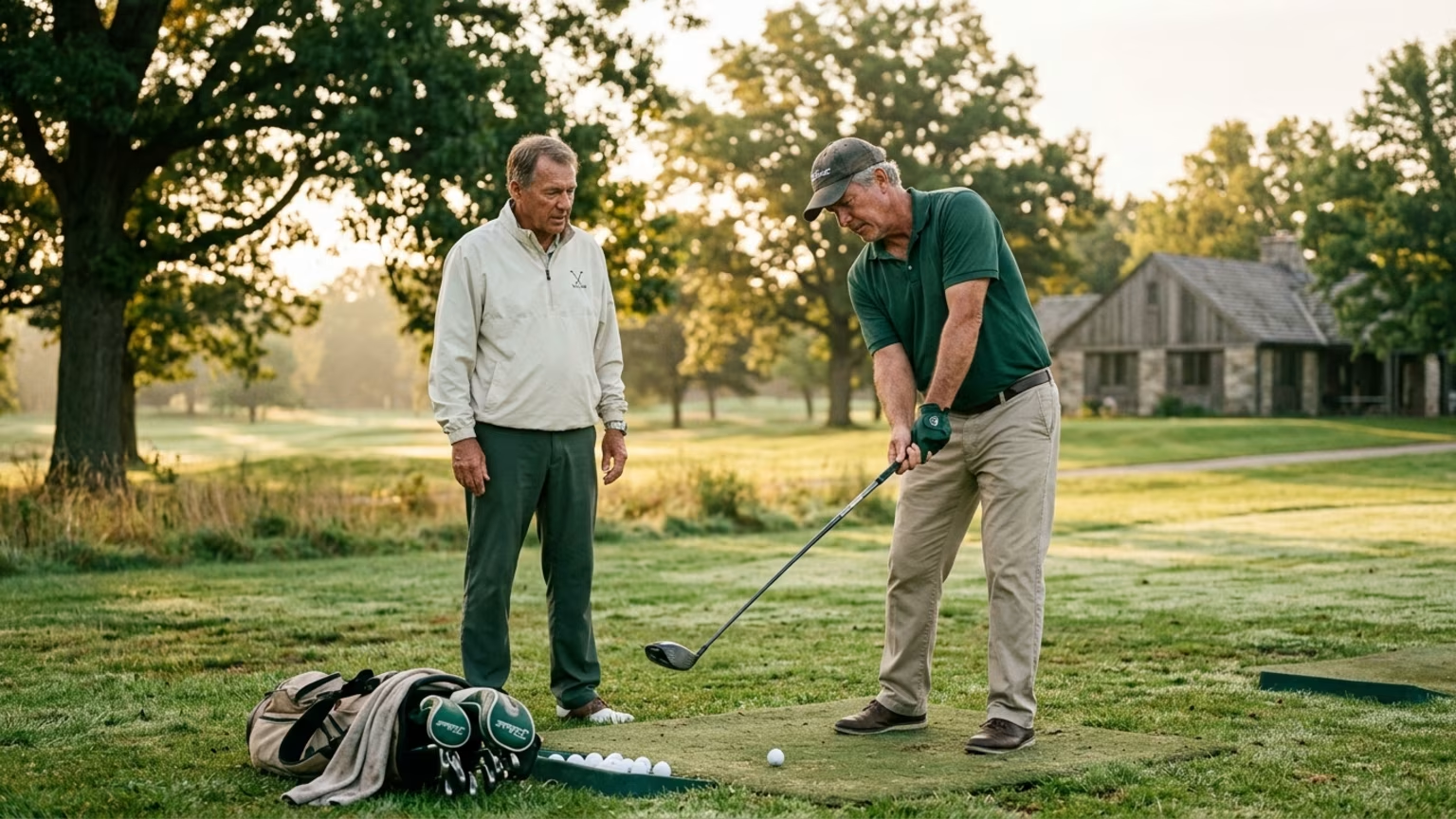

A recent 12-week study shows how adults aged 45 to 65 can preserve lean tissue during weight loss. Read practical muscle protection advice for golfers.




On August 11, 2026, the Journal of the International Society of Sports Nutrition published a 12-week study from Texas A&M University. The intervention examined 64 healthy adults aged 45 to 65. The research investigated how creatine supplementation affected body composition and strength during a weight-loss phase. These findings offer practical insights for older recreational golfers who want to maintain their physical foundation.
The golf swing places immense rotational stress on your skeletal structure. Your joints rely entirely on the surrounding lean tissue to absorb this violent movement safely. When older players lose muscle mass, the hips and thoracic spine lose their ability to decelerate the club properly. The connective tissues are then forced to bear the brunt of the swing forces.
This lack of muscular support changes how the body moves through impact. The lower back often takes on the load that your glutes and core are supposed to handle. A weak physical foundation limits your ability to tolerate rotational movement over 18 holes. Poor tissue support makes every aggressive swing a risk for sudden injury.
The 12-week intervention tracked healthy adults who were randomly assigned to receive either 10 grams of creatine monohydrate or a placebo daily. Participants chose either a structured exercise-and-diet program or a non-exercise condition. In the non-exercise condition, the creatine group gained approximately 1.1 kilograms of lean tissue. That equals about 2.4 pounds of lean mass over the study period.
The researchers reported improvements in leg-press and bench-press strength among participants who took creatine without entering the training program. The study authors reported that creatine without the exercise and diet intervention increased lean tissue mass, strength, and muscular endurance. It also produced favorable changes in selected blood-lipid measures and HbA1c. However, the most significant physical changes occurred when the supplement was paired with activity.
Participants in the exercise condition completed resistance and aerobic training three times per week. They followed a diet intended to create a modest calorie deficit. Within that structured exercise-and-diet condition, the creatine group gained nearly 1.4 kilograms of lean tissue. They also achieved a greater reduction in body-fat percentage than the exercise-and-diet placebo group.
The placebo group in the exercise-and-diet condition showed little change in lean tissue. This highlights the difficulty of retaining muscle mass while pursuing fat loss. The study authors reported that creatine produced favorable changes in selected markers of cognitive function and memory. These cognitive markers present an interesting secondary benefit for older adults.
Recreational players over 40 face a serious vulnerability to muscle loss as they age. Even when amateurs swing with less speed than tour professionals, their joints are often less equipped to handle rotational stress. We know that age-related muscle loss reduces the shock absorption capacity of the legs and torso. Older golfers who diet to lose weight often lose valuable muscle alongside fat.
The saddest thing I have seen in golf is watching lifelong playing partners slowly drop out of our weekend group. It usually starts with a nagging shoulder or knee issue they ignore until it requires surgery. That pattern is exactly why I became obsessed with golf longevity. We do not have to stop playing as we age, provided we do the right maintenance work between rounds.
Without sufficient muscle support, structural breakdown is highly likely. Golf requires repeated force production, trunk control, and balance. If a player loses lean tissue during a weight-loss effort, their on-course stamina will inevitably decline. You cannot expect your joints to perform properly without their supporting muscular framework.
To protect your joints and preserve your swing, adjust your off-course routine. The principal investigator for the Texas A&M study was Richard Kreider. Kreider is a professor and director of the university’s Exercise and Sport Nutrition Lab. His work suggests that a sensible muscle-preservation plan can benefit healthy aging adults.
If you are pursuing weight loss, pair a structured workout plan with adequate nutrition. The exercise-plus-creatine combination produced greater improvements in leg-press strength and time to exhaustion than creatine alone. Golfers should track waist measurements and swing consistency rather than focusing solely on the bathroom scale. A smart golf program logically combines lower-body strength with controlled rotation.
Proper preparation before your round is also a necessary adjustment. I used to stand on the first tee doing long, static hamstring stretches because I thought it was the right way to warm up. I would actually feel weaker on my first drive. Research later showed me that dynamic movements, like leg swings and torso twists, prime the nervous system much better. Changing my five minute warmup completely transformed my opening tee shots.
A common mistake is treating supplements as a replacement for hard work in the gym. The study does not support treating creatine as a substitute for resistance training. MedicalXpress reported that creatine did not appear to produce an additional improvement in aerobic capacity in this study. You still need to complete your resistance and aerobic training to build functional stamina.
Another misconception is that taking creatine instantly builds pure skeletal muscle. The study used lean tissue mass as an outcome rather than a direct measurement of contractile muscle alone. Lean tissue changes can include water storage associated with the supplement. The 1.1 kilogram result should not be viewed as pure new muscle without proper context.
Older players with relevant medical conditions should seek individual medical advice before starting any new routine. Some assume supplements inherently carry high risks for older adults. MedicalXpress reported that a 2025 analysis by Kreider and colleagues reviewed 685 clinical trials. The analysis found no significant difference in the rate of reported side effects between creatine and placebo groups.
You also cannot easily replace supplementation by changing your diet alone. MedicalXpress reported Kreider’s estimate that obtaining 10 grams of creatine from food is highly impractical. It would require eating roughly 2.3 to 4.5 kilograms of meat or fish per day. A sensible daily routine is much easier to sustain.
Maintaining your strength requires a realistic combination of good nutrition and active joint protection. The recent Texas A&M findings offer an interesting perspective on preserving lean tissue during a diet. What adjustments will you make to your mobility routine this season to steer clear of this hazard?
Follow Golfergy for practical insights on performance, mobility, recovery and healthy ageing. Stay connected for new articles, research-led guidance and ideas to help you play better for longer.


Learn why new golf footwear features like 3D insoles cannot replace proper workload management. See how to safely pace walking rounds and protect your joints.

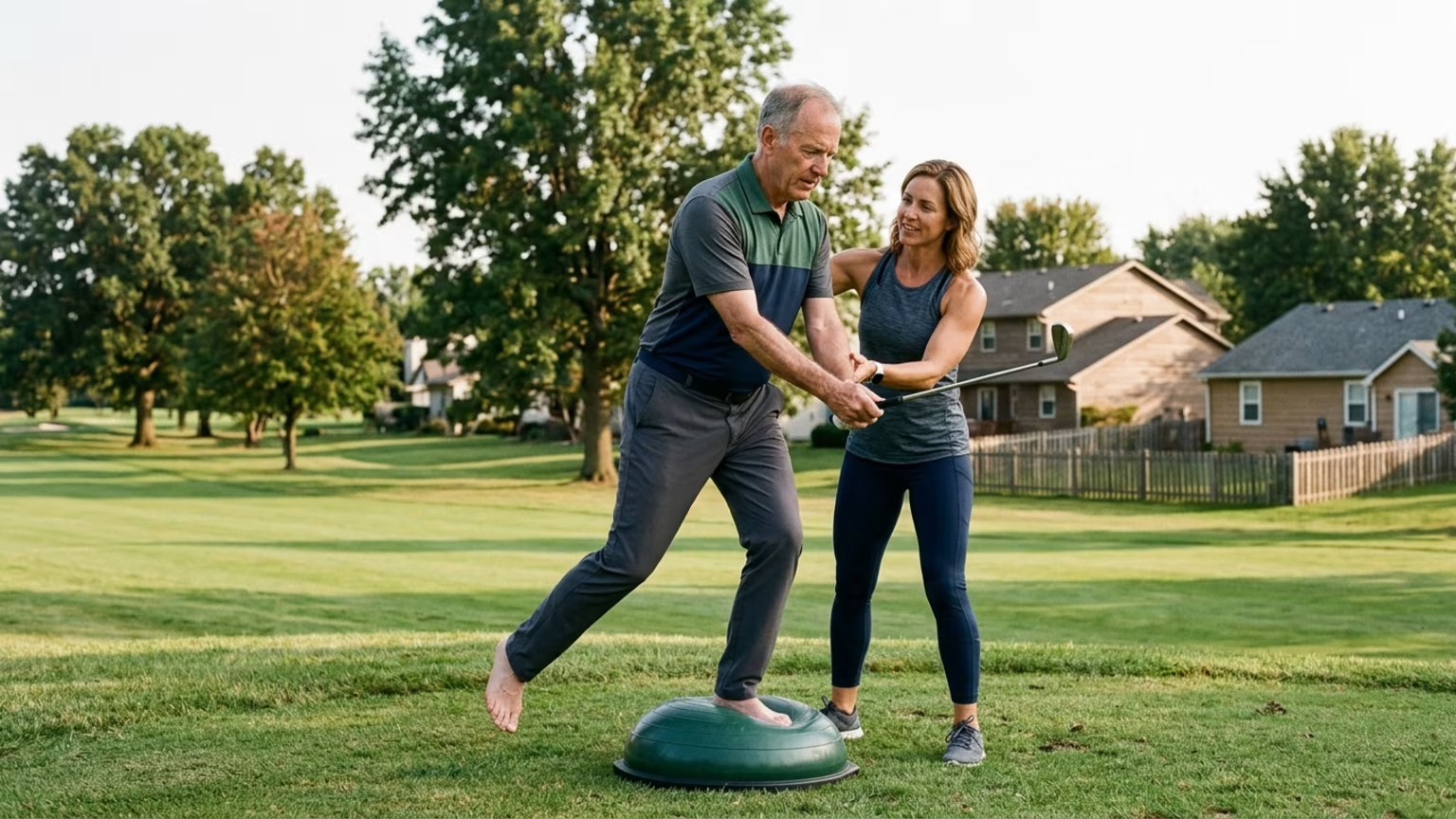
Discover why older golfers lose stability on the course and how practical dynamic balance training can protect your hips and improve your swing control.
Excessive lower-back arching at address strains your golf swing. Read how players over 40 can use better hip mobility and dynamic warm-ups to prevent pain.
Explore practical resources on performance, recovery, mobility and golf longevity.
Read the Blog