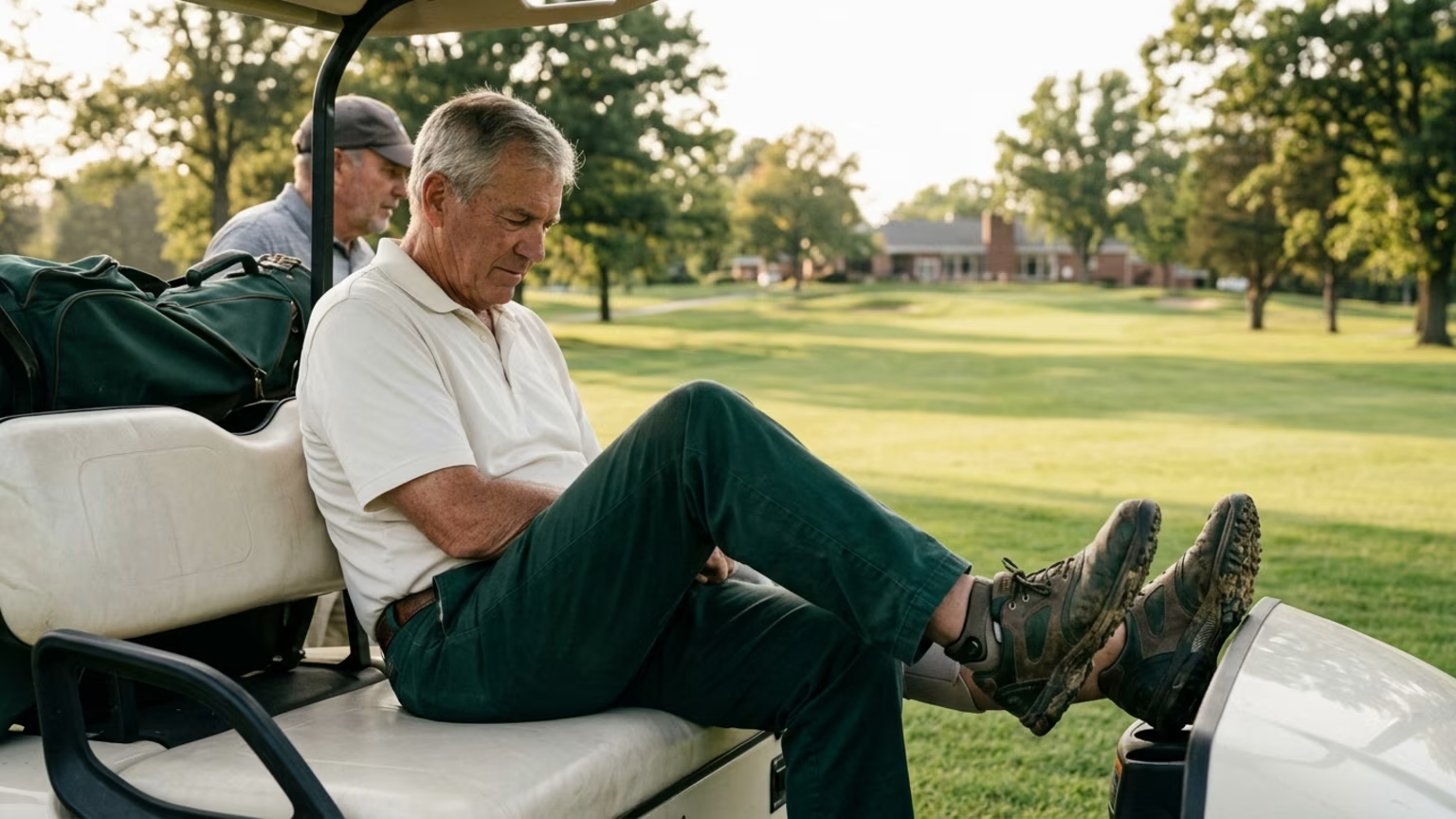

Learn why new golf footwear features like 3D insoles cannot replace proper workload management. See how to safely pace walking rounds and protect your joints.




On September 16, 2026, Seoul Shinmun reported on a new golf shoe lineup featuring a 3D support insole and a non-slip motion outsole. The publication noted the design aims to improve walking stability while encouraging proper foot mechanics over eighteen holes. The manufacturer prioritized walking comfort through natural leather, water resistance, and soft cushioning. The footwear also features breathability, arch support, and slip resistance. This launch reflects a wider industry movement toward building shoes that support both walking and swinging.
FootJoy’s 2026 Quantum model provides another clear example by combining foot-conforming cushioning with a multidirectional outsole. Designers are increasingly focused on retaining the foot during rotational movements while maintaining comfort across uneven terrain. While these features sound promising, they are manufacturer design choices rather than clinically validated medical solutions. A supportive shoe is helpful, but it cannot solve all lower-body fatigue on its own.
Understanding lower-body fatigue requires a look at how the golf swing interacts with walking. Your body functions as a complex chain of levers and hinges during play. The feet anchor this chain to the ground, transferring force upward through the ankles, knees, and hips. Walking an 18-hole round places immense mechanical stress on this lower-body system.
The golf swing forces rapid lateral movement and aggressive internal rotation of the lead hip. Your lead knee must then absorb sudden braking forces to stabilize the body through impact. Repeating this motion places significant demands on the ligaments and cartilage of the lower joints. When you combine this rotational stress with walking several miles, the physical toll multiplies. The tissues in your legs must continuously adapt to slopes, wet grass, and firm cart paths.
A shoe that feels perfectly stable during a swing might feel overly rigid during a long walk. Over time, heavy or restrictive footwear can alter a player's natural gait and increase muscle fatigue. Our team at Golfergy watched a lifelong playing partner quietly drop out of our weekend group. The issue started with a nagging knee problem that he ignored until it required surgery. We realized that older players must actively manage joint stress between rounds to keep playing. We do not have to stop playing as we age, provided we do the right maintenance work.
Players recovering from joint operations need concrete milestones before returning to full rounds. A 2026 clinical commentary outlines a specific progression for returning to golf after anterior cruciate ligament reconstruction. The framework requires patients to tolerate 30 to 45 minutes of walking on variable terrain first. Players must also control slopes, manage uneven stances, and execute 40 to 60 full swings without pain.
Medical professionals watch closely for negative readiness signals during this recovery phase. These warning signs include next-day swelling, joint pain, altered gait, or any loss of range of motion. If any of these symptoms appear, the player must pause their progression and allow the knee tissues to recover. The timeline varies for every single golfer, making it vital to follow strict clinical guidance over generalized equipment claims. Pushing through pain to finish a round often causes significant setbacks for older players.
Recreational golfers over 40 face a high risk of lower-body fatigue, even when swinging with moderate clubhead speed. The sheer volume of steps required to finish a round challenges muscular endurance and joint stability. Older players often experience stiffness on the back nine, which can ruin their swing mechanics. A shoe upgrade might feel comfortable, but the underlying physical demands of the game remain unchanged.
Fatigue fundamentally changes how older players interact with the ground. When your legs grow tired, you might unconsciously shorten your backswing or sway off the ball. This loss of stability places unusual strain on the lower back and shoulders. A shoe designed with motion control attempts to stabilize the foot, but it cannot counteract total muscular exhaustion.
A recent crossover study highlighted the specific physiological impacts of walking the course. Researchers observed 25 healthy older golfers completing an 18-hole round, a 6-kilometer Nordic walk, and a conventional walk. Systolic blood pressure fell after all three activities. The golf condition also produced favorable acute differences in glucose and lipid measures compared with the shorter walks.
While the study confirms walking golf provides meaningful physical activity, it strictly involved healthy participants. Older golfers with existing osteoarthritis, balance impairments, or recent surgeries face entirely different physical limitations. You cannot automatically assume a new insole will protect compromised knees from the rigors of a long round. Understanding the endurance gap helps players recognize when their legs need more direct conditioning.
You must manage your walking volume systematically to protect your joints and extend your playing years. The clinical commentary recommends increasing only one major workload variable at a time. This means you should never increase your swing count, practice frequency, and walking distance all in one week. Gradually building your tolerance allows your muscles and ligaments to adapt without overloading the system.
The proposed progression for injury recovery offers a smart template for any golfer returning from a long layoff. Start by riding in a cart for three to six holes, then progress to riding for nine holes. Next, try walking nine holes with a push cart to introduce walking stress safely. Eventually, you can advance to walking a full 18 holes with your push cart.
A push cart serves as an excellent intermediate tool for rebuilding lower-body stamina. It removes the asymmetrical burden of carrying a bag while still allowing you to build walking endurance. Stop or modify your play immediately if you notice pain or swelling that persists into the next day. Small, calculated steps protect your long-term mobility much better than rushing back to full rounds.
The clinical guidelines emphasize the importance of monitoring how your body responds to new stressors. If you wake up with a stiff knee or a swollen ankle, you have exceeded your current capacity. Adjusting your equipment provides comfort, but controlling your actual physical output prevents mechanical breakdown. Taking a rest day between walking rounds gives your tissues the necessary time to heal and strengthen. Tracking your physical readiness can help you measure your progress.
Many golfers mistakenly believe that buying a premium shoe will instantly resolve lower-body pain. A 3D insole can encourage proper mechanics, but it cannot correct a diagnosed gait abnormality. Furthermore, a non-slip outsole does not eliminate the risk of falling on wet grass or steep bunker faces. Golfers dealing with persistent swelling or recurrent ankle instability need a proper clinical assessment.
Shoe fit remains highly individual, and features that help one player might hurt another. Arch support and extra cushioning might aggravate a playing partner's plantar fascia or knee symptoms. Footwear selection should always be coordinated with a qualified clinician if you have known joint conditions. Relying entirely on marketing labels leaves you vulnerable to ongoing physical issues.
Years ago, I thought the proper pre-round routine meant doing long, static hamstring stretches on the first tee. I would step up to my first drive feeling completely powerless. Research later showed me that active, dynamic movements prime the nervous system much better than holding a static stretch. Changing my five minute warmup completely transformed my opening tee shots. The same logic applies here: passive equipment features cannot replace active physical management and proper conditioning.
Every choice you make off the course influences how your body performs on the back nine. We always recommend testing new shoes during shorter practice sessions before committing to a four-hour walking round. Comfort during a quick fitting in the golf shop rarely predicts how your feet will feel on variable terrain. Taking a cautious approach keeps small irritations from turning into season-ending injuries.
You hold the power to protect your joints through smart workload management and careful equipment testing. Pay close attention to how your hips, knees, and ankles feel the morning after a round. What adjustments will you make to your walking routine this season to finish every round feeling strong?
Follow Golfergy for practical insights on performance, mobility, recovery and healthy ageing. Stay connected for new articles, research-led guidance and ideas to help you play better for longer.


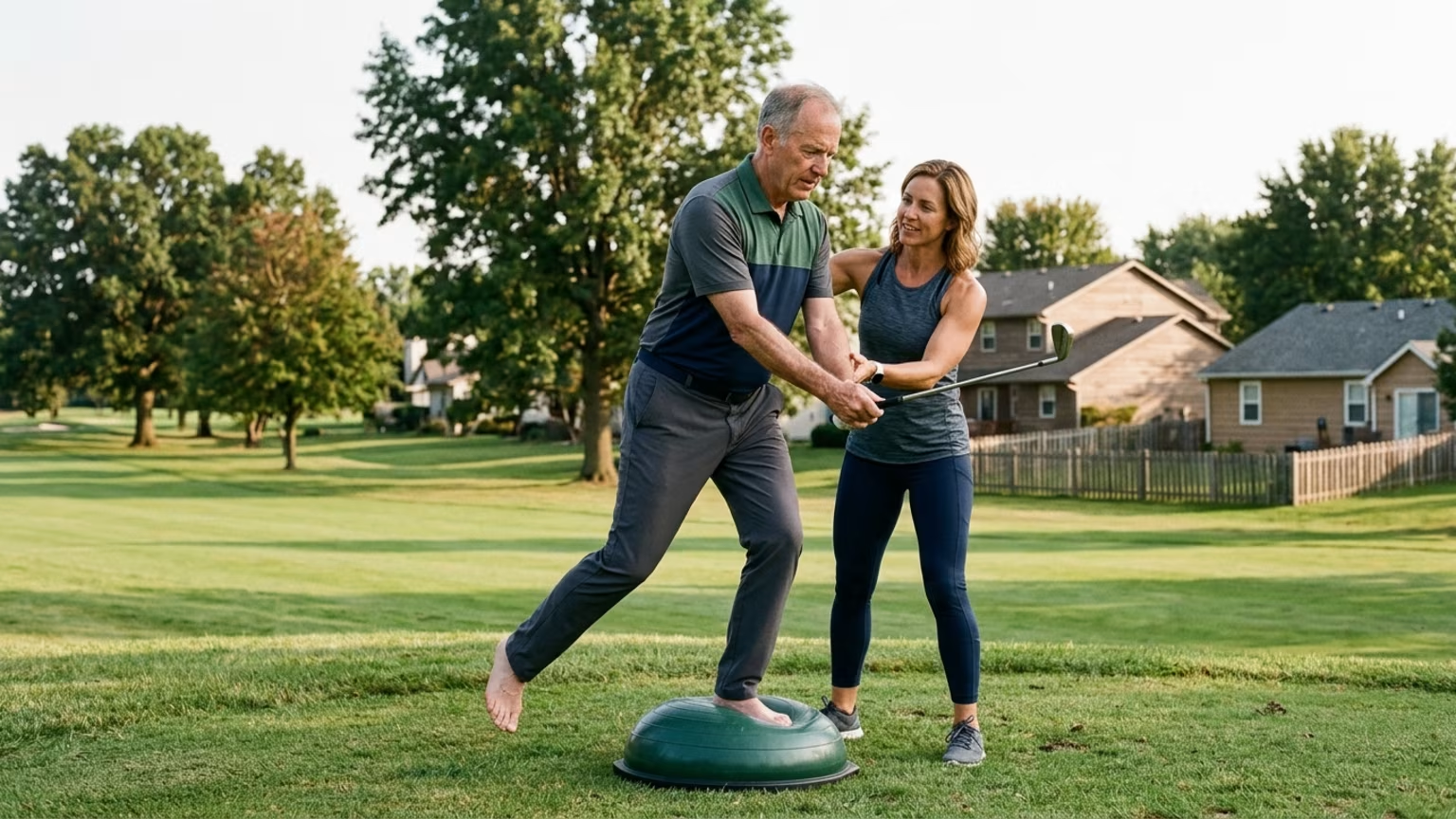
Discover why older golfers lose stability on the course and how practical dynamic balance training can protect your hips and improve your swing control.


Excessive lower-back arching at address strains your golf swing. Read how players over 40 can use better hip mobility and dynamic warm-ups to prevent pain.
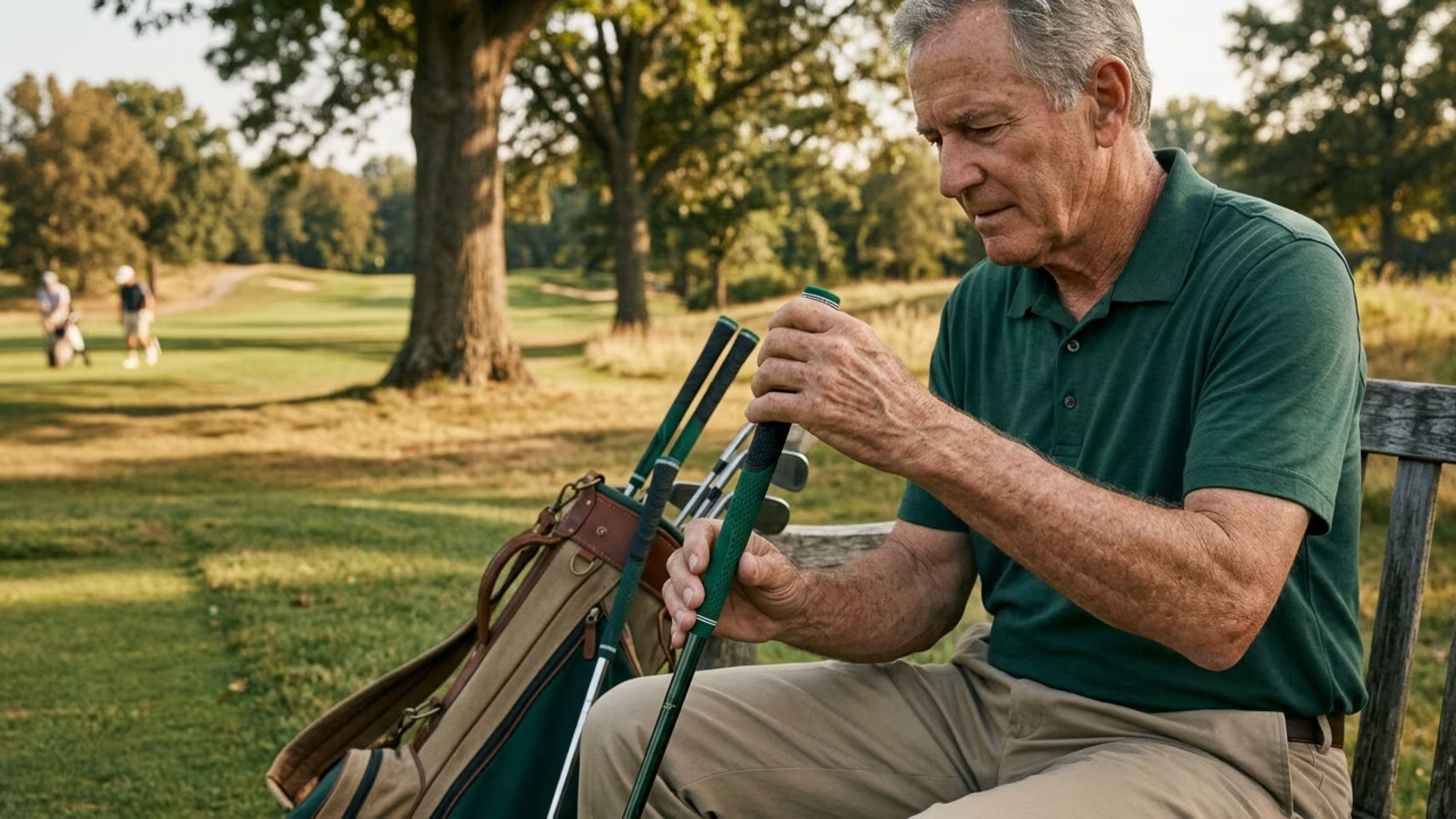
Learn how Golf Pride's new CP grip and dynamic mobility habits can help older golfers reduce hand tension, manage repetitive strain, and protect their joints.
Explore practical resources on performance, recovery, mobility and golf longevity.
Read the Blog