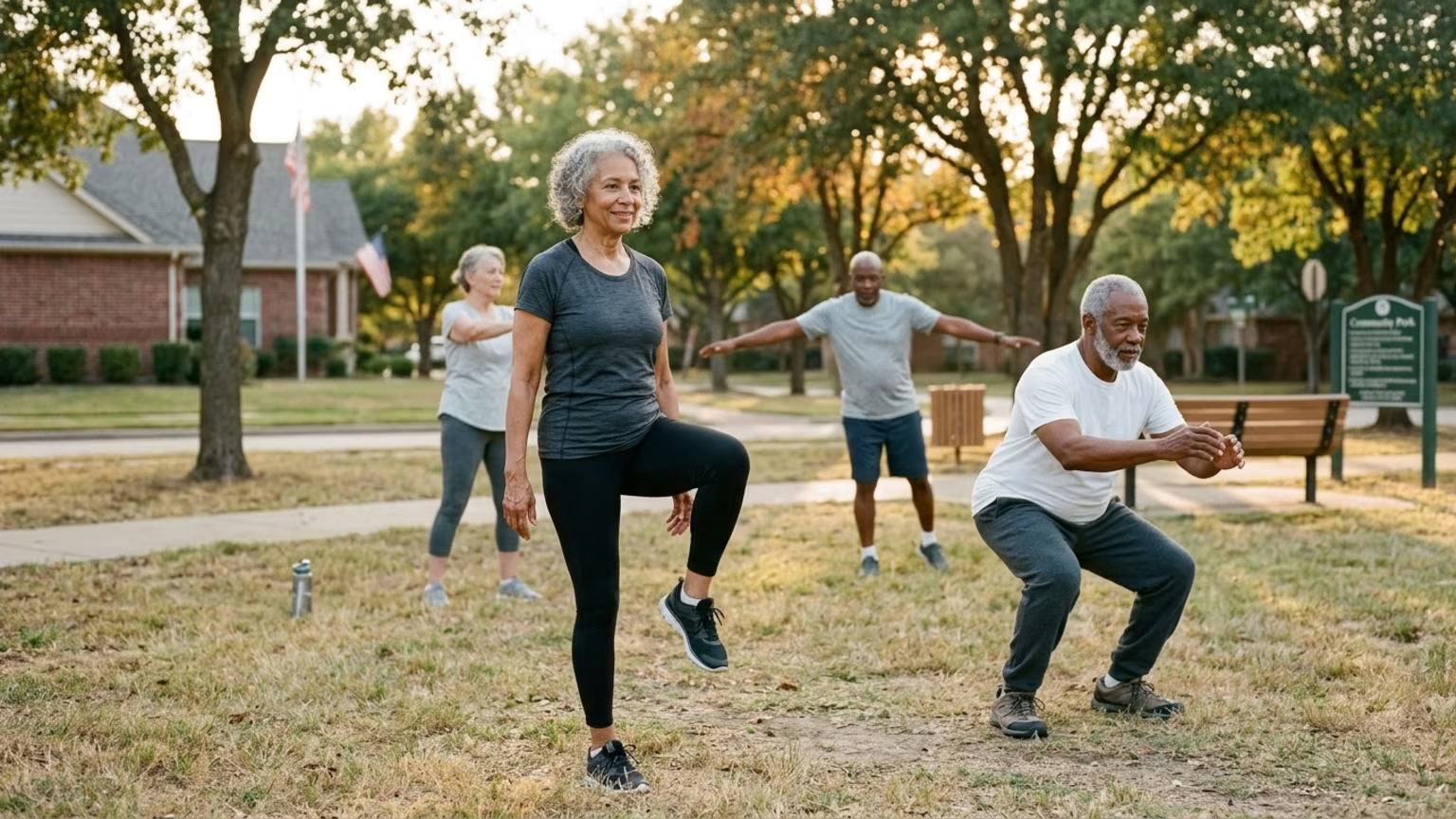

A PLOS One study shows how a four minute daily strength routine called FAST 2 improves mobility and balance for adults over 65.




Functional Activity Strength Training, version 2 (FAST 2), is simply a roughly four minute daily routine consisting of four basic movements. Tested in a recent PLOS One study, this program uses short bursts of effort to build physical capacity. The protocol requires completing a basic movement for 30 seconds, followed by 30 seconds of rest. For senior golfers, this represents a highly practical way to maintain the physical base needed for daily life and recreation.
Many older adults struggle to find the time or energy for long gym sessions. The FAST 2 approach removes the barrier of a lengthy workout. It relies entirely on accessible actions like climbing stairs or standing from a chair. By stripping away complicated exercise machines, the routine makes physical maintenance straightforward.
The study evaluated a group of 97 adults aged 65 and older. The participants were randomly assigned either to the FAST 2 exercise group or to a control group. The control group continued their usual activity without receiving the exercise program. The average participant age was 74, making the findings highly relevant for older recreational athletes.
The recent coverage by Euronews highlighted how this very short format can fit into busy schedules. Rather than treating a brief routine as a complete fitness cure, the news report framed it as a solid foundation. For older adults, taking small steps can feel much less daunting than starting a massive gym program. The findings suggest that consistency often outweighs sheer volume when building a base level of fitness.
A repeatable golf swing demands total lower body stability and reliable balance. During a standard round, you walk for miles, read putts from a crouched position, and rotate with force. The PLOS One study tested four functional movements to build this exact type of resilience. These movements included push ups, chair stands, two arm resistance band rows, and stair climbing.
Think about how you move during an 18 hole round. You bend down to tee up your ball, step out of deep bunkers, and pull your bag across uneven terrain. The muscles used to complete a basic chair stand are the exact same muscles powering your golf swing. A stronger lower body creates a much more stable base for rotation.
Lower body function often dictates how well a senior golfer can navigate a full round. Fatigue typically sets in slowly during the back nine, draining power from your shots. By practicing chair stands, you directly train the glutes and quadriceps needed to resist this late round fatigue. A golfer with stronger legs simply maintains their form much better than a tired player.
Consider the two arm resistance band row used in the study. Pulling motions are useful for maintaining the postural muscles in your upper back. Without sufficient back strength, your shoulders round forward over the ball. This poor posture restricts your ability to turn fully and safely during the backswing.
Stair or step climbing builds single leg stability and power. Golf requires transferring your body weight from your trail leg to your lead leg on every single shot. When an older golfer loses this single leg strength, they often slide out of their posture. A stronger lower body keeps your feet firmly planted throughout the entire motion.
Participants completed the routine on approximately 81% of study days. This high completion rate suggests the very short format was feasible for many people in the trial. A four minute routine fits perfectly into a morning routine or a pre round warm up. This kind of minimum effective strength routine helps protect your swing without causing unnecessary fatigue before you tee off.
As golfers pass age 40 and 50, their physical capacities naturally begin to change. Muscle mass slowly declines, and balance reactions become slightly delayed. The loss of fast twitch muscle fibers makes generating rotational speed much harder. This gradual decline directly impacts a golfer's ability to walk the course comfortably and swing without pain.
A few years ago, I noticed my swing falling apart around the 14th hole. My lower back would tighten up, and I started compensating with my arms. I spent months thinking it was a swing flaw, but a simple evening hip mobility routine showed me my glutes were just turning off from fatigue. Fixing that one physical limitation brought my back nine scores down drastically.
The PLOS One study highlights how a lack of strength directly affects daily mobility. The researchers linked the measured improvements to practical movements such as rising from a chair and walking. They noted that performance on these tests can provide information about future mobility and fall risk. While the study did not test golf specific outcomes, the connection between lower body weakness and physical fatigue is clear.
According to available physical activity guidance, older adults should still accumulate at least 150 minutes of moderate activity weekly. They should also perform muscle strengthening exercises on at least two days per week. The FAST 2 program is not designed to replace walking the golf course or practicing on the range. Instead, it serves as a reliable consistency tool for days when a full workout is unlikely.
A clinical fall prevention summary recommends individualized assessment of gait, strength, and balance alongside exercise interventions. Factors like blood pressure, vision, footwear, and home hazards should also be evaluated. The available coverage cautions that four minutes of exercise should not be interpreted as meeting all physical activity needs. Older adults still benefit greatly from walking, targeted balance training, and longer strength sessions.
The sample in the PLOS One study was limited specifically to older adults. These findings should not be generalized to highly trained younger players. People living in care settings or adults with significant medical conditions face different challenges. However, the study confirms that basic interventions still yield positive functional changes later in life.
The study lasted 12 weeks and produced measurable functional changes. While the findings do not prove a reduction in actual fall incidence, the performance improvements were notable. Older golfers can easily adopt the core principles of this routine at home.
You can build a simple movement primer using the four core exercises from the study. Spend 30 seconds on wall push ups, rest for 30 seconds, and move to chair stands. Follow this with two arm resistance band rows and supervised stair climbing. The program used progressive difficulty, meaning participants could move from wall supported push ups toward harder variations.
Focus entirely on maintaining a slow pace during each repetition. Never rush through the movements just to beat a clock. Anyone with balance limitations or joint pain should seek individualized professional advice before adding step ups or resistance training. Starting with the safest modifications helps prevent unnecessary strain.
The true value of the FAST 2 program lies in its built in progression model. You do not need to start with the hardest version of any exercise. If standard push ups cause wrist or shoulder pain, you can modify the movement by leaning against a countertop. As your control and strength improve over time, you can gradually move closer to the floor.
Step ups and single leg balance exercises create a valid safety issue for anyone at an elevated risk of falling. Guidance emphasizes that unsupported step ups should be avoided if you have a history of falls or major balance impairments. In these cases, working with a physical therapist provides a much safer path forward. Modifications exist for nearly every limitation, allowing golfers to train effectively without increasing their injury risk.
Chair stands are highly relevant as a simple way to monitor lower body function over time. You can safely track your own progress by counting your repetitions in a 30 second window. In the PLOS One trial, the exercise group completed an average of 4.2 additional repetitions in the 30 second chair stand test compared with baseline. This small test provides immediate feedback on your leg strength.
Focus entirely on pushing through your heels as you stand. Do not let your knees collapse inward. In addition to chair stands, the study found that one leg standing time improved by an average of 3.6 seconds. The time required for a repeated sit to stand mobility test also fell by 2.3 seconds.
Integrating these checks into a weekly healthy ageing routine gives you a clear picture of your physical readiness.
Maintaining baseline strength does not require hours in the gym, it just takes four minutes of daily intent to keep playing better for longer.
Follow Golfergy for practical insights on performance, mobility, recovery and healthy ageing. Stay connected for new articles, research-led guidance and ideas to help you play better for longer.


Build a practical golf warm-up from walking to comfortable mobility and fuller swings, while keeping preparation separate from long-term conditioning.


Shot Scope’s LM1 data offers age and handicap benchmarks for driver speed and carry. Here’s how golfers over 40 can read the figures.

A grounded look at balance after 40, with supported single-leg practice and a clear place for strength training and golf practice.
Explore practical resources on performance, recovery, mobility and golf longevity.
Read the Blog


