
Learn a science-backed, two-day strength routine designed for golfers over 40. Build consistency and protect your longevity without living in the gym.




An updated position stand from the American College of Sports Medicine draws on data from more than 30,000 participants to redefine physical preparation. This massive dataset reinforces resistance training as a general health behavior rather than something reserved for competitive athletes. You have probably heard a million times that protecting your golf swing requires grueling daily workouts and complex gym routines. The truth according to sports science is completely different.
It is easy to understand why recreational players fall for the daily workout myth. We watch professional golfers on television moving massive weights and logging hours in specialized training facilities. That constant exposure makes the average amateur feel like a simple routine is simply not enough. The messaging often implies that serious players must sacrifice their free time to build resilience.
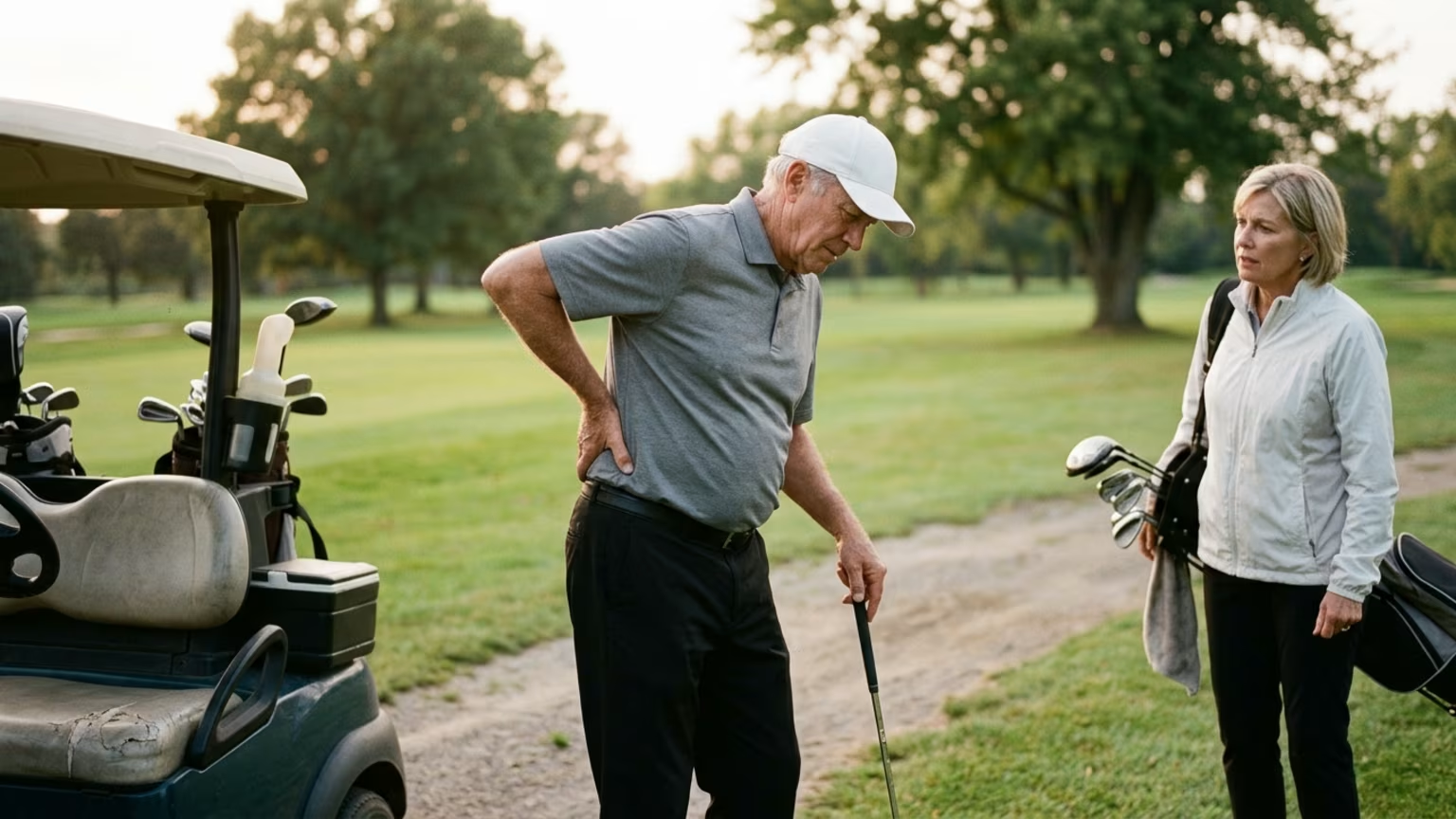
When you already struggle with lower back pain after a round, the idea of adding hours of gym time feels impossible. Many players juggle family commitments, demanding careers, and a desire to actually play golf on the weekends. It makes complete sense to feel frustrated by advice that ignores your busy reality. You want a practical way to support your game without adopting a secondary career as a bodybuilder.
The belief that aging golfers must constantly push their bodies to the limit ignores how our tissues actually recover. A scoping review in the British Journal of Sports Medicine identifies back injuries as the most frequent golf-injury category. It also describes many of these golf injuries as overuse problems rather than acute accidents. Pushing an older body through daily high-volume workouts often accelerates this very overuse cycle.
There is evidence supporting higher training volumes in specific populations when closely managed. In 2024, a meta-analysis found a small-to-moderate strength advantage for higher-volume training in adults aged 60 to 83. This difference became more pronounced after 12 weeks of training. However, the American College of Sports Medicine summary highlights consistency, not complicated programming, as the central theme of its guidance.
Golf requires lower-body strength, trunk control, upper-back strength, and grip capacity to support repeated swings. The review notes that older golfers may experience better balance, muscular function, and strength compared with non-golfing controls. However, walking course hills and swinging a club do not automatically replace a dedicated strengthening program. The physical demand of the game changes with factors including whether a player walks or rides, course terrain, age, and baseline fitness.
You need a structured approach to maintain tissue health without causing joint pain. We can look at very specific aging factors to prove this point. A 2026 meta-analysis of older adults with sarcopenia reported substantial strength benefits for handgrip and knee extension, while muscle-mass gains were smaller. The goal is stimulating the nervous system and strengthening the tissues, not necessarily building massive muscles.
Trying to replicate a professional workout often creates secondary problems for the weekend player. Excessive training volume raises your baseline fatigue before you even reach the first tee box. This systemic fatigue degrades your swing mechanics and places unnatural stress on your joints. Instead of building resilience, you might unintentionally aggravate a dormant shoulder or knee condition.
When your legs are exhausted from heavy lifting, you will instinctively compensate during your swing. You might stop rotating your hips properly and place all the rotational force onto your lower spine. This poor movement pattern feeds directly into the overuse injuries noted by sports medicine researchers. Avoiding this trap requires a realistic training volume that protects your energy reserves.
The actual proven strategy relies on a simple framework organized around five basic movement categories. World Health Organization guidance is summarized as recommending muscle-strengthening activity for all major muscle groups on at least two days each week. This minimal dose is highly effective for maintaining the strength you need to keep playing golf for decades. It leaves you with enough energy to actually enjoy your weekend rounds.
Your first session targets five areas: legs, hips, back, core and grip. Start with a goblet squat or a simple sit-to-stand movement, focusing entirely on feeling stable foot pressure against the floor. Follow this with a hip hinge movement like a dumbbell Romanian deadlift to build posterior strength. Add a supported row for your back, a suitcase carry for your trunk, and a dead hang for better club control and longevity.
These foundational moves replicate the physical forces you encounter on the course. They prepare your tissues to handle the repetitive stress of swinging a golf club. When you build capacity in these five areas, you protect your joints from unnecessary wear. It is a highly efficient way to spend your limited training time.
Your second session later in the week can introduce slight variations to the same movement patterns. Try a reverse lunge or a step-up for your lower body. Use a hip bridge to safely engage your glutes while lying flat on your back. Finish with band pull-aparts, a side plank, and some light wrist-extension work.
You do not need to push these variations to absolute failure to see meaningful benefits. Keep the range of motion controlled and always avoid pushing into painful positions. The objective is to finish the workout feeling stimulated rather than completely exhausted. Leaving some energy in reserve allows you to recover quickly before your next round.
How you fit this routine into your week matters just as much as the exercises themselves. Place the harder lower-body session far away from your most important tee time. If you have a busy week of golf, you can easily use a shorter, lighter session to maintain momentum. Retain the basic movement patterns even when reducing the weight, because consistency is the absolute priority.
For players seeking more stability, specialized balance work is highly recommended. For adults aged 65 and older, the guidance adds multicomponent activity focusing on functional balance and strength on at least three days per week. You can practice single-leg stands or controlled step-downs during your regular warm-up. Integrating these simple practices creates a solid framework for strength, balance, and rotational control.
Remember that anyone with persistent pain, neurological symptoms, recent surgery, or cardiovascular disease should obtain individualized medical advice before starting. This two-day template is population-level guidance, not a personal medical clearance. Start with one or two controlled working sets per exercise and progress slowly over several months.
The saddest thing our team has seen in golf is watching lifelong playing partners slowly drop out of our weekend group. It usually starts with a nagging shoulder or knee issue they ignore until it requires surgery. That pattern is exactly why we became obsessed with golf longevity. We do not have to stop playing as we age, provided we do the right maintenance work between rounds.
Core lesson: Next time your playing partner brags about a grueling daily gym routine, trust the 30,000 participants in the sports science data and stick to your consistent two-day framework instead.
Follow Golfergy for practical insights on performance, mobility, recovery and healthy ageing. Stay connected for new articles, research-led guidance and ideas to help you play better for longer.


Review elbow and wrist pain patterns in golf through symptom notes, practice changes, ground contact and grip condition, without assuming a quick fix.


Tiger Woods’ 2017 Dubai withdrawal offers a measured lesson for golfers over 40, with NHS guidance on when back pain needs medical attention.

Understand a stiffer golf turn, notice changes without self-diagnosis and learn when comfortable movement or individualized advice may help.
Explore practical resources on performance, recovery, mobility and golf longevity.
Read the Blog


