

Par4Success has published a six-exercise golf mobility routine. Learn how daily movement targets the thoracic spine and hips to reduce stiffness in golfers over 50.




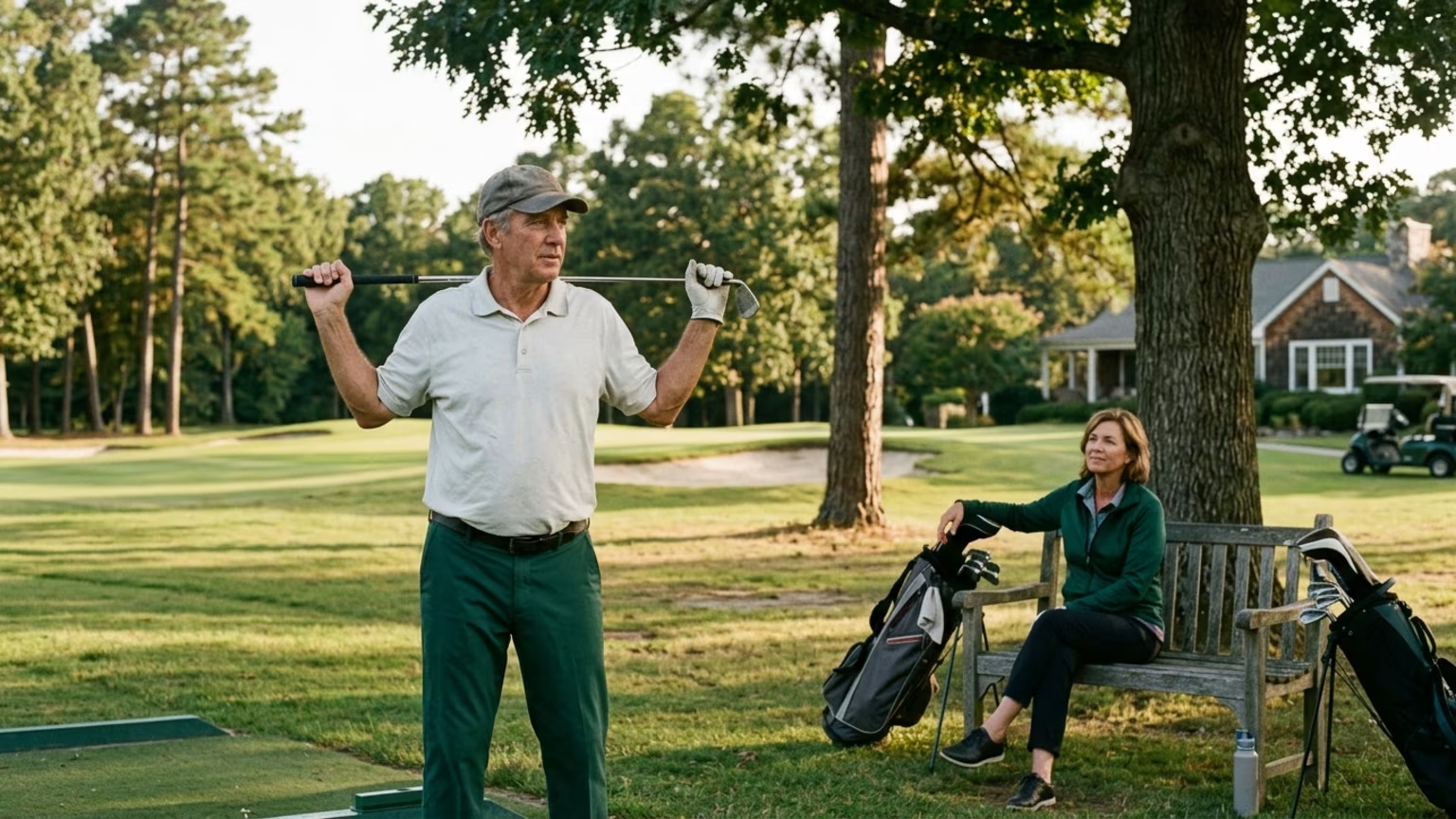
Jim stands on the 14th tee box. He reaches for his driver. His hips feel like concrete. He just wants to finish the round without wincing.
"Why does my lower back tighten up rigidly around the 14th hole?" It is the most common question we hear from golfers over 40. Par4Success (also identified on the page as P4S Golf) has published an article titled "6 Golf Mobility Exercises to Fix Stiffness." The routine targets the neck, shoulders, thoracic spine and hips. Ageing players often struggle to maintain fluid movement in these specific joints.
Many older players assume their muscles are simply too short. Par4Success distinguishes passive flexibility from active mobility. Passive flexibility is how far a muscle can stretch. Active mobility is the ability to control a joint through a usable range.
When golfers lack active control, their bodies recruit the wrong muscles. This creates tension that builds up over several holes. Over time, that tension turns into restrictive stiffness. The stiffness often starts in the hips or the middle of the back.
A golfer might have adequate passive range but insufficient strength or control. Another player might have a strength deficit rather than a mobility restriction. Both scenarios cause the body to protect itself by locking up. This is why you need a dedicated mobility check-in using four movement tests to understand your true limitations.
When your joints lose their ability to rotate smoothly, your golf swing changes. Par4Success states that its own data identify a lack of rotational mobility as the "number one physical limitation" preventing golfers from reaching maximum clubhead speed. Restricted movement in the thoracic spine or hips forces the body to compensate. This restriction can lead to early extension, swaying, sliding and casting.
You might notice a loss of clubface control or a shorter distance off the tee. The loss of posture often causes the lower back to take on unnecessary stress. A stable swing relies entirely on healthy rotation. Par4Success also states that dynamic mobility combined with resistance training produces larger clubhead-speed gains than static stretching alone.
They cite a study in the Journal of Strength and Conditioning Research to support this claim. A well-rounded strength plan after 40 helps translate this mobility into real power. A related Par4Success article specifically emphasizes hip rotation and lists 90/90 switches and hip CARs as active-mobility exercises. These movements teach your nervous system to handle speed without breaking down.
If you feel rigid during a round, you need movements that restore control without forcing a deep stretch. Par4Success includes forearm pronation and supination in their routine. You can perform this drill by rotating your forearm with your elbow close to your body. You can use a light object like a golf club for resistance.
This simple movement helps with wrist resilience and clubface control. Another gentle option from the routine is the cat-camel drill. The full cat-camel drill moves the spine slowly between rounded and extended positions. Par4Success describes it as a spinal-articulation exercise that may help golfers distinguish spinal movement from pelvic movement.
You can perform a standing version to prepare for rotation on the course. Keep instructions focused on one small movement at a time, such as focusing entirely on turning your trail hip. These small physical resets can help you get through the back nine with far less discomfort.
Normal muscle soreness feels very different from a structural problem. Golfers with acute pain or neurological symptoms should stop playing immediately. You must obtain individualized medical or rehabilitation advice before starting new exercises. This is especially true for anyone with recent surgery, joint replacement, osteoporosis or severe arthritis.
Persistent elbow, hip, neck or back symptoms also require professional attention. The Par4Success page does not provide a detailed medical-screening protocol or contraindication list. Their routine does not replace a comprehensive medical evaluation. Listen to your body, and consult a professional when pain is sharp or ongoing.
Par4Success recommends that golfers over 50 perform at least 10 to 15 minutes of dedicated mobility work every day. Their sequence can form the basis of a useful 15-minute mobility routine for your golf swing. The routine features open books, intended to train thoracic-spine rotation and active shoulder turn. It also includes 90/90 hip switches, which move the hips through internal and external rotation.
Supine marching is another drill designed to combine lower-limb movement with trunk and pelvic control. The sequence finishes with half-kneeling hip-flexor mobility work using a glute contraction and a slight posterior pelvic tilt. The open-book drill is performed lying on the side with the knees bent and held together. The upper arm rotates toward the floor behind the body.
Par4Success presents it as a way to focus movement on the thoracic spine rather than allowing the lower back to compensate. The 90/90 switch places the legs in positions that challenge both internal and external hip rotation. It then asks the golfer to move between sides while keeping the torso upright. Supine marching involves lying on the back, bracing the trunk, and lifting one knee at a time without allowing the lower back to arch.
The half-kneeling drill uses a glute squeeze and slight pelvic tuck before a small forward shift. General public health data supports the value of daily movement for older adults. A CDC feature says that increasing moderate-to-vigorous activity by even 10 minutes a day could potentially prevent approximately 110,000 deaths annually among U.S. adults aged 40 and older. The CDC source also says moderate-intensity muscle-strengthening and bone-strengthening activity can help slow bone-density loss.
Physical activity may help with arthritis pain and reduce hip-fracture risk. Par4Success promotes a broader Get Golf Fit framework and a free workout routine containing 20 exercises. These exercises combine mobility, strength and speed work. The goal is daily, consistent practice for long-term adaptation rather than occasional stretching.
You can safely build an ageing golfer routine around these concepts.
Your goal is to track functional outcomes rather than trying to achieve a perfect stretch. Assess your body during your next practice session at the driving range. Notice if you can turn comfortably and maintain posture without forcing rotation. Pay attention to how your hips and mid-back feel after hitting fifty balls.
Mobility work should complement your regular strength training for the best results on the course. A short sequence performed daily offers far more value than a long stretching session done once a month. Make the movements slow and controlled at all times.
Start by trying the open book exercise on the floor tonight. Move slowly, breathe naturally, and stop if you feel any pinching in your lower back. This simple action takes only two minutes and will tell you exactly where your physical baseline sits today.
Follow Golfergy for practical insights on performance, mobility, recovery and healthy ageing. Stay connected for new articles, research-led guidance and ideas to help you play better for longer.


Understand how your hips and mid-back contribute to a golf turn, with practical habits that put comfort ahead of extra backswing length.


A progressive golf warm-up for players over 40, moving from easy activity to fuller practice swings without treating preparation as a flexibility test.
Observe comfortable movement and control to frame better questions about your golf swing, with guidance on when pain needs professional assessment.
Explore practical resources on performance, recovery, mobility and golf longevity.
Read the Blog