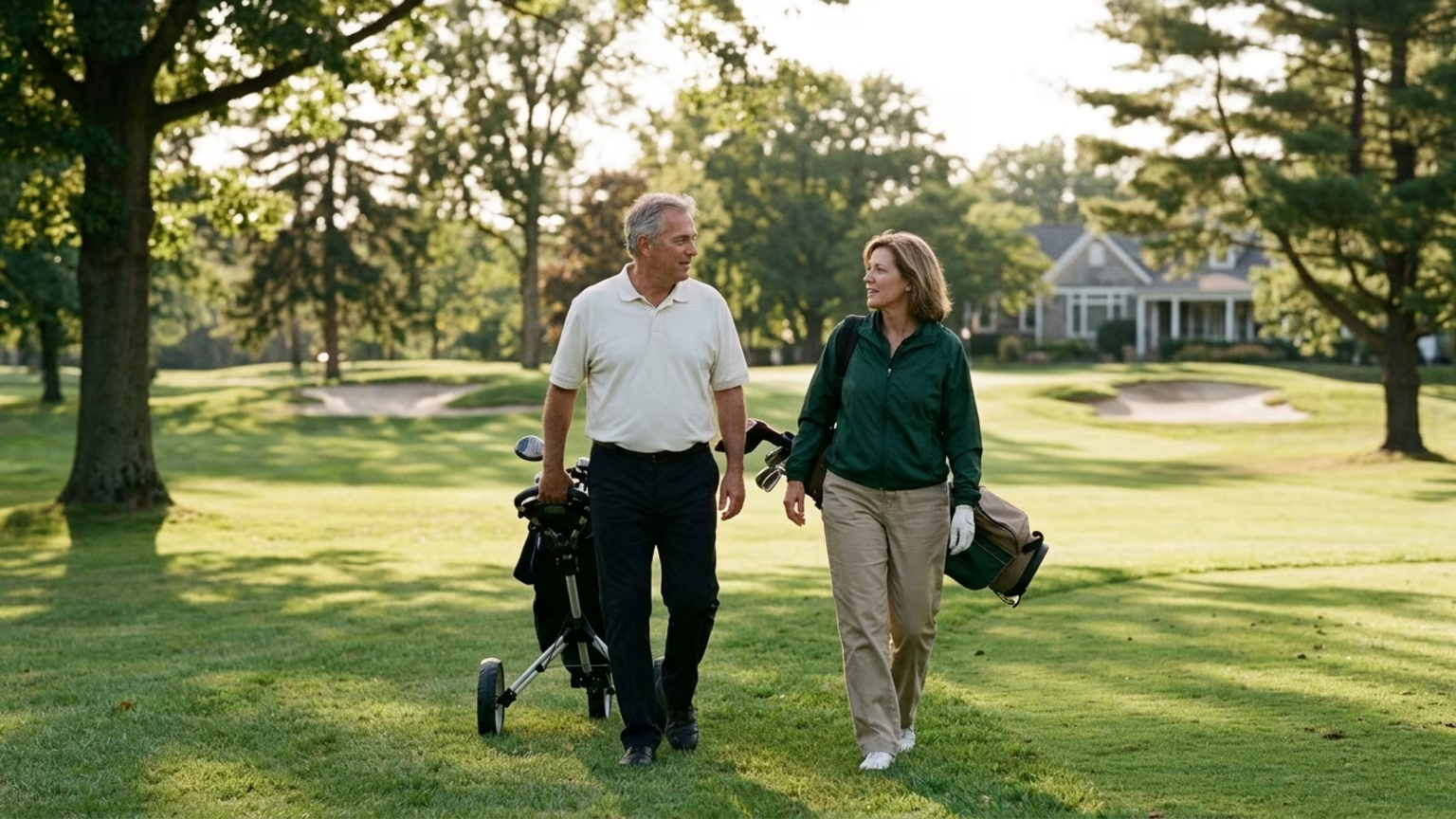
Learn why older golfers need resistance training to protect their joints, and how one weekly session can build strength using accessible movements.




When a professional golfer withdraws from a weekend tournament following a physical breakdown, the news serves as a stark reminder. While no specific tour withdrawal dominated the headlines this week, the sight of a player walking off the course with a muscle injury remains a common reality. These physical breakdowns stop even the most conditioned athletes in their tracks. For the recreational player, watching a professional struggle highlights a physical vulnerability we all share as we age.
The golf swing demands a massive amount of force from the human body. As you rotate backward and transition into the downswing, your muscles must act as shock absorbers for your joints. The large muscles of your legs and core contract to stabilise your pelvis and spine. When those muscles lack sufficient strength, they can no longer stabilise your joints under load.
Without strong muscle fibres to absorb the shock, the mechanical stress transfers directly into your ligaments and joint capsules. If the muscles cannot handle the speed of the club, the delicate tissues of the lower back, hips, and knees take the punishment. Over time, this repeated stress without adequate muscular support leads to tissue wear and eventual failure. To protect these vulnerable joints, the muscles working against the force of the swing must remain strong.
Your tendons also rely heavily on muscular strength to function properly during the swing. Weak muscles put extra tension on the connective tissues that attach muscle to bone. When a golfer takes a steep swing and hits the ground hard, strong forearms and wrists absorb the vibration. Weak hands and arms pass that violent vibration straight into the elbow joint.
Golfers over 40 face a much higher risk of these joint and tissue failures than younger players. Even though mature players swing with less speed than the professionals, the natural aging process makes their bodies more physically vulnerable. As we age, we naturally lose muscle mass and functional capacity over time. This loss leaves our joints with far less structural support during every swing.
A Knowridge article published on October 5 2026 highlights this exact challenge for older adults. Knowridge reports on a Newcastle University study that interviewed 14 adults aged 69 to 92. These older individuals had multiple long term conditions and physical vulnerabilities. Their overall health had also recently worsened.
The interviews, which were originally published in BMC Geriatrics on November 24 2023, revealed a common hurdle for older individuals facing muscle decline. Many participants did not even know the term resistance exercise. Furthermore, some initially doubted their bodies could manage that type of physical movement. For an older golfer, this hesitation makes perfect sense.
The thought of lifting heavy weights sounds risky for aging joints and stiff backs. However, the Knowridge article describes resistance exercise simply as muscles working against a force. This force can come from weights, resistance bands, or just your own body weight. In Knowridge’s account of the interviews, some participants expressed interest in trying it with individual guidance after the concept was explained clearly.
Finding accessible movements that do not overwhelm the body is a cornerstone of effective injury prevention on the course. It is critical to note that the Newcastle work was interview research rather than a trial of a new exercise programme. Knowridge cautions that the interview findings explain perceived barriers but do not establish regular attendance or actual strength gains. The participants' expressed interest does not guarantee they would stick with a routine long term.
However, the findings offer a valuable lesson about lowering the barrier to entry for older adults. Helping older players overcome their initial fear of resistance training is a necessary first step. You do not need a complicated gym routine or heavy barbells to begin. The Knowridge article offers supported chair rises and light band exercises as examples of accessible starting movements.
These simple actions allow you to start small and progress gradually over time. A separate 2022 review in Age and Ageing examined strength training prescriptions for sarcopenia. Knowridge reports that this review supported routines combining upper body and lower body movements. The Knowridge article highlights that having individual guidance was a key factor in making older adults feel comfortable with the idea of resistance exercise.
Working with a professional who understands your physical limitations can help you select the right movements. They can observe your form during a supported chair rise to make sure your knees stay aligned properly. Having a knowledgeable partner removes the guesswork from your routine. It allows you to focus purely on building the strength needed to support your joints on the golf course.
When you start, focus entirely on controlled movements with a very low risk of injury. For a supported chair rise, stand up slowly while keeping your weight balanced evenly over your feet. Use the arms of the chair for support if your legs feel unsteady. This builds the foundational leg strength required for a stable golf posture.
Try to keep instructions focused on one small movement at a time. This blended approach to strength and mobility helps older adults regain physical confidence safely. For your upper body, pulling a light resistance band helps strengthen the muscles around your shoulder blades. Anchor the band securely, stand tall, and pull the band toward your chest with controlled tension.
The golf swing requires both halves of the body to work in harmony. Engaging your legs and your upper back in the same session mimics the full body demands of the game. Combining these movements helps you manage the natural aging shift in physical capacity without stress. The most encouraging news is that you do not need to train every day to see physical results.
A separate ScienceDaily report from October 2026 presents a very practical finding for hesitant beginners. ScienceDaily reports that evidence suggests one weekly session may produce meaningful strength gains. This is particularly true for people who are completely new to strength training. While the Newcastle University interviews did not test weekly frequency, this separate evidence from ScienceDaily offers a realistic starting point for older players.
Building your physical resilience is a steady process that requires practical habits rather than extreme lifestyle changes. You have the tools and the evidence to start small, protect your joints, and extend your playing years. What adjustments will you make to your mobility routine this season to steer clear of this hazard?
Follow Golfergy for practical insights on performance, mobility, recovery and healthy ageing. Stay connected for new articles, research-led guidance and ideas to help you play better for longer.


A practical strength framework for golfers over 40, built around everyday goals, sensible progression and a careful look at limited golf research.


A research-led look at strength, balance, mobility and trunk control, with a flexible planning framework for golfers over 40.
Understand golf mobility after 40 with a comfortable-turn self-check, hip and shoulder guidance, and a clear look at flexibility and swing speed.
Explore practical resources on performance, recovery, mobility and golf longevity.
Read the Blog