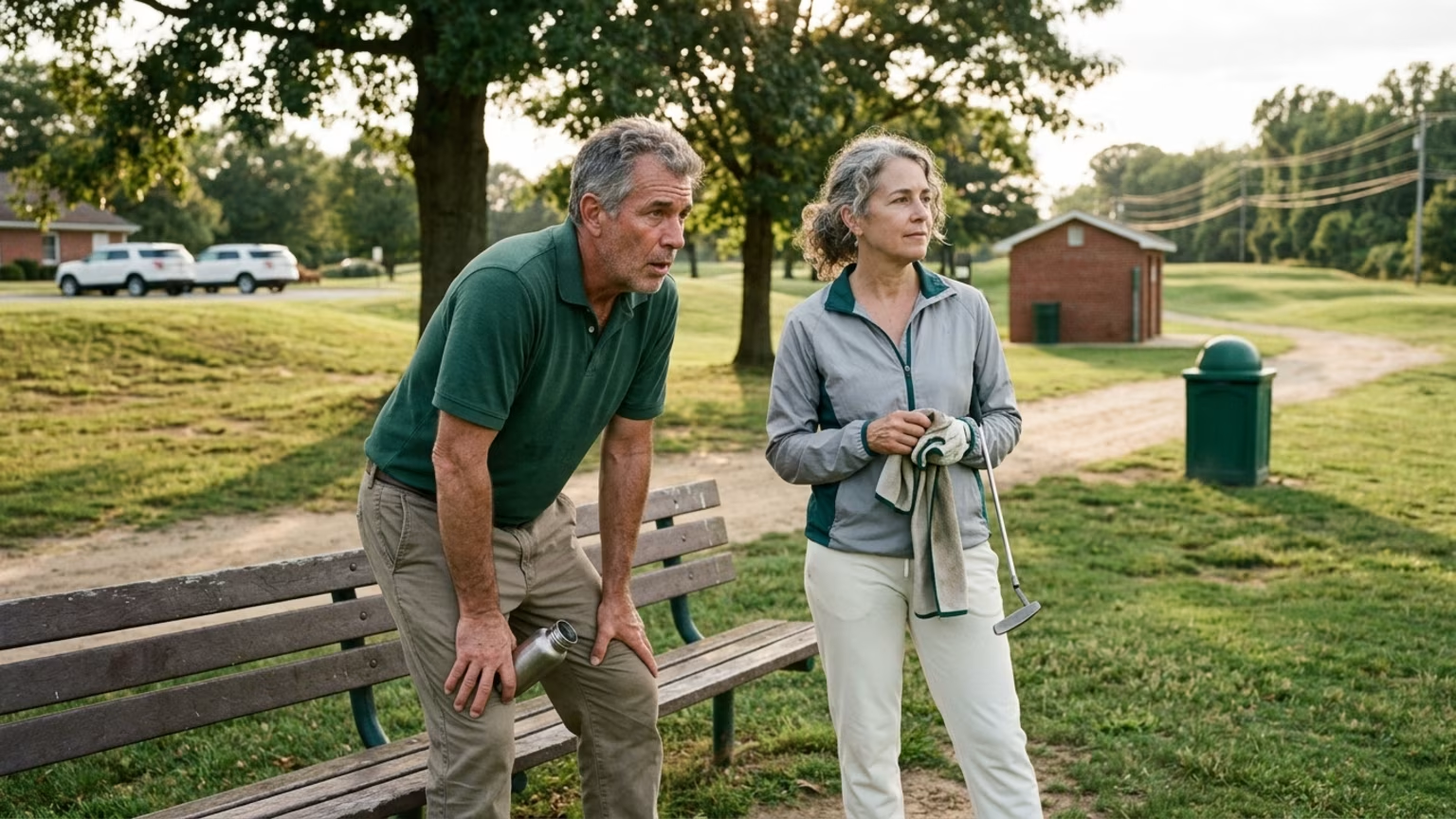

Read daily physical cues to gauge recovery between golf rounds. Learn practical ways to manage on-course fatigue and safely adjust your playing schedule.




"Why does my lower back tighten up rigidly around the 14th hole?" It is the most common question we hear from golfers over 40. You start the round feeling great, making confident swings, and walking with a spring in your step. Then you hit the back nine and your body hits a sudden physical wall.
Your rotation shrinks, your tempo gets quick, and every swing feels like a massive chore. This familiar struggle usually points back to how you manage your physical rest between rounds. Many experienced players treat their downtime as an afterthought. They push through a tired body, ignore the stiffness, and hope for the best on the first tee.
Over time, that lack of structured rest catches up with you. The fatigue compounds, and your body eventually forces you to slow down. At Golfergy, we believe in practical habits that keep you on the course for years to come. You do not need a complicated fitness spreadsheet to track your physical readiness.
You just need to listen to basic, reliable signals from your body. Learning to read these daily physical cues will help you make smarter decisions about when to push forward and when to rest. Recognizing these signals early is the key to healthy aging on the golf course. Building a sustainable schedule allows you to enjoy the game without constantly battling severe physical discomfort.
The simplest answer is that your body has not fully bounced back from your recent physical activity. Golf places significant, repetitive stress on your joints, muscles, and central nervous system. When you string together multiple rounds or heavy practice sessions, that mechanical stress accumulates. If your off-course routine falls short, you carry that lingering exhaustion straight to the first tee.
This built-up physical debt almost always reveals itself late in a round. The large muscles in your core, hips, and legs simply run out of fuel. They lose their ability to support your spine properly during the violent rotational demands of the golf swing. That is exactly when severe stiffness and uncomfortable tightness take over your lower back.
Many older players incorrectly assume they just need more flexibility or a longer stretching routine. The real issue is often a basic lack of adequate cellular rest. Recognizing this fatigue pattern is the very first step toward building a sustainable playing schedule. Players who struggle with this delicate balance often benefit from understanding how to manage your total weekly swing count to keep their legs fresh.
When exhaustion sets in, your brain instinctively looks for physical shortcuts to generate clubhead speed. A tired golfer will almost always stop turning their hips fully on the backswing. Instead of rotating efficiently around a stable center, you might start swaying off the ball or aggressively lifting your arms. This structural breakdown forces your smaller upper body muscles to do all the heavy lifting.
Relying exclusively on your arms and upper back puts massive strain on areas not designed for isolated power generation. You will likely see your club path change, your swing plane steepen, and your contact become highly erratic. Heavy, tired legs also lead to poor balance and a complete inability to shift your weight properly through the impact zone.
Your nervous system knows you are tired and actively tries to protect your fatigued joints. This natural protective mechanism limits your range of motion and drastically alters your natural tempo. The harder you try to force a full, aggressive swing with a tired body, the more your mechanics will fall apart. Recognizing these specific swing flaws early can help you adjust your course strategy before your scorecard takes a massive hit.
The absolute smartest move you can make on the course is to scale back your physical exertion immediately. Mutual of Omaha provides excellent senior-golfer guidance for managing your physical energy during a round. The guidance strongly suggests scaling the golf day when your energy is lower. Pushing through exhaustion will only lead to poor shots and potential pain.
First, consider dropping your total hole count for the day. You can simply play nine holes rather than a full 18 if you feel heavily worn out. Second, change how you physically navigate the golf course. Mutual of Omaha recommends using a cart if walking the course feels like too much work.
Riding gives your legs a much-needed break between shots and preserves your remaining stamina. You also need to manage the actual energy you spend hitting the golf ball. The same guidance advises taking fewer practice swings when you are tired. Limit yourself to one smooth rehearsal or skip the practice swing entirely.
Finally, take advantage of natural pauses in the round and sit down for a break when needed. These sensible, small adjustments keep you moving forward safely without draining your empty tank.
There is a massive difference between normal muscular tiredness and signs of a serious medical problem. You must be completely honest with yourself about what you are actually feeling on the course. Mutual of Omaha advises stopping play and seeking medical help for chest discomfort or dizziness. These are absolutely not minor symptoms you should ever try to push through for the sake of a golf game.
You should also stop playing immediately if you experience unusual shortness of breath. The senior-golfer guidance clearly advises stopping for any physical pain that changes how you move. Altering your normal walking gait or modifying your golf swing to avoid sharp pain is a glaring warning sign. Respect your body, protect your long-term health, and step away from the game if these distinct red flags appear.
Preventing mid-round fatigue starts the very moment you walk off the 18th green. Mutual of Omaha suggests noticing exactly how your body feels after a round and the next morning. This simple, consistent observation is your most powerful tool for accurately gauging your physical readiness. You do not need expensive wearable gadgets to tell you if your legs are feeling heavy.
If you wake up feeling incredibly stiff and physically drained, you must adapt your daily plans. The guidance recommends taking a full rest day when you are unusually sore or tired. Pushing through severe muscle soreness will only delay your natural healing process and ruin your next round of golf. It is always better to skip one day of golf than to be sidelined for a full month.
Choosing between an active mobility session or a complete day off depends heavily on these morning physical signals. You also need to watch very closely for symptoms that linger far too long. Mutual of Omaha recommends paying close attention to next-day pain, swelling, or fatigue. You should definitely contact a doctor if those specific symptoms do not improve with basic rest.
A smart daily recovery routine is built entirely on honest, daily physical check-ins. If you pay close attention to your body, you will stay much healthier and play better golf. You might also consider establishing a consistent 24-hour physical assessment to formalize this excellent habit.
Take this practical, sensible approach with you the next time you visit the driving range. Hit exactly five short wedges and pause to evaluate how your lower back and hips feel. Notice whether you have the physical energy to complete a full shoulder turn without feeling tight strain. Focus entirely on turning your trail hip smoothly and steadily.
If you feel unusually stiff or sluggish early in the session, stop hitting full, aggressive drivers. Switch your focus to light chipping and putting, or pack up your clubs and focus on resting. Listening closely to these basic physical cues during your practice will keep you fresh for the golf course. Make this simple, honest check-in a permanent part of your weekly golf routine.
Follow Golfergy for practical insights on performance, mobility, recovery and healthy ageing. Stay connected for new articles, research-led guidance and ideas to help you play better for longer.



Learn how experienced golfers can maintain performance and prevent tightness during hot rounds with practical hydration habits and steady fluid management.


Four Seasons Resort Peninsula Papagayo announced new golf longevity experiences. We examine how VO2 max testing and deep-pressure recovery affect older golfers.

Read how tour professionals manage physical recovery and learn practical, evidence-based habits older recreational golfers can use to protect their joints.
Explore practical resources on performance, recovery, mobility and golf longevity.
Read the Blog