

Understand hip rotation in your golf swing, try two gentle movement checks, and learn why a comfortable turn matters more than forcing range.




Hip internal rotation is simply your thigh turning inward relative to your pelvis. It is one part of hip mobility that golf practitioners look at when assessing how a golfer turns. A golf mobility practitioner article describes a gentle way to observe it: keep your thigh still while moving your foot outward.
That outward foot movement can seem backwards. Yet it shows why understanding the movement matters more than copying a stretch or chasing a bigger backswing. For Golfergy, the useful starting point is practical awareness of the turn you have today.
During a standard 18 holes, hip movement belongs to more than the full swing. A practitioner guide to golf in later life describes the game as a combination of walking, weight shifts, trunk rotation and repeated swings. Your turn sits within that wider movement picture.
The connection during the swing is between motion at the hip and rotation of the pelvis. Golf-oriented practitioner guidance suggests that restricted hip motion may influence posture or prompt a golfer to find movement elsewhere. That makes hip rotation worth observing when a turn feels blocked or requires an unexpected change in position.
On a tee shot, the useful question is how comfortably you turn back and through. On an approach shot, the same question applies to how you maintain your usual posture while turning. The issue is not whether your finish matches someone else's.
A golfer might describe the experience as having room to turn. Another might notice that the turn seems to stop unless the body changes position. Those descriptions are useful starting points for a conversation about movement rather than explanations of what caused a shot.
Think about the whole round without turning every swing into an examination. A simple observation can be saved for a slow practice movement without a club. Our discussion of mobility and movement control offers another way to frame that distinction.
After 40 and 50, the useful starting point is your current movement rather than an age-based target. The practitioner material does not establish a biological timetable for declining hip rotation at those ages. It also does not establish that age alone means a golfer needs more range.
That keeps the ageing question personal: what feels comfortable now, and what has changed for you? Blaming a restricted turn entirely on age would skip the broader assessment these sources recommend. Requiring a larger turn simply because you are older would make the same mistake.
The evidence boundaries belong together. These practitioner observations do not establish that limited inward rotation causes a particular swing fault or low-back pain. They do not provide a universal target angle or show that mobility work alone delivers extra distance, prevents injury or extends playing years.
The checks below are movement observations rather than diagnostic tests. Persistent pain or movement limitation calls for an individualized assessment with a qualified physical therapist. Exercise choices and changes to swing mechanics should follow that personal assessment rather than a single self-check.
A golf-focused physical therapy article recommends looking at more than inward rotation. Its assessment approach includes rotation in both directions and hip extension. It also considers side-to-side differences, strength, pelvic control and balance.
The final piece is how the golfer uses the movement they already have. A seated observation and a turning movement answer different questions. One looks at a specific motion at the hip; the other shows how that motion fits into a larger action.
This is a useful practitioner perspective because it keeps one finding from taking over the whole discussion. Rather than asking only whether a hip feels tight, an assessment can examine several parts of the movement together.
For the recreational golfer, that is a reason to stay curious rather than jump straight to a stretch. Golfergy's approach is to connect physical guidance with real golf movements while avoiding a quick-fix promise.
The golf mobility practitioner article offers two accessible starting movements. Both focus on observing comfortable motion rather than pushing for a particular position. Keep your attention on one small movement at a time.
The article describes this sequence:
Focus entirely on the foot moving outward while the thigh stays still. The motion being observed is inward rotation at the hip. Leaning or lifting the pelvis would change what you are watching.
There is no need to turn the comparison into a contest between sides. Notice how each side moves and whether the movement feels comfortable. The useful information is the observation itself rather than a score or an angle.
This is a small starting habit: pay attention to the movement before trying to change it. It fits the distinction between having range and using it, which is a helpful way to think about golf mobility.
The same practitioner article suggests observing a slow practice swing without a club:
Here the focus is the turn itself. Keep the movement comfortable rather than trying to recreate your longest backswing. Do not push into pain or force the end of the movement.
The seated check keeps attention on one hip motion. The no-club turn puts attention on how you move as a whole. Together they offer a simple starting point for describing what you feel without adding a complicated drill sequence.
If you take those observations to a qualified professional, describe the movement rather than naming a presumed cause. Explain which direction felt restricted and whether your posture changed. Those details fit the broader assessment approach better than deciding that one hip must be responsible for a swing fault.
For further reading, our discussion of adapting mechanics for the long term keeps attention on the relationship between the golfer and the swing.
Understanding the hip turn you have, without forcing the turn you want, is a grounded starting point for Playing Better for Longer.
Follow Golfergy for practical insights on performance, mobility, recovery and healthy ageing. Stay connected for new articles, research-led guidance and ideas to help you play better for longer.


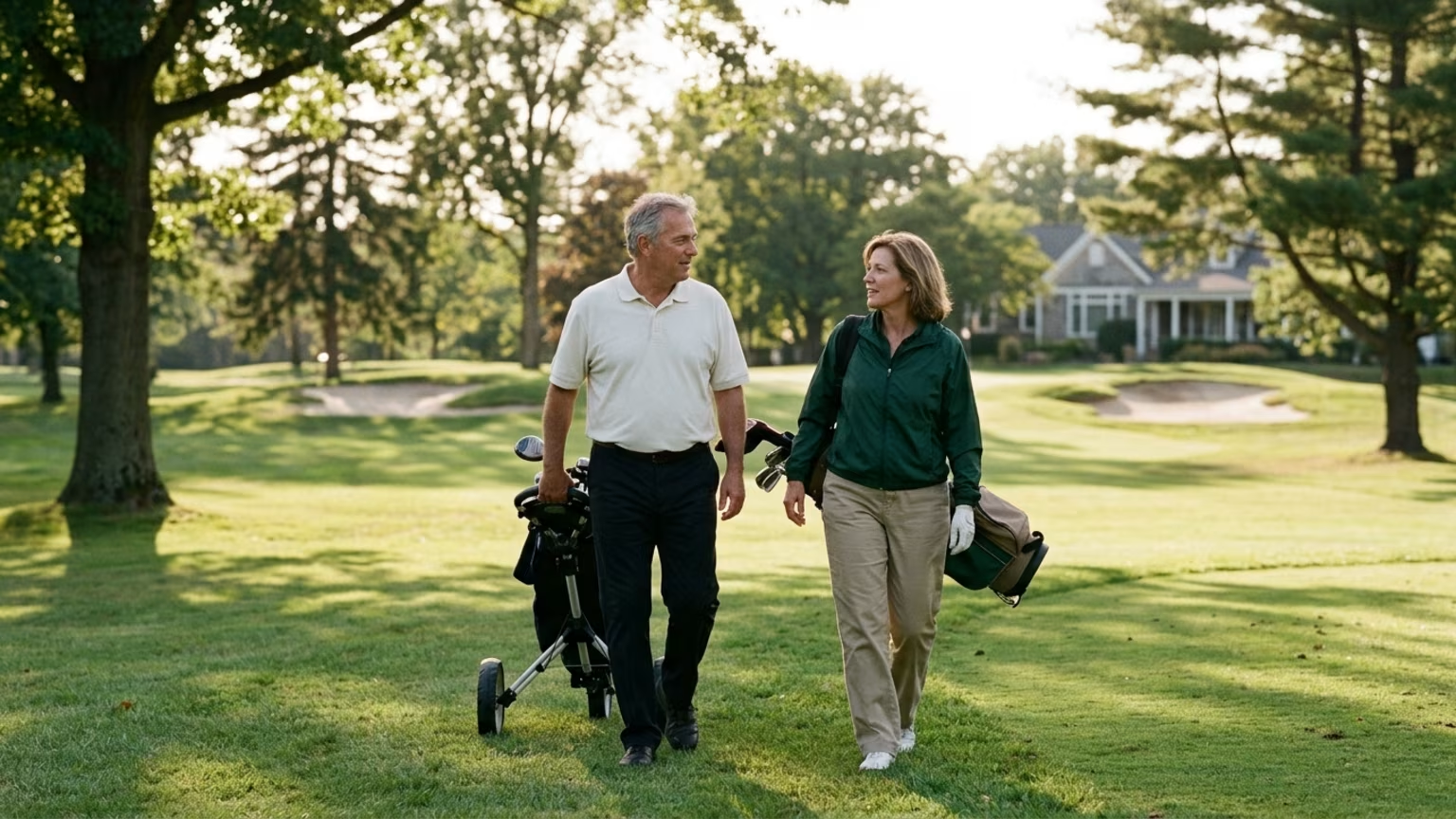
Understand how your hips and mid-back contribute to a golf turn, with practical habits that put comfort ahead of extra backswing length.


A progressive golf warm-up for players over 40, moving from easy activity to fuller practice swings without treating preparation as a flexibility test.
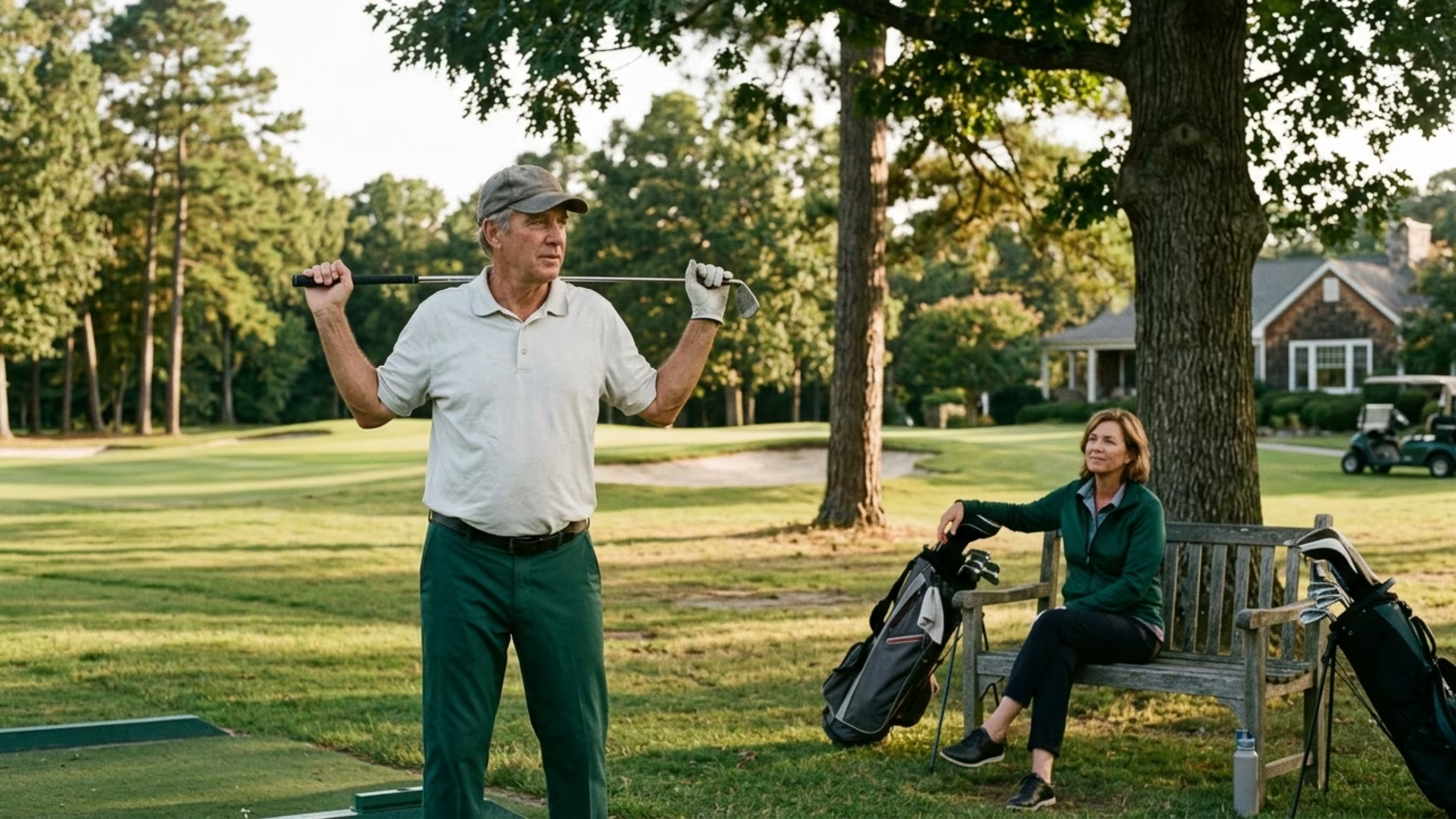
Observe comfortable movement and control to frame better questions about your golf swing, with guidance on when pain needs professional assessment.
Explore practical resources on performance, recovery, mobility and golf longevity.
Read the Blog


