
Learn how quiet eye research and precise target selection improve your swing. A focused pre-shot routine helps mature golfers reduce tension and play better.




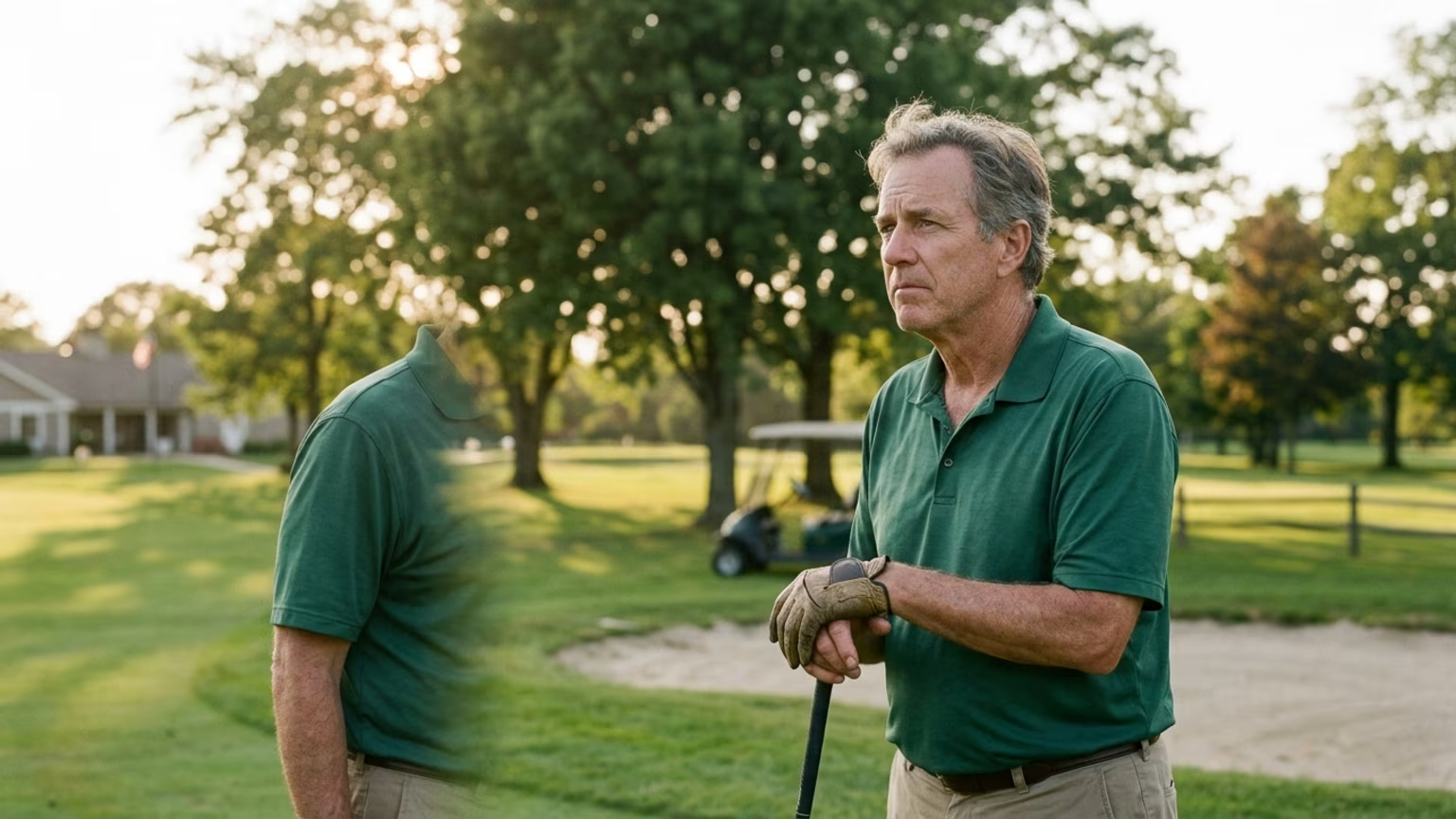
On the final hole of the BMW PGA Championship, Manuel Elvira faced a critical decision. He was tied for the lead with J.J. Spaun and had a chance to secure a massive victory. He chose to lay up short of a creek on the closing par five. Unfortunately, Elvira pulled the shot into a fairway bunker, made a double bogey, and fell out of contention.
This high-profile collapse caught the attention of major media outlets. Golf Digest published a detailed article on September 21, 2026, analyzing this exact moment. The publication updated the story on September 22, 2026, to highlight how a lack of clear intention can unravel an otherwise routine golf shot. Even professional players suffer when they lose their visual discipline under pressure.
Golf Digest connects this pulled shot to a concept known as quiet eye research. The core argument is that golfers benefit from locking onto a highly specific target before they swing. When a player relies on a vague visual aim, it can produce a significantly less precise motor pattern. The brain struggles to coordinate the body without exact spatial coordinates.
The broader research tradition for this visual concept is associated with Joan Vickers. Her early work examined gaze behavior during golf putting, which helped establish quiet eye as a major sport-performance concept. The final visual fixation gives the brain time to organize spatial information. It prepares the body for movement before the execution phase begins.
You can think of this process as sending a blueprint to your muscles. Without clear instructions, the nervous system has to guess what you want it to do. This guesswork leads to last-second swing manipulations and inconsistent strikes. A quiet gaze eliminates this confusion by providing a concrete physical destination.
A secondary summary of pressure-putting research provides clear insight into this visual phenomenon. Researchers tracked 50 expert golfers during a high-stakes pressure shootout. The findings showed that quiet-eye duration was measurably shorter on the putts these players eventually missed. Without that sustained final focus, the precise motor pattern often breaks down under stress.
The data suggests that visual discipline acts as an anchor when anxiety rises. A steady gaze helps filter out internal distractions and physical tension. However, more focus does not always mean better focus on the golf course. A University of Bern research page states that quiet-eye studies have examined whether longer final fixations before movement can improve performance.
This group reports experimental work on the direct relationship between quiet-eye duration and execution success. According to one University of Bern summary, the performance benefit actually became negative beyond approximately three seconds. Staring at the ball for too long can create muscular rigidity. The optimal window requires a brief, steady look rather than a prolonged stare.
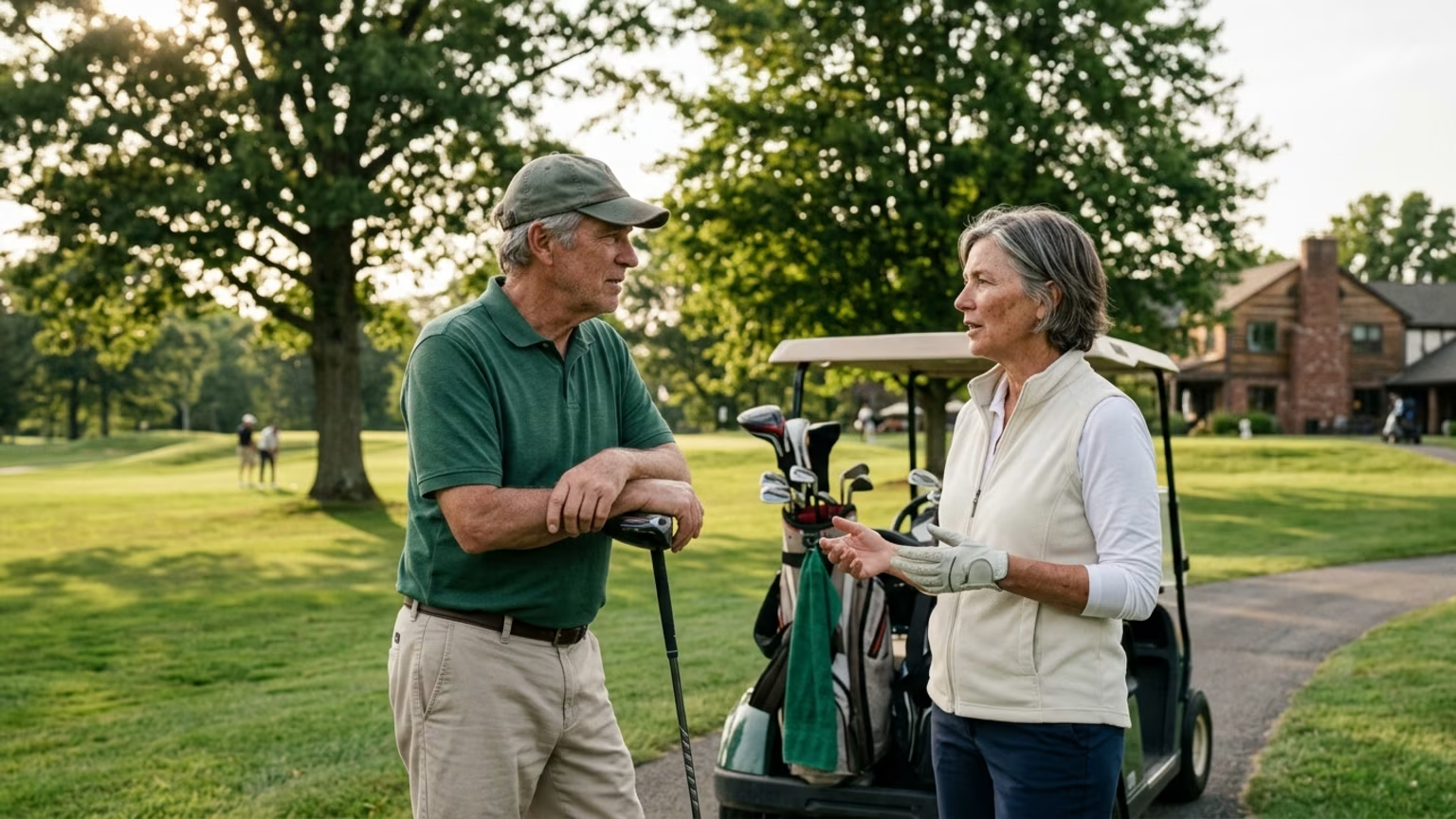
Experienced recreational golfers aged 40 and older face unique challenges on the course. You might not swing with the same speed as a tour professional, but your motor system requires the exact same clarity. Many mature players simply try to avoid a water hazard rather than picking a specific landing zone. This vague mindset creates hesitation and physical tension throughout the body.
Our team has seen how poor preparation affects performance on the course. I used to stand on the first tee doing long, static hamstring stretches because I thought it was the right way to warm up. I would actually feel weaker on my first drive. Research later showed me that dynamic movements prime the nervous system much better.
Changing my five minute warmup completely transformed my opening tee shots. Just as static stretching fails to prepare the body, a vague visual aim fails to prepare the mind. You need a clear intention to maintain consistent golf skill training stability. Without a sharp target, the brain cannot send the right signals to your muscles.
This disconnect often leads to the very mistakes mature golfers want to avoid. When you swing with doubt, you tend to restrict your natural rotation. This restriction places unnecessary stress on your lower back and joints. A clear target provides the freedom to swing fully and protect your body.
The most practical adjustment is to make target selection a deliberate part of your pre-shot routine. Choose your specific destination before you even address the golf ball. Replace a negative thought with a positive, observable target area. For example, aim for the left-center landing zone instead of avoiding the right bunker.
Make this target small enough to guide the shot but large enough to be realistic. A smart lay-up target might be a specific dark patch of fairway grass. You can easily improve your target focus by finding an intermediate point on the ground. Keep the routine calm rather than feeling forced.
Use the exact same sequence on every single shot you play. Assess the situation, select the target, make one rehearsal, and address the ball. Then, allow your gaze to settle on the relevant final reference before starting the swing. This steady process will protect your golf longevity and performance round after round.
Focus entirely on turning your trail hip while maintaining a quiet gaze on the golf ball. Do not let your vision dart around the landscape while you stand over the shot. A quiet gaze calms the mind and readies the body for athletic movement. Consistent repetition of this habit will build trust in your swing mechanics.
A common misconception is that you should stare intensely at the target throughout the entire golf swing. Quiet eye is not simply staring harder at the horizon. It involves a final, relaxed fixation on a task-relevant target right before the movement begins. For putting, this usually means settling your gaze on the ball immediately before the stroke.
Another misunderstanding is that longer concentration times always lead to better shots. As the University of Bern research indicated, holding your gaze for more than three seconds can actually hurt your performance. The goal is to settle your attention deliberately without freezing over the ball. A brief, steady look is all your motor system needs.
Some players mistakenly believe that intense focus can replace solid mechanics entirely. While a clear visual intention is valuable, it will not cure a severely flawed swing path. It simply gives your current technique the best possible chance to succeed. Think of it as a tool to support your existing physical potential.
Improving your visual discipline is a completely free way to upgrade your golf game. It requires zero physical strain, making it perfect for the mature recreational golfer. A quiet gaze helps eliminate the physical tension that ruins smooth swings. What adjustments will you make to your pre-shot routine this season to lock in your targets and play better golf?
Follow Golfergy for practical insights on performance, mobility, recovery and healthy ageing. Stay connected for new articles, research-led guidance and ideas to help you play better for longer.


A 2026 review found limited evidence that wearable readiness scores improve golf performance. Learn why older players should trust physical feedback over data.


Learn how PGA Tour coach James Ridyard helps older golfers build consistent wedge contact without chasing swing speed to protect aging joints.
Learn what older golfers can take from a recent breakdown of Scottie Scheffler’s swing. We explain how stable mechanics and balance protect the lower back.
Explore practical resources on performance, recovery, mobility and golf longevity.
Read the Blog