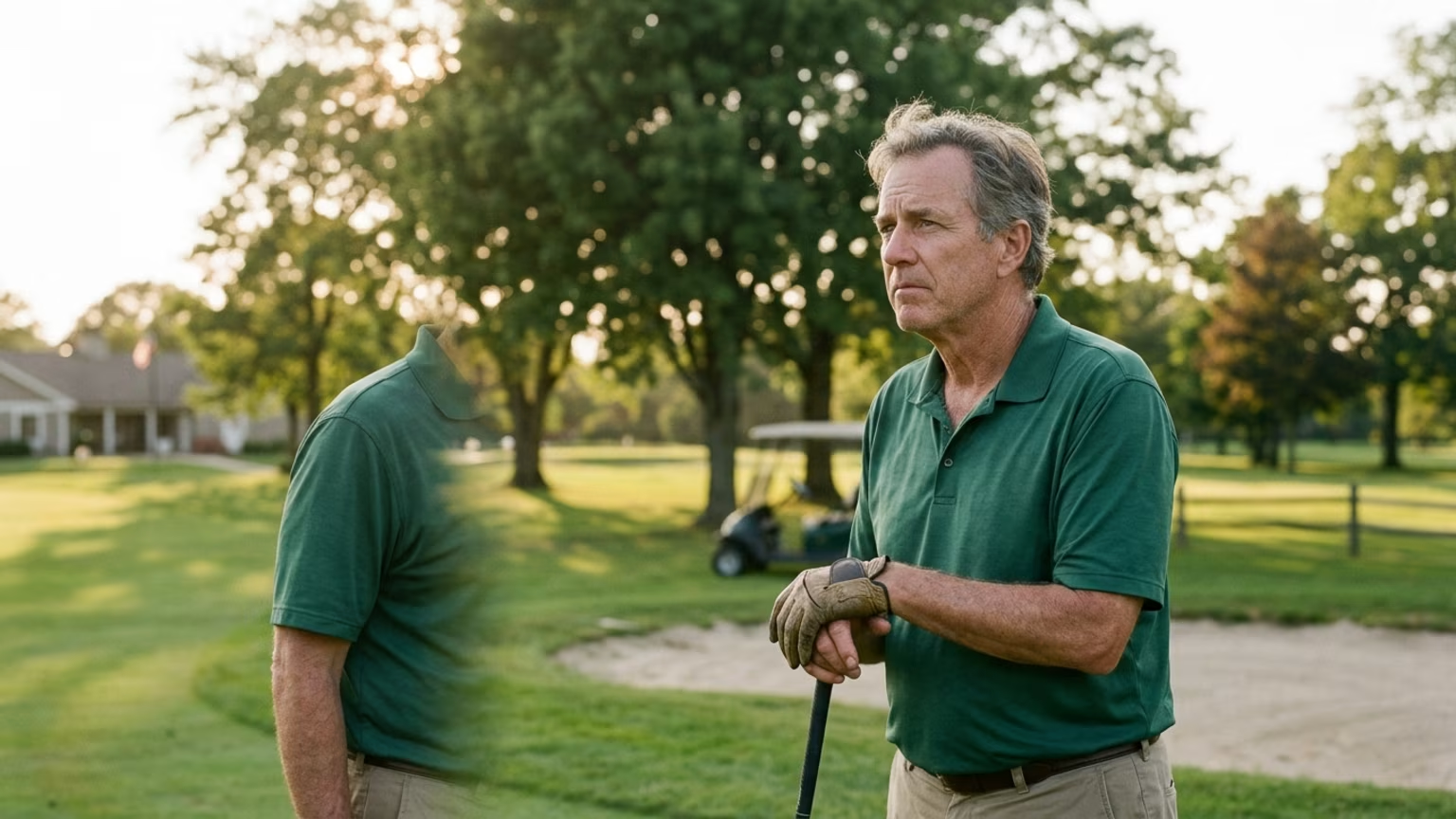
Private clubs are launching 16-week wellness cohorts focused on sleep, nutrition, and mobility. Learn how these programs protect golfers over 40 from injury.




In mid-September, Private Club Marketing proposed a 16-week wellness cohort for private clubs. The framework runs from mid-September through December. It divides a player's preparation into four distinct phases. Those phases are Release, Reset, Reconnect, and Renew.
This four-phase structure is adapted from Clinique La Prairie’s "4Rs journey". Clinique La Prairie CEO Simone Gibertoni describes the sequence as release, reset, reconnect, and renew. Clubs are adopting this specific schedule to help members build sustainable recovery habits before the winter season arrives.
The focus goes far beyond traditional fitness operations. The program uses baseline movement assessments, sleep workshops, and golf-specific mobility blocks. This cohort model treats physical recovery as a continuous process rather than a quick fix.
The model reflects a massive shift toward integrated health services at golf facilities. The article presents Colonial Country Club’s renovation and health-oriented strategy as a primary example. Board President Dan Casciano said, "We committed ourselves to doing these projects the right way the first time."
When golfers lack proper joint mobility, their swing mechanics break down under stress. TPI-style screening can help identify these physical movement limitations early. If a player lacks rotational range in their hips, the body forces other joints to compensate.
The lower back is not designed to absorb heavy twisting forces. The lumbar spine must step in to complete the swing when the hips stop turning. This mechanical compensation places massive strain on the local tissues and nerve pathways.
Over time, the repeated friction causes inflammation and restricts a golfer's range of motion even further. The entire kinematic sequence falls out of alignment. Muscles in the lower back tighten to protect the spine from further damage.
Massachusetts General Brigham’s GolfStrong program uses a full-body movement screen led by TPI-certified experts. They use this screen to identify limitations affecting a golfer's swing. Understanding how to build useful rotation safely can protect the spine from unnecessary damage.
Golfers over 40 face a serious risk of mechanical breakdown if they ignore their physical foundation. A 2026 systematic review indexed by PubMed highlights the absolute necessity of physical maintenance. The review included 124 trials involving 18,429 participants aged 40 and older.
The researchers found that exercise can attenuate age-related decline in bone mineral density. The certainty of evidence ranged from low to moderate for several outcomes. Mental and physical stress also compound over time.
The Fall Reset article cites ISPA’s European Spa Leaders’ Resource 2026 to note a troubling trend. Severe psychological distress has more than doubled over the past 30 years. Without structured physical activity, joint health slowly degrades.
Without a structured plan, players often try to compensate for their declining physical capabilities. They swing harder with their arms to make up for a lack of lower body turn. This upper-body dominant pattern places intense stress on the elbows and wrists. The Fall Reset program aims to stop this downward spiral before it forces a golfer off the course entirely.
The saddest thing I have seen in golf is watching lifelong playing partners slowly drop out of our weekend group. It usually starts with a nagging shoulder or knee issue they ignore until it requires surgery. That pattern is exactly why I became obsessed with golf longevity.
We do not have to stop playing as we age. We simply need to do the right maintenance work between rounds to protect our joints. Proper movement habits keep us on the course for decades.
The first four weeks of the Fall Reset begin with clear baseline assessments. These checks cover body composition, resting heart rate, mobility, and stress. The program repeats those exact assessments in December to measure concrete progress.
Troon Country Club in Scottsdale operates a 9,000-square-foot Wellness Center. The club uses Titleist Performance Institute movement screenings before members begin training. Their reported wellness facilities include nutrition counseling, a private Pilates and TRX studio, and a fitness concierge beginning at 5 a.m.
Country Club of Charleston uses a highly individualized approach for its members. Their wellness team includes three personal trainers and two group fitness instructors. Director of Wellness Kayla Edwards said, "Everything is individualized."
I used to stand on the first tee doing long static hamstring stretches. I thought it was the right way to prepare my body for a round of golf. I would actually feel weaker on my first drive.
Research later showed me that dynamic movements prime the nervous system much better. Focusing on active mobility transformed my opening tee shots. You should always seek an assessment-led program before trying a new exercise plan. An accurate baseline helps you build a practical recovery protocol that matches your specific limitations.
Clubs are using these individual assessments to assign proper rest intervals. A player who plays 18 holes four times a week requires a totally different recovery protocol than a weekend warrior. Giving each participant a one-page report showing their starting point and final result creates real accountability. Members can easily track their progress over the four months.
Other clubs are pushing this integrated model even further. Quail Creek Country Club operates an 18,000-square-foot Sports Center & Spa. They are the first club in the Naples area to earn Blue Zones certification for their fitness center.
Private Club Marketing also profiles Ocean Reef Club. They operate a 28,000-square-foot Spa & Fitness Center with more than 80 weekly group classes. They offer 64 spa services to their members.
The October phase combines small-group training, sleep workshops, nutrition workshops, and one weekly social anchor. This anchor might be a walking group or a cohort dinner. The article refers to members completing the experience alongside approximately 20 fellow participants.
The November phase of the Fall Reset links wellness to broader club activities. It includes golf-specific mobility, racquet conditioning, chef-led dining sessions, and guest speakers. This expands the recovery process into a social and educational experience.
Many older golfers spend heavily on modern recovery technology when their joints start aching. A recent medical review examined popular modalities like compression garments and electrical stimulation.
The review found no tested recovery modality outperformed passive recovery on the outcomes examined. The evidence for these active tools was insufficient for routine efficacy recommendations. This cautions clubs against presenting recovery technology as a substitute for sound training and sleep.
The Fall Reset model focuses on fundamental health pillars instead of expensive gadgets. This approach treats recovery as a habit-building issue rather than an equipment purchase. It helps golfers develop a reliable recovery checklist that works consistently over time.
The December phase of the Fall Reset helps participants consolidate their progress. The goal is to celebrate the cohort and connect participants with continued winter programming. You need a structured plan to maintain your mobility during the colder months.
What adjustments will you make to your mobility routine this season to steer clear of this hazard?
Follow Golfergy for practical insights on performance, mobility, recovery and healthy ageing. Stay connected for new articles, research-led guidance and ideas to help you play better for longer.


A new narrative review examines the tension between ultra-processed sports foods and long-term health. See how older golfers can optimize on-course fueling.

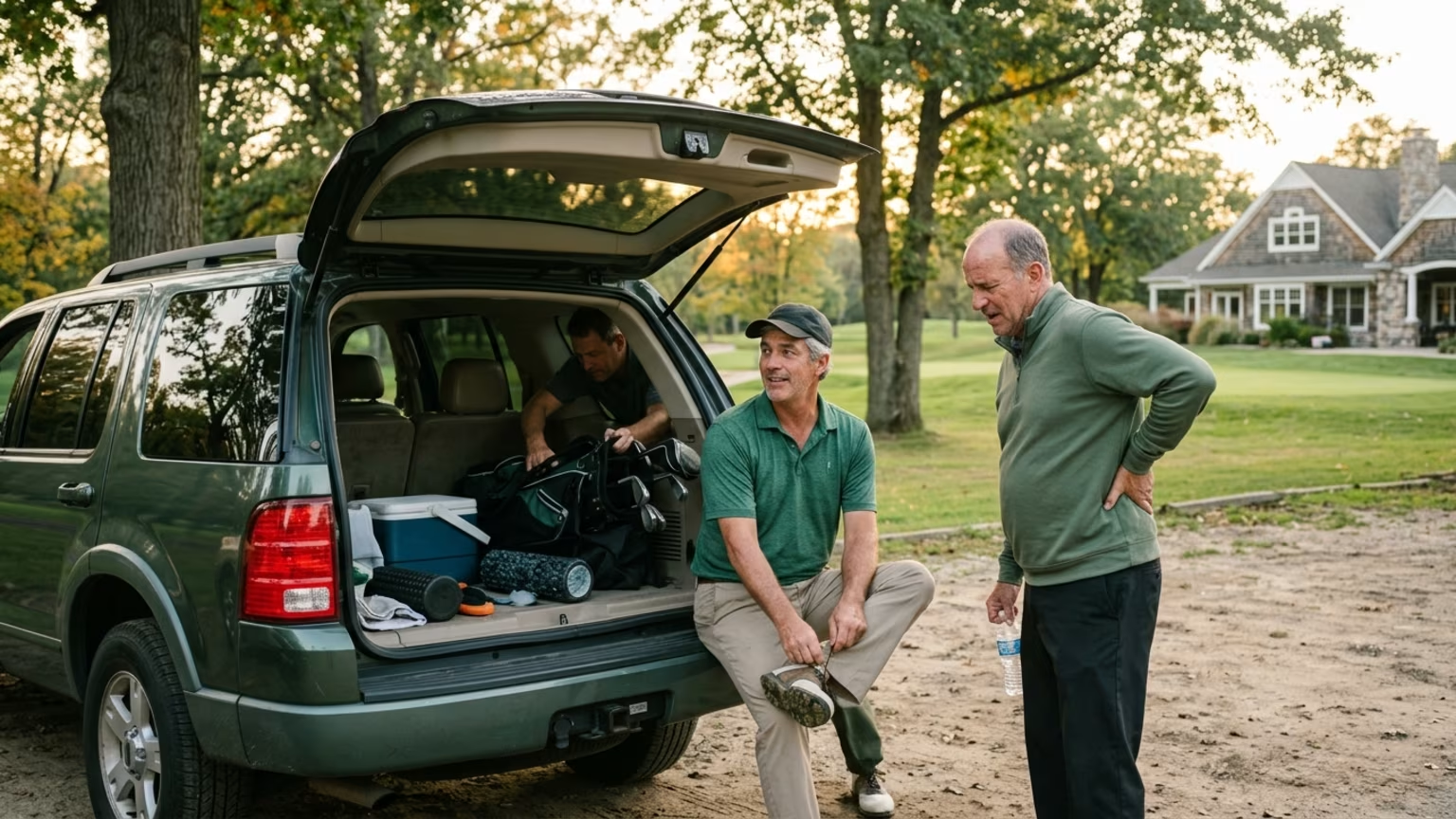
Learn how golfers over 40 can apply a six-step recovery protocol, including sleep hygiene, targeted protein intake, and mobility work, to maintain strength.
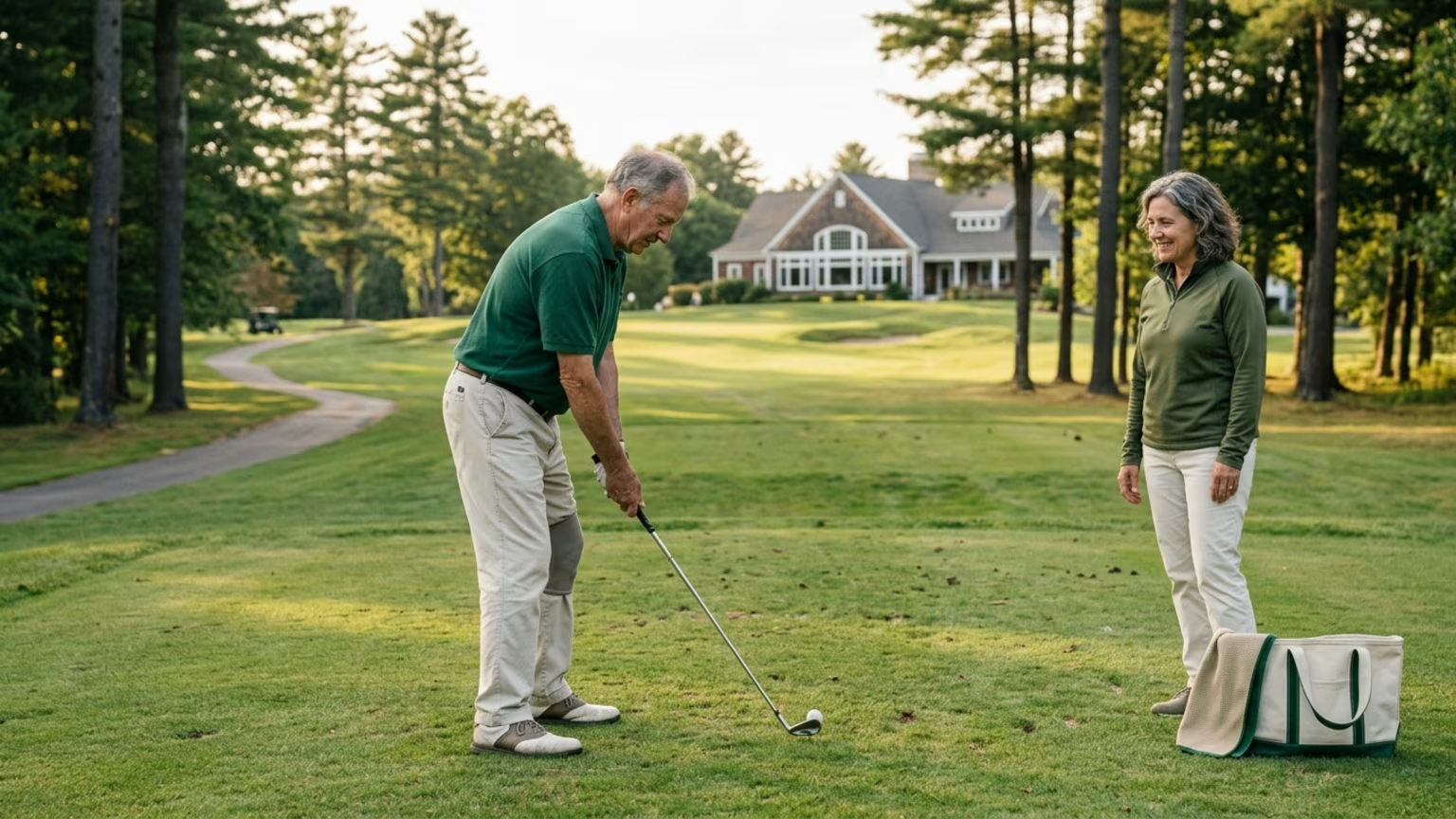
Learn how older golfers can adapt clinical return-to-play guidelines, protect knee joints, and use progressive workload management to play for decades.
Explore practical resources on performance, recovery, mobility and golf longevity.
Read the Blog