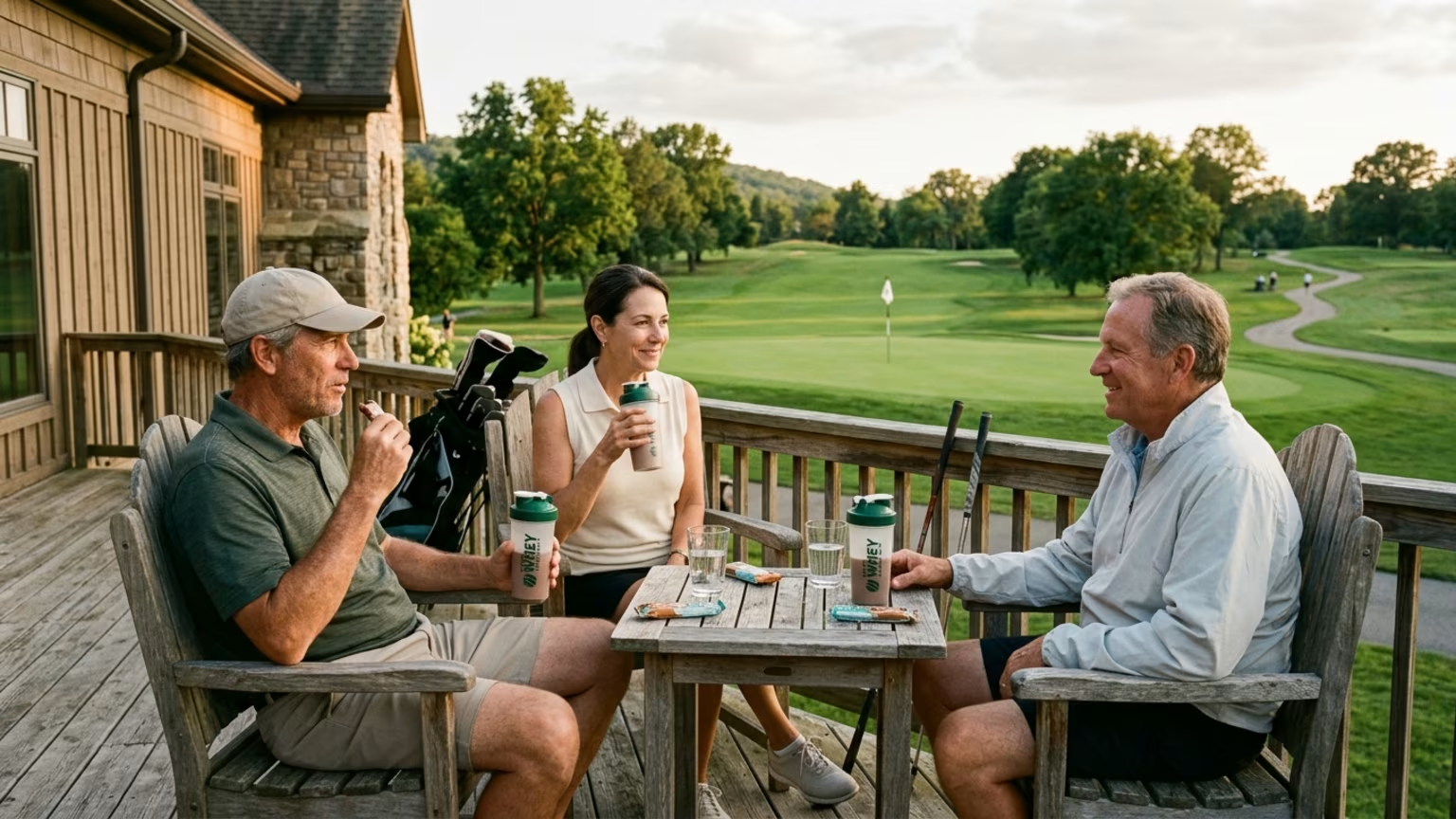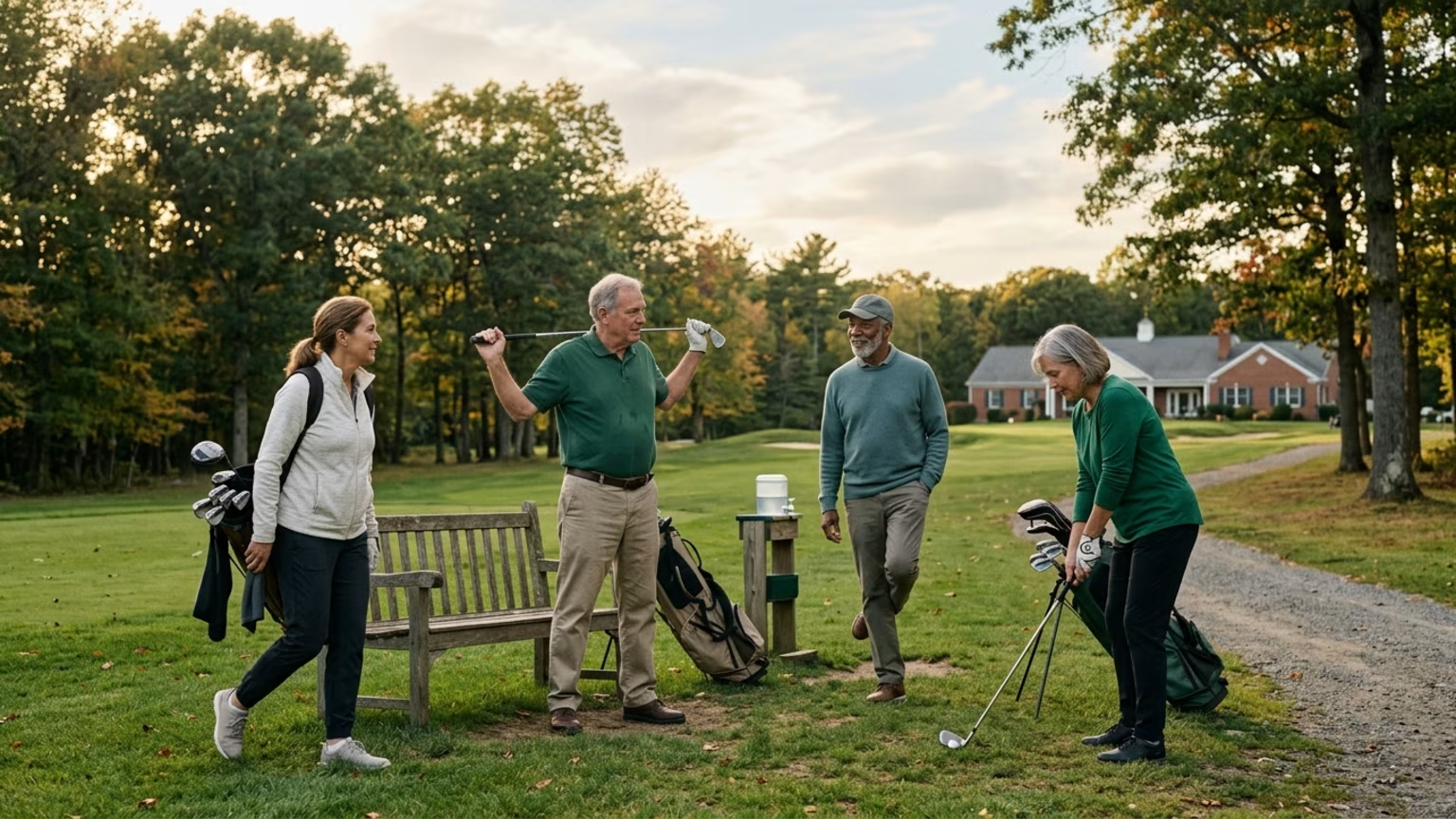

A 2026 study highlights four key fitness capacities linked to lower mortality risk in older adults. Learn how to train these pillars for better golf longevity.




In August 2026, researchers published a nationwide cohort study in JAMA Network Open regarding physical fitness. The study examined objectively measured fitness and all-cause mortality among 13,423 community-dwelling adults aged 65 and older in Taiwan. Participants were assessed during 2015 and 2016. Researchers followed them through national health and death records for a median of approximately seven years.
Researchers evaluated four broad fitness domains. These domains included cardiorespiratory fitness, muscular strength, flexibility, and balance and agility. The testing battery included a two-minute step test, arm curls, repeated chair rises, and flexibility tests. Participants also completed a one-leg stance and an eight-foot up-and-go test.
The physical mechanics highlighted by these tests translate directly to the golf swing. Lower-body strength dictates how well a player maintains posture through impact. The ability to rise easily from a chair mirrors the leg strength needed to load and transfer weight. Without sufficient lower-body power, the swing loses its primary engine.
Balance and agility keep the rotation centered and safe. The eight-foot up-and-go test involves standing, walking, turning, and sitting. Turning efficiently is the foundation of every rotational sport. If static balance fades, the weight shift becomes unpredictable and strains the lower back.
The Taiwanese cohort study found a graded relationship where mortality risk increased as performance declined. A composite index combining the fitness assessments showed an adjusted hazard ratio of 0.39 for the highest-performing group versus the lowest-performing group. In relative terms, that represents an approximately 61% lower adjusted mortality hazard in the study comparison.
The strongest individual association came from the eight-foot up-and-go test. The highest-performing group on this test had an adjusted hazard ratio of 0.41 compared to the lowest-performing group. The one-leg stance showed an adjusted hazard ratio of 0.50. The 30-second chair stand came in at 0.55.
The two-minute step test recorded an adjusted hazard ratio of 0.58. These comparisons correspond to approximately 50%, 45%, and 42% lower relative mortality hazards for the respective tests. The study's most prominent associations involved balance, lower-body strength, and cardiorespiratory fitness. Flexibility and upper-body strength showed weaker mortality associations in the reported results.
The saddest thing I have seen in golf is watching lifelong playing partners slowly drop out of our weekend group. It usually starts with a nagging shoulder or knee issue they ignore until it requires surgery. That pattern is exactly why I became obsessed with golf longevity. We do not have to stop playing as we age, provided we do the right maintenance work between rounds.
Recreational golfers over 40 often assume that walking 18 holes checks every physical box. An international golf-and-health consensus statement associates regular golf participation with increased longevity. The statement notes that walking the course safely provides greater health benefits than riding in a cart. However, a player might walk several miles and still lack the functional leg strength required for long-term health.
Golf alone may not sufficiently train every quality highlighted by the new mortality study. The intensity of a round varies with course topography, playing style, and weather. Players need targeted training to develop specific functional capacities outside of their regular tee times. Relying solely on weekend rounds leaves older players vulnerable to quiet declines in balance and agility.
Older golfers can use these specific fitness areas as practical training priorities. The chair-rise test makes lower-body strength highly relevant to everyday function and swing stability. Players can translate that priority into safe exercises such as supported squats, step-ups, and split squats. The goal is to make walking uneven ground and maintaining swing posture much easier.
Balance work should begin with external support like a sturdy chair. Golfers can address agility with controlled lateral steps, step-over drills, and change-of-direction exercises. The two-minute step test reflects cardiorespiratory fitness. Players can develop this capacity through brisk walking, cycling, or intervals.
I used to stand on the first tee doing long, static hamstring stretches because I thought it was the right way to warm up. I would actually feel weaker on my first drive. Research later showed me that dynamic movements, like leg swings and torso twists, prime the nervous system much better. Changing my five minute warmup completely transformed my opening tee shots.
The golf consensus recommends a warm-up that progresses from general aerobic activity to golf-specific mobility exercises. Players can then move on to practice swings. Proper strength and conditioning routines can improve performance while lowering injury risks. Combining golf with targeted physical activities provides much broader health benefits.
A common error is treating these functional assessments as personal predictions or guarantees. Domenic Angelino, an exercise scientist not involved in the research, cautioned that poor test performance is not a reason to panic. It simply indicates that a person's fitness might be lower than it could be. The assessments were a snapshot of abilities rather than a record of changes over time.
The study was purely observational. It cannot establish that poor balance or weak legs directly caused earlier death. Exercise physiologist Christopher Anderson stated the findings reaffirmed balance and strength as useful health markers. Physical therapist Milica McDowell added that these simple tests help identify people with lower functional capacity.
Experts advise against attempting unsupported challenges if you have a history of falls or unsteadiness. Anderson recommended consulting a physician before trying timed walking or balancing tests under such conditions. These simple assessments should never be treated as substitutes for regular aerobic exercise and strength training.
The international consensus statement advises adults to accumulate at least 150 minutes of moderate-intensity aerobic activity per week. Golf can contribute to that total when played consistently. A balanced weekly plan should include time on the course, dedicated strength training, and balance practice.
Maintaining your physical reserves requires consistent, focused effort away from the clubhouse. What adjustments will you make to your mobility routine this season to steer clear of this hazard?
Follow Golfergy for practical insights on performance, mobility, recovery and healthy ageing. Stay connected for new articles, research-led guidance and ideas to help you play better for longer.


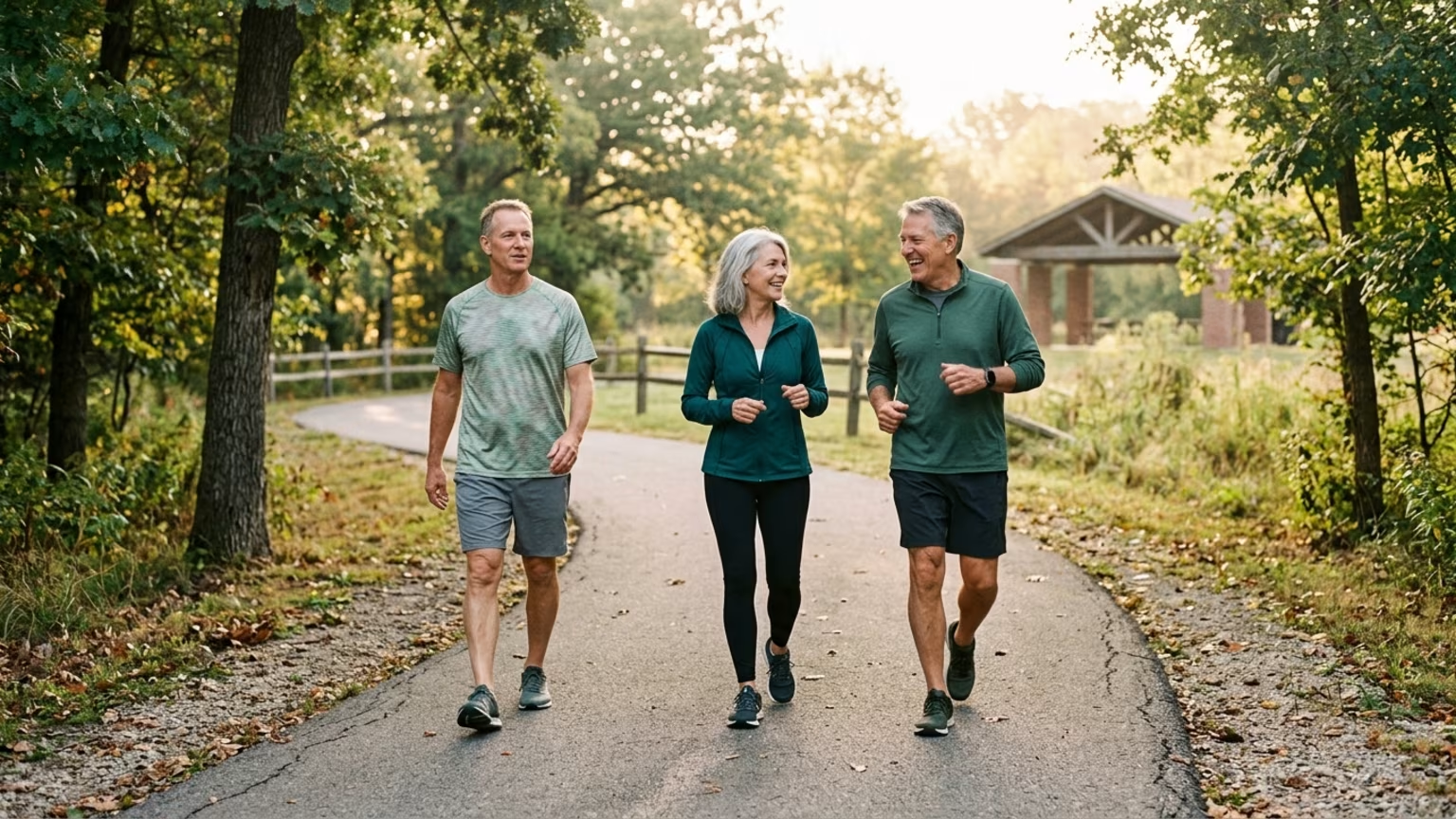
Learn how short bursts of brisk walking on the golf course can improve cardiovascular health and lower mortality risks for older players.

New research highlights VO2 max as a key longevity marker. Read how golfers over 40 can build a consistent aerobic base to play comfortably and recover faster.

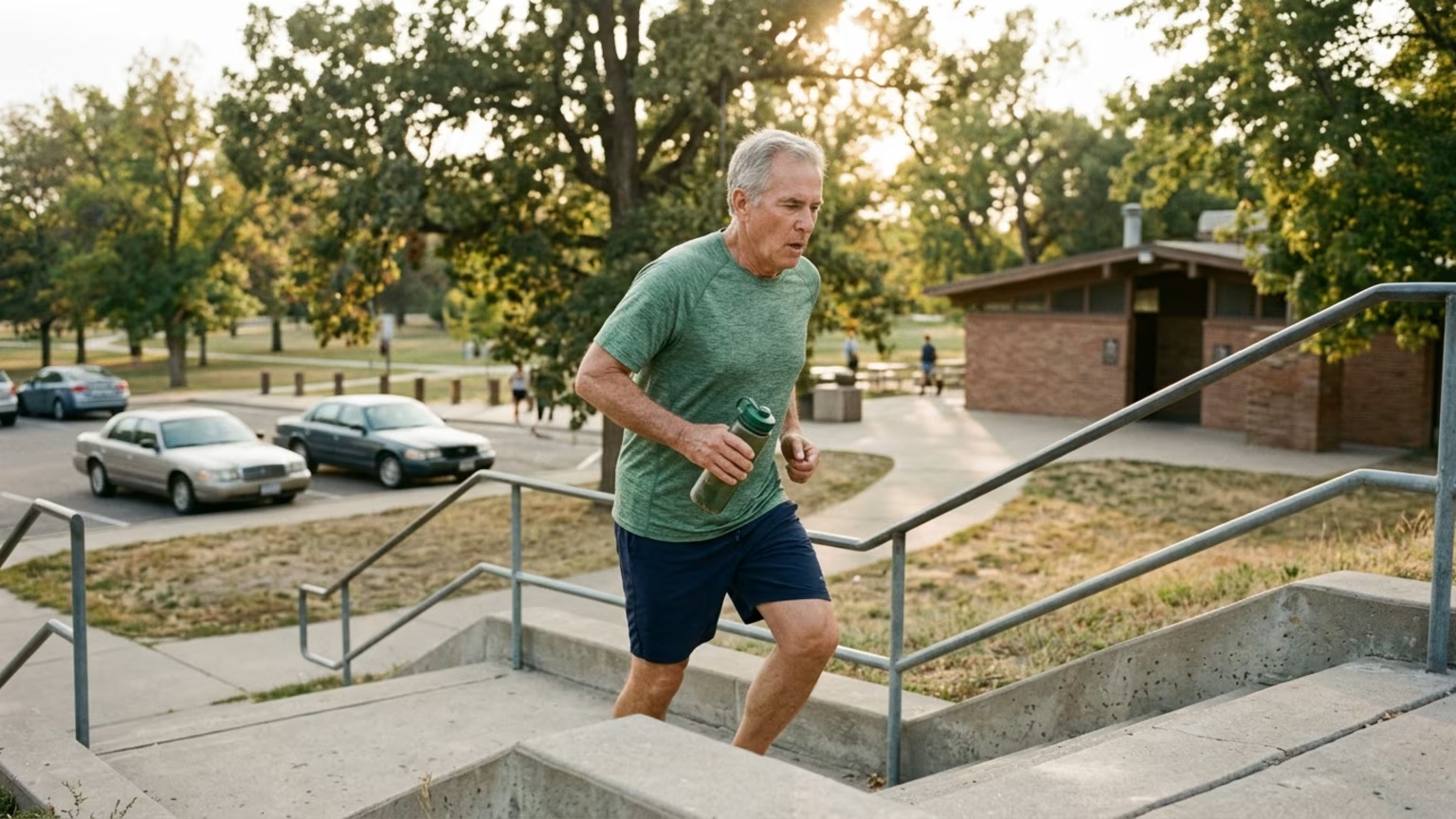
A 2026 study linked daily stair climbing to a 39 percent lower cardiovascular mortality risk. Learn how this simple habit can protect your late-round golf stamina.
Explore practical resources on performance, recovery, mobility and golf longevity.
Read the Blog