
A 2026 analysis shows mid-round caffeine can boost golf performance, but older players must balance course energy with strict cutoffs to protect their sleep.




On September 16, 2026, Takeroon updated its analysis on nicotine-free golf pouches. The publication summarized a 2016 caffeine-and-golf trial that tested fatigue management. This double-blind, placebo-controlled crossover study involved 12 male golfers with handicaps ranging from 3 to 10. The trial took place during a 36-hole competitive tournament.
Each golfer played 18 holes on two consecutive days under both caffeine and placebo conditions. The results provide interesting data on stamina, but they highlight a difficult balance for older players. Managing fatigue on the course must never ruin your ability to rest that night.
To understand the physical mechanics behind mid-round fatigue, we must examine the nervous system. The golf swing requires explosive rotational force that slowly drains the body. Participants in the study consumed approximately 155 mg of caffeine before the round. They took another 155-mg dose at the turn after nine holes.
This mid-round timing targets the specific point when muscular output begins to fade. The trial reported lower scores, more greens in regulation, longer drives, and less fatigue in the caffeine condition. Average driving distance was 239.9 yards with caffeine versus 233.2 yards with a placebo. The caffeine group also recorded 8.6 greens in regulation compared to 6.9 under the placebo condition.
The scoring impact reflects how better energy maintenance supports the physical swing. The study reported average scores of 76.9 with caffeine versus 79.4 with a placebo. This represents a difference of 2.5 strokes during the round. By delaying fatigue, players maintained better physical mechanics and clubhead control late into the afternoon.
Interestingly, the study reportedly found no meaningful change in heart rate, breathing, or putting posture. This pattern suggests the performance effect was not simply a measurable cardiovascular spike. The small sample limits how confidently we can infer the exact mechanism, but the physical output clearly improved.
While stimulants support late-round output, they remain in the body long after the final putt. The cited review notes that caffeine half-life can vary from roughly two to ten hours among healthy adults. A separate randomized study tested 400 mg of caffeine at bedtime, three hours before bed, and six hours before bed. All three timings produced statistically significant sleep disturbance relative to a placebo.
Clearance rates depend heavily on the total dose consumed. A systematic review estimated that avoiding a standard 107-mg coffee requires a cutoff of approximately 8.8 hours before bedtime. This specific window prevents a measurable loss of total sleep time. A larger 217.5-mg dose required approximately 13.2 hours before sleep.
The reported golf protocol delivered approximately 310 mg across the two doses. This total sits below the commonly cited limit of 400 mg per day. The United States Food and Drug Administration notes this 400-mg level does not typically cause negative effects for healthy adults. However, individual sensitivity varies greatly, and a general threshold guarantees nothing for your personal sleep quality.
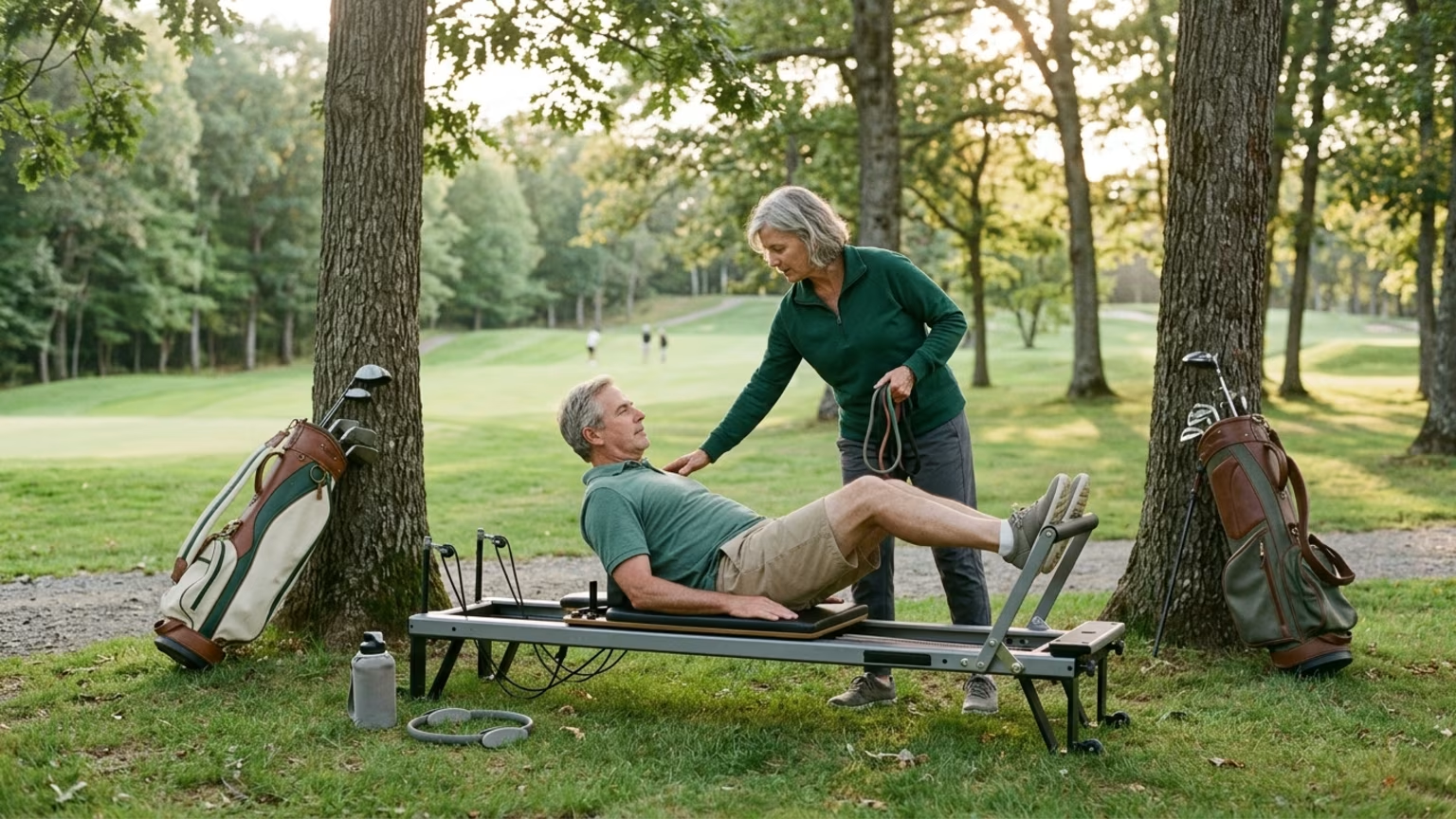
The saddest thing we have seen in golf is watching lifelong playing partners slowly drop out of our weekend group. It usually starts with a nagging shoulder or knee issue they ignore until it requires surgery. That pattern is exactly why our team became obsessed with golf longevity. We do not have to stop playing as we age, provided we do the right maintenance work between rounds.
Excellent maintenance demands deep rest to repair muscle fibers and calm the nervous system. A player might feel perfectly alert at bedtime while still experiencing objectively poorer sleep quality. The sleep evidence indicates that subjective awareness is not a reliable safeguard against actual sleep disruption.
Older players cannot afford to trade night-time healing for a temporary afternoon boost. Poor overnight recovery may undermine the next day’s mobility and general exercise tolerance. The trial involved only 12 male golfers with low handicaps. These findings cannot automatically be generalized to older adults who need focused physical recovery after 40.
To protect your rest, you must build a strict timing boundary for your energy intake. Takeroon’s cited sleep guidance recommends treating eight hours before bedtime as a conservative caffeine cutoff. For a golfer who sleeps at 10:00 p.m., this means finishing caffeine by approximately 2:00 p.m. If you have an 11:00 p.m. bedtime, the corresponding cutoff would be approximately 3:00 p.m.
A morning tee time can easily accommodate a pre-round dose and a turn dose. Afternoon rounds carry a much higher risk of lingering stimulant effects. You should consider your entire daily intake rather than counting only the specific pouch used on the course. Those who prioritize sleep science for golfers often skip late stimulants entirely.
Test any new timing strategy during a casual round before using it in competition. Measure the outcomes that actually matter for longevity, such as sleep duration and next-day stiffness. You can evaluate how well the timing protects your overnight neural recovery. True longevity requires balancing your scoring goals with sustainable rest habits.
Many players wrongly assume that any modern focus product perfectly replicates the published trial results. The 2016 study utilized a specific intervention of roughly 155 mg per dose. Commercial pouch formulations vary substantially in dose and ingredients. Takeroon’s comparison identifies caffeine-containing products such as Grinds and Roon alongside caffeine-free options like Yippy For the Course.
Takeroon lists Roon’s pouch as containing 80 mg of caffeine along with L-theanine, methylliberine, and theacrine. Takeroon also lists Grinds as a zero-nicotine product containing 80 mg of caffeine. Taking an 80-mg pouch delivers a materially lower amount than the research dose. Added ingredients in commercial formulations make direct comparisons even more difficult.
The findings from one small controlled trial do not prove that a specific commercial pouch will lower your score. You should treat the 155-mg pre-round and turn protocol as a study condition rather than a medical prescription.
Managing your energy on the course should never compromise your physical healing at night. What adjustments will you make to your caffeine timing this season to steer clear of sleep disruption?
Follow Golfergy for practical insights on performance, mobility, recovery and healthy ageing. Stay connected for new articles, research-led guidance and ideas to help you play better for longer.


A recent review explores how a daily creatine maintenance dose may help older golfers manage cognitive fatigue and physical impairment after poor sleep.


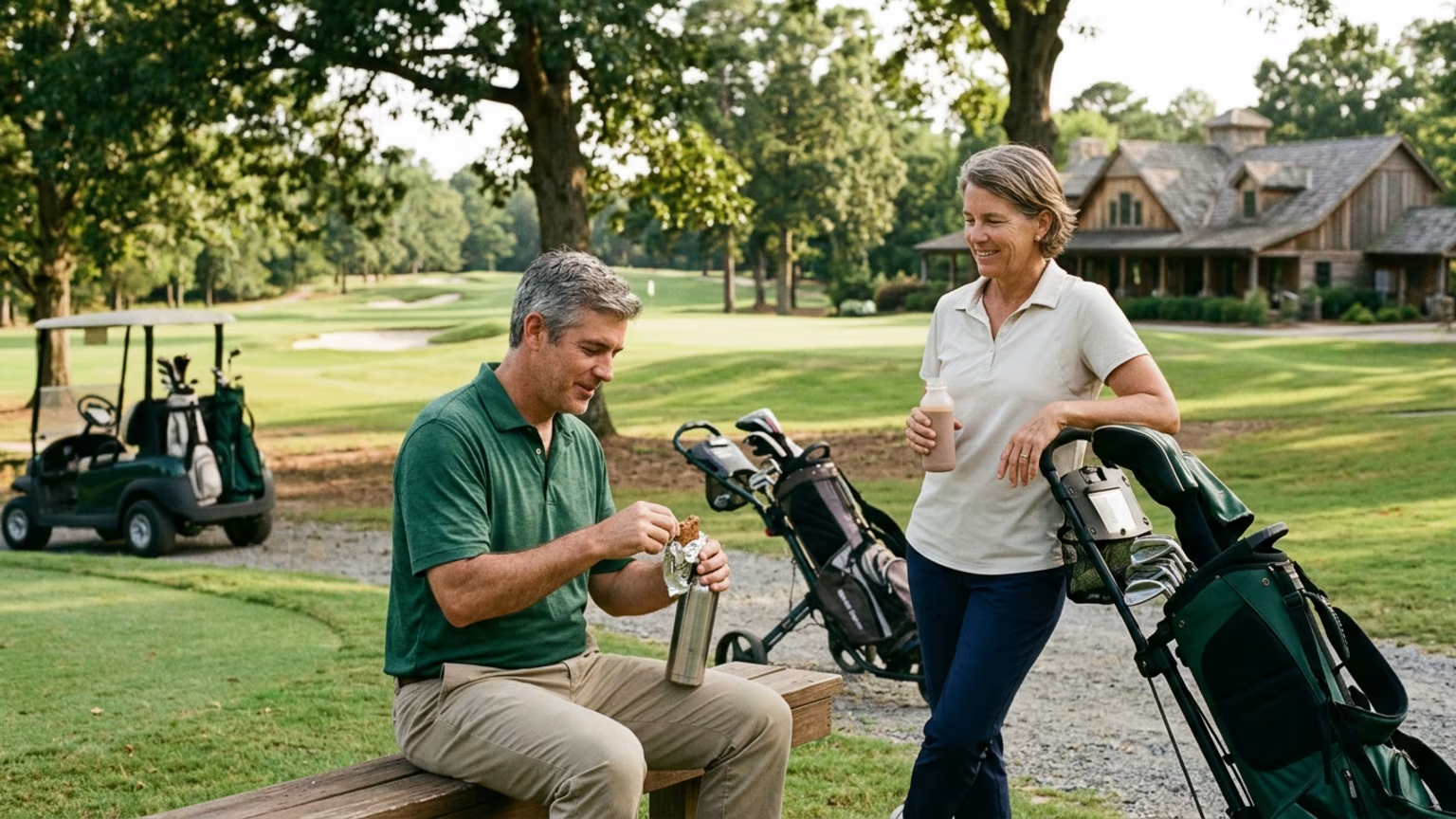
Learn practical whole-food protein targets to support your post-round golf recovery. See how balanced meals can help older players maintain muscle mass.
A September 2026 analysis reveals that golfers over 40 should prioritize total daily protein and complete amino acid profiles over traditional BCAA ratios.
Explore practical resources on performance, recovery, mobility and golf longevity.
Read the Blog