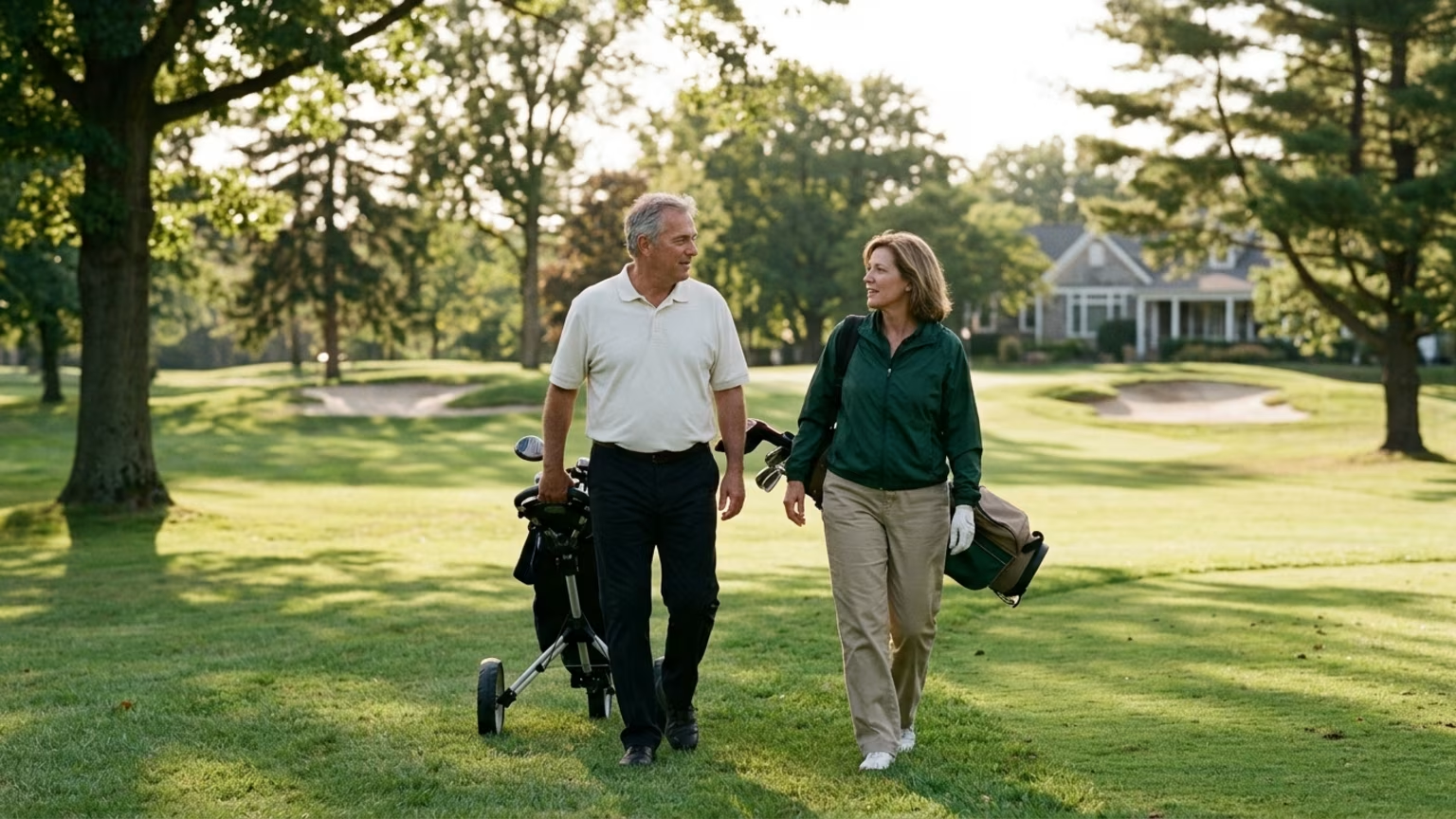
A strong lower body helps older golfers control pressure shifts and maintain balance. Learn simple, adaptable habits to build a steadier base for your swing.




Lower-body stability in the golf swing is simply your ability to control your pressure shift without losing your balance. Many players confuse moving pressure with swaying their bodies. A recent golf-biomechanics explainer draws a careful line between pressure under the feet and large body movements. Shifting pressure does not mean sliding your center of mass from side to side.
It means managing the force you put into the ground while keeping your skeletal structure steady. A stable foundation allows the upper half to rotate freely. Without this lower-body control, the golf swing becomes a disorganized sequence of compensations. Your feet are your only connection to the ground, making pressure management highly relevant.
Out on the course, this subtle difference changes how every shot feels. When you stand on a slightly uneven fairway lie, your legs have to hold your stance while your torso rotates. If your lower body lacks foundational strength, shifting pressure into your trail side during the backswing often turns into a noticeable sway. Your head moves laterally, and returning to the golf ball requires perfect timing.
By the time you reach the back nine, fatigue makes it harder to hold your posture. You might feel your weight falling onto your toes or hanging back on your heels during the downswing. A strong base prevents that late round collapse from ruining a good scorecard. It lets you swing within yourself, knowing your feet are securely interacting with the turf from the first tee to the final putt.
Maintaining steady pressure helps you sequence the downswing correctly without feeling rushed. You can load your trail side going back, and then step into your lead side on the way through. When your lower body can handle this weight transfer smoothly, your swing feels effortless. Building a steadier foundation for your swing requires paying attention to how your feet use the ground.
When you watch experienced older players, their swings often look quiet and controlled. Their lower bodies remain stable while their arms and torso deliver the clubhead to the ball. This stability is not an accident, but rather the result of maintaining adequate leg strength. Without strong legs, golfers often try to generate speed by throwing their arms at the ball.
This upper body dominance leads to inconsistent strikes and frequent lower back pain. If your legs cannot stabilize your rotation, your back takes the brunt of the rotational force. A solid stance gives your upper body a brake to push against, sending energy out to the clubhead. Leg strength directly supports a safer, more repeatable movement pattern.
As players cross their 40s and 50s, the natural decline in muscle mass makes balance harder to maintain. Legs lose the raw power needed to absorb movement, which forces the upper body to compensate during rotation. Stiff joints and weaker glutes change the way we interact with the ground. Staying active can help counteract this physical shift and preserve your capabilities.
Sports Medicine Weekly reports that a 2023 cross-sectional comparison looked at recreational golfers aged 65 to 79 against sedentary peers. The study found the active golfers had higher grip strength and better static and dynamic balance. Because the study design was cross-sectional, it cannot establish that playing the game actually caused those differences. Still, it highlights a clear association between the physical demands of the sport and retained physical capacity.
Small, focused training studies reinforce the idea that older golfers can improve their physical condition. Secondary reports describe one eight week study of men aged 55 to 79. The training group recorded an average clubhead speed increase from 85.0 to 87.1 mph. A separate small study of older male golfers averaging 70.7 years old found maximum clubhead speed increased after an eight week multicomponent program.
The routine combined flexibility, core stability, balance, and resistance exercise. While these specific performance results belong solely to those small study groups, they show how targeted physical effort relates to functional performance. You do not need to accept an inevitable decline in your lower-body strength. Committing to a sensible strength plan for older golfers can help you maintain the physical tools needed to play comfortably.
Many players assume that stretching is the only way to stay limber as they get older. While mobility matters, strength is what controls that mobility during a fast movement like the golf swing. Resistance training keeps your muscles capable of absorbing force, protecting your joints from unnecessary wear and tear. A stable lower body is your primary defense against injury.
You do not need complex gymnastics to begin working on your lower body control. Simple movement patterns can help you practice managing pressure and balance in a safe environment. Start with a basic sitting and standing pattern from a standard chair height in your living room. This simple squat variation builds bilateral leg strength without putting unnecessary stress on your joints.
Try to perform the movement slowly, focusing entirely on pushing your feet evenly into the floor. Once you feel comfortable standing up and sitting down with control, you can practice one-sided strength movements. Single leg strength is highly relevant to the golf swing, as pressure constantly shifts from one foot to the other. A commercial golf training guide suggests using a chair for support during single leg exercises.
Standing next to a sturdy chair, hold the backrest lightly while lifting one foot off the ground. With one hand supported, practice a small hinge motion with your hips. This supported split stance movement challenges your balance gently without risking a fall. Holding onto the backrest gives you the stability to safely practice shifting pressure into the standing leg.
Focus entirely on turning your trail hip while maintaining control of your posture. You can also try a supported split stance to build endurance. Place one foot slightly behind you with the heel raised, keeping most of your pressure on the front foot. Use a wall or a golf club for balance if needed.
Lower yourself down a few inches, pause, and stand back up slowly. Practicing these deliberate movements trains the muscles that keep you anchored during a full swing. Incorporating these adapted movements supports a practical framework for maintaining physical balance. These basic habits are adaptable examples rather than guaranteed swing fixes.
They simply give your body a chance to rehearse the stability required to play the game comfortably. Focus entirely on moving smoothly, rather than trying to lift heavy weights or rush through repetitions. A steady, consistent approach yields the best results.
Building strength in your lower body gives your swing a reliable foundation, reducing unnecessary physical strain and helping you play better for longer.
Follow Golfergy for practical insights on performance, mobility, recovery and healthy ageing. Stay connected for new articles, research-led guidance and ideas to help you play better for longer.


A practical look at golf strength after 40, with research on older golfers and simple habits for connecting training goals to a coordinated swing.


How legs, trunk and upper body share the work of a golf swing, with simple planning habits and a measured look at evidence for older golfers.

Understand mobility versus stability in golf, what older-golfer research reports, and two modest habits for comfortable movement control.
Explore practical resources on performance, recovery, mobility and golf longevity.
Read the Blog