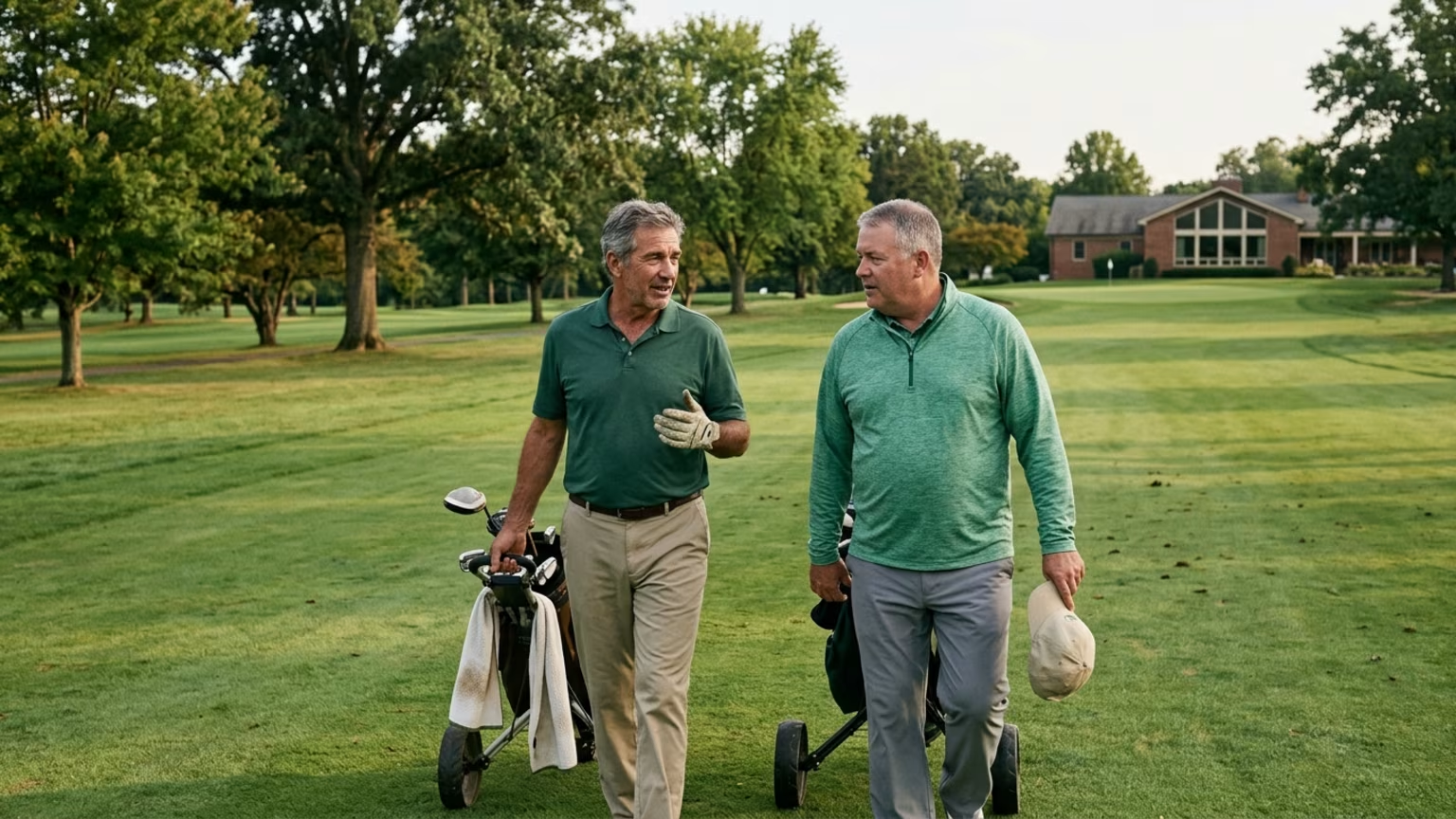

Explore the choice between luxury golf wellness resorts like Camiral and fundamental daily recovery habits to keep older golfers playing better for longer.




You just finished a grueling, sweaty 18 holes in July, and now your lower back is barking as you order a drink at the clubhouse. The stiffness sets in before you even reach your car. That physical toll is exactly why destinations like Camiral Golf & Wellness are building entire hospitality experiences around recovery. Many older golfers accept post-round pain as an unavoidable part of the game.
We tell ourselves that sore joints are simply the price of playing a sport we love. The fatigue on the back nine becomes a familiar companion. We start reaching for painkillers instead of addressing the root cause of our physical decline. A slow recovery between rounds slowly drains the joy out of our weekend matches.
When joint pain lingers, recreational players often look for solutions to speed up their healing process. This creates a choice between two very different recovery paths. Option A involves booking a stay at a luxury golf wellness resort for high-tech treatments. Option B relies on building a consistent, unglamorous daily routine of basic human maintenance.
Both paths aim to help you feel better and prepare for your next round. Golfers constantly debate whether they should invest in expensive treatments or simply rest more. The resort model is gaining massive international attention right now. Consider Camiral Golf & Wellness, the Girona-area resort selected to host the 2031 Ryder Cup.
The venue is positioning itself as a destination for longevity and rest. It has spent more than a decade developing a wellness ecosystem around golf. This approach targets people seeking better sleep, relief from stress, and dedicated time to recover. It represents a shift from occasional spa use toward an integrated health model.
A dedicated wellness destination provides a highly structured environment for your body. The Camiral resort features a wellness centre offering low-intensity movement and recovery services. Guests can participate in yoga sessions or spend time inside a hyperbaric chamber. La Razón reports that Camiral offers specific programs named Detox & Cleanse and Longevity & Vitality.
These distinct tracks combine personalised nutrition, gentle movement, rest, and modern recovery technologies. They present a comprehensive approach to physical restoration. The nutrition component receives heavy focus during these stays. Nutritionist Mireia Cervera designed the cuisine accompanying the programs at Camiral.
The food is designed to support the structure of each program and make healthy eating part of the guest experience. Furthermore, the publication identifies Clínica Planas as a partner in the resort's health approach. A third-party description lists available modalities including cryotherapy, photobiomodulation, oxygen-chamber therapy, and pressotherapy. These interventions are often marketed to players wanting a complete physical reset.
There is some scientific backing for using structured interventions in older populations. A 2026 systematic review found low to moderate-certainty evidence that exergaming may reduce falls in older adults. Compared with usual care, the reported risk ratio for having one or more falls at 12 months was 0.75. The study noted a 95% confidence interval of 0.61-0.92 for this specific finding.
However, this is evidence about a class of exercise-based interventions rather than proof that resort programs prevent golf injuries. The main drawback of luxury treatments is their lack of proven, direct impact on your golf handicap. There is no verified evidence that oxygen chambers or pressotherapy will directly improve your swing speed. A treatment offered inside a high-end resort is not automatically medically appropriate for every player.
Recreational golfers must remember that marketing claims do not always equal proven medical results. The promise of cellular regeneration sounds appealing when your back aches. Before booking a technology-led program, ask what specific outcome is being measured. You should also verify whether the claims are based on independent research or provider marketing.
The alternative to a high-tech resort is building a foundation of practical recovery habits. This approach costs almost nothing and relies entirely on your own daily choices. Golf-specific recovery guidance recommends rehydration immediately after a round. You should also eat a balanced meal or snack containing protein and complex carbohydrates within 30-60 minutes after play.
A consistent strategic protocol for post-round physiological recovery creates an optimal environment for tissue repair. Sleep is the most critical component of this fundamental approach. The guidance recommends approximately 7-9 hours of sleep per night. You should pair this with a dark, cool bedroom and a strict wind-down routine.
A separate article cites sleep physician Javier Albares regarding the profound benefits of adequate rest. He stated that athletes who obtain the sleep they need during a month of holiday were later injured almost 40% less than sleep-deprived athletes. This highlights the sheer power of basic rest.
When I developed medial epicondylitis, commonly known as golfer's elbow, I thought I needed complete rest. Six weeks off the course did nothing to help my condition. I finally learned that active recovery with a flexbar was the actual solution. It taught me that treating golf injuries requires loading the tissue properly, not just sitting on the couch and hoping for the best.
Active rehabilitation builds tissue tolerance far better than passive resting. The same logic applies to preserving your rotational golf mobility. Instead of relying passively on a machine, you need intentional, active movement. When doing mobility work at home, keep your instructions focused on one small movement at a time.
For example, you might focus entirely on turning your trail hip during a stretch. This active engagement trains your nervous system far better than lying still in a cryotherapy chamber. Movement teaches your body how to handle the specific loads of the golf swing.
Booking a week at a European Ryder Cup venue requires a significant financial investment. The programs at destinations like Camiral cater to a premium travel market. Guests pay for the expertise of nutritionists, the use of expensive machines, and the luxury environment. For many recreational players, this level of spending is an occasional treat rather than a weekly habit.
The financial barrier limits how often you can utilize these high-end recovery tools. A single session in a hyperbaric oxygen chamber carries a premium price tag. Meanwhile, drinking water and sleeping properly require zero financial outlay. A simple home routine offers unmatched accessibility for the average player.
You can stretch in your living room, eat a balanced meal, and go to bed early without booking a flight. Understanding how alcohol affects your next round is a free decision that drastically alters how you feel tomorrow. Consistency always beats sporadic, expensive interventions.
At Golfergy, our ultimate goal is helping you achieve repeatable capacity on the golf course. You want to finish a round without excessive pain and recover before your next tee time. A recovery article aimed at athletes provides a very clear perspective on this goal. It states that post-exercise carbohydrate and protein intake should be individualised according to body size, total daily intake, and training demands.
There is no universal prescription that fits every single player perfectly. The same source states that recovery technologies should support sleep, nutrition, appropriate training loads, active recovery, or professional guidance. They should never replace those foundational elements. You cannot out-treat a terrible sleep schedule or a poor diet with twenty minutes of photobiomodulation.
If you ignore your basic human needs, no resort treatment will automatically restore your physical capabilities. The heavy lifting of recovery happens through daily discipline. You must learn to measure on-course readiness through daily wellness markers. Your body will tell you when it needs more rest or a lighter practice session.
The most defensible part of the modern wellness trend is the integration of several basic behaviours. Regular movement, appropriate nutrition, sleep, and recovery planning form the true secret to longevity. Mastering these basics will keep you on the course for decades.
We all want a simple, painless solution for sore joints and tired muscles. Golf wellness resorts offer relaxing environments that can successfully kickstart better health habits. However, true physical resilience is built quietly in your own home every single day. Choose luxury wellness programs for a restorative holiday, and foundational daily habits for long-term swing health.
Follow Golfergy for practical insights on performance, mobility, recovery and healthy ageing. Stay connected for new articles, research-led guidance and ideas to help you play better for longer.


Rest or move the day after 18 holes? Use fatigue, soreness, symptoms and your playing schedule to guide a flexible recovery day.


Compare foam rolling, massage, compression, heat and cold for golfers, with comfort benefits kept separate from performance and injury claims.
A measured guide to stiffness during and after golf, with gentle movement options, sustainable habits and NHS-backed back-pain warning signs.
Explore practical resources on performance, recovery, mobility and golf longevity.
Read the Blog


