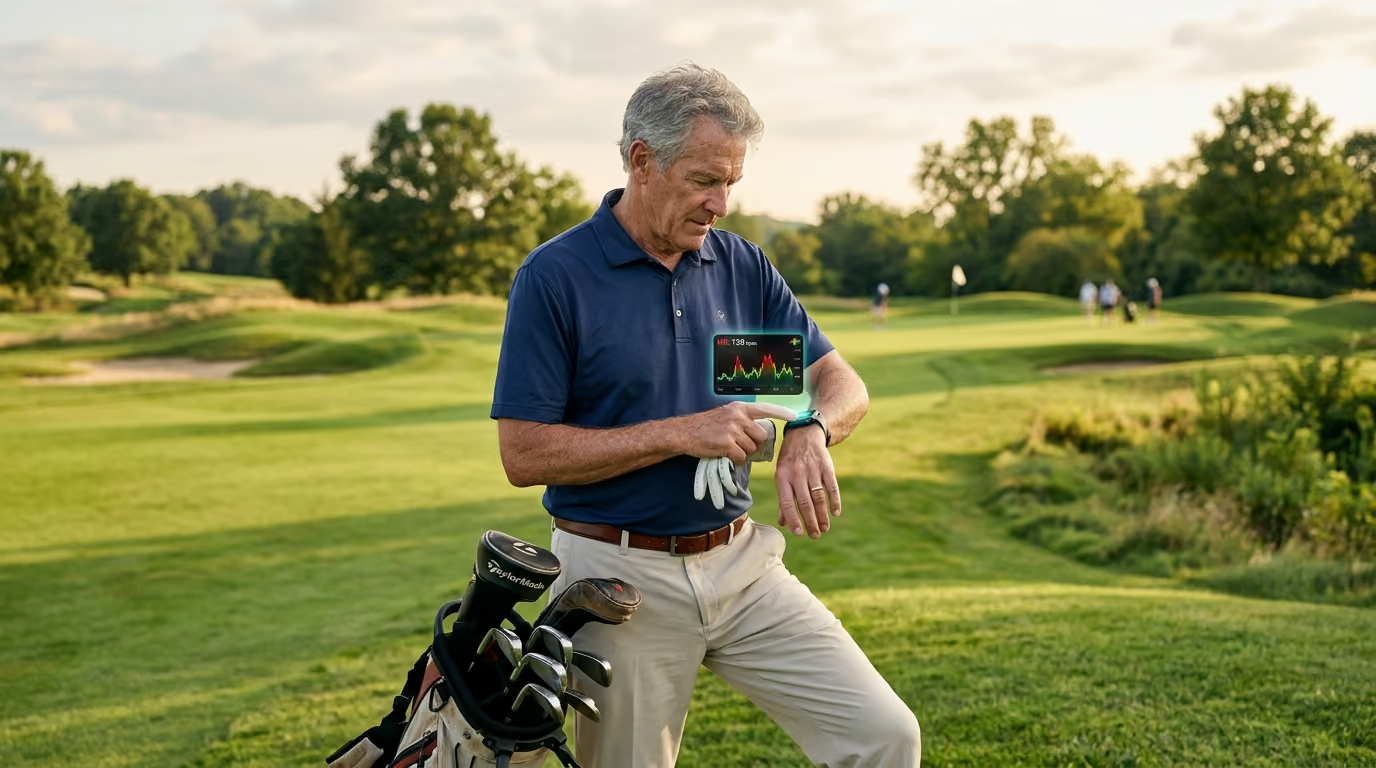

Senior golfers often blame aging for lost distance off the tee, but targeted glute strength provides the real foundation for a powerful swing.




"How to stop losing driving distance after 50" is a common search query for older golfers. Many players look for a magic club or a special training aid. They believe their physical decline is simply an unavoidable part of getting older. However, research shows that a loss of swing speed often stems from a specific physical issue. That issue is the weakening of the primary muscles of the hips.
Your glutes are the physical foundation of your movement. When these muscles lose strength, your swing loses its stability. You start to rely on your lower back and arms to generate power. This shift leads to shorter drives and increased soreness after your round.
This guide explains how glute strength maintains your swing and protects your body. By understanding the connection between your hips and your swing, you can play pain-free golf for years to come.
Imagine standing on the fourteenth tee during a close round. You are three hours into your day, and you feel a familiar dull ache in your lower back. Your playing partners notice that your tee shots are starting to slice to the right. You try to swing harder to regain your distance, but your body does not cooperate. Instead of turning your hips, you feel your lower body slide laterally toward the target.
This physical breakdown on the back nine is rarely a lack of effort. It is the direct result of muscle fatigue in your pelvic stabilizers. When these muscles stop working, your swing mechanics fall apart. You lose distance, your contact becomes inconsistent, and you risk injury.
In our experience, golfers often blame their swing mechanics for these late-round errors. They try to adjust their hand position or their swing plane. But you cannot execute a proper swing if your body lacks the stability to support it. The root cause of this breakdown is almost always found in the hips.
To understand the golf swing, you must look at the kinetic chain. Power starts in the ground and travels up through your legs, pelvis, torso, and arms. The Titleist Performance Institute refers to the glutes as the "King of the Swing" because they control this power transfer. They act as the primary stabilizers of your pelvis.
The glute group consists of three distinct muscles. The gluteus maximus is the largest muscle in the body and produces forward and backward movement. The gluteus medius and minimus sit on the side of your hip. These side muscles control lateral stability and prevent your hips from swaying during your turn.
During the backswing, your trail glute must support your weight while your hip rotates. This requires a balance of pelvic stability and hip joint mobility. If your lateral hip muscles are weak, your pelvis will slide away from the target instead of turning. This lateral movement is called a sway, and it ruins your ability to store power.
When you start your downswing, you must push into the ground to rotate your hips. This action relies on ground reaction forces. Your gluteus maximus is the primary muscle responsible for producing this force. Pushing hard against the ground allows you to turn your hips rapidly and transfer energy to the clubhead.
Many senior golfers suffer from a condition called gluteal amnesia, which is sometimes called dead butt syndrome. This condition develops from prolonged sitting during your working years or retirement. When you sit for hours, your brain stops sending strong signals to your hip muscles. Over time, these muscles forget how to fire during athletic movements.
This muscle inactivity leads to lower crossed syndrome. This postural issue features tight hip flexors and a tight lower back paired with weak glutes and abdominals. This imbalance creates an excessive arch in your lower back at address, which is known as an S-posture. This position turns off your glutes before your swing even begins, forcing your lower back to handle all the rotational stress.
You can identify weak glutes by looking at specific swing faults. These movements are common physical compensations that occur when the pelvis is unstable.
This player moves their lower body laterally away from the target during the backswing. You can spot this fault by watching the trail hip. Instead of turning backward, the hip slides to the side. This movement is caused by weak lateral muscles, specifically the gluteus medius. Without lateral stability, your body cannot support a clean turn, leading to inconsistent contact and a loss of balance.
This is the most common swing fault screened by fitness professionals. During the downswing, the player's hips move forward toward the golf ball. This movement causes the golfer to stand up and lose their posture before impact. When you lose this posture, you must use your hands to rescue the shot, which causes blocks and hooks. This fault occurs because the glutes are too weak to support the deep hip hinge required during rotation.
This player sets up to the ball with an excessive arch in their lower back. This posture is often mistaken for an athletic setup. In reality, it places a massive amount of stress on the lumbar spine. This position lengthens and deactivates the glutes. It makes it nearly impossible to use your hips to rotate during the downswing, which leads to early fatigue.
I used to stand on the first tee doing long, static hamstring stretches because I thought it was the right way to warm up. I would actually feel weaker on my first drive. Research later showed me that dynamic movements, like leg swings and torso twists, prime the nervous system much better. Changing my five minute warmup completely transformed my opening tee shots.
Static stretching relaxes your muscles and reduces their ability to produce power. To hit long drives on the first tee, you need your muscles to be active and ready to fire. You can achieve this by using a short dynamic warmup routine.
Before you hit your first practice shot, stand near your golf cart for support. Swing your trail leg forward and backward ten times. Focus entirely on turning your trail hip through a full range of motion. Repeat this movement with your lead leg to prepare both hips for the rotational demands of the swing.
Next, place a club across your shoulders and assume your golf posture. Slowly turn your shoulders back while keeping your hips completely still. Then, turn your hips while keeping your chest facing forward. This movement separates your upper body from your lower body, which is crucial for building swing speed.
Finally, perform ten bodyweight squats. As you stand up from each squat, focus on squeezing your glutes tightly. This simple step wakes up the brain-to-muscle connection. It ensures your primary power source is ready to work on the very first tee.
To address the root cause of pelvic instability, you need a structured home routine. This program focuses on building strength and coordination in all three glute muscles. You do not need heavy weights to complete these exercises.
[Phase 1: Activation]
Glute Bridge with March -> Focus on pelvic stability and preventing hip drop.
[Phase 2: Lateral Stability]
Clamshells & Side-Lying Abduction -> Target the gluteus medius to eliminate swaying.
[Phase 3: Integration]
Single-Leg Step-Ups -> Replicate the single-leg stance of the golf finish.
This exercise trains your glutes to support your pelvis while your legs move. It replicates the stability you need during the high-speed transition of your swing.
Perform three sets of eight repetitions on each leg. If you feel your hips drop or your lower back pinch, lower your hips and reset your posture.
This movement targets the gluteus medius, which is the muscle that stops your swing from swaying.
Perform three sets of twelve repetitions on each side. Focus on feeling the burn in the side of your hip, not the front of your leg.
This exercise builds the single-leg strength needed to post up on your lead side during the downswing.
Perform three sets of eight repetitions on each leg. This slow descent builds eccentric strength, which helps control your body during the finish of your swing. This is a key part of golf-specific strength training for mature athletes.
As we age, our bodies undergo natural physical changes. The most significant of these changes is sarcopenia, which is the natural loss of skeletal muscle mass. This process begins around age thirty, but it accelerates rapidly after age fifty.
This muscle loss target fast-twitch muscle fibers first. These fibers are responsible for explosive movements, such as jumping, sprinting, and swinging a golf club. When these fibers shrink, your ability to produce high clubhead speed decreases.
Research published in the Golf Science Journal shows that fifty percent of senior recreational players report age-related musculoskeletal conditions that impact their game. Many golfers try to combat this by walking more. While walking offers excellent cardiovascular benefits, it does not stop muscle loss.
Walking is a low-intensity aerobic activity. It does not force your body to maintain its explosive muscle fibers. To combat sarcopenia, you must participate in resistance training. Pushing your muscles against resistance forces your body to maintain its strength and mass.
A study on golfers aged 55 to 79 showed that an eight-week strength and flexibility program increased mean clubhead speed from 85.0 to 87.1 miles per hour. This speed increase equates to nearly ten yards of extra carry distance off the tee. This improvement was achieved without buying new equipment or changing swing mechanics.
By dedicating time to healthy ageing strategies, you can protect your muscles from decline. Strength training is not about building bulky muscles. It is about maintaining the functional capacity to enjoy the game you love.
When golfers realize they need to strengthen their lower body, they often make common mistakes. These errors can lead to injuries or worsen existing swing faults.
Many players believe that traditional squats are all they need to build lower body power. Squats are an excellent exercise, but they only move your body up and down. The golf swing is a rotational movement that occurs on one leg at a time. If you only perform bilateral squats, you neglect the lateral stability muscles like the gluteus medius. This neglect leads to a strong but unstable lower body that still sways on the course.
When your glutes are inactive, your body must find another way to extend your hips. It usually forces your hamstrings and lower back to do the work. This compensation pattern is called hamstring dominance. During the downswing, your hamstrings strain to produce power, which increases your risk of a pull. It also reduces the rapid snap of your hips at impact, which costs you distance.
Golfers often assume that hip stiffness means they need to stretch their muscles. While flexibility is important, stiffness is often a sign of weakness. When a muscle is weak, your nervous system tightens it to protect the joint. If you stretch a weak muscle without strengthening it, you make the joint less stable. This instability can lead to joint pain and poorer swing mechanics.
Your connection to the ground is the first step in generating swing power. The shoes you wear play a major role in how your glutes perform.
Many modern golf shoes feature thick, cushioned heels. This design raises your heel above your toes, which is known as a high heel drop. While this cushioning feels soft, it shifts your weight forward onto the balls of your feet. This forward weight shift tilts your pelvis forward and turns off your glute muscles before you even start your swing.
For better muscle activation, choose shoes with a low heel-to-toe drop. These shoes keep your foot flatter on the ground, which makes it easier to keep your weight balanced over your arches. This balanced position allows your hips to sit in a neutral alignment, which helps your glutes fire naturally.
Spike selection also affects your stability. Spikeless shoes are comfortable for walking, but they offer less traction on wet turf. If your feet slip during your swing, your glutes will contract to prevent a fall rather than producing rotational power. Wearing spiked shoes during wet conditions gives you the stability you need to push hard into the ground.
Finally, check the wear pattern on your shoes. If the outer edges of your soles are worn down, your feet are rolling outward. This roll indicates that your lateral hip stabilizers are not holding your feet in position. Replacing worn shoes helps maintain a stable base for your swing.
Returning to the course after a hip replacement is a common goal for senior players. Modern surgical techniques allow many golfers to return to the game. However, you must take specific precautions to protect your new joint.
A total hip replacement alters the biomechanics of your hip joint. The surrounding muscles, including your glutes, must be rebuilt to support the prosthetic. Without proper rehabilitation, your swing will rely on dangerous compensations that strain your lower back.
Your first step must always be obtaining clearance from your surgeon. Once cleared, your focus should be on gentle coordination exercises rather than heavy lifting.
The 90/90 stretch is an excellent tool for improving hip mobility without putting excessive strain on the joint.
This stretch improves internal and external rotation of the hip. This rotation is necessary to clear your hips during the swing without twisting your knee or lower back.
Step-ups are also crucial for restoring balance around the prosthetic. They train the glutes to stabilize the joint during single-leg movements, which protects the implant from lateral forces.
When you return to the course, avoid swinging at full speed immediately. Focus on smooth, controlled swings that emphasize balance over power. This approach protects your joint while allowing your muscles to adapt to the physical demands of the game. It is a vital part of preventing golf injuries after joint surgery.
Maintaining your golf game as you age does not require drastic changes to your swing. It requires a commitment to protecting your body's primary power source. By strengthening your glutes, you build a stable foundation that supports a powerful swing.
This strength keeps your pelvis stable, protects your lower back, and keeps your driving distance high. You do not need to spend hours in the gym to see results. Consistent, targeted movements will keep you playing pain-free golf for years to come.
To protect your lower back and keep your driving distance, you must train your glutes to stabilize your pelvis.
To help you get started this week, here is a simple checklist to follow:
By taking these small steps, you will build the physical foundation needed for a lifetime of healthy, powerful golf. For more detailed training guides and articles on maintaining your body, visit our resources page to continue your journey.
Follow Golfergy for practical insights on performance, mobility, recovery and healthy ageing. Stay connected for new articles, research-led guidance and ideas to help you play better for longer.


Explore practical resources on performance, recovery, mobility and golf longevity.
Read the Blog