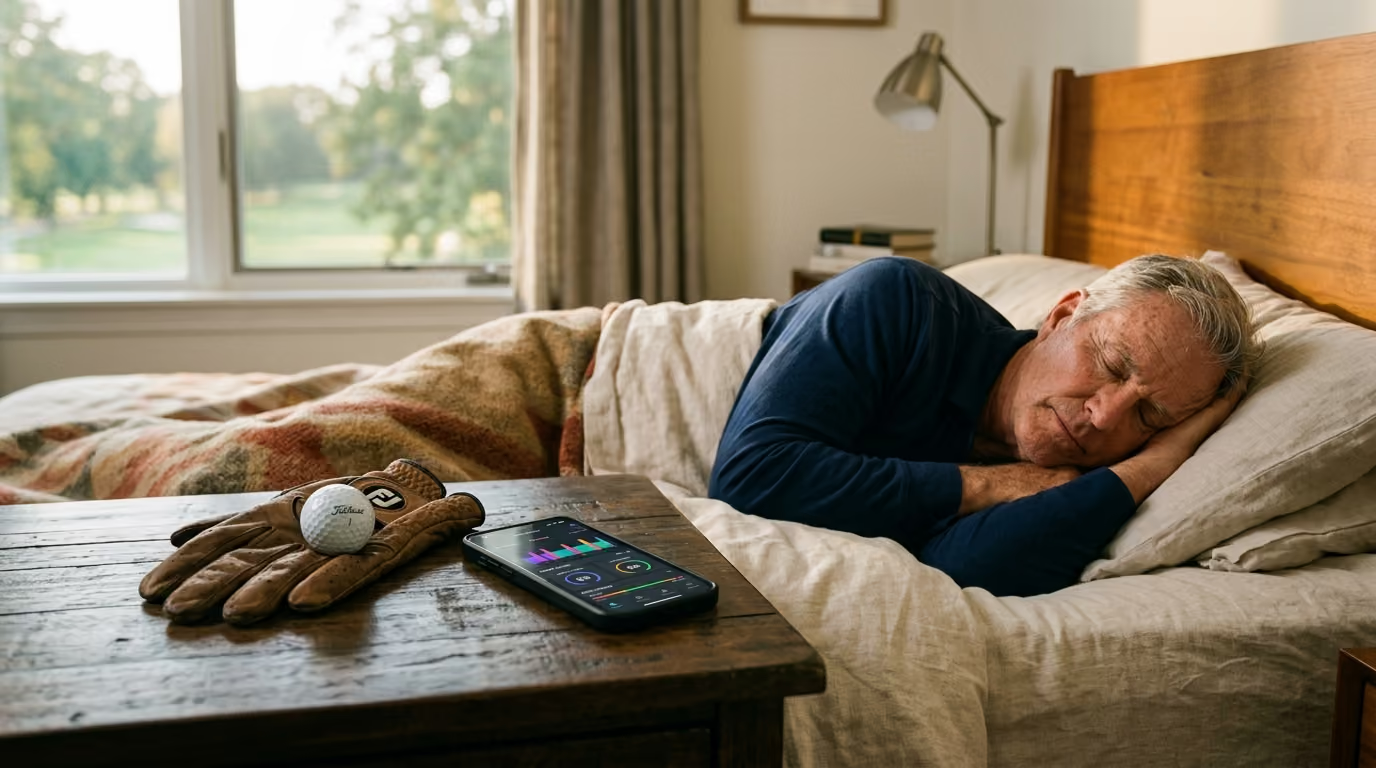

Fifty years of age marks a major shift in sleep architecture that directly degrades golf swing mechanics and raises your handicap.




Have you ever searched the internet for why your golf swing falls apart on the back nine? You might think this sudden late-round decline comes from poor physical fitness or simply getting older. The true cause often lies in how your brain rests at night. This guide offers a definitive answer to how sleep changes after age fifty and how it dictates your handicap index.
Maintaining a low handicap requires consistent physical movement and sharp mental choices. If you sleep poorly, both your body and your mind suffer on the course. By understanding the connection between sleep and athletic performance, you can protect your swing speed. You can also prevent chronic injuries and extend your playing years.
Imagine standing on the fourteenth tee during a warm afternoon round. You started the day with three pars and felt completely in control of your swing. Now, your body feels heavy and your lead shoulder resists a full backswing. You try to turn your hips, but your lower back aches when you rotate.
Your tee shot ends up in the right rough because your clubface remained open at impact. You tell your playing partner that you are simply losing steam because of your age. This physical decline is actually a direct result of sleep fragmentation from the previous night. Your nervous system is struggling to send fast signals to your muscles.
As you walk toward your ball, you notice your feet dragging slightly. You struggle to calculate the distance to the pin because the yardage marker looks blurry. You make a hasty club selection and swing with extra force to make up for your fatigue. This forced swing causes you to lose your balance, leading to a double bogey.
This scenario happens to thousands of mature golfers every single weekend. They blame their swing mechanics, their equipment, or their overall fitness levels. The real issue is that their muscles and joints did not fully recover during the night. Their brains are operating with reduced cognitive vigilance, which ruins their course strategy.
As you cross the age of fifty, the structure of your sleep undergoes a major biological shift. Sleep researchers call this structure sleep architecture, and it controls how your body heals. In your younger years, your brain spent hours in deep, restorative phases. Now, those phases are shorter and easily disrupted.
The most critical phase for a golfer is N3 Slow-Wave Sleep, which is often called deep sleep. During this phase, your body releases growth hormone to repair damaged muscle fibers. After age fifty, the time you spend in this deep state decreases significantly. You spend more time in light sleep, which makes you easily wake up from minor noises.
This change in your sleep structure often leads to Advanced Sleep Phase Syndrome. This condition alters your internal clock, causing you to feel tired much earlier in the evening. You might find yourself waking up spontaneously at four or five in the morning. This early awakening cuts your rapid eye movement sleep short, which is the phase that processes motor skills.
[Normal Sleep Architecture] ---> [Age 50+ Sleep Architecture]
When your sleep is fragmented, your nervous system cannot reset its baseline voltage. Your muscles require precise electrical impulses from your brain to fire in the correct sequence. Without deep sleep, those electrical pathways become sluggish. Your swing loses its natural tempo, and you struggle to clear your trail hip.
Your sleep quality has a measurable effect on your actual golf score. Researchers have studied how sleep efficiency correlates with athletic skill and handicap maintenance. Sleep efficiency is the percentage of time you spend asleep compared to the total time you spend in bed. A low efficiency score means you spend hours tossing and turning instead of resting.
According to the American Academy of Sleep Medicine, optimizing your sleep can drastically lower your handicap. Researchers studied golfers who received treatment for sleep-disordered breathing, such as sleep apnea. The average handicap index for the entire group dropped by over eleven percent after treatment.
The results were even more impressive for skilled golfers with handicaps below twelve. These competitive players saw their handicaps drop by thirty-one and a half percent after fixing their sleep. When your swing is already highly refined, small improvements in your recovery yield massive performance gains.
Sleep Apnea Treatment Study (Handicap Reduction):
Additionally, research published in the Journal of Science and Medicine in Sport highlights a score-per-hour metric. Every extra hour of sleep you get is associated with a half-stroke reduction in your round score. A ten percent increase in sleep consistency also correlates with a drop of nearly half a stroke. Consistent sleep schedules keep your motor system functioning at peak capacity.
To maintain a powerful golf swing as you age, you must fight against sarcopenia. Sarcopenia is the natural loss of muscle mass and strength that occurs after middle age. Your body requires deep sleep to synthesize proteins and rebuild muscle fibers after physical exertion. If you do not sleep enough, your muscles will gradually waste away.
Research from the National Institutes of Health shows a U-shaped relationship between sleep duration and sarcopenia risk. Golfers over fifty who sleep fewer than six hours per night face a three-fold higher risk of muscle loss. Without sufficient sleep, your body cannot produce enough testosterone and growth hormone to maintain your physical power.
Sleep Duration and Sarcopenia Risk:
Intriguingly, sleeping more than eight hours also correlates with an eighteen percent increase in sarcopenia risk. This statistic suggests there is an optimal window of seven to eight hours for muscle health. Sleeping too long often indicates poor sleep quality or underlying physical health issues.
To preserve your swing speed, you must target this optimal seven-to-eight-hour rest window. This targeted sleep duration protects your fast-twitch muscle fibers, which generate clubhead speed. It also ensures that your body recovers from a demanding round of golf before you tee off again. Proper sleep is a vital part of building functional golf strength and preserving your long-term mobility.
Many mature golfers suffer from osteoarthritis, which causes stiffness in the hips, knees, and spine. This joint discomfort makes it difficult to turn your shoulders fully during your backswing. This physical limitation leads to a shorter, steeper swing path that places immense pressure on your lower back.
According to research in Nature Reviews Rheumatology, sleep loss and joint pain are deeply connected. Poor sleep activates inflammatory mechanisms in your body, raising markers like C-Reactive Protein. Specifically, sleep-deprived men show a sixteen percent increase in C-Reactive Protein levels. They also experience a twelve percent rise in interleukin-six, which is another marker of joint inflammation.
Sleep Deprivation ---> Increased Inflammatory Markers:
These elevated inflammatory chemicals directly increase your sensitivity to physical pain. A minor joint ache that you would normally ignore becomes highly painful after a poor night of sleep. This heightened pain sensitivity causes you to restrict your physical movements during your swing. You end up sliding your hips instead of rotating them, which ruinously alters your ball flight.
This relationship creates a vicious cycle that ruins your golf game and your health. Your joint pain disrupts your sleep, and your poor sleep makes your joints feel even more painful the next day. Breaking this cycle is crucial if you want to focus on improving joint mobility and playing pain-free golf.
Golf is as much a mental game as it is a physical challenge. You must read the wind, judge the slope of the green, and select the right club for every shot. These tasks require high levels of cognitive vigilance, which is the ability to maintain focus over several hours. Sleep loss degrades this vigilance, leading to poor tactical choices on the course.
A sleep-deprived brain struggles to process spatial details, which makes it hard to read green slopes accurately. You might misjudge a breaking putt because your visual cortex is not working at full capacity. You may also experience decision fatigue, which causes you to make risky choices on the back nine.
For example, you might try to hit a high-risk recovery shot through a narrow gap in the trees. A well-rested brain would recognize that playing a safe chip back to the fairway is the smarter play. Sleep loss impairs your prefrontal cortex, which governs risk assessment and emotional control.
Furthermore, sleep is essential for motor skill retention, though the process differs for older adults. While younger golfers can improve their skills overnight through sleep, older adults do not experience this offline learning. Instead, sleep in mature golfers serves to prevent the decay of existing motor patterns. Good sleep helps you retain your swing muscle memory from week to week.
If you find yourself on the tenth tee feeling sluggish, you need an immediate strategy to boost your alertness. You cannot go back in time to fix your sleep, but you can manage your nervous system. A quick physical reset can help you maintain your swing mechanics for the remaining holes.
First, focus entirely on turning your trail hip during your backswing. When you are tired, your body naturally wants to slide instead of rotating. This slide movement destroys your posture and causes thin or fat shots. By directing your mind to turn your trail hip, you force your body to rotate around a stable spine.
Second, take three deep, slow breaths before you address the golf ball. Inhale through your nose for four seconds, hold for two seconds, and exhale through your mouth for six seconds. This specific breathing pattern helps lower your heart rate and calms your nervous system. It reduces the physical tension that builds up in your shoulders when you feel fatigued.
Finally, expose your eyes to natural sunlight during your walk between shots. Take off your sunglasses for a few minutes when walking down the fairway. This bright light exposure stimulates your optic nerve, which tells your brain to stop producing melatonin. This simple action can help clear afternoon brain fog and keep you sharp for crucial putts.
To address the root cause of poor sleep, you need a structured daily routine. This routine uses resistance training and light exposure to realign your internal biological clock. By performing this routine consistently, you can improve your deep sleep and keep your swing powerful.
Perform this physical movement in the morning, ideally within one hour of waking up. Step outside into the bright sunlight to help set your circadian rhythm. Stand with your feet shoulder-width apart, and place your hands on your shoulders with your elbows pointing forward.
Morning Circadian Movement:
Slowly rotate your torso to the right, focusing entirely on turning your trail hip backward. Keep your head relatively still and feel the stretch in your mid-back. Hold this position for two seconds, then slowly rotate back to the center. Repeat this movement to the left side, focusing on turning your lead hip.
Perform ten controlled repetitions on each side to activate your core and warm up your spine. This morning movement combines joint mobilization with light resistance to stimulate your nervous system. The bright morning light halts melatonin production, which helps you feel alert and prepares your body for a great night of sleep. Incorporating this routine into your schedule is an excellent way to practice proper post-round recovery.
Many golfers make critical mistakes when they try to improve their sleep or combat afternoon fatigue. These errors often worsen their physical performance and disrupt their recovery even further.
By avoiding these three common errors, you can protect your sleep quality. You will also help your body prepare for your next round of golf. This proactive approach is a fundamental part of avoiding common golf injuries caused by physical fatigue.
Your physical fatigue directly affects how you interact with your golf clubs. When your muscles are tired, your grip pressure naturally increases to compensate for weak forearm muscles. This tight grip restricts your wrist hinge, which reduces your clubhead speed and alters your ball flight.
To counter this issue, consider installing midsize or oversized grips on your clubs. These larger grips allow you to hold the club securely with less physical tension in your hands. This change helps you maintain a smooth, relaxed release even when your body feels tired.
Fatigue Mechanics and Equipment Solutions:
You might also look at the weight of your club shafts. If you use heavy steel shafts, your swing speed will drop significantly during the back nine. Switching to lighter graphite shafts can help you maintain your natural swing tempo. This lighter material reduces the physical strain on your shoulders and lower back over eighteen holes.
Finally, pay close attention to your golf shoes. Shoes that lack proper arch support can cause your feet to ache, which increases your overall fatigue. Look for shoes that feature supportive cushioning and a stable sole design. This footwear helps keep your lower body stable, which allows for a better transfer of weight during your swing.
To get your sleep and your golf game back on track, follow this simple checklist this week:
Your golf swing is only as strong as your nightly recovery, making deep sleep the ultimate tool for handicap preservation and physical longevity.
Follow Golfergy for practical insights on performance, mobility, recovery and healthy ageing. Stay connected for new articles, research-led guidance and ideas to help you play better for longer.


Explore practical resources on performance, recovery, mobility and golf longevity.
Read the Blog