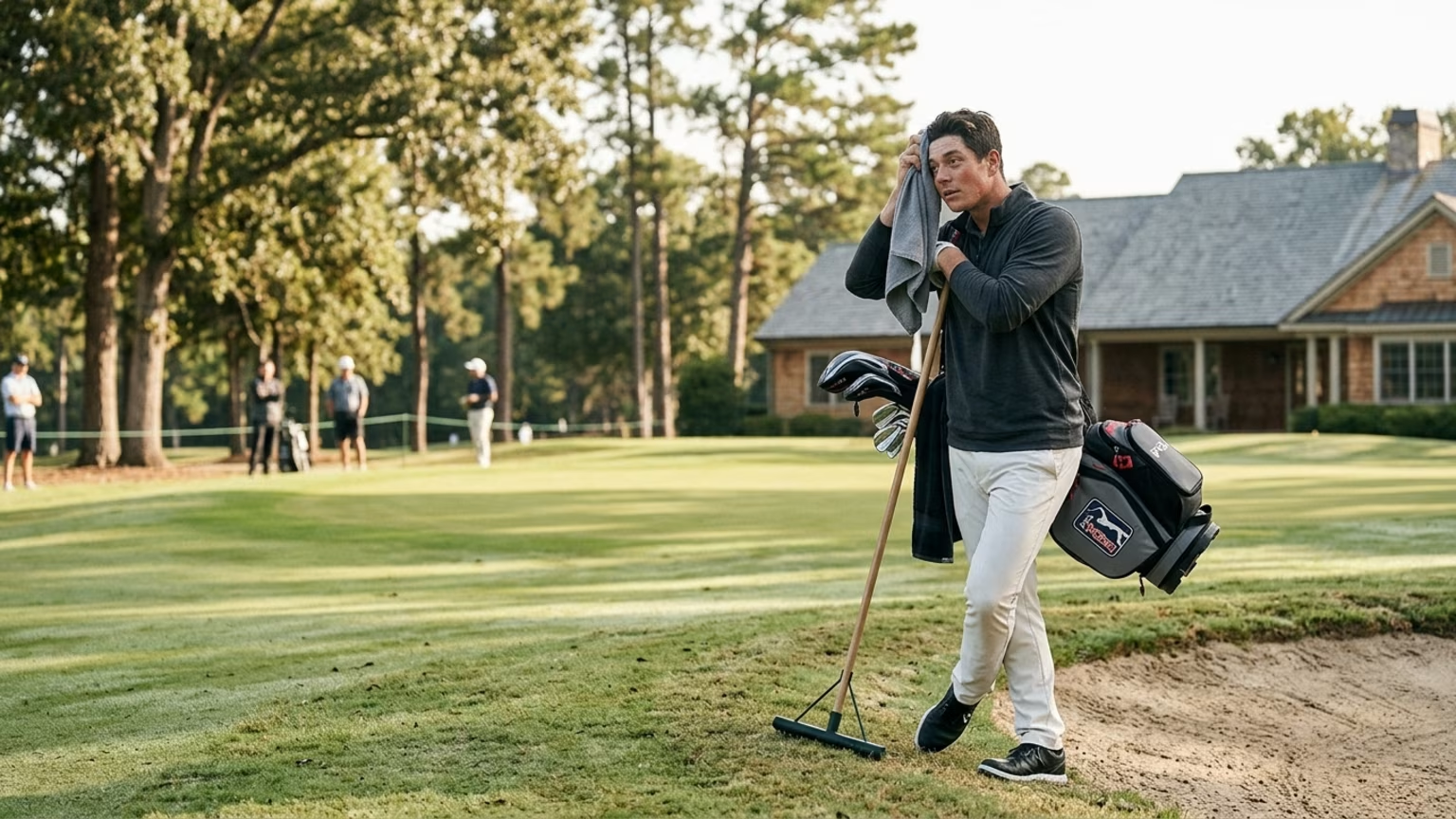

Learn how golfers over 40 can use an offseason reset to fix swing mechanics, prevent injuries, and rebuild strength, inspired by Viktor Hovland's approach.




The trunk of your car slams shut as you slowly swap your golf spikes for comfortable street shoes. A playing partner rubs his stiff lower back and asks, "Why do my mechanics fall apart and my body feel so tight by the end of the season?" It is a frustration we hear constantly from golfers over 40 at Golfergy. Playing hard all summer takes a physical toll that eventually masks your natural swing pattern.
Late-season fatigue creates stiffness that makes your normal golf swing nearly impossible to execute properly. When your muscles lose their natural elasticity, your brain forces your body to find new ways to move the club. This subconscious process causes you to lose your preferred technique over the course of a long season. You can actually post acceptable scores while feeling totally disconnected from your best swing.
We saw this exact tension in a PGA TOUR feature published on August 30, 2026. Viktor Hovland finished as the runner-up at the TOUR Championship after holding a one-stroke lead through 54 holes. He closed his tournament with a two-over-par 72 to finish at 13-under par. Scottie Scheffler shot a final-round 66 to finish at 16-under par and win the event by three shots.
The victory gave Scheffler his second FedExCup title and his 22nd PGA TOUR victory. Meanwhile, Hovland noted that his swing had moved far from his original DNA during the year. He stayed competitive mostly because he led the tournament field and gained more than six strokes putting. Older amateurs face similar issues when physical tightness forces them to rely on short-game compensations rather than solid ball striking.
A tired body directly alters how you control the club face and your overall swing path. If your hips and back feel locked up, your arms take over to generate swing speed. This upper-body dominance usually leads to a steep path and poor contact on the golf ball. You might also lose your balance as your legs fatigue on the critical back nine holes.
Hovland experienced clear mechanical breakdowns under competitive pressure during his final round. His final-round problems included a missed fairway and a subsequent failed recovery at the 13th hole. This struggle was soon followed by an overhit wedge and a frustrating bogey at the 17th hole. You can delay these physical issues with a proper pre-round warm-up, but muscular fatigue always catches up eventually.
Hovland plans to take an extended break after playing three DP World Tour events in the fall. He will use this offseason time to work closely with his swing coach Joe Mayo. Mayo coached Hovland during his highly successful 2023 campaign. In 2023, Hovland won the BMW Championship and the TOUR Championship in consecutive weeks while reaching No. 3 in the Official World Golf Ranking.
You will inevitably face stiffness during a round and need an immediate physical fix to survive. Do not try to rebuild your entire swing while standing nervously on the 14th tee box. Instead, focus on the safest stretch or adjustment you can make right now without leaving the golf course. Keep your instructions incredibly simple and focus entirely on turning your trail hip through the ball.
Taking a slower practice swing helps reset your tempo and takes unnecessary pressure off your lower back. You can also implement a modified hip hinge to gently open up your tight lower body muscles. Stand tall, place your hands on your hips, and slowly push your hips backward while keeping your spine neutral. These small physical resets help you finish the round without causing further damage to tired muscles.
General soreness is a normal part of aging, but sharp pain requires a totally different and immediate response. If you experience persistent or worsening pain, you must stop playing golf right away. Neurological symptoms, marked weakness, or a sudden loss of physical function are serious warning signs. These critical issues always warrant an immediate evaluation by a highly qualified healthcare professional.
You should never try to stretch through this kind of severe physical feedback on the golf course. Pushing past sharp pain often turns a minor muscle strain into a season-ending injury. People with underlying health conditions should seek appropriate medical advice before starting any new exercise program. Listen to your body and prioritize your long-term physical health over finishing a single round of golf.
A shoulder season is the perfect time to build sustainable habits that protect your aging body. A research review by The Conversation reports that older adults can still make substantial gains in cardiorespiratory fitness and strength. The research notes that these meaningful adaptations can continue well beyond age 70. You do not need to accept physical decline just because you are adding years to your age.
Aerobic exercise, resistance training, and regular daily movement provide immense physical benefits for aging golfers. The most useful training program is always one that you can sustain safely over a long period. Use your time away from full-volume golf to improve your foundational strength and overall joint mobility. A dedicated period of active recovery helps prepare your body for a much healthier return to the golf course.
Hovland is using his offseason to gently reassess his technique and find his original swing pattern again. Recreational golfers should take a very similar approach to their winter downtime. Work on simple movement patterns and slowly rebuild your core strength before the spring golfing season arrives. This proactive physical maintenance keeps you resilient and ready for the demands of a full 18-hole round.
Your next range session is a perfect opportunity to honestly assess your physical readiness. Hit twenty golf balls and pay close attention to how your back, hips, and shoulders respond to the rotational stress. If you feel tightness creeping in early, you need to reduce your practice volume and focus on physical recovery. Focus entirely on making smooth contact rather than swinging as hard as you possibly can.
Play smart, listen to your body, and keep enjoying the great game of golf for years to come.
Follow Golfergy for practical insights on performance, mobility, recovery and healthy ageing. Stay connected for new articles, research-led guidance and ideas to help you play better for longer.


Rest or move the day after 18 holes? Use fatigue, soreness, symptoms and your playing schedule to guide a flexible recovery day.


Compare foam rolling, massage, compression, heat and cold for golfers, with comfort benefits kept separate from performance and injury claims.
A measured guide to stiffness during and after golf, with gentle movement options, sustainable habits and NHS-backed back-pain warning signs.
Explore practical resources on performance, recovery, mobility and golf longevity.
Read the Blog


