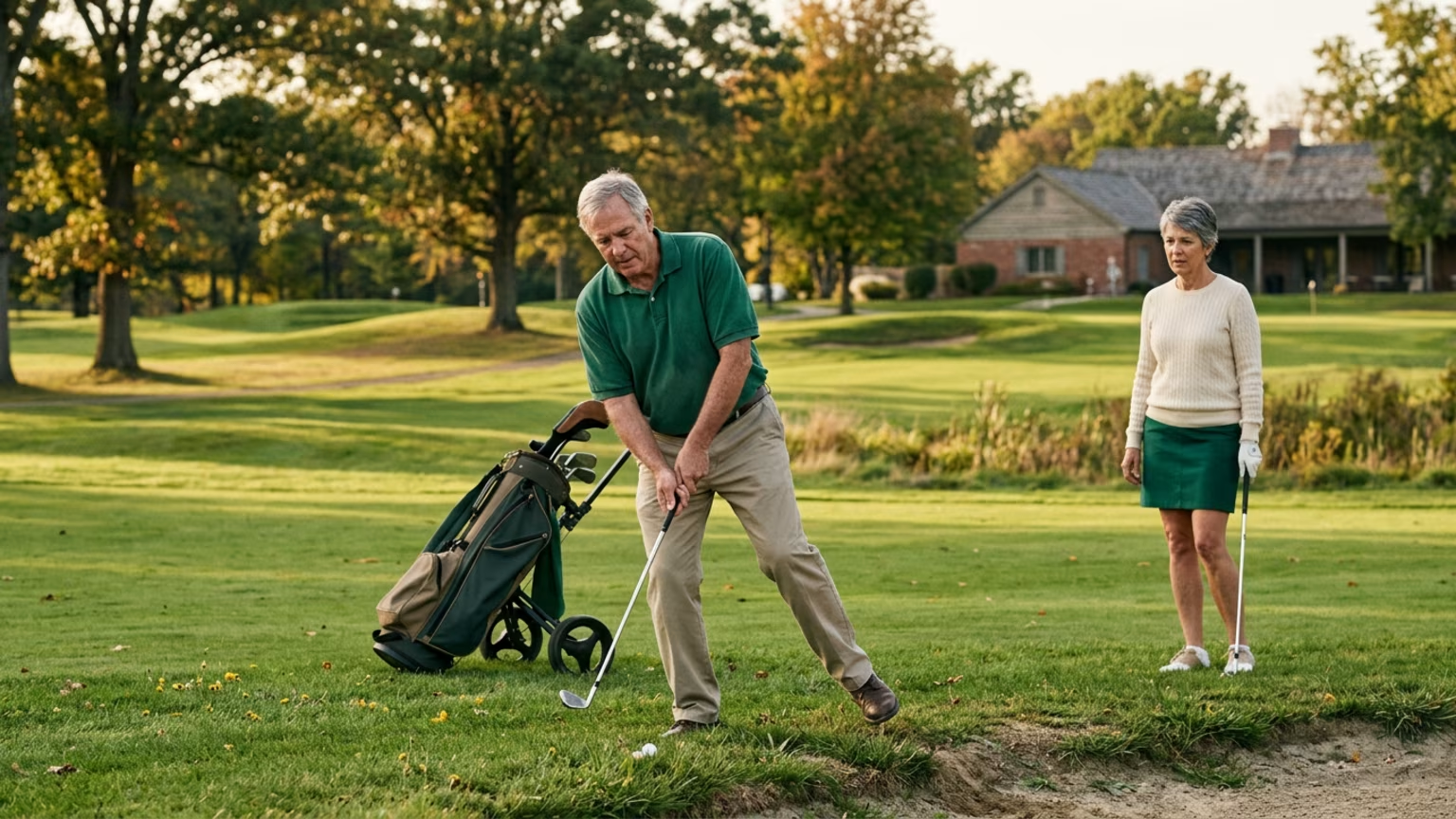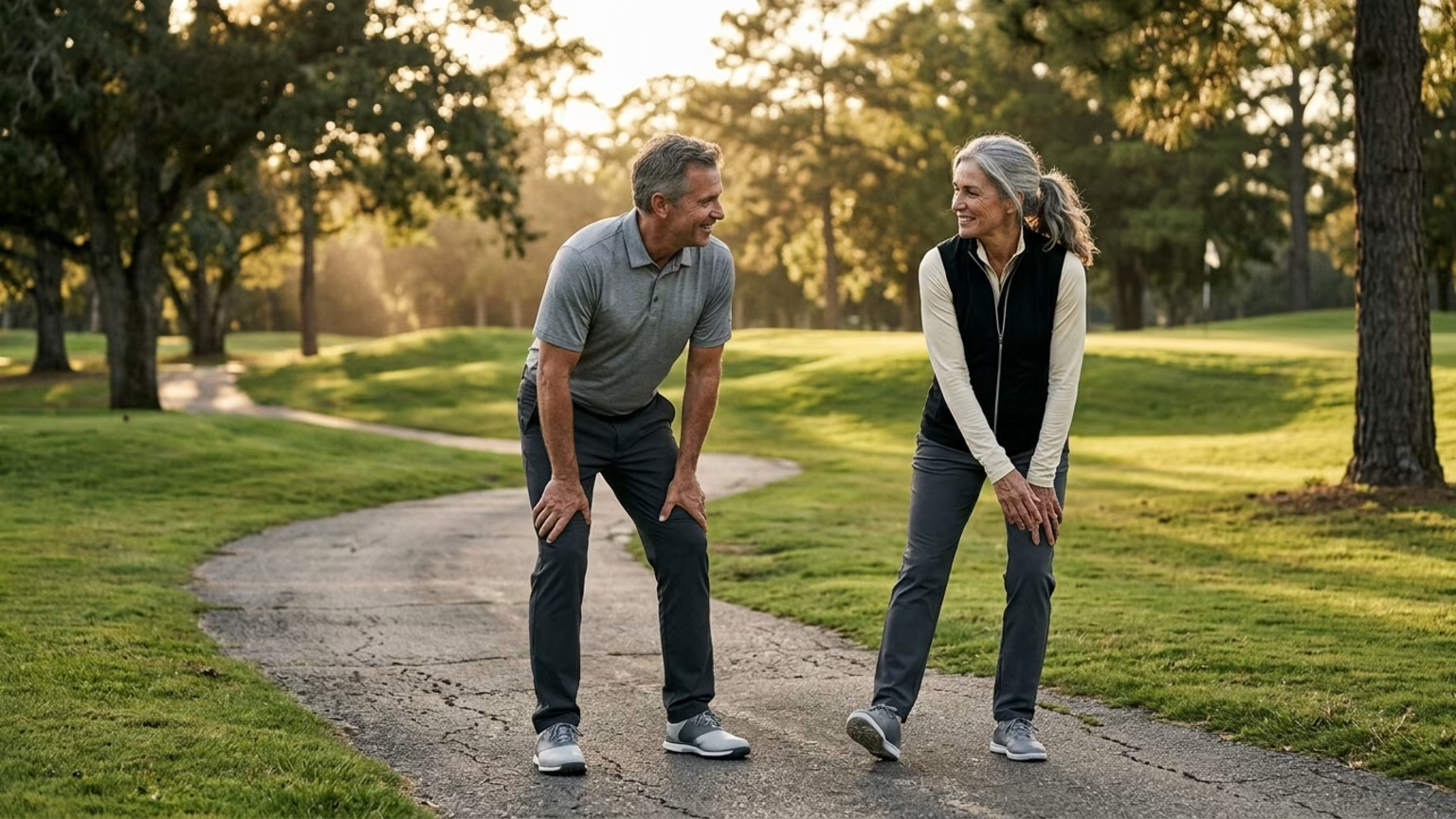

Discover why walking the golf course isn't enough to maintain your strength. Learn four practical, science-backed exercises to extend your playing years.




Current public-health guidance recommends that adults perform muscle-strengthening activity involving the major muscle groups at least two days per week. This straightforward frequency builds the functional reserve needed for walking hills and swinging clubs without breaking down. It serves as the foundation for playing comfortably into your later years.
You have probably heard that just walking the golf course is enough to keep your body strong for the game. The truth according to sports science is completely different. Walking is an excellent way to accumulate aerobic activity, but it fails to provide the progressive overload needed to maintain muscle power. Over time, your body adapts to the walking pace and stops building new strength. A repetitive walking habit maintains endurance, yet it leaves your muscles completely unprepared for sudden exertion.
Golfers feel genuinely exhausted after walking a full round, so they naturally assume it counts as a complete workout. The heavy legs and sore feet at the end of a long day make skipping the gym seem completely reasonable. Many players also worry that lifting weights will make them stiff or ruin their natural swing tempo. They stick strictly to the fairways, hoping that playing more often will keep them fit.
It is incredibly easy to confuse feeling tired with getting stronger. A long day on your feet burns calories and creates fatigue, yet it does not challenge your muscles with new resistance. When you skip dedicated strength training, your lower body loses the raw power needed for an explosive downswing. This slow decline in force production often sneaks up on players in their fifties and sixties.
As we age, our bodies naturally lose their ability to produce force quickly. UK national guidance prioritizes maintaining or improving muscle strength, balance and flexibility on at least two days per week. Older adults should also gradually build toward 150 minutes of moderate aerobic activity. A review of resistance-training evidence in older adults found beneficial effects on lower-limb strength, balance, gait speed and stair-climbing ability among frail populations.
WHO-style guidance identifies functional strength and balance as especially important components of multicomponent exercise for older adults. For adults 65 and older, the CDC also recommends at least 150 minutes of moderate-intensity aerobic activity per week, muscle-strengthening activity on at least two days, and balance activities. Relying strictly on golf simply ignores these critical areas of physical maintenance.
When you only play golf, you lose the ability to handle unexpected stress. Building a dedicated routine off the course helps you by protecting your structural foundation over time. This targeted work directly protects your physical frame against the repetitive strain of the swing. The science clearly shows that functional aging requires intentional intervention outside of your normal hobbies.
A practical longevity plan focuses on the movements you need to navigate the course safely. You do not need to lift heavy weights to see real benefits immediately. Elastic-band training is one potentially accessible option for many older adults. A 2025 systematic review reported that elastic-band programs may improve lower-limb strength and balance in older adults with different health conditions.
According to that exact review, strength gains appeared more evident after at least eight weeks of consistent band work. Balance improvements typically showed up after four or more weeks of practice. You can start slowly and build these four functional capacities into your weekly routine. Doing a little bit of targeted work frequently yields much better results than occasional intense gym sessions.
Your legs power your swing and carry you up steep fairway hills. Sit-to-stand movements are highly effective for maintaining lower body strength. Start by sitting on a firm chair, cross your arms over your chest, and stand up smoothly. Slowly lower yourself back down to complete one repetition safely.
You can easily modify this movement based on your current joint health. Try using a taller chair if your knees feel sensitive during the descent. Building dedicated muscle resilience focuses on moving securely through a comfortable range of motion. Keep your feet planted firmly and push the floor away from you.
Golf requires you to shift your weight and balance dynamically on uneven terrain. Single-leg stability is critical for a powerful swing and safe walking on slippery grass. Start by standing near a sturdy counter or wall for reliable physical support. Lift one foot slightly off the floor and hold the position for ten seconds.
Gradually decrease your reliance on hand support as your physical confidence grows. Focus entirely on keeping your standing leg firm and stable. This simple drill pays significant dividends on awkward sidehill lies. Your nervous system needs this constant stimulation to maintain sharp balance reflexes.
Transporting your clubs and lifting heavy bags into a trunk require practical trunk strength. Carrying exercises mimic these real-world demands perfectly without overcomplicating your workout. Hold a moderate weight in each hand and walk continuously for a short distance. Keep your chest tall and your shoulders pulled back slightly during the walk.
You can use dumbbells, small kettlebells, or even heavy household items. Increase the distance or the weight carefully over time. This practical strength translates directly to better physical stamina on the back nine. Stronger core muscles also protect your lower spine from rotation-based fatigue.
The ability to get down to the ground and back up is vital for reading putts and retrieving dropped balls. Start by kneeling on a soft mat near a strong, heavy chair. Use the chair for solid support as you transition smoothly from kneeling to standing. Lower yourself back down with complete physical control.
Practicing these supported transfers keeps your hips and knees adaptable for daily life. It provides immense peace of mind when you face an awkward stance in a deep bunker. Always listen to your body and strictly avoid forcing movements that cause joint pain. Developing these basic floor skills helps you confidently prepare for maintaining high performance throughout your later years.
Next time your playing partner insists that walking the course is a complete fitness plan, trust your body's true functional needs instead. Hitting the public-health target of two days of strength work per week provides the muscular armor your joints desperately require. Your body needs dedicated resistance to handle the physical demands of a long, hilly round. Protect your physical capacities now, and your golf game will reliably reward you for decades to come.
Follow Golfergy for practical insights on performance, mobility, recovery and healthy ageing. Stay connected for new articles, research-led guidance and ideas to help you play better for longer.


A new cellular study reveals how aging muscle affects your golf swing. Learn why older golfers need resistance training to protect their tissue capacity.


Golf Digest recently published a five-part single-leg fitness challenge. Learn what this movement reveals about your balance, strength, and golf longevity.

Elite tournament recovery relies on sleep hygiene and structured training. Golfers over 40 can use these exact methods to prevent late-round fatigue.
Explore practical resources on performance, recovery, mobility and golf longevity.
Read the Blog