

Learn why limited hip internal rotation causes a sway or slide in your golf swing. Read our research-backed mobility habits to protect your lower back.




Static stretching before the first tee is widely considered the best way to prevent a mid-round backache. You stand over a pressure-packed drive on the back nine, feel a sharp pull in your lower back, and wonder why the warm-up failed. You blame fatigue, a sudden loss of rhythm, or simply getting older. The truth is that brief stretching does nothing to fix a locked hip, which is the actual reason your swing breaks down.
For older golfers, blaming age is an easy way out of addressing the real mechanical fault. Your swing does not hurt because you are over fifty. It hurts because your joints have lost the basic rotational capacity required to swing a golf club. Ignoring this joint restriction guarantees that your lower back will eventually bear the brunt of your swing speed.
Traditional advice tells players to bend over, hold a quick toe touch for thirty seconds, take a few practice swings, and head straight to the tee. This mainstream approach assumes the body is functionally sound and just needs a quick physical wake-up call before action. However, research highlights that hip and thoracic spine mobility restrictions are significantly more common in male golfers over the age of 50. A brief morning stretch does absolutely nothing to address these deep, chronic restrictions in the joint capsule.
When the hips refuse to turn, the body finds another way to complete the motion. This restriction often forces the lumbar spine to compensate heavily during the swing. According to clinical biomechanics research, the lumbar spine is simply not designed for heavy rotation. Relying on your lower back to generate coil is a guaranteed path to pain, stiffness, and eventual injury.
The golf industry has spent decades selling quick fixes for back pain, but a rapid warm-up routine will never solve a foundational joint restriction. It only provides a false sense of security before you swing.
When the hip joint cannot rotate, the body is forced to create a compensatory movement to hit the ball. Dr. Greg Rose of the Titleist Performance Institute argues that this lack of rotation forces the body into a lateral sway or slide. Sideways movement becomes the only motion available to complete the swing arc when true rotation fails. Dr. Rose stresses that the lumbar spine should never be the primary driver of rotation in the golf swing.
This physical compensation shows up clearly in your swing mechanics. If you lack trail hip internal rotation, your body will move laterally away from the target on the backswing. This sway creates an inconsistent bottom to your swing arc, leading to fat or thin shots. The loss of proper rotation is highly costly to your overall performance and daily consistency.
In fact, studies in golf performance link up to 48 percent of ball speed variation to hip rotational flexibility and the resulting hip-shoulder separation. The physical toll of restricted rotation is absolutely massive. During the downswing, the body generates a mean peak compressive load exceeding six times total body weight. This incredible force must be absorbed by the lead hip as it clears the body out of the way.
If the hip cannot rotate safely, that force travels directly into the lower back, knees, and ankles. A sliding motion cannot handle six times your body weight without causing structural damage over time. The clinical data clearly highlights the danger of ignoring this specific mobility limitation. Data from over 15,000 physical assessments suggests that a golfer’s risk of lower back injury spikes dramatically if lead hip internal rotation is less than 40 degrees.
Without that 40-degree clearance, you are effectively swinging on borrowed time. This is exactly why following a structured hip mobility manual is highly recommended for older players.
Many recreational players waste valuable time on rapid, bouncing stretches before a round in a desperate attempt to loosen up. These quick drills fail to create any meaningful change in the joint capsule or the deep surrounding tissues. Short holds might make your muscles feel warm, but they do not alter the structural capacity of the hip. Dr. Rose notes that some practitioners now advocate for holds as long as two minutes to impact the joint capsule and connective tissue effectively.
Anything less than a two-minute hold will not create the structural changes needed to handle a high-speed golf swing safely. Sticking to quick, thirty-second stretches is simply a waste of effort for a golfer with stiff hips. You cannot rush tissue adaptation, and trying to do so only leads to false confidence on the course. Bouncing around on the first tee box looks athletic, but it provides zero protection for a restricted hip joint.
To protect your back and your swing, you must change how you view your physical preparation off the course. Programs now prioritize passive mobility, which is your basic range of motion, as a prerequisite before training active power. You cannot produce a powerful, injury-free swing if your joints do not have the fundamental room to move. Identifying these specific movement limitations early is the smartest way to extend your playing years and enjoy the game.
The use of 3D biomechanical assessments is becoming standard for recreational golfers over 40. These detailed assessments help identify power leaks like the sway and slide before they manifest as clinical injuries. Finding out exactly how much your hips rotate gives you a clear baseline for future improvement. Once you know your numbers, you can begin targeted work to restore your internal rotation safely and systematically.
When working on your hip mobility at home with golfergy, keep the movements incredibly small and highly controlled. Focus entirely on turning your trail hip inward without letting your lower back twist or shift. Hold this isolated position of internal rotation for two full minutes to allow the tissues to truly adapt. This slow, steady approach is how you begin building functional torque for the golf course without causing further harm.
Once your hips begin to move freely again, you must make sure your mid-back can match that new rotational freedom. Evaluating your thoracic spine is the next logical step for maintaining a fluid, pain-free golf swing. A stiff upper back will quickly undo the hard work you just put into your lower body mobility. Taking time to learn about maintaining your swing arc after 50 will provide the missing piece to your longevity puzzle.
Your single actionable task for today is to sit in a chair, actively turn your lead foot outward to force internal hip rotation, and hold that stretch for two straight minutes.
Follow Golfergy for practical insights on performance, mobility, recovery and healthy ageing. Stay connected for new articles, research-led guidance and ideas to help you play better for longer.



Learn how proper pelvic rotation can protect your back and knees. We review WatchItGolf's recent biomechanics data and share drills for a safer swing after 40.


Compare static stretching against dynamic movement for older golfers. Learn why active motion prepares your golf swing while static holds belong post-round.
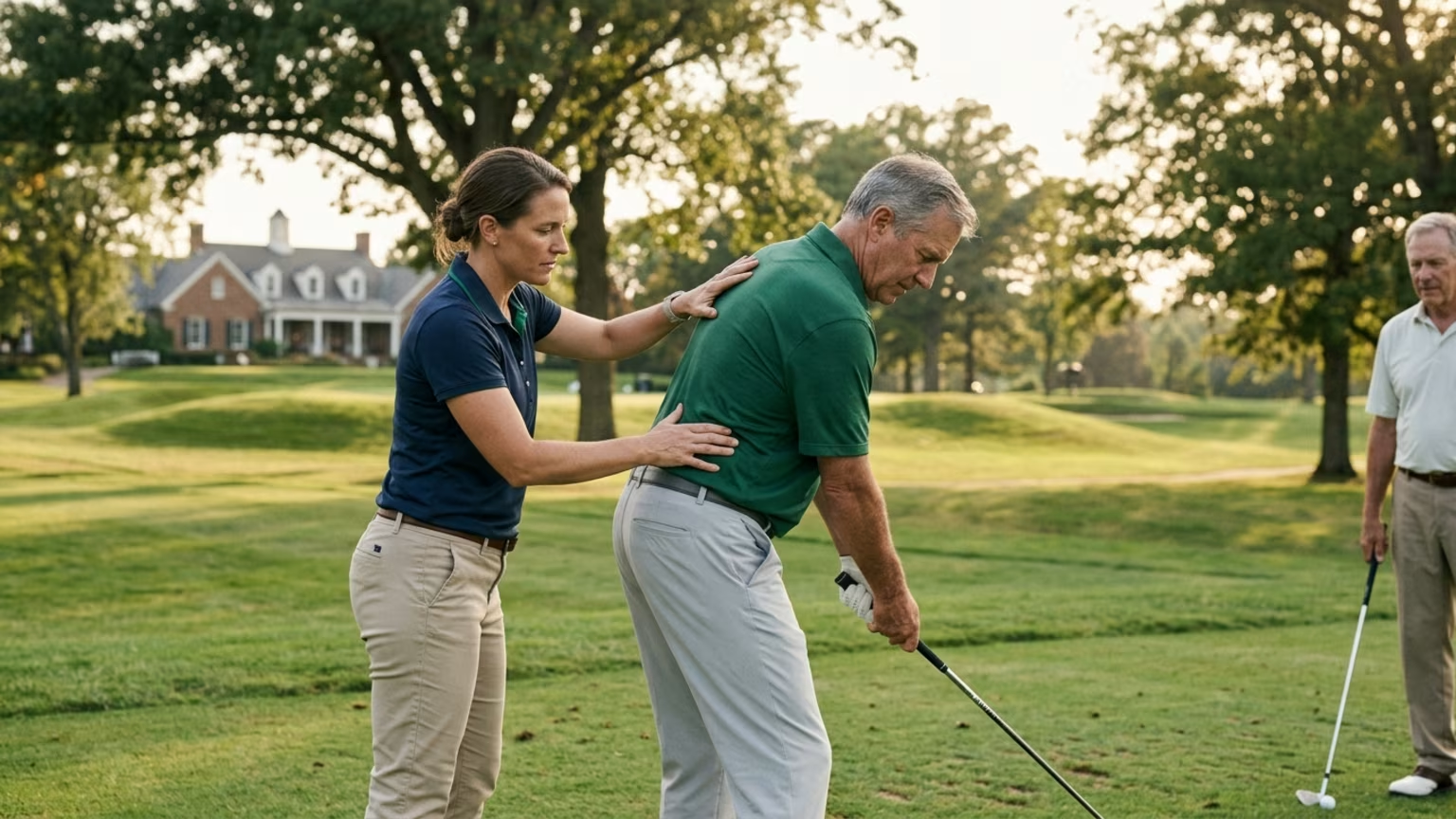
Learn how coordinating your hips, pelvis, thoracic spine and shoulders creates a safer golf rotation and protects your lower back as you age.
Explore practical resources on performance, recovery, mobility and golf longevity.
Read the Blog