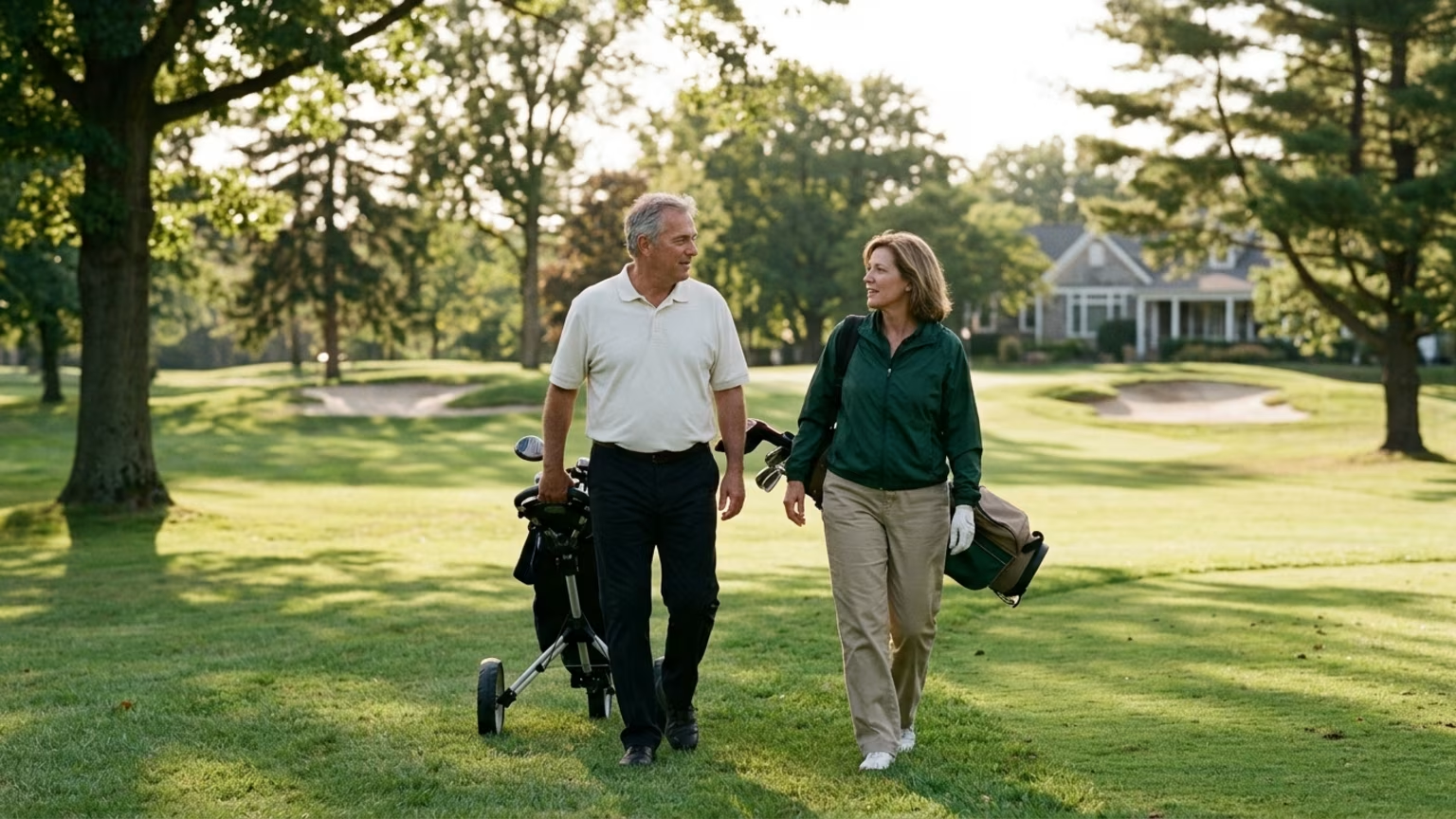
A practical look at walking-round demands, individualized hydration, food and gentle movement, with no fixed recovery targets.




“Why do I feel tight halfway through a walking round, and what should I do when I finish?” It is frustrating when the walk starts to feel harder and your usual swing feels less comfortable.
For golfers over 40, the useful goal is a repeatable way to think about fluids, food and the transition out of play. Recovery planning should reflect the round and the player rather than a fixed bottle count or stretching routine.
A walking round can involve substantial physical work, but these findings do not establish the cause of mid-round tightness.
A golf-media summary of a study of 16 skilled male golfers reported a clear difference between walking and cart use. The report described the following findings:
The same account reported higher core temperatures at holes 6, 12 and 18. Walkers also reported higher perceived exertion after the round.
The sample was young, skilled men rather than recreational golfers aged 40 and older. These figures are not predictions for your next round.
This research also does not establish a golf-specific meal, stretching routine or cooldown sequence. The practical approach below is a way to organize decisions rather than a tested recovery protocol.
The findings do not establish a specific change in swing path, distance or contact. Treat how your body feels and what the ball does as separate observations rather than assume a particular cause.
At practice, keep the questions simple:
These notes are more useful than deciding that your hips must be restricted or that your swing path must have shifted. They give you something specific to discuss without turning a sensation into a diagnosis.
Our guide to making sense of body signals is a useful companion for that observation.
Start with a pause to assess what you are feeling rather than search for a corrective stretch. Focus on one observation at a time. Notice where the tightness is before drawing conclusions about what it means.
This is a decision-making step, not a treatment. If symptoms raise questions about whether to keep playing, seek guidance from a qualified health professional rather than treat an article as clearance.
The American College of Sports Medicine's October 2026 science spotlight highlights individualized hydration strategies. It discusses sweat profiling and timing approaches rather than a universal drinking amount.
The spotlight also discusses performance decrements associated with fluid losses above 2% of body mass. That figure is not a personal target or a prescription for how much every golfer should drink.
For your own planning, note the weather and terrain alongside your pace and experience of sweating. These are practical details to bring into a discussion about hydration. Where personal health decisions are involved, a qualified professional can help individualize the plan.
Golfergy's approach favors steady habits over quick fixes. Make fluids, food and how you feel part of your golf-day planning. Use a weekly review to spot questions worth following up rather than expect one routine to prevent every episode of tightness.
Keep a simple record of what you drank and the conditions you played in. Add how demanding the walk felt. The purpose is to give your planning some context rather than copy another golfer's intake.
Think about the whole round when reviewing recovery rather than focus only on the drink you have afterward. ACSM's focus on individual strategies makes a fixed post-round bottle rule a poor fit for this evidence.
Eating after play is a practical option. An ordinary meal gives you a straightforward starting point without turning recovery into a calculation based on the walking study.
Do not convert the reported activity energy figure into a dinner requirement. A group study result does not set your personal food needs. The aim here is to make space for eating adequately rather than chase a number.
For help thinking through everyday food choices, our article on making post-round eating practical keeps that part of recovery in view.
Gentle post-round movement is another practical option. Treat it as a transition out of play rather than a test of how far you can stretch. Keep attention on one movement at a time instead of combining several movements into a corrective routine.
Keep the review separate from the movement itself. Ask whether you made time for fluids and food rather than trying to correct every sensation before leaving the course.
If the walk is the part you want to plan more carefully, our guide to preparing for the back nine is a related starting point.
At your next practice session, assess your body before making a recovery plan more complicated. Note where you feel tight and how demanding movement feels. Then record contact or ball flight as a separate observation.
Bring those notes back to your weekly review of the round. Look for questions rather than diagnose a pattern. Use that next practice session to learn what you actually notice about your body before choosing your next step.
Follow Golfergy for practical insights on performance, mobility, recovery and healthy ageing. Stay connected for new articles, research-led guidance and ideas to help you play better for longer.


Rest or move the day after 18 holes? Use fatigue, soreness, symptoms and your playing schedule to guide a flexible recovery day.


Compare foam rolling, massage, compression, heat and cold for golfers, with comfort benefits kept separate from performance and injury claims.
A measured guide to stiffness during and after golf, with gentle movement options, sustainable habits and NHS-backed back-pain warning signs.
Explore practical resources on performance, recovery, mobility and golf longevity.
Read the Blog