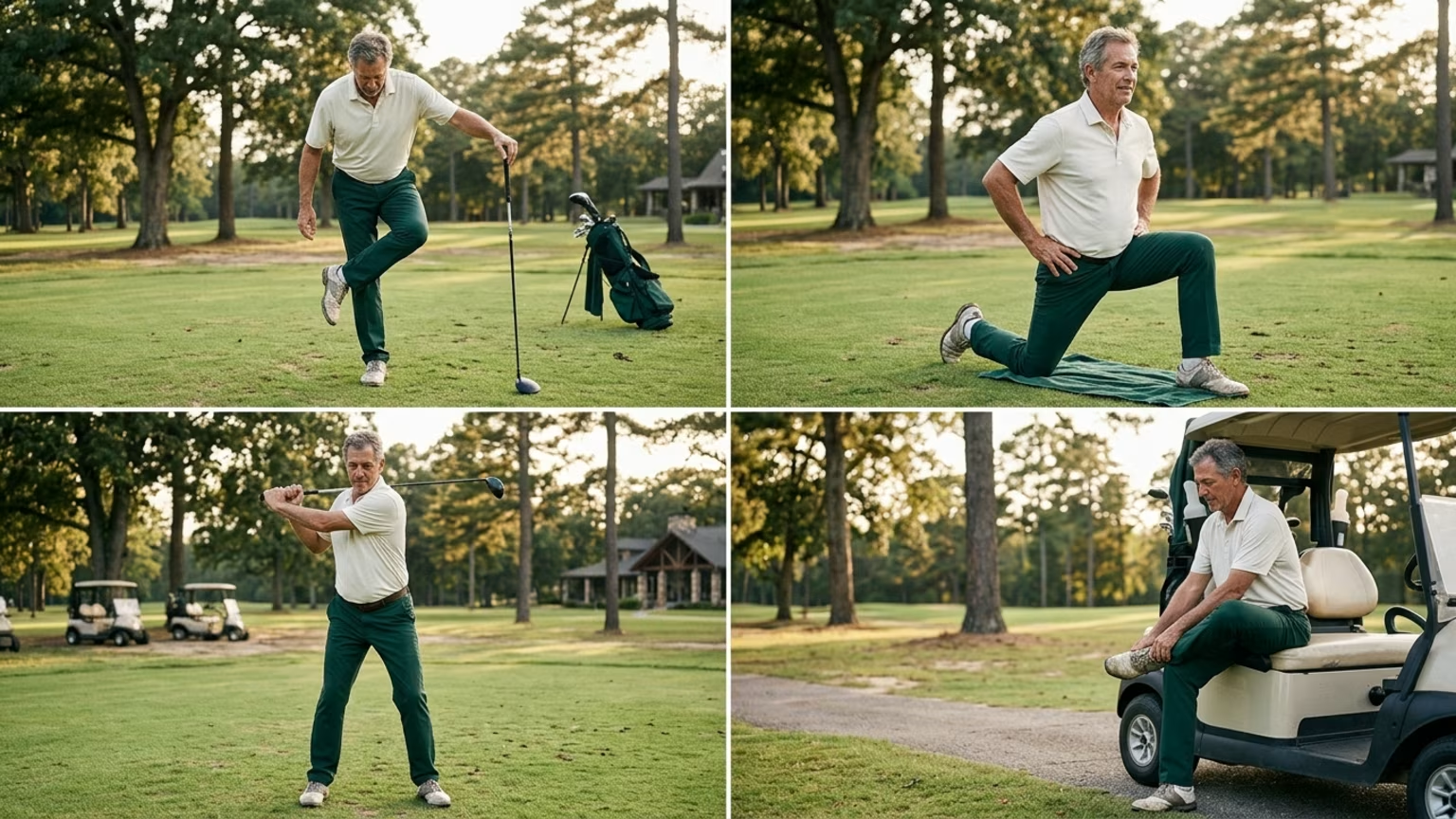

Maintain your golf swing with a practical hip-rotation routine for players over 40. Learn adaptable standing and floor-based movements to manage joint comfort.




The 4-step hip mobility protocol:
A tight hip can ruin a good swing plane. Before you begin stretching, you need a simple baseline check. Stand tall with your feet about shoulder-width apart. Rest your hands gently on your hips for awareness. Slowly rotate your hips to the right and return to the center.
Then, rotate your hips gently to the left. Notice any stiffness or resistance on either side. A golf-specific article from The Performance Shift cautions that no single home-test score determines whether a person can swing well. You do not need to achieve a specific rotation angle today. Your only goal is to understand how your body feels right now.
Taking a moment to assess your comfort level helps you respect your physical limits. Many players worry that their rotation is worse than their peers. The Performance Shift supports an individualized approach rather than treating one mobility number as a universal requirement. Focus entirely on your own body. If your left side feels tighter than your right side, simply acknowledge it.
Building a personal baseline resembles completing a quick movement check before your round. This honest assessment keeps you safe during the actual exercises. You can track your comfort over time without worrying about degrees of rotation. A better swing comes from pain-free movement.
This routine requires very little preparation or space in your home. You will need a sturdy chair or a solid kitchen counter to support your weight. This support is critical for the standing movements. A comfortable yoga mat or a soft carpet works perfectly for the floor-based exercises.
We want to keep the setup as simple as possible for older players. You do not need heavy resistance bands or weighted golf clubs. A quiet room and ten minutes of your time will suffice. Setting out your mat in advance makes it easier to build a consistent habit. Having your chair nearby keeps the transitions safe and smooth.
We designed this sequence to offer adaptable variations for older players. You can start with the standing option if you prefer to stay upright. After that, you can move to the floor-based exercises if you feel comfortable getting down. The focus must always remain on controlled movement rather than aggressive stretching.
Tightness in the front of the hips can restrict your backswing. DRVN's senior-golfer exercise guidance describes a supported split-stance stretch for the front of the back hip. Stand beside your sturdy chair or counter for balance. Step one leg back into a split stance while keeping your torso tall.
Next, tuck your pelvis slightly underneath you to isolate the stretch. Gently bend your front knee until you feel a comfortable pull at the front of your back hip. Hold this position briefly without bouncing. Switch your legs and repeat the movement on the opposite side. This steady hold prevents sudden jerking motions that irritate older joints.
For the next movement, transition carefully down to your floor mat. DRVN includes a side-lying rotation drill to encourage mobility through the midsection. Lie on one side with your knees bent and stacked on top of each other. Reach both of your arms forward along the floor.
Slowly open your top arm toward the ceiling. Keep your knees stacked together firmly. Follow your moving hand with your eyes as you open your chest. This gentle opening movement allows your upper body to rotate while your lower body remains stable.
Return your arm to the starting position and switch sides. Take deep breaths as you rotate your torso. A smooth breathing pattern helps your muscles relax into the movement. This drill feels great after a long day of sitting at a desk.
Stay on the floor for a more direct hip stretch. Keiser University College of Golf presents the knee-to-opposite-shoulder stretch as an effective floor-based movement. Lie flat on your back with your legs extended. Pull one knee gently toward your opposite shoulder. Keep your head resting flat on the ground.
Keiser University College of Golf suggests holding this stretch for 20 to 30 seconds per side. Only pull your knee as far as your body comfortably allows. This controlled action maintains joint comfort without demanding an aggressive pull. This measured approach acts as a great complement to an active first tee dynamic sequence.
Finish your floor work with a seated posture. Keiser University College of Golf suggests the seated 90/90 stretch to target hip rotation directly. Sit on the floor with one leg bent in front of you at a 90-degree angle. Bend your other leg behind you at a similar angle. Keep your weight centered.
Sit up as tall as possible. Lean forward slightly over your front leg to feel the stretch in your hip. Keiser University College of Golf recommends a 30-second hold per side for this movement. Remember to breathe steadily during the hold. Return to an upright position slowly when you finish.
Enthusiastic golfers often try to force a deeper range of motion during these exercises. Pushing through pain does not improve your mobility or help your golf swing. The supplied exercise descriptions provide gentle stretch ideas rather than a medical treatment plan. Forcing a tight joint to stretch too far causes irritation and lingering aches.
Another common error involves chasing a specific rotation target. The available sources do not validate specific hip-rotation angle targets as universal standards for golfers. Increasing your hip range alone does not prevent injury or improve performance. Stay within a comfortable range and stop immediately if a movement causes pain. Your body knows its limits better than a generic mobility chart.
Many older players mistakenly think that soreness equals progress. If you experience sharp pain, it helps to understand how to tell normal fatigue from a real issue. Treat these movements as a comfortable check of your joints. Consistency with practical editorial suggestions yields much better results than an intense stretching session once a month. Daily gentle movement beats occasional aggressive stretching every time.
You can easily adapt the standing hip stretch to use while playing a round. Waiting on the tee box often causes the hips to cool down and stiffen. Stand next to the golf cart and place a hand on the roof for support. Step one foot back into a shallow split stance and tuck your pelvis. Keep your posture tall and relaxed.
Gently bend your front knee to relieve tension in the front of your hip. You do not need to hold this stretch for 30 seconds on the course. A few brief seconds of comfortable movement keeps the joints primed for your next shot. This small habit helps you manage mid-round stiffness on the back nine without slowing down your playing partners. Your playing partners will likely not even notice you stretching.
The 10-minute investment in gentle hip rotation today saves you 18 holes of aches tomorrow. You never need a perfect mobility score to enjoy your time on the fairways. A reliable and pain-free routine keeps you swinging freely for years to come.
Follow Golfergy for practical insights on performance, mobility, recovery and healthy ageing. Stay connected for new articles, research-led guidance and ideas to help you play better for longer.


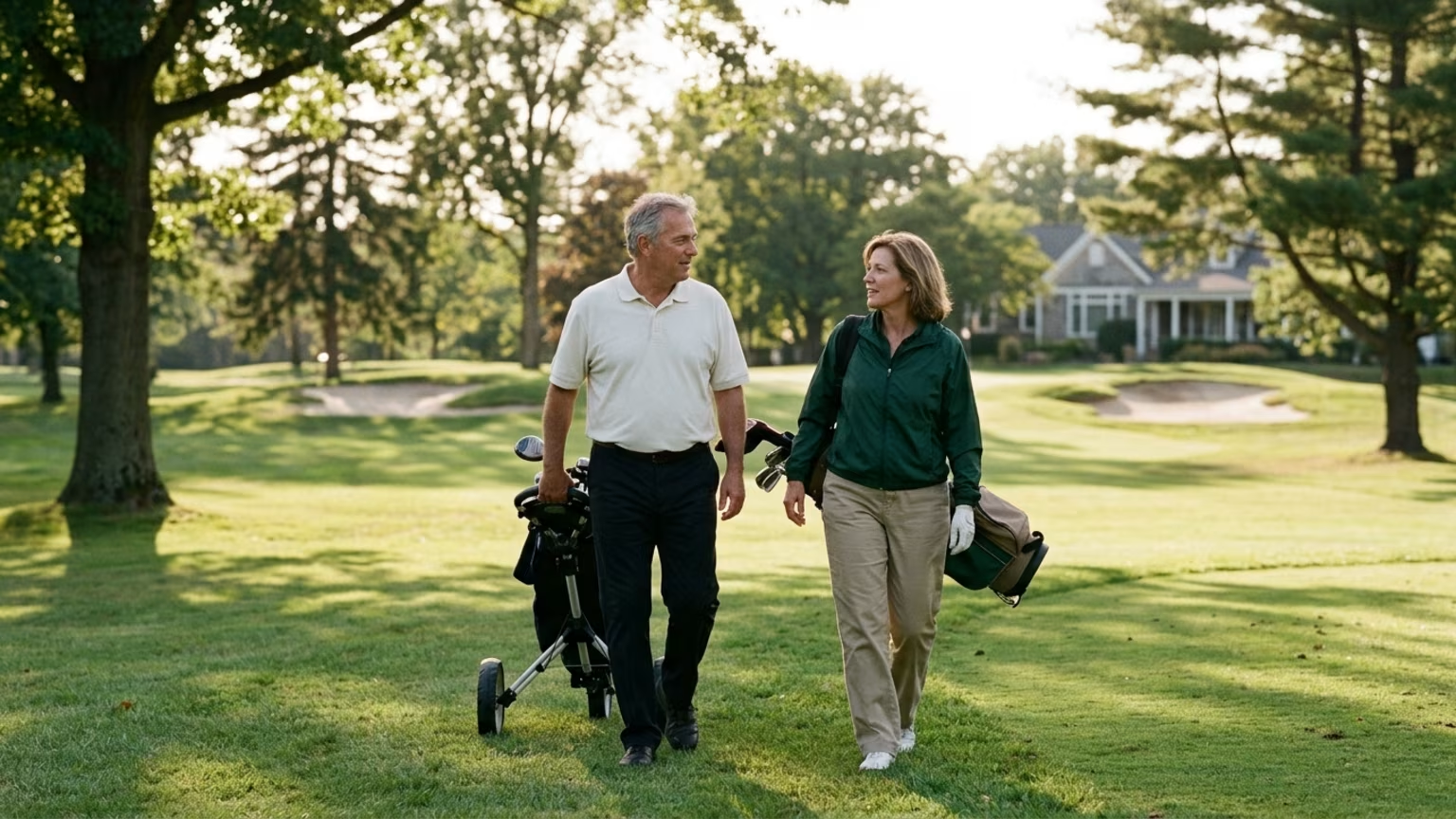
Understand how your hips and mid-back contribute to a golf turn, with practical habits that put comfort ahead of extra backswing length.


A progressive golf warm-up for players over 40, moving from easy activity to fuller practice swings without treating preparation as a flexibility test.
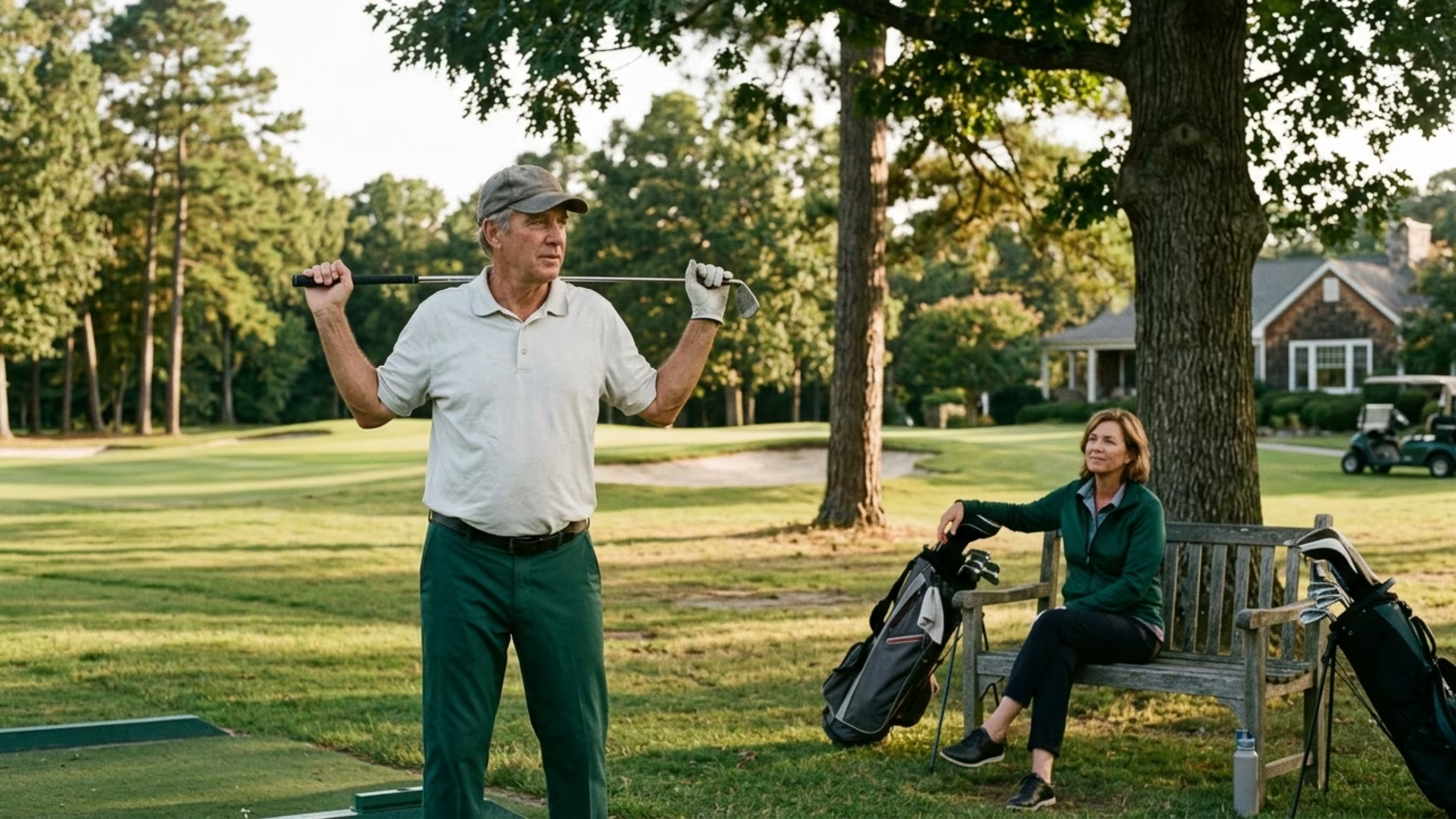
Observe comfortable movement and control to frame better questions about your golf swing, with guidance on when pain needs professional assessment.
Explore practical resources on performance, recovery, mobility and golf longevity.
Read the Blog


