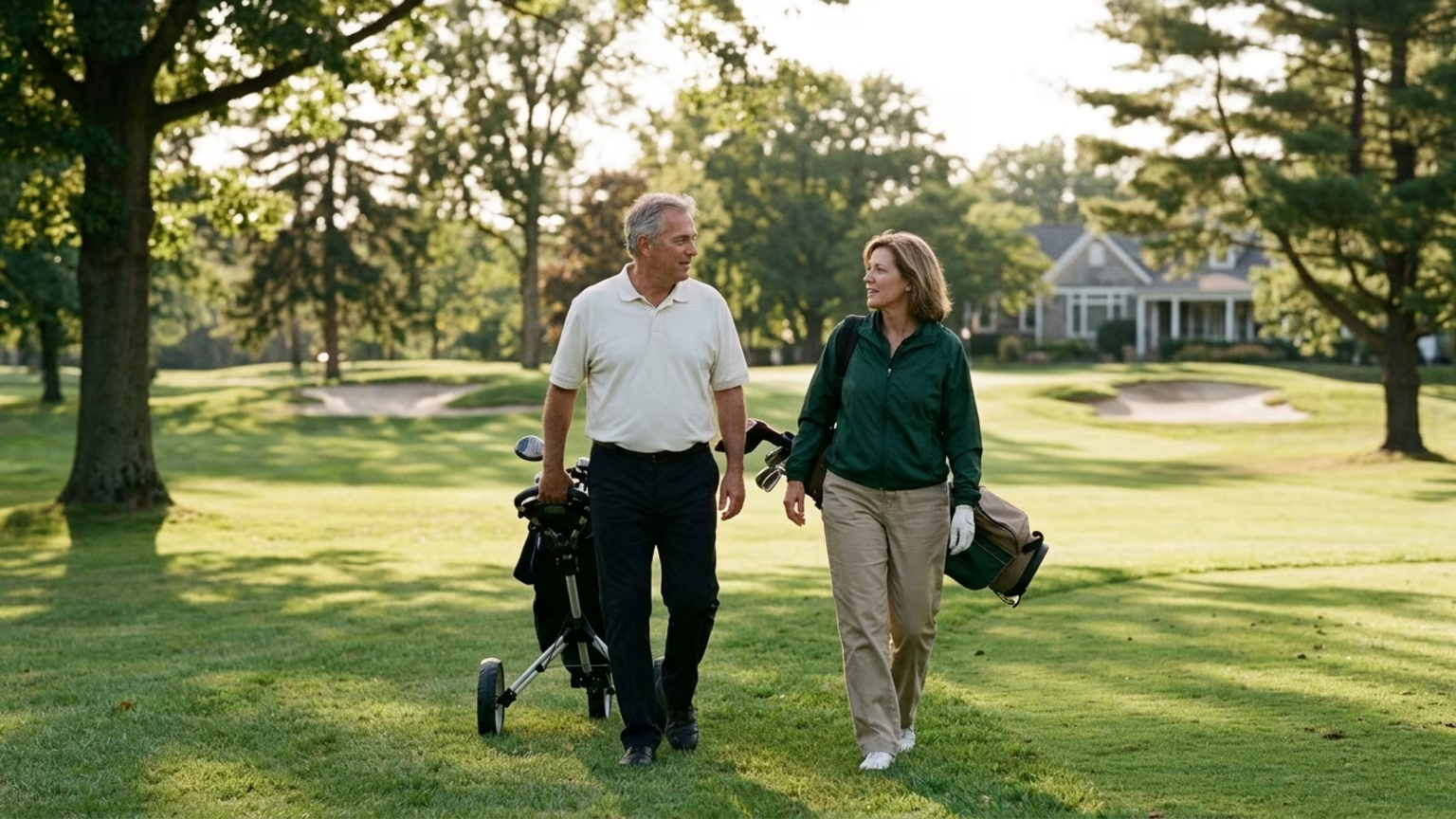
Learn how to beat mid-round fatigue and improve your recovery with a simple post-round meal. Build practical nutrition and hydration habits to play longer.




"Why does my lower back tighten up and my energy crash around the 14th hole?" It is the most common question we hear from golfers over 40. Playing a full round of golf demands steady focus and physical endurance. Your body goes through hours of continuous movement.
This prolonged activity leaves many players feeling stiff and exhausted by the time they reach the clubhouse. You need a sensible plan to manage your energy and recover properly. Refueling your body is a major part of that recovery process. A simple nutrition strategy keeps you playing comfortably.
Many recreational players underestimate the physical demands of playing a full round. A summary from Kriz Physical Therapy notes the International Consensus Statement on Golf and Health. This statement clarifies that golf provides moderate-intensity aerobic activity. The physical toll builds slowly over a typical four-hour round.
Walking the course burns stored fuel and drains your energy reserves over time. Kriz Physical Therapy points out that there are likely greater health benefits for golfers who walk when able. This extra physical effort requires proper hydration and sensible nutrition. Hot or humid conditions add significant physical stress to your muscles and joints.
Losing fluids without replacing them makes your muscles feel incredibly stiff and heavy. Your body relies on water and stored carbohydrates to keep moving smoothly. A lack of steady energy leaves you dragging on the back nine. This slow physical drain causes your posture to weaken and your back to tighten.
You can learn more about protecting your spine in our guide to staying pain-free on the golf course. Paying attention to your aerobic limits is a crucial part of healthy aging. Older players must respect the gradual fatigue that comes from walking the fairways.
You might assume that feeling tired automatically ruins your swing speed. The research shows a slightly different reality for experienced players. TakeRoon summarizes a 2023 trial involving 11 competitive golfers. These players consumed about 30 grams of carbohydrate per hour via gummies.
The summary reports that perceived fatigue was lower from hole six onward. The players also noted higher concentration levels during their play. Strikingly, the trial showed no changes in score, putting, drive distance, or clubhead speed. Your actual physical output might remain stable even when you feel exhausted.
The feeling of fatigue completely changes how you experience the game. Lower concentration makes it difficult to read greens and commit to your shots. A tired body makes every swing feel harder to control. When you lose mental sharpness, your timing and tempo often begin to drift.
You might stop focusing entirely on turning your trail hip smoothly. This mental and physical drag ruins the enjoyment of your round. Managing this fatigue is a critical part of athletic training strategies for older players.
The best immediate adjustment you can make happens right by your golf bag. You need to manage your fluids and fuel while you are still playing. Kriz Physical Therapy highlights the importance of maintaining hydration throughout your round. This is particularly crucial in hot or humid conditions.
Do not wait until you feel completely exhausted to take a drink. Sip water consistently between holes to keep your muscles functioning properly. If you feel your energy dropping, a small snack provides a noticeable lift. TakeRoon's summary of the gummy trial shows that a simple carbohydrate intake helps.
Consuming small amounts of food keeps your concentration high on the back nine. Focus entirely on taking small bites and frequent sips of water. This keeps your energy steady without making you feel uncomfortably full. Proper on-course fueling sets the stage for your recovery later in the day.
Your recovery actually begins the moment you walk off the 18th green. A solid post-round meal helps your body repair and prepare for tomorrow. You do not need a complicated formula or a strict eating schedule. Practical guidance works best for older recreational players looking to stay fresh.
When you walk the fairways, your body burns through its limited stores of carbohydrates. These carbohydrates act as the primary fuel source for your muscles and your brain. Replenishing this fuel helps stop the heavy, lethargic feeling that sets in after playing. Adding protein to your meal helps repair the small muscle fiber tears caused by swinging.
This natural repair process keeps your joints and muscles ready for your next round. A separate golf-nutrition page summarized by TakeRoon reviewed a small feeding trial. This trial compared a carbohydrate snack, a carbohydrate-plus-protein snack, and a zero-calorie control. The study reported post-round fatigue scores of 3.0, 2.5, and 4.0 respectively.
Performance did not differ between the groups in this specific research trial. This finding suggests that getting some fuel is much better than getting nothing. Combining carbohydrates and protein seems to provide the most comfortable recovery feeling. There is no verified evidence showing that one specific eating window is mandatory.
You should base your meal timing on your own appetite and your travel schedule. Older golfers often find that their post-round recovery slows down over the years. A sensible meal is a simple way to support your tired muscles. Steady, practical habits always beat extreme sports nutrition protocols.
Golf-oriented guidance offers very straightforward options for your post-round plate. A basic sandwich, a bowl of yogurt, or a hearty chicken salad serve as practical examples. You just need a solid combination of carbohydrates and protein to refuel your system. Treat your post-round meal as a normal, healthy opportunity to eat and relax.
You do not need to overthink the exact ratios on your plate. A simple turkey sandwich on whole wheat bread provides an excellent balance. Adding a piece of fruit and a handful of nuts brings additional energy. These common foods offer the perfect mix of nutrients without requiring a calculator.
Match your fluid intake to your thirst and the current weather conditions. A longer round or a very hot day makes drinking water extremely important. Your personal dietary needs should dictate exactly what goes on your post-round plate. You can find more ideas in our guide on eating for the long round.
Ignore the extreme advice that demands highly precise macronutrient targets after golf. The available nutrition evidence does not establish age-specific post-round dietary formulas for older players. A familiar meal with good nutritional balance is all you really need. This sensible habit keeps you feeling capable and ready for your next tee time.
You need to pay attention to how your body responds to your fueling habits. During your next practice session, assess your physical comfort and your concentration levels. Hit a few balls and focus entirely on turning your trail hip. Notice if your back feels stiff or if your swing feels completely fluid.
Evaluate how your energy levels hold up after a weekend round. Ask yourself if you felt sharp on the final few holes. Think about whether your post-round stiffness felt worse than usual the next morning. Adjust your hydration and your post-round meals based on these simple observations.
Pay close attention to your breathing and your posture during these practice sessions. If you feel sluggish, try having a slightly larger carbohydrate snack before you hit the range next time. Keep your adjustments small and easy to track. This grounded approach to golf fitness keeps you focused on playing the game you love.
Staying aware of your daily energy helps you play better for much longer. Consistently monitoring your body allows you to refine your nutrition over time. Small adjustments to your eating habits make a massive difference in your longevity. Take ownership of your recovery and enjoy more pain-free golf.
Follow Golfergy for practical insights on performance, mobility, recovery and healthy ageing. Stay connected for new articles, research-led guidance and ideas to help you play better for longer.


Rest or move the day after 18 holes? Use fatigue, soreness, symptoms and your playing schedule to guide a flexible recovery day.


Compare foam rolling, massage, compression, heat and cold for golfers, with comfort benefits kept separate from performance and injury claims.
A measured guide to stiffness during and after golf, with gentle movement options, sustainable habits and NHS-backed back-pain warning signs.
Explore practical resources on performance, recovery, mobility and golf longevity.
Read the Blog