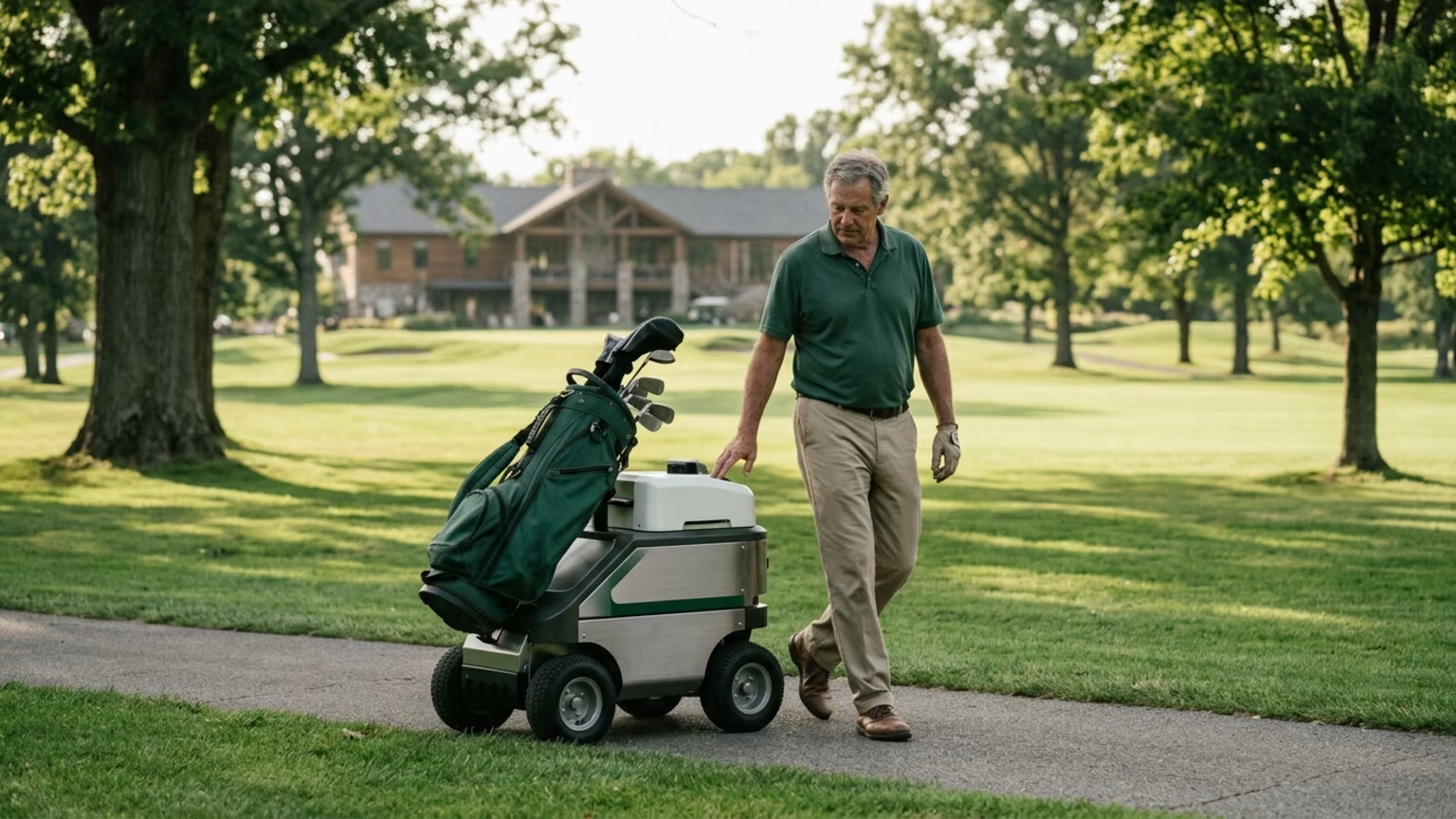

Goyang Country Club recently introduced Hello Caddy robots. Learn why walking six kilometers with AI support still requires older golfers to manage fatigue.




In September 2026, Goyang Country Club introduced 40 "Hello Caddy" robot caddies after a one-month trial in August. The system was developed by Airobot. This artificial-intelligence company specializes in golf-course applications. The rollout represents an early shift in how public courses manage rounds.
Hello Caddy handles several crucial logistical tasks. It carries a golfer's bag and follows the player around the course. The unit also displays location-related information like remaining distance to the pin and penalty areas. Goyang CC charges 30,000 won per person for the Hello Caddy service.
The club assigns the robot-caddy groups to the third and fourth tee-time blocks. The reported price positions the service against conventional caddie fees of 30,000 to 40,000 won. It also replaces conventional cart fees of 20,000 to 30,000 won per person. According to Goyang CC customer-service division head Lee Won-hee, demand was steady from the beginning.
Lee reported that five or six tee times were fully booked during the trial. The club now plans to add more units to expand availability. Other local clubs are also adopting new automation. Spring Hills Country Club uses "Chaeum" and "Seum" AI turf-maintenance robots developed by X-Up.
While the robot removes the burden of carrying a heavy bag, it does not eliminate the physical work of the round. During the trial, customers told the club that walking six to seven kilometers gave them a real workout. Walking this distance places a repetitive load on the lower body. Every step requires the hips and knees to absorb ground reaction forces.
When you walk a golf course, your joints must manage uneven terrain and constant elevation changes. This extended walking load slowly drains the energy reserves of the lower body. Fatigue alters how your muscles stabilize your joints during the golf swing. As the round progresses, tired legs lose their ability to hold a stable base.
The knees take a specific beating during long walks on hilly terrain. Uphill climbs force the quadriceps to work overtime. Downhill slopes place heavy eccentric loads on the patellar tendon. These forces add up over thousands of steps.
This loss of stability forces the lower back to take on more rotational force. The biomechanics of the golf swing rely heavily on fresh glutes and hamstrings. When these muscles tire from logging miles on foot, swing mechanics break down. Managing this strain makes balancing swings, rounds, and recovery a serious challenge.
The hips play a primary role in generating power and protecting the spine. Walking several kilometers slowly tightens the hip flexors. Tight hip flexors restrict your ability to rotate through the ball safely. This is exactly why a walking round feels so exhausting on the final few holes.
The robots provide excellent logistical support without monitoring your actual physical strain. The available coverage describes navigation and carrying functions. It does not mention fatigue or recovery monitoring. You must still manage your own exertion levels.
Golfers over 40 face a significant risk from unmanaged walking fatigue. We may swing with less speed than tour professionals, but our soft tissues require more time to recover. The saddest thing I have seen in golf is watching lifelong playing partners slowly drop out of our weekend group. It usually starts with a nagging shoulder or knee issue they ignore until it requires surgery.
That pattern is exactly why I became obsessed with golf longevity. We do not have to stop playing as we age, provided we do the right maintenance work between rounds. Taking on a long walking round without preparation accelerates joint wear. Preparing for the physical demand of 18 holes and managing walking load is something you must actively train for.
Many mature players try to push through late-round fatigue with caffeine or painkillers. This approach masks the warning signs of muscle failure. When your stabilizer muscles fail, your larger joints take on forces they cannot safely handle. This is how a simple round of golf turns into a six-month injury layoff.
An X-Up official claimed that operating AI turf-maintenance robots for approximately five years saves about 700 million won in average course-maintenance costs. X-Up also said its Chaeum robot achieves a 92 percent divot-repair accuracy rate. While AI improves course conditions, it does nothing to protect your physical health.
Toptracer global sales chief Peter Barry characterized Korean golfers as highly receptive to data-driven swing and shot analysis. We need to apply that same analytical mindset to our own physical capacity. A robot can give you yardages, but it cannot tell you when your legs are too tired to swing safely.
You must treat a robot-caddy round as a genuine physical workout. Start by keeping a simple post-round log of your walking distance and weather exposure. Record your perceived exertion and any next-day fatigue. This basic self-monitoring helps you spot recovery issues before they become chronic injuries.
Build deliberate pauses into your round to protect your stamina. Use the turn to cool down and consume fluids. If you notice deteriorating balance or a loss of swing control on the back nine, shorten your practice sessions that week. Learning how to accelerate post-round recovery with a simple downshift routine can also help your body reset.
I used to stand on the first tee doing long static hamstring stretches because I thought it was the right way to warm up. I would actually feel weaker on my first drive. Research later showed me that dynamic movements prime the nervous system much better. Changing my five minute warmup completely transformed my opening tee shots and prepared my legs for the walk.
Focus entirely on turning your trail hip during your off-day mobility work. This small movement pattern keeps the joint lubricated without adding unnecessary strain. Practicing lower-body power drills for hip stability will build the endurance you need for those late holes. Make sensible decisions about pacing to keep your body feeling fresh.
Proper footwear also plays a critical role in managing fatigue. Your shoes must provide enough support to handle uneven grassy surfaces for hours. Weak support forces your ankles to work harder to maintain balance. This extra ankle work quickly translates into knee and lower back pain.
The integration of technology into public golf courses is only just beginning. As automation becomes more common, the responsibility for physical pacing will fall entirely on the player. You have the tools and the knowledge to protect your joints and preserve your swing. What adjustments will you make to your mobility routine this season to steer clear of this hazard?
Follow Golfergy for practical insights on performance, mobility, recovery and healthy ageing. Stay connected for new articles, research-led guidance and ideas to help you play better for longer.


Learn why a bad night of sleep does not automatically ruin your next golf round. Discover a flexible, research-backed recovery routine for golfers over 40.

Learn how adequate sleep, sensible workload management, and strategic rest periods reverse overtraining and protect older golfers from chronic fatigue and pain.

Learn how to stop mid-round back tightness with a practical recovery nutrition plan. We share how proper hydration and small snacks maintain your swing mechanics.
Explore practical resources on performance, recovery, mobility and golf longevity.
Read the Blog