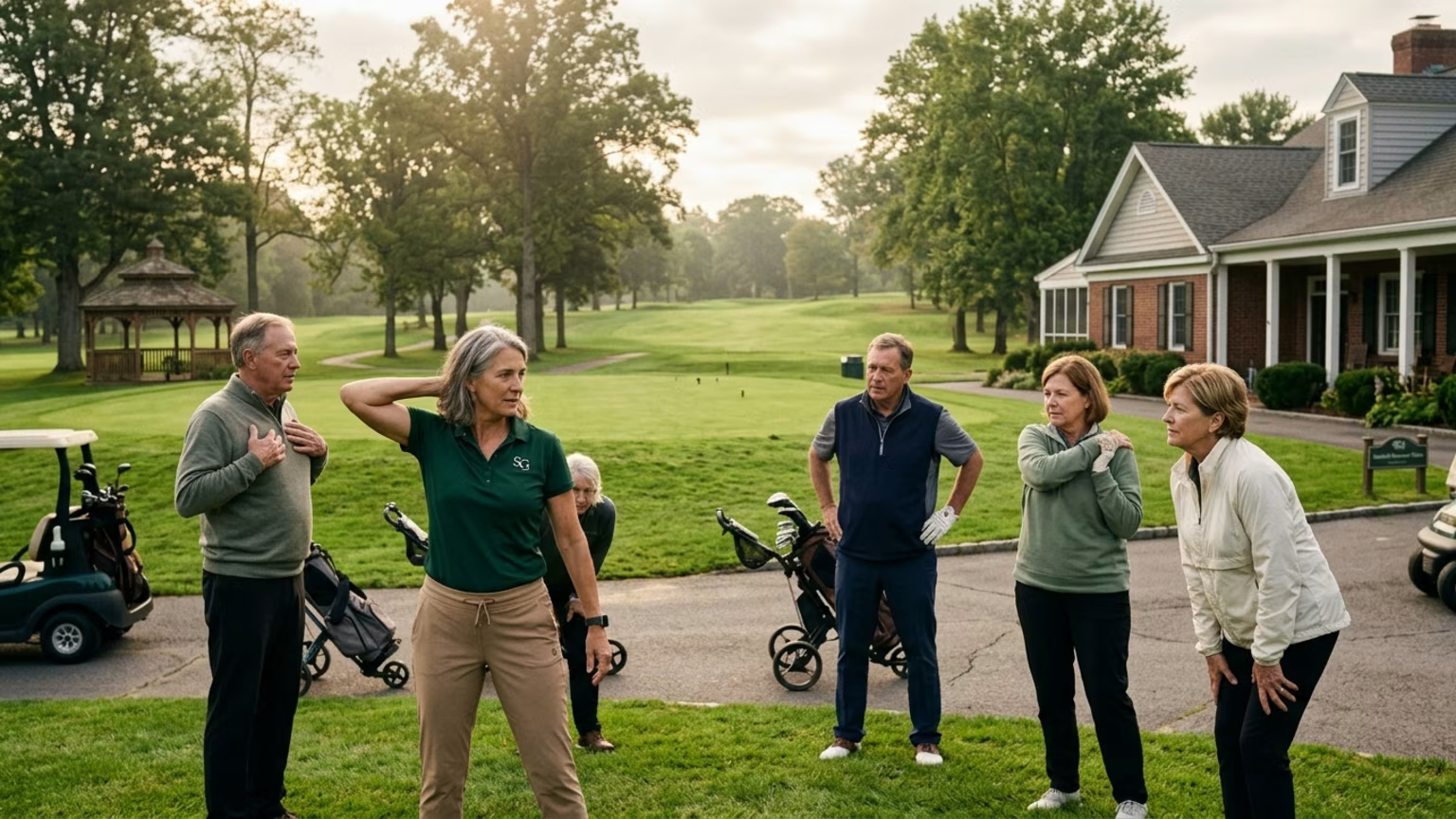

Discover how a new PGA Coach program connects mobility to functional fitness, helping older golfers improve rotation and sequence their swing safely.




"Why does my lower back tighten up rigidly around the 14th hole?" It is the most common question we hear from golfers over 40. Recently, PGA Coach listed a Ladies Golf Mobility & Functional Fitness program at SimGolf in Colonie, New York. Golf fitness coach Alexis Ryder leads this progressive program. The listing says the program begins Wednesday, September 9, 2026, at 5:45 p.m.
A few years ago, I noticed my swing falling apart around the 14th hole. My lower back would tighten up, and I started compensating with my arms. I spent months thinking it was a swing flaw. It was not until I started a simple evening hip mobility routine that I realized my glutes were just turning off from fatigue.
Fixing that one physical limitation brought my back nine scores down drastically. This physical reality is exactly what the new PGA Coach program aims to address. The listing says the program works on body-swing connections, movement limitations, strength, and flexibility. The advertised outcomes include smoother rotation, better sequencing, fewer golf-related aches, and improved general mobility.
It is helpful to remember that promotional language represents an intended benefit. It is not an independently verified clinical result. However, addressing movement limitations before hitting the course often reduces joint strain. When your hips stop rotating efficiently, your body forces the lower spine to twist.
This structural overload is a primary reason for tightness creeping into the lower back late in a round. The PGA Coach program provides an interesting model for tackling this issue. Participants get to focus entirely on how their body moves before touching a club. This separation of fitness and technical swing thoughts is highly beneficial.
When physical fatigue sets in, your mechanics inevitably change. Tightness in your hips or thoracic spine restricts your ability to complete a full shoulder turn. Your brain recognizes this limitation and tries to generate speed using your hands and arms. This upper-body dominance usually throws the club outside your intended path.
The resulting over-the-top motion leads to weak slices and a significant loss of distance. A 2026 study indexed by PubMed examined the acute effect of power exercises on golf-driving measures. The research observed 18 male high-level amateur golf players. The authors reported that lower-body power exercises produced statistically significant improvements in clubhead speed, ball speed, carry distance, and smash factor.
Upper-body exercises produced smaller improvements in distance-related measures but no significant change in clubhead speed. This research highlights the connection between physical readiness and performance. Of course, this study examined acute power interventions in male high-level amateurs. It does not prove that a four-week mobility class will increase driving distance for older recreational players.
Still, losing functional mobility mid-round clearly prevents you from transferring power efficiently. When your legs and hips stop firing, your hands take over completely. This throws off your swing path and reduces your smash factor. Maintaining your lower-body capacity is critical for finishing a round strong.
If you feel rigid on the course, you need a safe way to restore basic movement. Do not try to force a deeper shoulder turn or swing harder. Focus entirely on turning your trail hip backward during your backswing. This is a small internal cue that frees up space without requiring extreme flexibility.
The SimGolf program takes a smart approach to introducing these physical adjustments. Each class includes a 45-minute mobility and functional-fitness session. This is followed by optional swing time intended to let participants practice movements from the session. The listing says clubs are not required and equipment is provided.
This format lowers the equipment barrier for golfers who want to try the program. By removing the pressure of hitting golf balls immediately, you can focus on how your body moves. Practicing a small movement without a club is the safest way to rebuild your mechanics. If you feel tightness on the 14th tee, rehearse your hip turn slowly before addressing the ball.
Testing a stretch on the course gives you immediate feedback about your body. The optional swing time at SimGolf operates on this exact same principle. You learn a movement pattern in the fitness session and apply it in the simulator. This structure logically connects fitness to actual golf mechanics.
There is a major difference between normal muscular fatigue and a medical red flag. The American College of Sports Medicine released a 2026 science update on this topic. ACSM identifies muscular fitness, flexibility, and neuromotor fitness as vital components of physical fitness. Neuromotor qualities include agility, balance, and gait speed.
Their Exercise Is Medicine program emphasizes that exercise guidance must account for people with chronic diseases or medical conditions. A 2026 PubMed-indexed study looked at exercise-based rehabilitation for people with chronic low-back pain. The patients had different levels of radiographic lumbar spinal stenosis. The researchers reported short-term improvements to exercise rehabilitation across stenosis severity groups.
This shows that structured movement can aid clinical rehabilitation. However, that study involves clinical rehabilitation patients. It should not be used to claim that a local golf mobility class treats spinal stenosis or chronic back pain. If your tightness turns into sharp pain or neurological symptoms, you need medical advice.
A group fitness class is a great tool, but it is not a substitute for individualized clinical care. Always obtain medical clearance if you have previous injuries or persistent joint pain. Pushing through sharp pain on the course will only lengthen your recovery time. Knowing your medical boundaries is a crucial part of long-term playing health.
Sustainable golf requires ongoing maintenance. The PGA Coach program at SimGolf is a four-week progressive program meeting once per week. The listed price is $100 for all four sessions. Individual sessions are available for $25, and payment is collected in person.
This $100 four-week price works out to exactly $25 per scheduled session. The package appears to offer continuity rather than a stated per-session discount. While this specific class is tagged Women, Beginner Friendly, and Women Only, the concepts apply broadly. In fact, PGA Coach also lists a men's version at the same venue.
The men's program features the exact same coach, four-week structure, price, and 45-minute session. It also shares the optional swing time and equipment policy. The Colonie page lists 12 golf programs in total. Options include junior programs, private instruction, and club fitting.
It also features women's golf instruction and the two functional-fitness offerings. The abundance of options shows how popular consistent golf mobility routines have become. Building a weekly habit of stretching and balancing will keep you on the course for years. Committing to a structured class is a great way to start.
Before your next practice session, take five minutes to test your body without a golf club. Stand in your golf posture, cross your arms over your chest, and slowly rotate your shoulders. Take note of any resistance, tightness, or imbalance between your right and left sides. Recognizing your physical limits today is the first step toward playing better tomorrow.
Follow Golfergy for practical insights on performance, mobility, recovery and healthy ageing. Stay connected for new articles, research-led guidance and ideas to help you play better for longer.


Understand how your hips and mid-back contribute to a golf turn, with practical habits that put comfort ahead of extra backswing length.


A progressive golf warm-up for players over 40, moving from easy activity to fuller practice swings without treating preparation as a flexibility test.
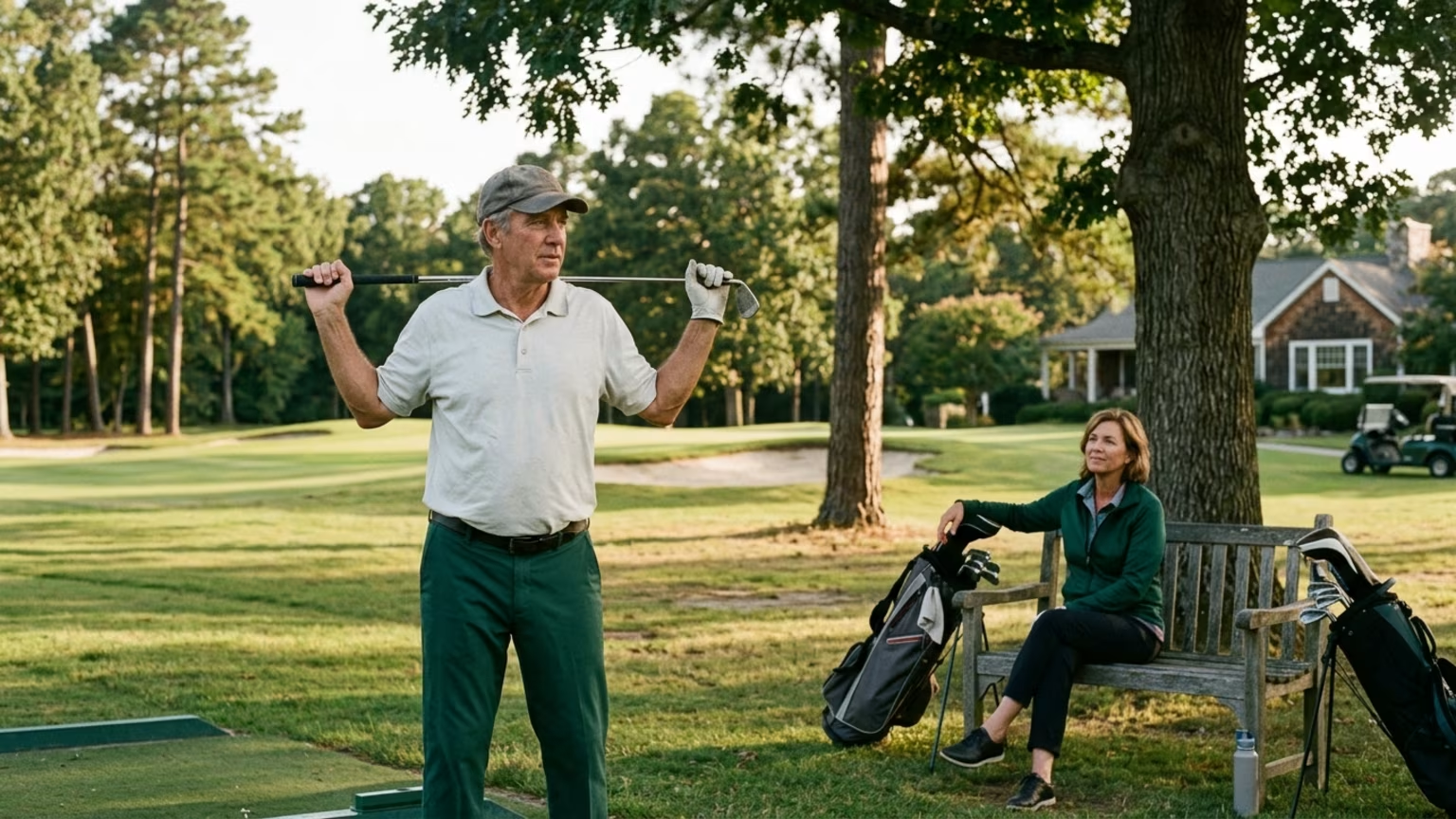
Observe comfortable movement and control to frame better questions about your golf swing, with guidance on when pain needs professional assessment.
Explore practical resources on performance, recovery, mobility and golf longevity.
Read the Blog


