

Learn how to evaluate your total physical workload and decide if you are ready for another round of golf using a simple check of your soreness and mobility.




"Should I play another 18 holes today, or take a full rest day?" It is the most common question we hear from golfers over 40 managing multi-day trips. You wake up feeling stiff in your lower back. You wonder if teeing it up again will cause harm or ruin your swing mechanics.
Figuring out your next move requires understanding your true physical workload. A long golf trip tests your physical limits and your recovery capacity. Making the right decision protects your body and your enjoyment of the game. Smart choices keep you on the course for the long term.
Your body tightens up because a full round of golf demands prolonged physical effort. My Lifelong Strength cites a 2023 study of an 18-hole round in healthy older golfers. This study measured duration, distance and energy expenditure on the course. The physical workload of walking a course is significant for older adults.
Your muscles tighten as they respond to this sustained output over four or more hours. A separate report describes a study of 25 healthy golfers aged 65 and older. This group included 16 men and nine women. Researchers compared an 18-hole round with two six-kilometer walks.
They measured blood pressure, glucose and blood lipids to understand the physical impact. The researchers noted that the longer duration and higher energy expenditure of golf explain its specific effects. They found this helps explain changes in lipid profile and glucose metabolism. These physiological demands add up quickly over a long day.
Your body is doing real physical work on the course. You are walking uneven terrain, climbing out of deep bunkers and swinging a heavy club repeatedly. That total work translates into tight hips and tired legs by the time you reach the clubhouse. Understanding this workload helps you make smarter decisions about your next round.
When soreness sets in, your swing mechanics inevitably change. You might lose rotation control or struggle with your overall walking capacity. My Lifelong Strength describes an educational tool called the Golf Durability Scorecard. This scorecard covers walking capacity, rotation control and strength foundation.
It also evaluates recovery capacity and seasonal structure. The scorecard is an educational review of these five areas, not a diagnosis or injury screen. Losing rotation control often leads to a shorter, more restrictive backswing. A shorter backswing forces your arms to take over the movement entirely.
This arm-dominant path causes you to lose distance and struggle with solid center contact. Managing mid-round fatigue and tightness is vital for keeping your swing on track. If your hips cannot turn smoothly, your path becomes steep and unpredictable. Your body will always find a way to complete the swing.
It often achieves this at the expense of proper technique and athletic posture. You might stand up early through impact to compensate for stiff hamstrings. These compensations lead to heavy strikes and erratic ball flights. Recognizing these swing changes early can help you avoid forming bad movement habits.
When you feel stiff before your next round, focus on a single, light movement. Keep the movement simple. Focus entirely on turning your trail hip slowly. Do not push into pain or force a deep stretch on cold muscles.
Moving gently helps your joints recognize the required range of motion. The sources reviewed here do not establish a fixed recovery interval. They also do not validate a symptom-based next-day readiness check for older recreational golfers. You will not find a rigid medical rule for when to play again.
Instead of seeking a perfect formula, choose an easy walk or light movement. These are highly practical options for choosing the right reset between rounds. Light movement promotes blood flow without adding stress to your joints. An easy walk can help loosen your legs before you approach the first tee.
Gentle activity is often better than staying completely still on the couch. A simple walk around the practice green might be all you need. Pay attention to how your body responds to these slow movements.
Managing your golf week requires looking at your total weekly workload. You must look at how your rounds, practice sessions and walking fit together. The 2023 study cited by My Lifelong Strength does not report numerical recovery measurements. The author explicitly cautions that the study cannot determine what every single golfer needs.
Because there is no universal rule, you must manage your own schedule carefully. Build a habit of tracking your weekly activity volume. Balance your practice time with active rest days and proper daily nutrition. Think about whether your current routine remains manageable as your rounds increase during the summer.
Do not treat golf, practice, walking and strength work as completely separate demands. They all pull from the very same physical energy pool. Proactive maintenance means planning your week before you feel completely exhausted. If you know you are playing 36 holes this weekend, skip the heavy range session on Thursday.
Protect your energy reserves for the actual golf course. Structuring your week properly helps protect your body over a long season. Making smart choices today keeps you playing well tomorrow.
Use a simple self-check covering soreness, energy, sleep and mobility. This is not a validated test or a substitute for professional clinical advice. It is simply a practical editorial prompt to help you notice how you feel. Take a few minutes to evaluate your body honestly before committing to another round.
A quick assessment provides valuable information about your physical state. During your next practice session, assess these four areas before hitting any golf balls. Notice if your energy feels low or your sleep was restless. Check your mobility by seeing if you can rotate your shoulders freely.
If your mobility feels restricted, choose an easy walk or a full rest day instead. Listen to your physical feedback and adjust your upcoming plans accordingly. Measuring your on-course readiness keeps you playing consistently week after week. Taking a single rest day is much better than forcing a bad round with tight muscles.
Pay close attention to your total physical workload. Let your body guide your next step to keep your game sharp. Playing smart is just as important as playing hard.
Follow Golfergy for practical insights on performance, mobility, recovery and healthy ageing. Stay connected for new articles, research-led guidance and ideas to help you play better for longer.


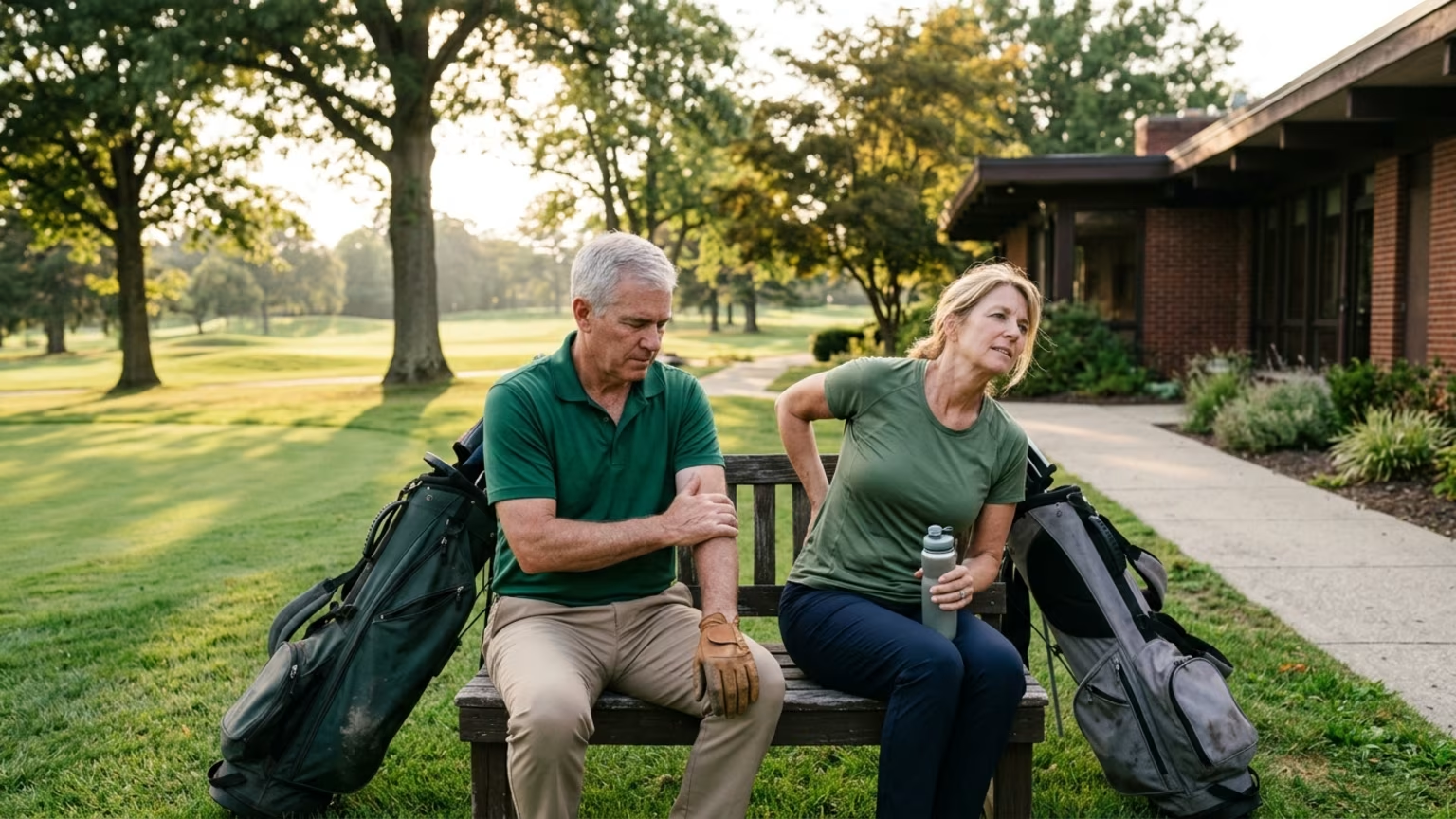
Learn why your legs and back tighten up late in a round. Understand how cumulative fatigue changes your golf swing and find simple strategies for recovery.

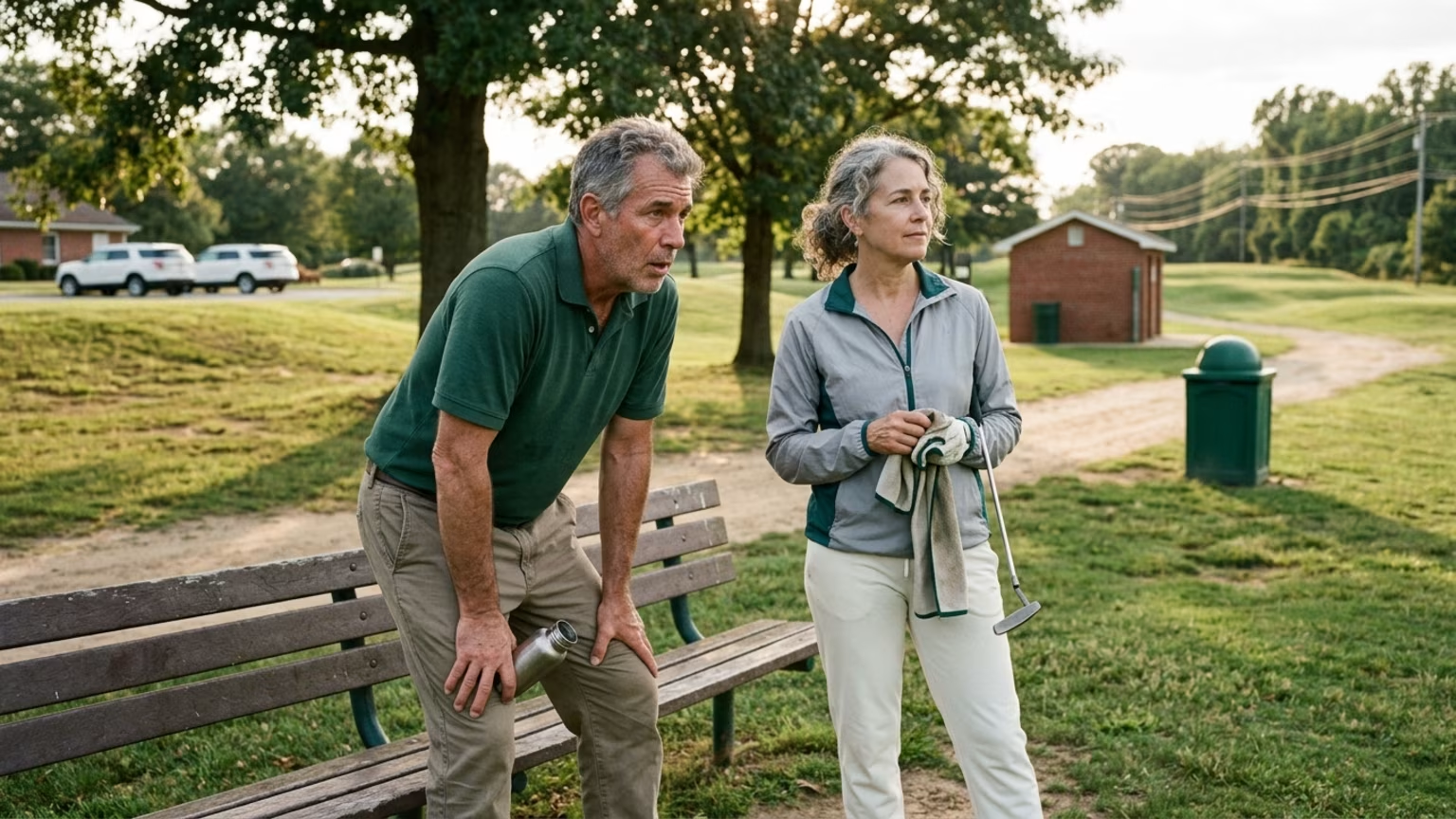
Read daily physical cues to gauge recovery between golf rounds. Learn practical ways to manage on-course fatigue and safely adjust your playing schedule.

Learn how experienced golfers can maintain performance and prevent tightness during hot rounds with practical hydration habits and steady fluid management.
Explore practical resources on performance, recovery, mobility and golf longevity.
Read the Blog