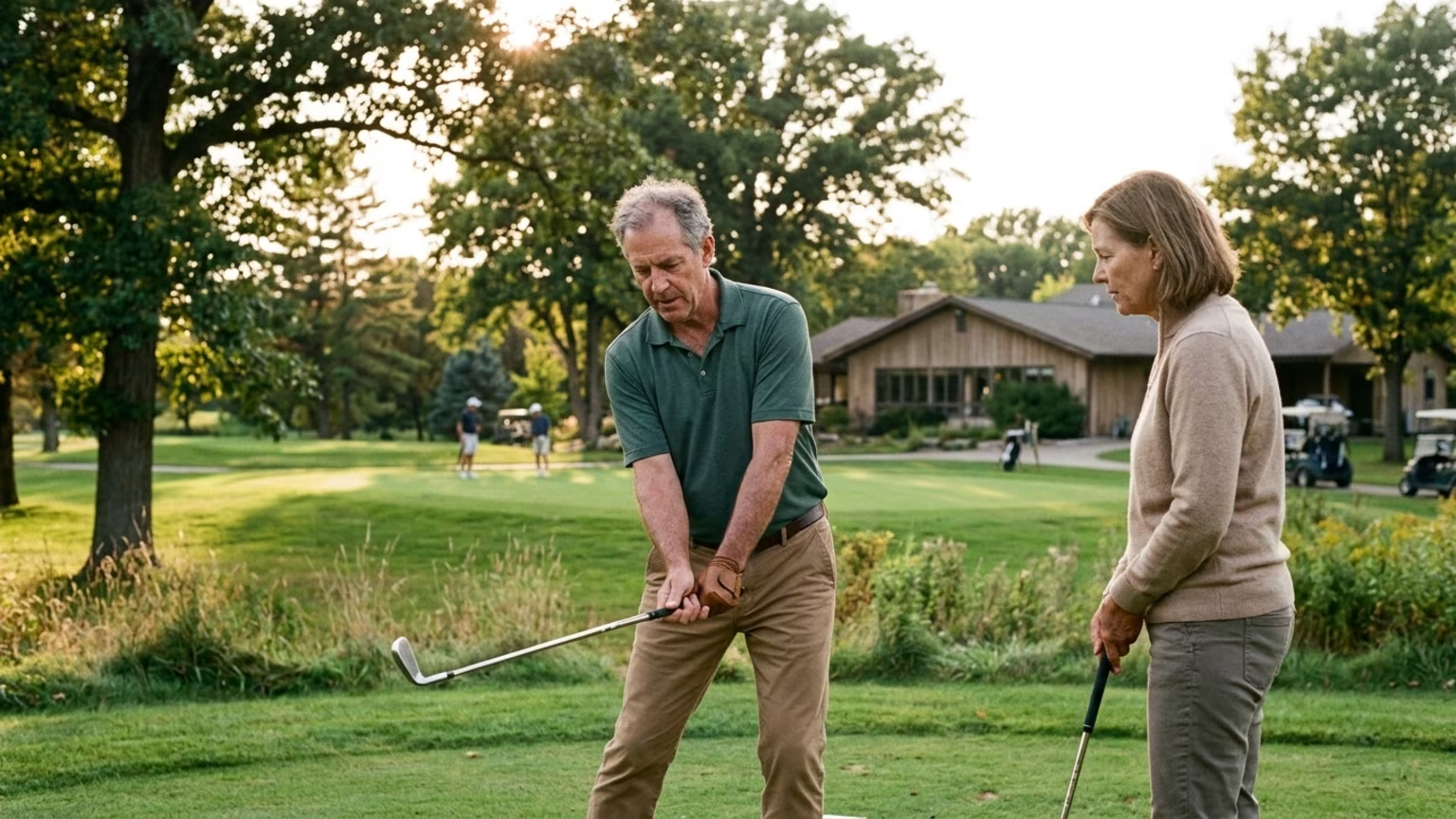

Discover why Greater Than Dallas's assessment-led golf rehab model proves that targeted strength, not passive stretching, improves rotation for older amateurs.




You have probably heard a million times that simply stretching before your round will fix a restricted swing, but the truth according to modern sports science is completely different. Dallas-based Greater Than has built a golf training and rehab program that addresses this exact misunderstanding. Earlier research summarized by LaunchPoint Golf reported a 1.6 percent clubhead speed increase after an 11-week strength, power, and flexibility program in Division I collegiate players. That data translates to approximately 5.4 additional yards of carry, which proves why targeted loading matters far more than passive flexibility alone.
Most amateur players assume that tight hips or a sore lower back simply require a few weeks of rest on the couch. This mindset usually comes from years of outdated advice where doctors told athletes to stop moving whenever physical pain appeared. Older recreational players often adopt this passive approach because it feels like the safest option. We know firsthand how frustrating this cycle becomes when total rest fails to improve the situation.
"When I developed medial epicondylitis, commonly known as golfer's elbow, I thought I needed complete rest. Six weeks off the course did nothing to help. I finally learned that active recovery with a flexbar was the actual solution. It taught me that treating golf injuries requires loading the tissue properly, not just sitting on the couch and hoping for the best."
Golfers constantly share advice about stretching routines that worked for someone else years ago. The problem is that what worked for a twenty-year-old athlete rarely applies to a fifty-year-old recreational player with desk-job posture. When you stretch a joint that lacks stability, your nervous system perceives a threat and tightens the surrounding tissue. This biological reaction explains why ten minutes of aggressive stretching often leaves you feeling tighter by the third hole.
For many players over 40, the desire to find a quick fix leads them toward basic flexibility routines. They hope that touching their toes will magically restore their rotation on the tee box. In reality, older players need strength and control instead of stretching to support the physical demands of a modern golf swing. Ignoring the physical weakness behind the tightness only delays true progress and keeps you locked in a cycle of stiffness.
The biomechanical reality is that your nervous system restricts rotation when your joints lack the stability to control that movement. UT Medicine’s golf-rehabilitation guidance highlights testing golf-specific movements, including backswing comfort, while evaluating upper body and lower body function. Their clinical guidance shows that readiness should be judged by the movements and demands of golf rather than pain alone. A healthy shoulder or knee means nothing if the surrounding joints cannot handle the torque of a driver swing.
This mechanism is why ACSM-related 2026 guidance recommends consistent resistance training at least twice weekly for healthy adults. That same guidance distinguishes heavier strength work from faster power movements, which provides a clear framework for building physical capacity. When older players try to force rotation past their available strength, the nervous system tightens the muscles to prevent joint injury. A structured assessment helps you build a controlled range to protect your spine while addressing the true weak link.
By testing the specific movements required for golf, you stop treating symptoms and start treating the root cause. This logical approach prevents the frustration of guessing which physical attribute needs your attention. You can clearly see whether you lack rotational control or raw leg power. Focusing on these functional markers ultimately dictates your overall swing quality.
Failing to address lower-body strength often forces the upper body to overwork during the downswing. A 2026 study indexed by PubMed of 18 high-level amateur male golfers showed that lower-body power exercises produced small acute improvements in distance metrics. These measured improvements included clubhead speed, ball speed, carry distance, and smash factor. While this small study measured short-term responses, it highlights how much the golf swing relies on lower-body force generation.
If your legs and hips cannot generate stable power, your arms and lower back will attempt to compensate for the deficit. Over time, this compensation pattern leads to massive fatigue on the back nine and an increased risk of tissue overload. You cannot maintain your posture through impact if your core and legs tire before the round finishes. This reality makes it critical to stay steady on the course with targeted balance and lower-body strength training.
The upper body plays a role, but it rarely drives distance improvements independently. The same 2026 study found that an upper-body intervention improved some ball speed and carry metrics without significantly changing clubhead speed. Players who only focus on shoulder turns miss the foundational power derived from the ground. Your weak links will always dictate your physical ceiling on the golf course.
Greater Than describes its Dallas Golf Training & Rehab offering as a two-hour starting program. This structured model combines swing and mobility assessment, physical therapy, golf-specific strength training, and customized follow-up. The provider uses video review of the swing to look for restrictions, imbalances, and weak points that may be targeted clinically. A customized approach identifies specific movement issues before any physical load is applied to the body.
According to Greater Than, its assessment examines thoracic and hip rotation alongside shoulder mobility. The evaluation also measures core stability, lower-body strength, and any pain patterns experienced on the course. This thorough evaluation prevents older recreational golfers from wasting time on movements that do not address their unique limitations. When you apply this clinical sequence to your own routine, focus entirely on turning your trail hip before adding complex movements.
Start your own evaluation process by identifying the specific problem that limits your golf round. Whether you struggle with a restricted backswing, poor stability, or declining leg strength, an assessment framework explicitly targets these categories. Treat active therapy or bodywork as one piece of the puzzle rather than the entire solution. Progress gradually and monitor how your body feels both during the next round and the following morning.
Greater Than’s broader personal-training model begins with an assessment of your individual goals and health history. Practitioners then measure your balance, overall strength, and mobility before developing an individualized program. By treating physical therapy and bodywork as mere components of a larger plan, players can build lasting on-course stability. You should always test your golf-relevant movement regularly rather than measuring flexibility in isolation.
Core lesson: Stop relying on passive stretching to fix rotational limits, and start treating your body with the assessment-driven respect your golf swing requires. A model that evaluates mobility, builds targeted strength, and reassesses movement will always outperform guesswork. The 1.6 percent clubhead speed increase seen in collegiate golfers reminds us that physical change requires consistent and specific loading. Next time your playing partner suggests touching your toes to cure a tight backswing, trust your body's true mechanical needs instead.
Follow Golfergy for practical insights on performance, mobility, recovery and healthy ageing. Stay connected for new articles, research-led guidance and ideas to help you play better for longer.


A practical look at golf strength after 40, with research on older golfers and simple habits for connecting training goals to a coordinated swing.


How legs, trunk and upper body share the work of a golf swing, with simple planning habits and a measured look at evidence for older golfers.

Understand mobility versus stability in golf, what older-golfer research reports, and two modest habits for comfortable movement control.
Explore practical resources on performance, recovery, mobility and golf longevity.
Read the Blog


