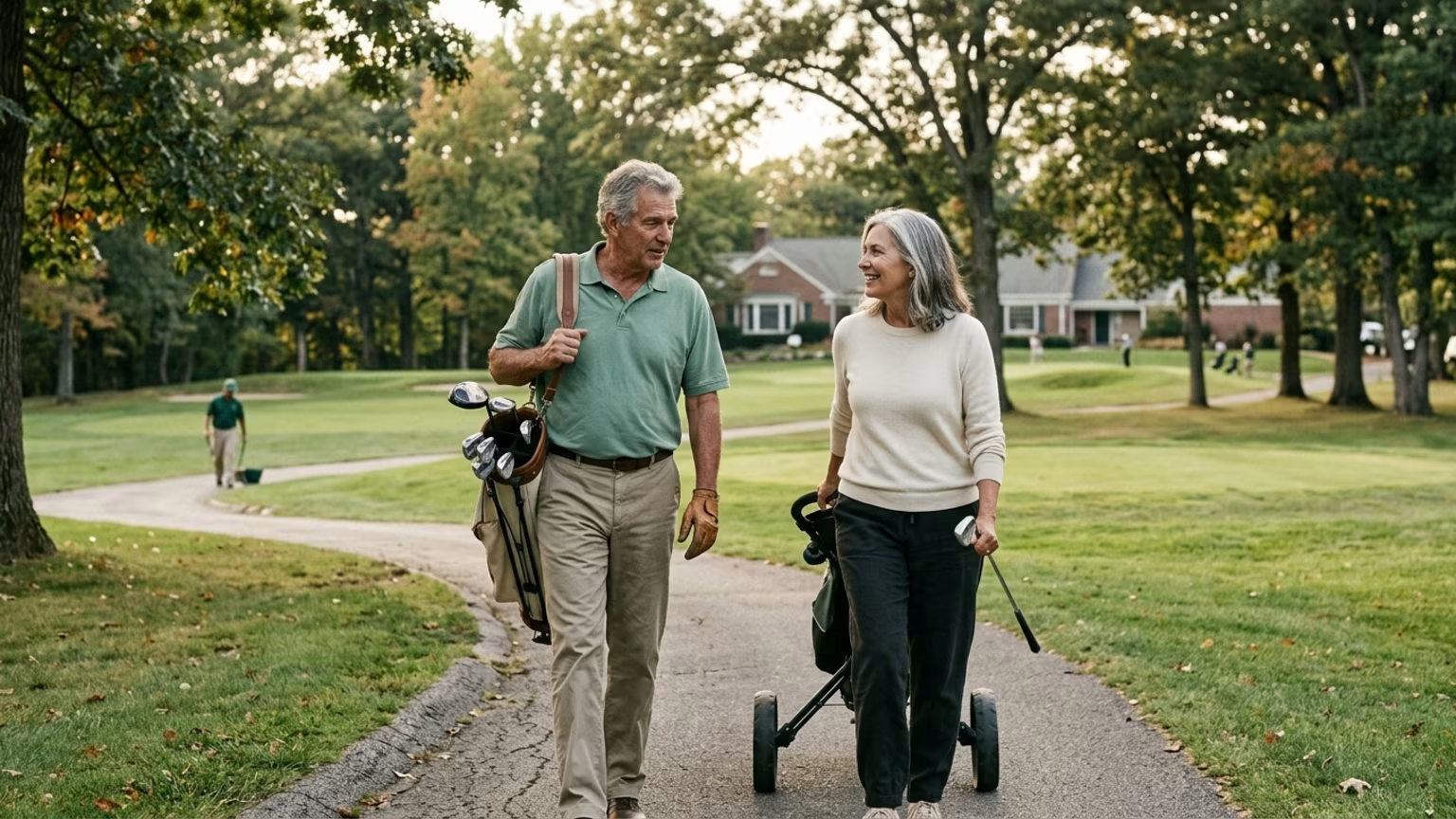

A new 2026 study on genetic profiles and handgrip strength highlights the importance of forearm conditioning and functional mobility for older golfers.




In September 2026, researchers affiliated with the University of Helsinki published a peer-reviewed article in Medicine & Science in Sports & Exercise. The study evaluated a genome-wide polygenic score for handgrip strength. It examined how inherited differences connect to muscle strength and lifestyle. You will rarely see a professional withdraw from a tournament explicitly citing poor grip strength.
However, diminished hand capacity is often the quiet culprit behind severe wrist and forearm injuries that force players off the course. A weak grip compromises your ability to stabilize the clubhead through heavy rough or firm turf. This loss of stability transfers dangerous amounts of stress directly into the tendons of the forearm. The new research highlights the critical role of physical functioning as we age.
It also reinforces why older golfers must prioritize their hands and forearms to maintain club control. You need to treat hand strength as a foundational element of your long-term recovery and longevity plan. Without adequate forearm conditioning, your overall swing mechanics will inevitably suffer over time.
To understand why handgrip strength matters, we need to look at how the body transfers power. The golf swing generates a massive amount of force that travels from the ground up. This energy moves through the legs, the core and the shoulders before reaching the arms. Ultimately, your hands and wrists are the only physical connection to the golf club.
They must manage this rapid transfer of force while stabilizing the clubface through impact. During the downswing, your forearm muscles must contract forcefully to maintain the correct wrist angles. The flexor muscles on the inside of the forearm pull the wrist inward. Meanwhile, the extensor muscles on the outside of the forearm work to stabilize the joint against the momentum of the club.
If these tissues lack the necessary strength, the wrists can break down under the speed of the swing. This breakdown compromises your ball striking and places immense stress on the delicate tendons of the hand. When the club hits the turf, a strong grip absorbs the vibration before it damages the joint. If your hands are weak, that shock wave travels directly into the elbows and shoulders.
This lack of shock absorption is a leading cause of the chronic pain that ruins many golf seasons. Strong forearms act as the ultimate defense mechanism for your upper body. They allow you to swing freely without fearing the painful feedback of a heavy strike.
Recreational players over 40 face a significant risk of hand and wrist issues while swinging with less speed than touring professionals. Aging brings a natural decline in muscle mass and tissue elasticity. A recent review describes grip strength as a potential systems biomarker of aging. If an older golfer loses grip strength, they often compensate by gripping the club excessively tight.
This extreme tension creates a rigid chain from the hands all the way up to the elbows and shoulders. When an older golfer with rigid forearms strikes the turf, the shock travels directly into vulnerable joints. Professionals have the foundational conditioning to absorb this impact safely. Amateurs often lack the broad physical capacity required to protect their tissues from repeated strain.
This physical gap makes weekend players highly susceptible to overuse injuries that can ruin a season. This decline in strength extends well beyond the golf course. A recent multi-cohort study analyzed data from CHARLS, ELSA and SHARE to understand the broader implications of hand strength. The research reported positive associations between cumulative grip strength and successful aging.
The study showed a pooled odds ratio of 1.043 for every 1-kilogram increase in grip strength. Maintaining this baseline strength is vital for your long-term mobility and independence. It allows you to carry your golf bag, maneuver a cart and execute everyday tasks without pain. You can read more about managing this decline by reading how aging acts as a manageable shift in physical capacity.
You can protect your wrists and improve your club control by adopting a targeted conditioning routine. A golf injury-prevention program from Lifemark recommends simple wrist-flexion and wrist-extension exercises. You should perform 10 repetitions on each wrist using a light weight or a resistance band. This targeted work helps build the specific forearm capacity required for the golf swing.
It also serves as a crucial piece of preparing your body for the physical demands of golf. However, you should not focus exclusively on your hands. Lifemark’s golf guidance includes trunk, shoulder, hip and core exercises alongside this wrist work. Building whole-body strength helps your larger muscles handle the heavy lifting during the swing.
This balanced approach reduces the overall burden placed on your smaller wrist joints. You can learn more about assessing your physical needs by reading about a practical framework for strength, balance, and rotational control. Your preparation immediately before a round is just as critical as your time in the gym. Lifemark recommends using a dynamic warm-up before you step onto the first tee.
You can incorporate arm swings, hip circles and trunk rotations to prepare your joints for movement. Lifemark also advises returning golfers to increase playing volume gradually after a long layoff. Rushing back to a full schedule of heavy practice sessions dramatically increases your risk of tendon strain. Furthermore, you should avoid an excessively tight grip on the club to minimize unnecessary stress on your elbows.
Many golfers mistakenly believe that simply squeezing a grip trainer will solve all their physical aging concerns. A recent review cautions that an improvement in grip strength should not automatically be interpreted as a reduction in mortality risk. Grip strength is a useful indicator of general physical function. It is not a magic cure that directly prevents disease or extends your lifespan.
You cannot rely on hand exercises alone to offset a sedentary lifestyle. Another common error is treating genetic predispositions as absolute boundaries. The University of Helsinki research evaluated a genome-wide polygenic score related to handgrip strength. This genetic score is an estimate rather than a fixed forecast of your physical future.
Inherited traits might influence your baseline strength, but they do not dictate your potential for improvement. Your training habits, recovery strategies and lifestyle choices remain the primary drivers of your functional capacity. Older golfers should view grip strength as a measurable baseline rather than a genetic life sentence. Consistent resistance training can help you build the durability needed for the back nine.
Building resilient hands and forearms requires consistent attention and a balanced approach to fitness. You have the power to protect your joints by integrating basic wrist exercises into your weekly schedule. Taking a few extra minutes to warm up properly can make a massive difference in how your body feels after 18 holes.
You do not need to spend hours in the gym to see meaningful improvements in your club control. Simple, targeted movements will help you maintain your swing mechanics and avoid frustrating mid-season injuries. What adjustments will you make to your mobility routine this season to steer clear of this hazard?
Follow Golfergy for practical insights on performance, mobility, recovery and healthy ageing. Stay connected for new articles, research-led guidance and ideas to help you play better for longer.


Choose between easy movement, lighter practice and full rest after golf, with a clear look at walking-round demands and the limits of recovery research.


Rest or move the day after 18 holes? Use fatigue, soreness, symptoms and your playing schedule to guide a flexible recovery day.

Compare foam rolling, massage, compression, heat and cold for golfers, with comfort benefits kept separate from performance and injury claims.
Explore practical resources on performance, recovery, mobility and golf longevity.
Read the Blog


