
Learn how five structured weekly habits can help golfers over 50 protect their joint mobility, reduce tissue strain, and play consistently for decades.




In late summer of 2026, golf health publications clearly separated the heavy physical burdens of elite tournament play from the long-term benefits available to recreational players. Professional golfers often face acute physical breakdowns from massive practice volumes and extreme swing speeds. Their bodies endure constant repetitive stress that frequently leads to sudden withdrawals from major events. Everyday players over 40 face a different physical challenge entirely.
The goal for recreational players is not to survive a grueling tour schedule. The objective is to retain enough functional capability to play the game consistently for decades. A recent press release from Dr. John Spencer Ellis outlined five weekly practices for men over 50. These habits focus on sustainable movement and recovery to help maintain physical function.
The physical breakdown many older golfers experience stems directly from how muscle and connective tissue change over time. After age 30, muscle mass naturally declines by about 3 to 5 percent per decade. The ability of those muscles to produce force drops two to five times faster than the actual loss of muscle size. This means a golfer loses rotational power and joint stability much quicker than they lose overall body weight.
Furthermore, connective tissues like tendons and ligaments adapt much slower than muscle tissue. When a golfer suddenly increases their swing effort or playing volume, the muscle might be able to handle the workload. The lagging connective tissue fails under the sudden load. This imbalance is the root cause of many tissue strains.
The data surrounding these physical changes paints a very clear picture. The PURE study involved nearly 140,000 adults across 17 countries. Researchers found that a mere five-kilogram reduction in grip strength was associated with a 1.16 hazard ratio for all-cause mortality. The impact of actively addressing these physical declines is equally measurable.
A 2026 Japanese study showed that strength training was associated with a 74 percent lower risk of dementia. Meanwhile, a massive Swedish cohort study of 300,818 registered golfers found a standardized mortality ratio of 0.60. That equates to a 40 percent lower observed mortality rate compared to the general population. This observational finding cannot prove golf directly extends life, but it highlights the potential benefits of staying physically active.
Older golfers remain highly vulnerable to tissue strain whether they swing slowly or with great speed. Ordinary daily tasks simply do not demand enough physical force to preserve high-level muscle function. When an older player steps onto the first tee, the sudden rotational force of the golf swing places massive stress on the spine. The hips and lower back absorb sudden torque that everyday walking does not prepare them for.
The risk is heavily compounded by the slower adaptation rate of connective tissue mentioned earlier. Tendons require gradual loading to build the tensile strength needed for a full golf swing. Adding sudden loads without prior conditioning makes injuries highly likely. Without a structured physical routine, the everyday golfer relies entirely on fading tissue elasticity to control the club.
To avoid these physical setbacks, recreational golfers can adopt a clear routine based on five practical habits. First, complete two to four resistance training sessions each week. Keep instructions focused on one small movement at a time, such as tracking your knee properly during a squat. This targeted approach builds structural resilience without making the golf swing the only source of physical stress. Complete sessions covering the squat, hinge, push, pull and loaded carry.
A 2026 systematic review and meta-analysis on physical-training interventions in golfers concluded that structured training can improve key golf-shot performance outcomes. Second, accumulate 150 to 200 minutes of aerobic work weekly at a conversational pace. You can introduce high-intensity intervals only after this aerobic base is firmly established. Taking time to establish a basic fitness foundation helps players prevent common injury patterns before they happen.
Third, focus heavily on your sleep quality. Dr. Ellis pairs a seven-to-nine-hour sleep target with a strict, consistent wake time every single day. Stanford research noted that athletes spending 10 hours in bed for five to seven weeks improved selected skilled performance measures by approximately 9 percent. While recreational players do not need that extreme duration, maintaining a strict wake time helps regulate recovery far better than simply spending random extra hours in bed.
Fourth, build regular social contact by connecting with two close friends each week. Speaking over the phone or meeting in person provides mental stability that text messaging cannot match. A pooled analysis covering 148 studies and 308,849 participants showed stronger social relationships were associated with a 50 percent greater likelihood of survival. Adding a regular weekly tee time is a great way to combine social connection with your physical activity.
Finally, adjust your dietary habits to support tissue maintenance. Aim for roughly 30 to 40 grams of protein at each of your three daily meals. For younger men, stimulating muscle protein synthesis requires about 0.24 grams of protein per kilogram of body weight per meal. Older men require approximately 0.40 grams per kilogram to achieve the same internal response.
Distributing your intake evenly across breakfast, lunch and dinner prevents large nutritional gaps. Readers should consult a medical professional for personalized dietary advice if they manage specific kidney conditions or diabetes. Building these habits creates a strong foundation for long-term physical longevity on the course.
A common misconception is that playing a few rounds of golf each week provides a complete fitness solution. A recent golf health review confirms the sport provides excellent aerobic activity and social participation. Relying on golf alone is simply not enough. Most adults still require progressive resistance training to protect their joints and maintain true muscle power.
Relying on golf as your sole form of exercise leaves critical movement patterns completely untrained. Another misconception is that harder exercise is always better. Older golfers must progress slowly to let tendons adapt safely before chasing intense fatigue. Building a steady routine creates far better results than occasionally pushing yourself to exhaustion.
Translating these five practices into your daily life can actively preserve your mobility and power on the course. They offer a grounded way to counter the natural decline of muscle and connective tissue. Combining sensible resistance training with adequate sleep and targeted nutrition builds a physical foundation that lasts. What adjustments will you make to your weekly routine this season to steer clear of early fatigue and keep your game sharp?
Follow Golfergy for practical insights on performance, mobility, recovery and healthy ageing. Stay connected for new articles, research-led guidance and ideas to help you play better for longer.


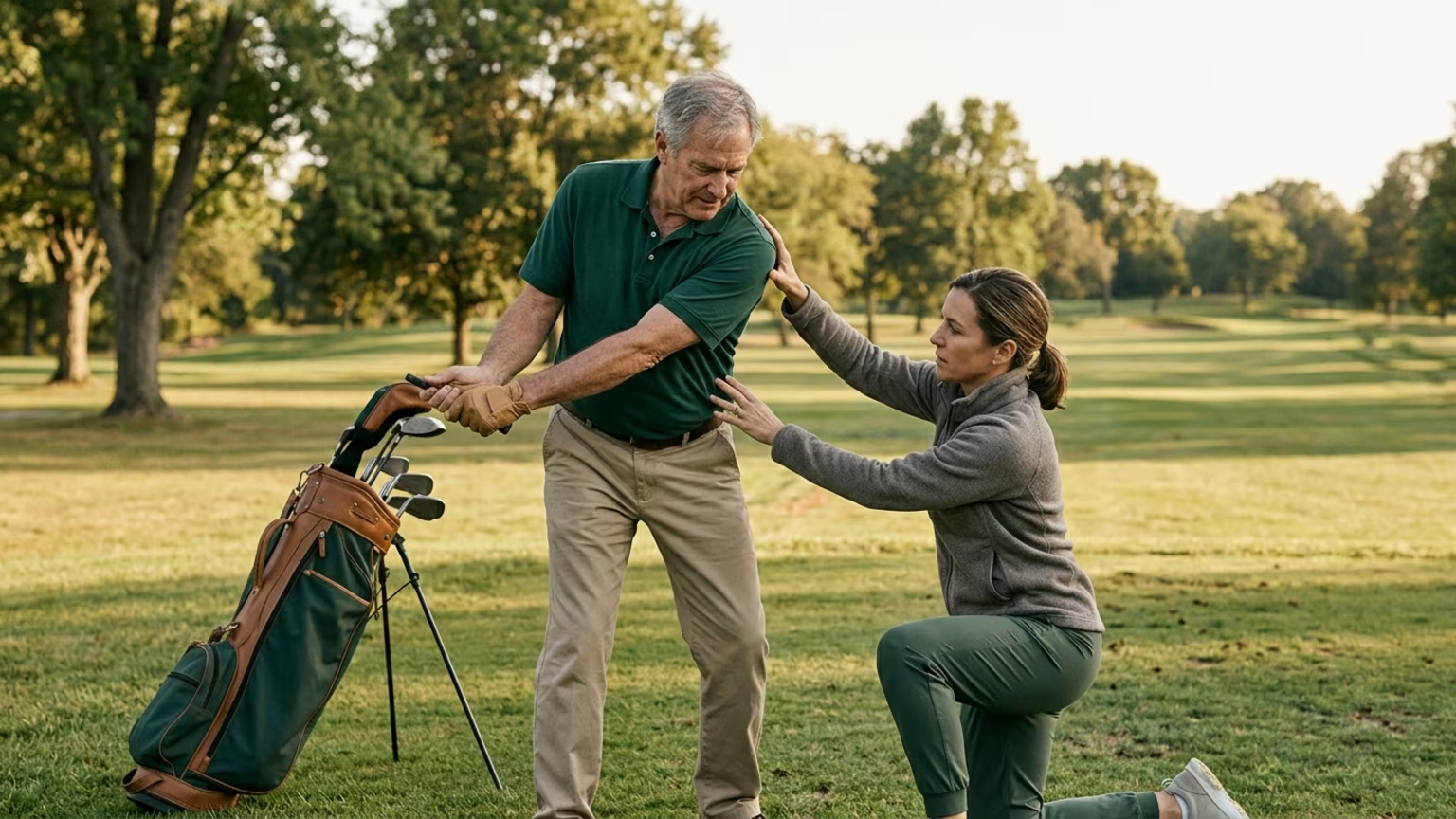
The APTA 'PT For Future Me' campaign emphasizes proactive physical therapy to maintain lifelong mobility. Learn how older golfers can use these principles.


Learn how older golfers can apply the latest Administration for Community Living fall-prevention guidance to maintain balance and protect their golf swing.
Recent research highlighted by Exercise New Zealand shows why older golfers must prioritize lower-body muscle power over pure grip strength to maintain speed.
Explore practical resources on performance, recovery, mobility and golf longevity.
Read the Blog