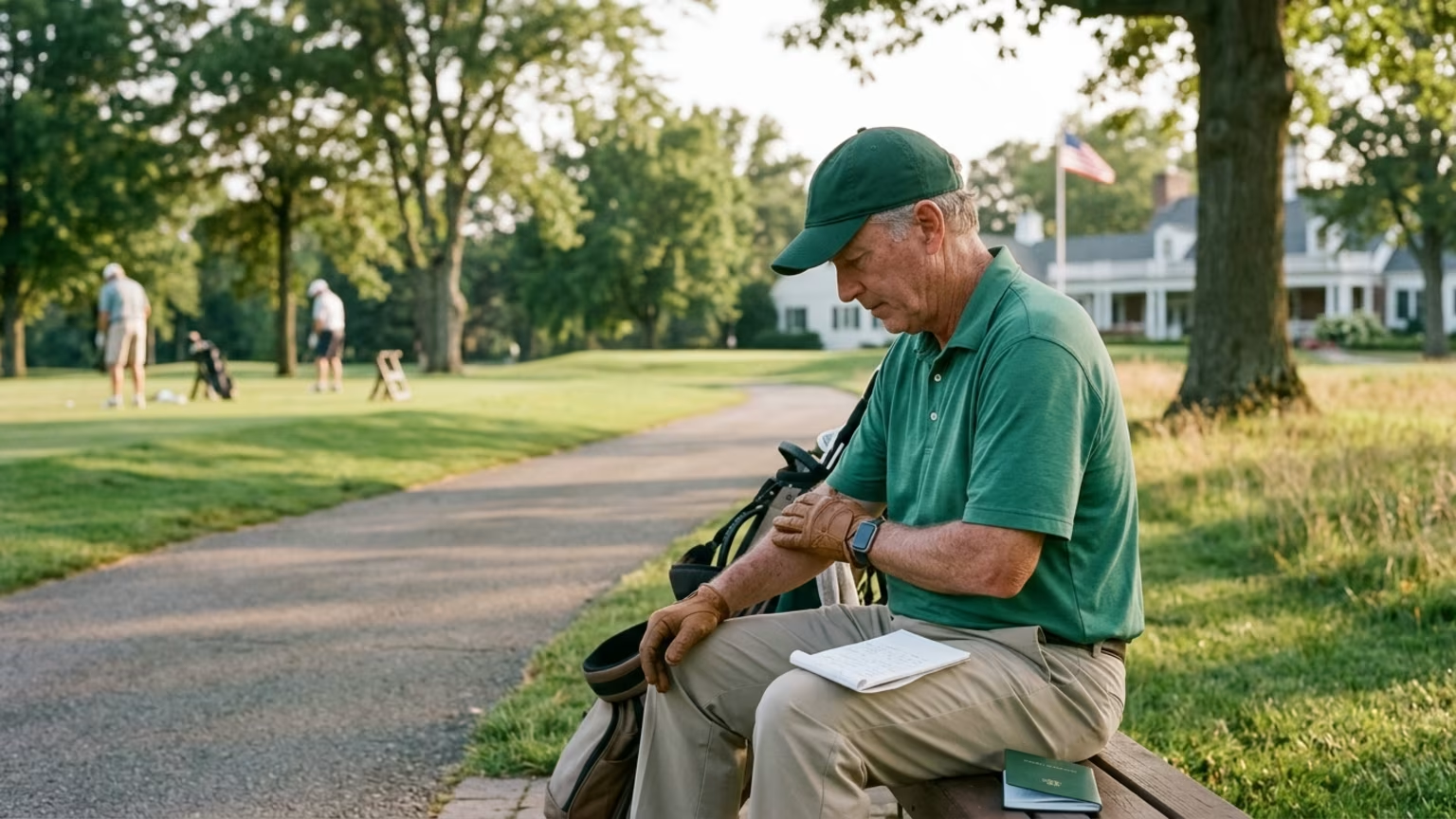

A step-by-step load management guide to safely return to golf. Learn how to progress your swing volume, effort, and walking demands without causing an injury.




The saddest thing I have seen in golf is watching lifelong playing partners slowly drop out of our weekend group. It usually starts with a nagging shoulder or knee issue they ignore until it requires surgery. That pattern is exactly why I became obsessed with golf longevity. We do not have to stop playing as we age, provided we do the right maintenance work between rounds.
Many recreational players ruin a fantastic stretch of golf by completely mismanaging their physical workload. They take weeks off for winter, a vacation, or a minor illness. They then immediately return to their peak summer practice volume. This sudden spike in activity heavily overloads tissues that have lost their recent adaptation.
The International Journal of Sports Physical Therapy recently published a clinical commentary proposing a six-phase progression after anterior cruciate ligament reconstruction. While this specific model is aimed at surgical recovery, it provides excellent foundational guidance for any older player managing their training load. The authors present the framework as evidence-informed guidance requiring future validation. It gives us a highly structured way to approach our seasonal return.
The five core steps of a smart return protocol:
Before you start hitting buckets of balls, you need a clear way to measure your physical tolerance. The easiest way to check your baseline is to monitor your body the morning after a practice session. Many players mistakenly judge their readiness by how they feel while standing on the driving range. The true test of your physical tolerance happens long after you leave the practice facility.
The proposed symptom-monitoring rule from the commentary focuses entirely on your next-day response. Pain and swelling should return to pre-session levels by the following morning. These symptoms must return to normal no later than 24 hours after your practice. Watching for these specific next-day reactions is a practical way to spot the early warning signs for golfers over 40.
If you experience persistent or worsening pain, new swelling, motion loss, or a limp, the load was excessive. You must regress to the previous tolerated dose. You should also pay close attention to your pain levels during the actual session. The article recommends ending a session immediately if your pain exceeds 2 out of 10, if instability appears, or if your swing quality progressively deteriorates.
You do not need complicated fitness equipment to safely manage your training load. A standard set of clubs is the only resistance tool you require. You will start with your putter, progress to your wedges, and eventually need your full set of irons and woods.
A push cart is another valuable piece of equipment for this protocol. Managing your walking volume is just as vital as monitoring your swing count. You will need a push cart to bridge the gap between riding in a buggy and carrying your heavy bag. This simple tool helps you control your physical fatigue on the course.
This progression treats a return to golf as a gradual buildup of physical exposure. Remember that surgeon restrictions and specific rehabilitation requirements always take precedence over these proposed time windows. You should consult a medical professional for individualized clearance.
You must start the process entirely on the practice green. The earliest phase begins with roughly 20 to 30 putts. This usually takes about 10 to 15 minutes to complete. You can progress by 5 to 10 minutes per session until you reach 30 to 45 minutes of comfortable putting.
Next, you will move to basic short game work around the practice area. Begin with approximately 20 chips at 25 to 40 percent effort. If you tolerate this well, follow it with 10 to 15 pitches at no more than 50 percent effort. This gives you a safe starting point of approximately 30 to 40 total swings.
Your next step involves slightly larger rotational movements. Start with 10 swings at approximately 50 percent effort. Then hit 10 swings at approximately 75 percent effort. Initial sessions are generally limited to 30 to 40 swings, progressing slowly toward approximately 50 to 60 total swings.
Now you can introduce full swings with shorter clubs. Begin with approximately 30 swings at about 75 percent effort. Hit 10 swings each with a 9-iron, an 8-iron, and a 7-iron. Progress toward 45 to 60 swings after symptom-stable sessions, using this deliberate pacing as a highly effective golf load-management plan.
Longer clubs create significantly more stress on your joints and spine. Start with 5 to 10 swings per club at 50 to 75 percent effort. Do not hit more than approximately 30 full swings initially. You can eventually progress toward your usual speed and approximately 60 to 75 full swings.
Before playing an actual round, the framework calls for two to three specific range sessions. These sessions must contain 40 to 60 full swings without a next-day physical reaction. You must also prove you can walk 30 to 45 minutes on variable terrain. This final test confirms your foundational endurance.
The most common mistake enthusiastic players make is changing multiple variables at the same time. The commentary identifies six distinct workload variables that should not all be increased at once. These are the number of swings, swing effort, club length, practice frequency, walking volume, and environmental complexity. Changing just one factor provides plenty of new stimulus for your body.
The article recommends increasing only one primary workload variable at a time. A classic error is stacking a long range session, maximum effort swings, and a full walking round together. You must completely avoid simultaneous increases in your swing effort and your total swing volume. This disciplined approach is a critical part of any successful return to golf playbook.
The framework treats clubhead speed as a workload variable too. It recommends using a percentage of your usual speed rather than chasing an absolute speed threshold. Using relative effort helps you safely scale your practice without risking a massive physical setback. This keeps your tissues adapting safely over time.
Once you finally reach the course, your physical transition must remain highly structured. The proposed course sequence begins cautiously with three to six riding holes. You then progress to nine riding holes, followed by nine walking holes with a push cart. This isolates the walking demand from the swinging demand.
The final stages involve 18 riding holes, then 18 walking holes with a push cart. Carrying a bag is reserved for the very last step. You should delay consecutive-day play until at least two complete rounds at your current level have been fully tolerated. During the first two sessions of any new phase, the proposed framework recommends at least one recovery day between golf exposures.
The suggested figures in this protocol are clinical starting points rather than validated universal rules. If a practice session is tolerated, the article proposes increasing your total swing count by approximately 10 swings or 10 to 20 percent. Sticking to this conservative math protects your joints. The 5-minute investment in tracking your swings today saves you 18 holes of aches tomorrow.
Follow Golfergy for practical insights on performance, mobility, recovery and healthy ageing. Stay connected for new articles, research-led guidance and ideas to help you play better for longer.



Review the 2026 Solheim Cup swings of Nelly Korda and Charley Hull. Learn how simple clubface and hand-path checkpoints help older golfers reduce strain.


Learn how to distinguish normal post-round muscle fatigue from serious overuse injuries. Discover the warning signs that require a doctor and how to adjust your play.
Learn why the lower back often compensates for restricted hips and mid-back in the golf swing, plus practical mobility habits for older players.
Explore practical resources on performance, recovery, mobility and golf longevity.
Read the Blog


