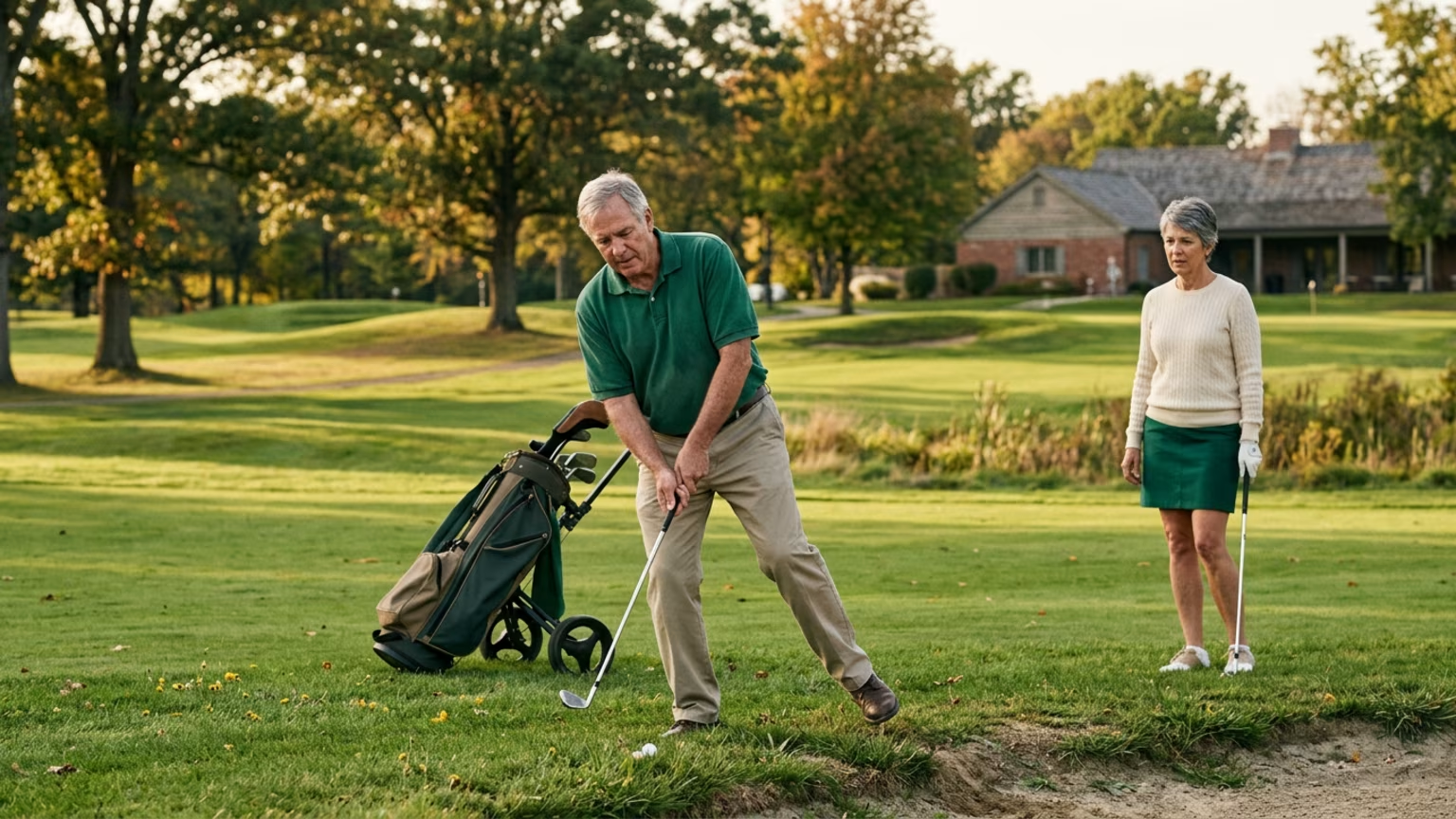

Stop freezing your lower body. Learn why dynamic stability, ground force, and controlled movement are the true keys to power and longevity in your golf swing.




A completely still lower body is the fastest way to ruin a golf swing. For years, players have been told to keep their legs quiet to improve consistency. This advice creates far more problems than it solves. When professional players withdraw from major events because of sudden back issues, spectators often blame their swing speed.
The true culprit is frequently a mechanical failure in how the body manages physical force. Restricting motion in the lower body places massive stress on the lower back. Golf instruction and biomechanics literature from sources like Keiser University College of Golf outline a specific movement chain. The downswing is commonly described as a proximal-to-distal sequence.
This pattern dictates that the pelvis initiates the aggressive motion. The torso, lead arm and club then follow in that exact order. Each physical segment accelerates and then rapidly decelerates so energy passes safely to the next link. A rigid foundation completely destroys this delicate timing.
Ground-reaction force is the pressure the turf applies back to the player. Biomechanical coaching from eCoach360 identifies this specific force as a key source of angular momentum. Players use the ground to build energy before sending it upward through the body. A successful downswing relies heavily on this organized upward chain.
One biomechanics explanation details a lateral shift, rotational braking and a vertical push. A completely frozen lower body breaks this natural sequence before it even begins. An efficient pelvis must rotate, tilt, shift and rise. The Golf Lessons Channel notes that players must maintain functional balance while completing these demanding actions.
Stability actually means controlling this complex movement rather than avoiding it entirely. Your lower half must act as a dynamic engine and a set of brakes. Energy cannot flow freely if the joints are locked tight. You need mobility to generate speed and strength to control it.
Golfers over 40 face a significant risk when they deliberately restrict their lower body. Older players often swing with much less raw speed than tour professionals. A forceful swing without adequate joint control forces the aging body to compensate elsewhere. The lower back usually takes the brunt of this structural failure.
A few years ago, I noticed my swing falling apart around the 14th hole. My lower back would tighten up, and I started compensating with my arms. I spent months thinking it was a frustrating swing flaw. It was not until I started a simple evening hip mobility routine that I realized my glutes were just turning off from fatigue.
Fixing that one physical limitation brought my back nine scores down drastically. The inability to safely transfer power from the ground drains energy late in a challenging round. The lower body has to create movement while also carefully controlling it. The feet act as the primary ground interface while the trunk organizes the force.
Many veteran players mistakenly believe that restricted movement creates better accuracy. They shorten their backswing and stiffen their knees to find the fairway. This approach destroys the kinetic sequence and places extreme torque on vulnerable joints. The loss of distance is matched only by the inevitable onset of joint stiffness.
The physical demands of a modern golf swing are immense. As our bodies age, we naturally lose some elasticity in our tendons and ligaments. This physical decline makes efficient biomechanics even more critical for older players. Trying to power through a poorly organized swing simply accelerates wear and tear on the body.
Older amateurs who just try to hit harder with their hands invite serious injury. Your body will always find a way to complete a requested motion. If the hips cannot turn freely, the spine will twist beyond its safe limits. This compensation cycle eventually leads to chronic pain and lost distance.
Many players attempt to protect their backs by rigidly bracing their abdomen. This common misconception stems from a complete misunderstanding of core strength. A stable trunk does not mean locking the stomach muscles tight throughout the entire swing. Rigid bracing actually restricts the hips and thoracic spine from rotating freely.
The true goal is managing the delicate relationship between the pelvis, spine and rib cage. You must allow the body to rotate while maintaining a highly organized posture. There is no public evidence that isolating the core with a rigid brace improves clubhead speed. Instead of freezing the torso, golfers should focus on adapting mechanics as the body ages.
A highly functional core reacts naturally to the forces generated by the legs. It transfers power smoothly without needing to be clenched tight. Focusing solely on a stiff midsection blocks the flow of momentum. Your back requires supple movement to remain healthy over eighteen holes.
A 2026 summary of a systematic review from Golfing Fore All highlights the value of controlled pressure. The review reported that 24 studies examined ground-reaction forces in the golf swing. Ten of those studies found moderate-to-strong relationships between force-use variables and overall clubhead speed. You need practical adjustments to harness this invisible momentum.
Start by prioritizing your foot and ankle function during every single practice session. Practice maintaining stable contact on the inside of the trail foot during the backswing. When transitioning into the early downswing, shift your pressure toward the lead foot. Keep instructions simple and focus entirely on turning your trail hip.
You must actively train your ability to redirect physical pressure safely. Include controlled split squats or lateral step-downs in your weekly fitness routine. These movements help develop the braking strength needed to stabilize a dynamic golf swing. Consistent activating the proper muscle groups prepares the body to handle rotational forces safely.
Mobility work must support your specific swing rather than forcing an extreme range of motion. A stable trunk cannot compensate indefinitely for severely restricted hips or limited upper-back rotation. Older golfers should avoid suddenly adding high-volume rotational drills right before a major playing period. Your physical load should increase progressively with adequate recovery between demanding practice sessions.
Your footwear also plays a crucial role in managing these forces safely. Ground pressure means very little if your shoes fail to provide proper lateral support. A solid connection to the turf allows you to push confidently during the transition. Stable footing is the foundation of every powerful swing.
Focus on strike quality rather than simply swinging out of your shoes. A perfectly timed motion will always outperform a chaotic burst of effort. Proper sequential timing maximizes the energy reaching the golf ball. Precision and control matter far more than sheer muscular strength.
At golfergy, we know that your overall golf longevity depends heavily on how well you manage physical force. The human body was designed to move in sequence rather than fight rigidly against itself. A quiet lower body is merely a well-organized one.
What adjustments will you make to your mobility routine this season to steer clear of this hazard? True stability is found in the quiet spaces between motion and balance.
Follow Golfergy for practical insights on performance, mobility, recovery and healthy ageing. Stay connected for new articles, research-led guidance and ideas to help you play better for longer.



A new cellular study reveals how aging muscle affects your golf swing. Learn why older golfers need resistance training to protect their tissue capacity.


Golf Digest recently published a five-part single-leg fitness challenge. Learn what this movement reveals about your balance, strength, and golf longevity.

Elite tournament recovery relies on sleep hygiene and structured training. Golfers over 40 can use these exact methods to prevent late-round fatigue.
Explore practical resources on performance, recovery, mobility and golf longevity.
Read the Blog